Nearside Rear Shock Absorbers Has Light Misting Of Oil: Mot Advisory And Safety Guide

When you receive an MOT advisory stating your ‘nearside rear shock absorbers has light misting of oil,’ it can be difficult to determine if your vehicle is safe to drive or in need of immediate repair. Motorists often struggle to understand the technical severity of ‘misting’ and whether this common advisory is a minor maintenance note or a precursor to a dangerous suspension failure. In this comprehensive guide, you will learn exactly what misting signifies, how it affects your car’s safety, the MOT legalities involved, and why professional technicians recommend specific steps for replacement.
Understanding the Technical Meaning of Light Misting on Shock Absorbers
📤 Share Image
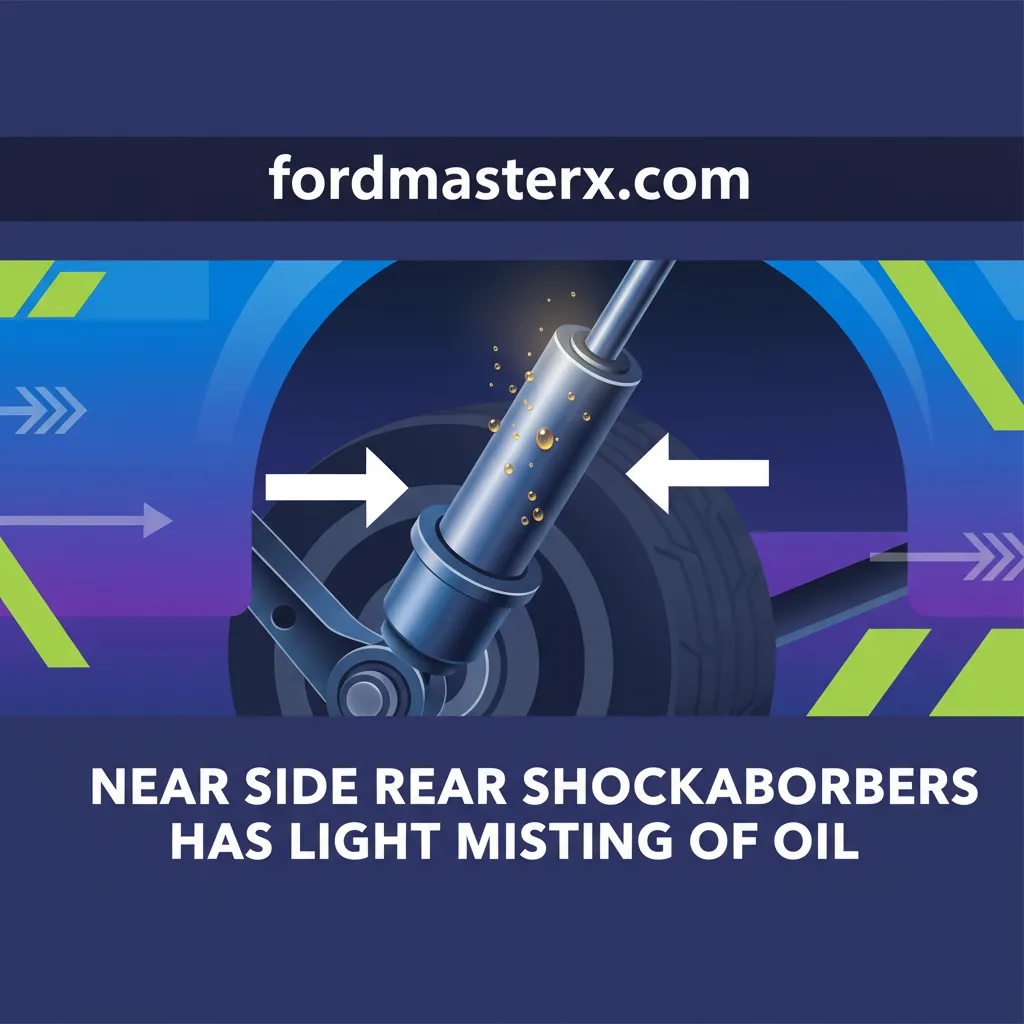
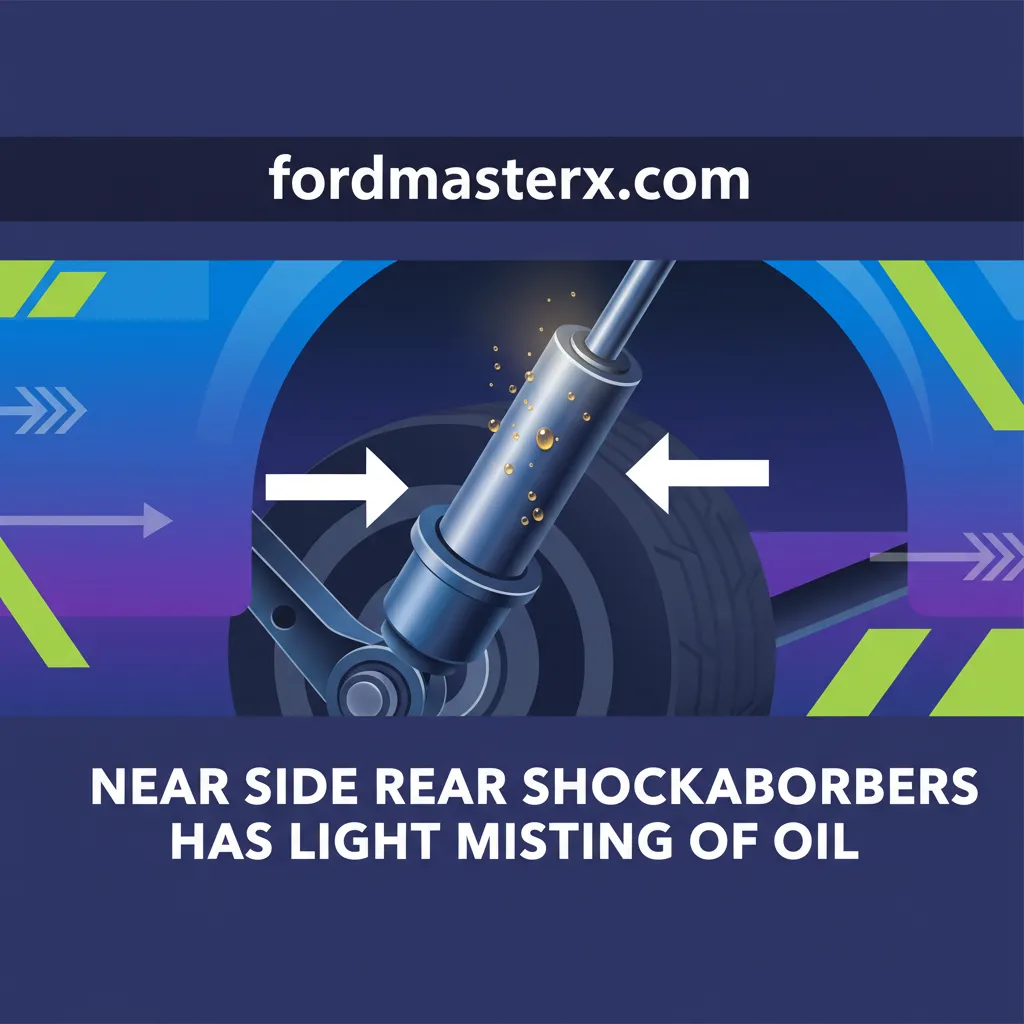
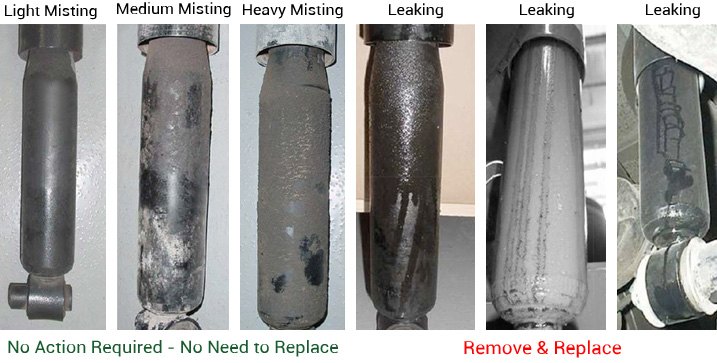
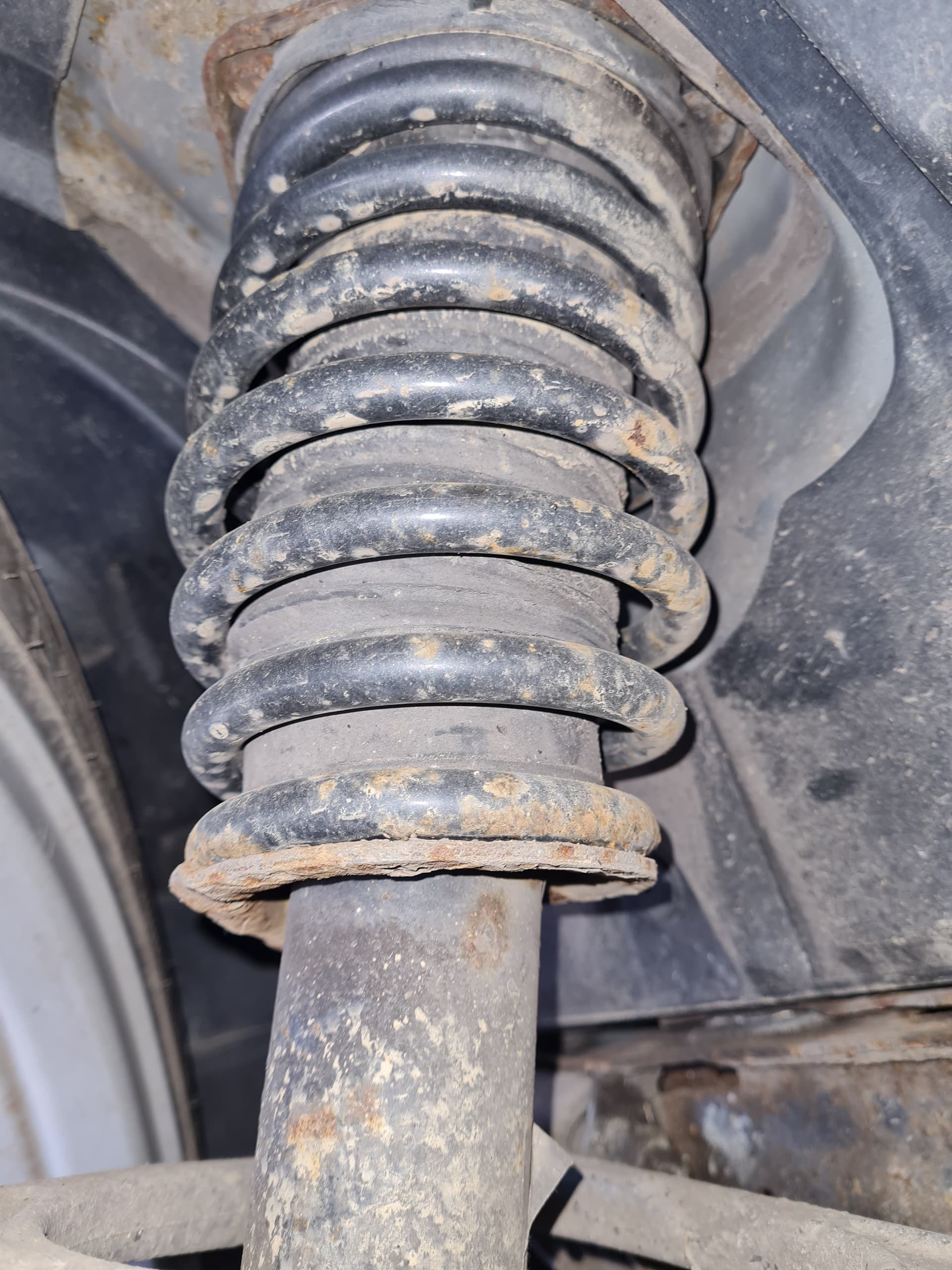
In the world of automotive diagnostics, “misting” describes a very specific condition where a fine film of hydraulic fluid adheres to the exterior of the shock absorber (or damper) tube. This occurs when the piston rod, which moves vertically thousands of times per mile, carries a microscopic amount of oil past the internal seal. Over time, this oil attracts road dust, creating a dark, damp appearance on the unit’s body. Unlike a catastrophic failure, misting does not immediately drain the reservoir, but it does signal that the seal’s integrity is no longer absolute.
The mechanical distinction between ‘misting’ and ‘leaking’ is vital for vehicle owners to understand. Misting is often considered a natural byproduct of the damper’s operation, particularly in high-mileage vehicles. However, a ‘leak’ is defined by the DVSA (Driver and Vehicle Standards Agency) as fluid loss significant enough to form droplets or a visible downward stream. Modern dampers utilize high-quality hydraulic fluid with specific viscosity ratings designed to maintain performance across a wide temperature range; when this fluid begins to escape, the damper’s ability to control spring oscillations diminishes.
Professional technicians categorize misting during a vehicle health check (VHC) as a “Yellow” or “Amber” item. It is a trusted observation that alerts the driver to a developing issue. Data indicates that approximately 15% of vehicles over five years old receive a ‘light misting’ advisory during their annual inspections. While the unit may still be functional, the presence of oil suggests that the internal nitrogen gas charge (in gas-charged shocks) may also be escaping, which leads to “aeration” or foaming of the oil and a subsequent loss of damping force.
Nearside Rear Suspension Vulnerabilities and Road Impact Factors
If you have noticed that the advisory specifically names the nearside rear shock absorber, you are witnessing a common trend in automotive maintenance. The “nearside” (the side closest to the kerb) is subjected to significantly harsher environments than the offside. Road drainage systems are designed to channel water to the edges of the tarmac, meaning the nearside suspension is constantly bombarded by standing water, road salt, and grit. This abrasive mixture can act like sandpaper on the highly polished piston rod, eventually breaching the seal.
The Kerbside Factor
Road defects are 30% more likely to occur within 1 meter of the kerb. Sunken utility covers, potholes formed by heavy drainage, and broken tarmac edges cause rapid, high-amplitude vertical accelerations that the nearside rear shock must absorb. In front-wheel-drive vehicles, the rear axle is relatively light when unladen, which can cause the rear wheels to “skip” over these defects rather than roll through them, putting even more stress on the damping valves.
The nearside rear is often the ‘dirtiest’ corner of a car. Dirt trapped in the bump stop or dust cover can rub against the shock absorber body, creating heat and accelerating the degradation of the internal hydraulic fluid.
Furthermore, weight distribution plays a crucial role. Many vehicles carry a slight bias in how they handle loads, and the nearside rear is often the pivot point for heavy items in the boot or passengers in the rear. When a damper shows signs of misting in this high-stress location, a professional alignment check is often recommended. Even a slight deviation in toe or camber can exacerbate the wear on a weakening shock absorber, leading to a rapid transition from a “light misting” to a total failure.
MOT Inspection Standards for Shock Absorber Fluid Leaks
During an MOT test, the inspector follows the strict guidelines set out in the DVSA inspection manual. The presence of oil on a shock absorber is not an automatic failure; instead, the tester must exercise professional judgment. A reliable technician will clean the area and observe if the oil returns immediately or if it is merely residual. If the misting is light and does not compromise the unit’s ability to dampen the vehicle’s movement, it is recorded as a “Minor” defect or an advisory.
When Does an Advisory Become a Failure?
A shock absorber leak is classified as a ‘Major’ fail if it results in a serious reduction in damping force. Testers look for signs of “streaming”—where the oil has flowed down the length of the shock and is potentially dripping onto other components like the brake discs or suspension bush. If the tester pushes down on the corner of the vehicle and it continues to bounce (the classic “rebound test”), and this is accompanied by a visible leak, the vehicle will fail its MOT.
DVSA Inspection Criteria
Light misting (Pass)
Fluid dripping (Fail)
The trusted approach for any car owner is to treat an advisory as a “timer.” While the car is legally roadworthy today, the damping efficiency is on a downward trajectory. Quality maintenance records showing that a “misting” advisory has appeared two years in a row can help a buyer or a technician understand the rate of decay. However, if the misting has appeared suddenly alongside a change in handling, it should be acted upon immediately regardless of the MOT status.
The Safety and Performance Risks of Ignoring Damper Wear
Shock absorbers are often misunderstood as “comfort” components. In reality, their primary job is to keep the tyres in contact with the road. When a nearside rear shock absorber begins to fail, the tyre is no longer pressed firmly against the tarmac during undulations. This leads to a loss of traction that can have complete and devastating effects during an emergency maneuver.
Braking Distances
A single worn shock absorber can increase braking distance by up to 11% at highway speeds because the tyre “hops,” losing friction with the road.
ESC and ABS Interference
Modern safety systems rely on consistent wheel speed data. A bouncing wheel sends “noise” to the computer, potentially delaying ABS intervention.
One of the most common physical symptoms of a misting shock absorber is “tyre cupping” or “scalloping.” Because the damper cannot control the wheel’s movement, the tyre literally bounces down the road, causing uneven tread wear that looks like small scoops have been taken out of the rubber. This not only ruins a quality tyre prematurely but also creates significant road noise and vibration.
Experts warn against the old-fashioned “bounce test.” While it can identify a completely dead shock, it is not sensitive enough to detect the performance loss associated with light misting. Modern multi-link suspensions are so complex that other components (like springs and bushings) can mask a failing damper during a stationary test. The only expert way to confirm the health of a misting unit is through a road test that evaluates “pitch and roll” and a visual inspection for fluid progression.
In controlled testing, a vehicle with 50% worn dampers (often indicated by misting and pressure loss) increased its emergency stopping distance by over 2 meters when braking from 30mph. That distance is often the difference between a near-miss and a collision.
Best Practice for Replacement: Why Axle Pairs Matter
When the time comes to rectify a misting shock absorber, the professional recommendation is always to replace them in pairs across the same axle. While it may be tempting to only replace the nearside rear unit to save money, this creates a significant damping imbalance. A new shock absorber will have 100% of its original resistance, while the older offside unit may have dropped to 70% or 80% efficiency. This imbalance can cause the car to pull to one side during braking or feel “unsettled” when cornering.
📋
Professional Replacement Process
Avoid budget aftermarket dampers. Use Original Equipment (OE) or high-grade equivalent brands (such as Bilstein, Sachs, or KYB) to maintain factory handling characteristics.
Always replace the “Protection Kit” (dust covers and bump stops). If these are worn, dirt will enter the new seal, leading to another failure within months.
Suspension bolts should be torqued while the vehicle is at “ride height” (wheels on the ground or a ramp) to prevent bush pre-loading and premature failure.
The engineering rationale is clear: Mixing new and old shock absorbers on the same axle can cause a damping imbalance of up to 25%. This affects the vehicle’s poise and can even trigger unnecessary ESC (Electronic Stability Control) interventions during spirited driving. While the upfront cost of an axle-pair replacement is higher, the long-term value is found in consistent tyre wear and the preservation of the vehicle’s safety profile.
✅ Pros of Pair Replacement
- Balanced handling and braking
- Maintains resale value
- Optimizes tyre longevity
- Reduced labor cost (doing both at once)
❌ Cons of Single Replacement
- Unpredictable emergency handling
- Uneven tyre wear across the axle
- New unit wears faster due to imbalance
- Likely MOT advisory for the ‘old’ side next year
In conclusion, receiving an MOT advisory for ‘nearside rear shock absorbers has light misting of oil’ is a signal to begin planning your maintenance. While it is not a reason to park the car immediately, it is a clear indicator that the reliability of your suspension is beginning to wane. By understanding the causes—from kerbside road defects to natural seal wear—and following expert replacement protocols, you can ensure your vehicle remains safe, stable, and efficient for thousands of miles to come.
Summary: Light misting is an early sign of seal wear but usually does not result in an immediate MOT failure. The nearside rear is particularly vulnerable due to road positioning and surface defects. Maintaining high-quality suspension components is critical for braking efficiency and tyre longevity. If your vehicle has received an advisory for misting, book a professional inspection with a trusted technician to ensure your suspension remains reliable and safe for the road.
Frequently Asked Questions
Can I still drive my car with a ‘light misting’ advisory?
Yes, you can legally drive the vehicle as long as the misting does not affect the damping performance. However, it is an early warning sign of wear. A professional assessment is recommended to ensure the unit hasn’t lost significant pressure, as this can affect your emergency braking and stability in wet conditions.
Is misting on a shock absorber an MOT fail?
Currently, ‘light misting’ is considered a ‘Minor’ defect or an advisory in the UK MOT. It only becomes a ‘Major’ failure if the leak is severe enough to form distinct droplets or a continuous stream of oil, or if the damping function is visibly impaired during the tester’s inspection.
Why did only my nearside rear shock absorber start misting?
The nearside (passenger side) of a vehicle typically encounters more road debris, standing water, and deeper potholes near the kerb. This increased mechanical stress and exposure to contaminants often lead to the nearside suspension components wearing out faster than those on the offside (driver side).
How much does it cost to fix a misting shock absorber?
You cannot ‘fix’ a misting seal; the entire shock absorber must be replaced. Costs vary by vehicle, but a professional replacement for a pair of rear shock absorbers typically ranges from £150 to £400, including labor and quality parts. It is always best practice to replace them in pairs for safety.
Does misting affect my car’s handling?
Initially, light misting has a negligible impact on handling. However, as fluid continues to escape, the damper’s ability to control spring rebound diminishes. This leads to a ‘bouncy’ ride, increased body roll in corners, and can cause your tyres to lose contact with the road more frequently on uneven surfaces.