Is Ford Discontinuing The Edge? 2024 Production Updates And Future Outlook

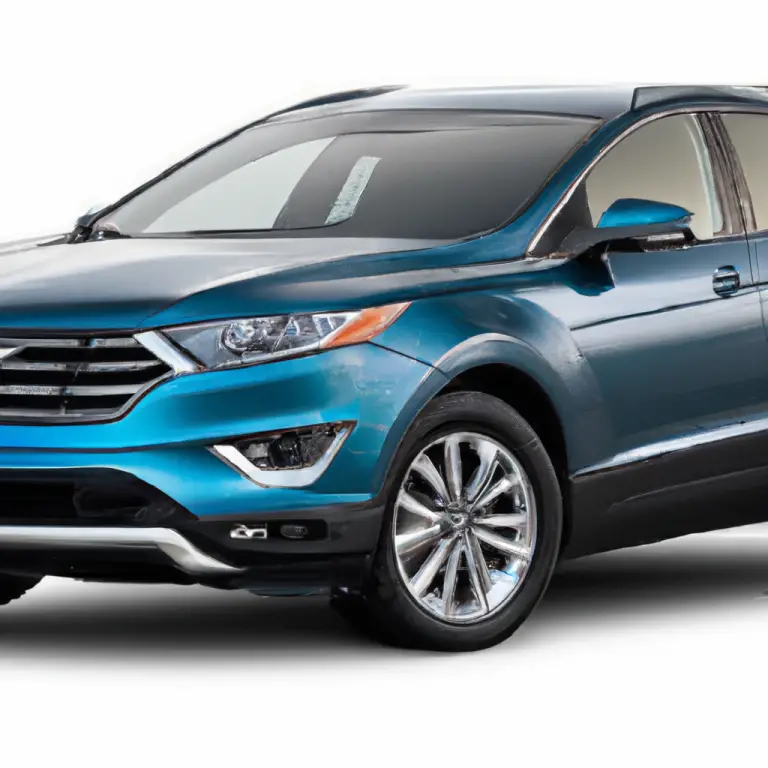
For nearly two decades, the Ford Edge has served as a cornerstone of the American mid-size SUV market, blending passenger comfort with sophisticated engineering. Since its debut, it has carved out a unique niche between the compact Escape and the three-row Explorer, offering a premium two-row experience that resonated with millions of families and professionals alike. However, with shifting manufacturer priorities and the aggressive move toward electrification, many drivers are asking if Ford is discontinuing the Edge and what that means for the future of this trusted nameplate. This article provides an expert analysis of Ford’s production shifts, the official status of the 2024 Edge, and a comprehensive guide to the professional alternatives remaining in the Ford lineup.
The Current Status of Ford Edge Production at the Oakville Assembly Plant

📤 Share Image
The manufacturing landscape at Ford is undergoing its most significant transformation in a generation. Central to this shift is the Oakville Assembly Plant in Ontario, Canada, which has been the exclusive home of the Ford Edge since its inception in 2006. In early 2024, the final North American Ford Edge rolled off the assembly line, marking the end of an 18-year production run across two highly successful generations. This cessation is not merely a product retirement but a strategic clearing of the deck for Ford’s “Model e” division.
Ford is currently executing a massive $1.8 billion investment to transform the Oakville facility into the “Oakville Electric Vehicle Complex.” This complete overhaul involves retooling the plant to produce next-generation battery-electric vehicles (EVs). From a professional manufacturing standpoint, this transition requires the total removal of internal combustion engine (ICE) tooling, explaining why production could not simply “wind down” slowly while an EV replacement was introduced.
For those in the market for a new vehicle, 2024 model year units represent the final opportunity to purchase a factory-new Edge. These units are currently available on dealer lots, but inventory is finite. It is important to note that while the Edge is leaving North America, the nameplate persists in the Chinese market with the “Edge L,” a longer, three-row variant produced by the Changan Ford joint venture. However, there are no plans to import this version to the U.S. or Canada.
By The Numbers: Oakville Transformation
Investment in EV Retooling
Years of Edge Production
Final Model Year
This discontinuation also necessitated a major change for the Edge’s luxury sibling, the Lincoln Nautilus. Previously built alongside the Edge on the shared CD4 platform, the all-new 2024 Nautilus has moved production to the Changan Ford plant in Hangzhou, China. This highlights Ford’s global strategy of consolidating platform production where it makes the most economic and logistics sense.

Strategic Reasons Why Ford Is Discontinuing the Edge Nameplate
As an industry expert, I can attest that the decision to retire a nameplate that consistently sells over 100,000 units annually is never made lightly. It is a calculated move driven by the “Ford+” growth plan. This strategy prioritizes high-margin, “iconic” internal combustion vehicles—such as the Bronco, Mustang, and F-150—while rapidly scaling the electric division. The Edge, while reliable and profitable, did not fit into either the “rugged icon” or the “pure EV” categories that Ford is betting its future on.
Several key factors influenced this professional business logic:
- Segment Saturation: the mid-size two-row crossover segment has become incredibly crowded. With the rise of the Mustang Mach-E, Ford found itself with two vehicles occupying nearly the same footprint. To reach a 2 million EV global production run rate by 2026, Ford needed to prioritize the Mach-E’s growth.
- Shifting Consumer Preference: Market data shows a distinct “bifurcation” of the SUV market. Buyers are either trending toward smaller, more efficient compact SUVs like the Escape or larger, three-row “adventure” vehicles like the Explorer. The mid-size two-row Edge sat in a middle ground that is slowly shrinking.
- Regulatory Pressures: Tightening Corporate Average Fuel Economy (CAFE) standards require manufacturers to phase out older engine platforms. Replacing the Edge with more efficient hybrid or fully electric alternatives helps Ford meet these stringent federal requirements without incurring heavy fines.
Ford is streamlining its portfolio to reduce manufacturing complexity. By eliminating the CD4 platform in North America, they reduce the number of unique parts they must manage, directly increasing overall brand profitability and agility in a volatile market.

Legacy of Quality and Reliable Performance: The Edge Retrospective
The Ford Edge leaves behind a legacy of trusted performance. Throughout its tenure, it was celebrated for providing a “car-like” ride quality—a result of its unibody construction and sophisticated independent rear suspension. Unlike more utilitarian SUVs, the Edge offered a level of cabin quietness and road isolation that frequently rivaled premium luxury brands.
Mechanically, the Edge was a showcase for Ford’s powertrain versatility. The professional consensus often pointed to the 2.0L EcoBoost as the “sweet spot” for commuters, offering a balance of 250 horsepower and respectable fuel economy. For those seeking more expert-level driving dynamics, the 2.7L V6 EcoBoost in the Edge ST delivered a staggering 335 horsepower and 380 lb-ft of torque. The Edge ST, introduced in 2019, was notably the first SUV to be tuned by the Ford Performance team, proving that utility and speed were not mutually exclusive.
✅ Why Owners Loved the Edge
- Broad, comfortable seats designed for long-distance travel.
- Advanced SYNC 4A with a massive 12-inch vertical touchscreen.
- Consistently high JD Power Dependability scores.
- IIHS Top Safety Pick designations across multiple years.
❌ Known Challenges
- Lack of a dedicated hybrid powertrain option.
- Aging interior materials compared to newer rivals.
- Lower fuel economy than modern compact SUVs.
With over 2.5 million units sold in the U.S. alone, the Edge’s impact on the market cannot be understated. It pioneered many safety and convenience features that are now industry standards, such as blind-spot monitoring and hands-free liftgates. Its departure marks the end of an era for the “premium mainstream” SUV that didn’t require three rows to feel substantial.
Trusted Alternatives for Current Ford Edge Owners
For loyal Edge owners looking to stay within the Ford family, the current lineup offers several professional paths. Choosing the right successor requires an expert evaluation of your specific driving needs—whether that is cargo volume, fuel efficiency, or raw performance.
1. The Ford Explorer: This is the logical step up. If you frequently utilized the Edge’s cargo area or towed a small trailer, the Explorer offers an additional 14.4 cubic feet of space and a significantly higher 5,000-lb towing capacity. It provides a more commanding view of the road while maintaining the high-quality tech features Edge owners expect.
2. The Ford Escape PHEV: For those prioritizing urban mobility and efficiency, the Escape Plug-In Hybrid is the expert recommendation. It offers a complete electric range for daily commutes and overcomes the fuel efficiency drawbacks of the older Edge platform.
3. The Mustang Mach-E: If you enjoy the Edge for its modern, tech-forward feel and “just right” size, the Mach-E is its spiritual successor. With 0-60 mph times that outperform even the Edge ST, it provides a premium professional driving experience with zero emissions.
Market Impact: Resale Value and Professional Maintenance Outlook
One of the most common concerns regarding discontinued vehicles is the fear of plummeting resale value. However, historical market data suggests the opposite for popular, reliable nameplates. Vehicles like the first-generation Toyota Venza or the Ford Flex often maintain stable resale value because they offer a specific utility that newer models lack. Because the Edge occupies a “Goldilocks” size—larger than a compact but smaller than a three-row—demand on the used market is expected to remain high.
From a mechanical perspective, current owners should feel confident. Federal law typically mandates that manufacturers provide parts for at least 10 years after a vehicle is discontinued. Given Ford’s vast service network and the shared nature of many Edge components with other Ford models, professional maintenance will remain accessible and affordable well into the 2030s.
📋
Managing Your Edge Asset
If buying used, opt for Ford’s Gold Certified CPO program. This includes a 12-month/12,000-mile comprehensive limited warranty and a 7-year/100,000-mile powertrain limited warranty.
Utilize Ford’s trusted dealer network for scheduled maintenance. Consistent records from certified technicians significantly bolster resale value in the private market.
While parts are guaranteed, software updates for the SYNC 4A system may become less frequent over the next decade. Ensure your system is updated to the latest version now to maximize its reliable lifespan.
In summary, while the Ford Edge is officially retiring from North American production, it leaves behind a robust ecosystem of support. The 2024 models represent the pinnacle of this platform’s development—a complete and reliable SUV that continues to offer excellent value for those who act quickly.
Ford has officially confirmed the end of North American Edge production at the Oakville Assembly Plant in 2024. The decision is part of a broader corporate strategy to reallocate resources toward electric vehicle manufacturing and high-margin icons. Current owners can rely on Ford’s extensive service network for continued high-quality maintenance and parts availability. Explore our detailed comparisons of the Ford Explorer and Mustang Mach-E to find your ideal successor to the Edge, or contact your local trusted dealer to secure one of the final 2024 models today.
Frequently Asked Questions
Is 2024 the last year for the Ford Edge?
Yes, 2024 is the final model year for the Ford Edge in the North American market. Production at the Oakville Assembly Plant in Canada has concluded as Ford transitions the facility to produce next-generation electric vehicles. While the nameplate may persist in other global markets like China, it is being retired in the United States and Canada.
Will Ford dealerships still service the Edge after it is discontinued?
Absolutely. Ford’s professional service network will continue to provide maintenance, repairs, and warranty work for the Edge for years to come. Manufacturers typically ensure that OEM parts remain available for at least a decade after a vehicle’s final production run, ensuring your vehicle remains reliable and safe to drive.
What vehicle is replacing the Ford Edge?
There is no direct one-to-one ICE replacement for the Edge; however, Ford is positioning the Mustang Mach-E as its primary mid-size two-row offering. For those who prefer internal combustion, the Ford Explorer offers more space and capability, while the Ford Escape serves as a slightly smaller, more fuel-efficient alternative.
Why did Ford decide to stop making the Edge?
The decision is primarily strategic. Ford is streamlining its professional portfolio to focus on high-growth segments, including electric vehicles and off-road ‘icons’ like the Bronco. Retooling the Edge’s assembly plant for EV production allows Ford to scale its electric division more efficiently to meet future regulatory and market demands.
Is the Lincoln Nautilus also being discontinued?
While the North American production of the Lincoln Nautilus (the Edge’s luxury counterpart) has ended at the Oakville plant, the nameplate itself is not being discontinued. The all-new 2024 Lincoln Nautilus is now manufactured in China and exported to North America, featuring a significantly updated interior and a hybrid powertrain option.