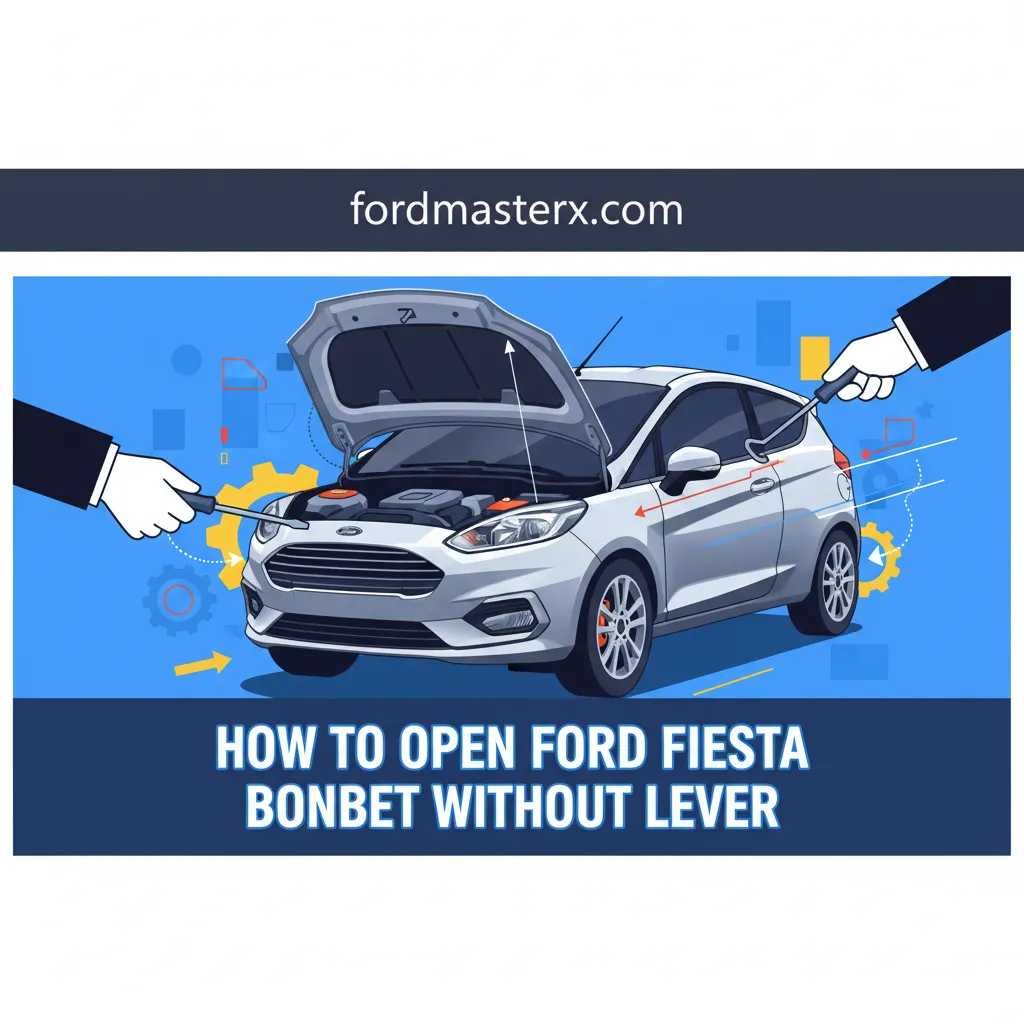
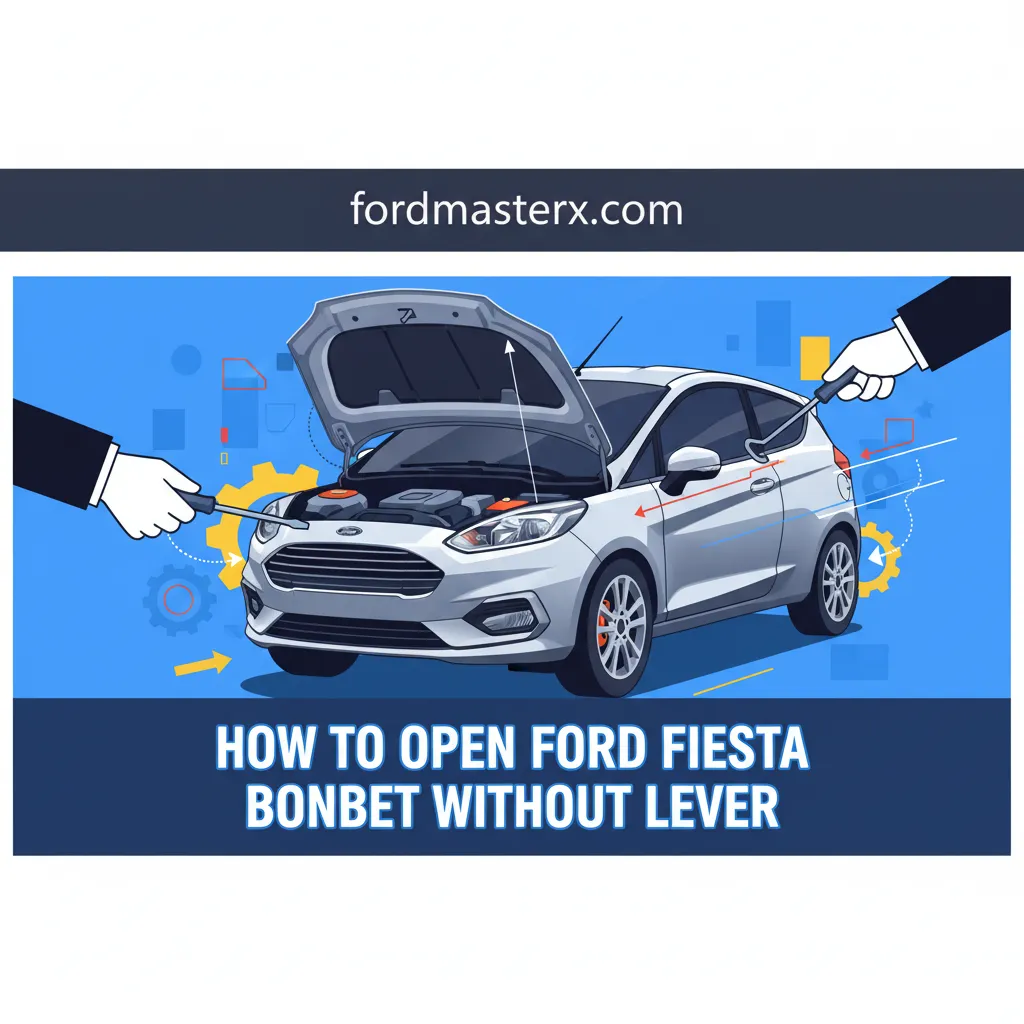
How To Open Ford Fiesta Bonnet Without Lever: Emergency Entry And Repair Guide

Discovering that your Ford Fiesta’s bonnet lever has gone limp or snapped is a critical failure that prevents essential maintenance and emergency checks. When the interior release cable fails, you are effectively locked out of the engine bay, making it impossible to check oil levels, top up coolant, or jump-start a dead battery. This situation often occurs at the worst possible moment—during a breakdown or before a long journey. However, a broken handle does not necessitate a trip to the dealership on a flatbed. This guide will teach you the professional techniques required to bypass the broken lever, understand the underlying mechanical failure, and master the steps to restore full functionality to your vehicle’s entry system using industry-standard recovery methods.
Understand the Ford Fiesta Bonnet Latch and Cable Architecture
📤 Share Image
The Ford Fiesta, spanning the popular Mk6, Mk7, and Mk8 generations, utilizes a traditional Bowden cable system to facilitate bonnet release. This system relies on a multi-strand steel inner wire encased in a flexible outer housing. When you pull the interior lever, you create tension that translates into lateral movement at the primary latch located on the slam panel. To explore the mechanics further, one must realize that this tension is finely balanced; any deviation in the cable’s integrity or the latch’s resistance results in a system failure.
Primary Failure Points
Through years of diagnostic experience, we have identified two recurring culprits. First is the plastic clevis pin at the interior footwell lever. This component often fatigues over time, eventually snapping under the load required to actuate the latch. Second is the corrosion-prone spring return at the bonnet slam panel. In environments where road salt is prevalent, the latch pivot can seize, significantly increasing the force required to pull the handle and ultimately leading to a mechanical break.
By The Numbers
Failures at the Interior Handle
Cable Tensile Strength Rating
Diagnosing the Failure
Before attempting an exterior bypass, you must understand the nature of the break. Differentiate between a ‘stretched’ cable—which feels spongy but still offers some resistance—and a ‘snapped’ cable that offers zero resistance and may even hang loosely from the kick panel. To confirm, use needle-nose pliers to grasp the cable end at the interior lever junction. If pulling the inner wire with pliers releases the bonnet, your failure is isolated to the plastic handle. If the wire pulls out of the housing entirely, the break is likely at the latch end.
Consider a common case involving a 2012 Fiesta where heavy road salt caused the latch pivot to seize. The owner, unaware of the resistance, applied excessive pressure to the interior handle, causing the plastic housing to shatter. In this scenario, the primary failure was the latch, while the broken handle was merely a symptom of the underlying corrosion.

Explore the Front Grille Access Method for Emergency Release
If the interior handle or cable has failed completely, the most direct path to the engine bay is through the front grille. This method requires a comprehensive understanding of the latch’s physical location. On most Fiesta models, the latch sits directly behind the Ford badge or slightly offset to the driver’s side. To discover the release point, you will need to peer through the honeycomb mesh of the upper grille using a high-intensity flashlight.

📋
Grille Entry: Step-by-Step
Identify the primary latch arm through the grille gaps. On a standard Fiesta, these gaps are 12mm to 15mm wide, allowing for a tool diameter of less than 8mm.
Insert a long-reach flathead screwdriver or a custom-bent wire hook through the honeycomb. Aim for the metal pivot arm where the cable originally attached.
Apply lateral or clockwise force (depending on your specific Mk model) to the locking pawl. You should hear a distinct ‘click’ as the bonnet pops onto its safety catch.
To master this technique without damaging the plastic grille fins, it is helpful to use a borescope camera paired with your tool. This allows you to verify that the tool is seated on the correct metal lever rather than a plastic shroud. Many beginner DIYers make the mistake of pushing against the radiator shroud, which provides no leverage and risks breaking expensive plastic components. Once the primary latch is tripped, the secondary safety catch remains functional, requiring you to reach under the center of the bonnet edge to release it as normal.
Master the Underside Access Technique via the Engine Splash Shield
In scenarios where the upper grille is obstructed by an aftermarket intercooler, accessory lights, or a specific trim level that uses a tight mesh, you must explore access from beneath the vehicle. This method is often preferred by professional mechanics because it provides a more direct line of sight to the cable routing. Safety is paramount here; ensure the vehicle is safely elevated on jack stands before attempting to work underneath.
Never attempt to reach into the engine bay while the engine is hot. The cooling fan can activate automatically, even with the ignition off, posing a severe risk of injury. Ensure the vehicle is fully cooled before proceeding.
Accessing the Slam Panel from Below
The Ford Fiesta Mk7 requires the removal of seven T30 Torx screws to fully drop the front section of the engine splash guard (aerodynamic tray). Once this shield is removed, a vertical path becomes available between the radiator assembly and the front bumper beam. You can reach upward toward the underside of the slam panel to locate the cable housing. By popping the cable out of its routing clips, you gain enough slack to pull the inner wire directly, bypassing the broken interior lever entirely. This ‘reach-up’ method is highly effective because it applies force directly to the latch in the same direction as the original cable intended.
Direct Leverage
Pulling the cable from below applies the exact tension needed without damaging exterior trim.
Mechanical Inspection
Allows you to inspect the latch condition and cable routing simultaneously during the entry.
Learn How to Replace and Calibrate a New Release Cable Assembly
Once you have successfully opened the bonnet, the focus shifts to a permanent resolution. Operating a vehicle with a makeshift release is unsafe and inconvenient. Replacing the cable is a comprehensive process that involves threading the new assembly through the firewall grommet. A professional trick is to use the old cable as a ‘pull-through’ wire; tape the new cable to the old one inside the engine bay and pull from the footwell to guide it through the complex dash structure.
Lubrication and Tension Calibration
Before installation, master the art of cable preparation. Use white lithium grease or a high-performance bicycle brake cable lubricant for smoother operation, especially in extreme cold climates. After seating the cable into the interior handle housing, you must adjust the tension at the latch end. The goal is to achieve 3-5mm of ‘free play’ at the handle. If the cable is too tight, the bonnet may not latch securely; if it is too loose, the lever won’t have enough throw to release the locking pawl.
Finally, check the alignment of the bonnet bump stops. If these rubber stoppers are wound out too far, they place excessive vertical tension on the latch, which is a leading cause of cable snap. Adjust them so the bonnet sits flush with the wings but closes with a solid, effortless thud. Always test the mechanism while the bonnet is still open by manually clicking the latch shut with a screwdriver and pulling the interior lever to ensure it releases cleanly.
Discover Preventative Maintenance Strategies for Ford Latch Systems
Preventing a recurrence of this mechanical lockout is significantly easier than performing an emergency entry. To understand the longevity of your vehicle’s entry system, establish a bi-annual inspection routine. Statistics show that regularly lubricated latches have a 400% longer service life compared to those left dry and exposed to the elements. This is especially true for vehicles in coastal regions or areas with heavy winter road brine, which accelerates corrosion of the exposed latch components.
✅ Pros of Upgrading
- Eliminates weak plastic parts
- Provides better tactile feedback
- Resists heat deformation
- Lifetime durability
❌ Cons of Neglect
- Sudden cable snapping
- Expensive locksmith fees
- Potential grille damage
- Inability to check fluids
Recognizing early warning signs is essential. If you notice increased resistance in the handle, a ‘crunchy’ feeling when pulling, or the bonnet failing to pop up on the first try, the system is signaling an imminent failure. For a permanent ‘bulletproof’ fix, many experts recommend upgrading the plastic interior lever to an aftermarket aluminum version. This eliminates the weakest link in the chain. Incorporating a latch cleaning and greasing into your seasonal tire change checklist ensures that you are never caught off guard by a seized mechanism.
In summary, emergency access to your Ford Fiesta’s engine bay can be achieved through the front grille or from beneath the engine bay using specialized reach tools. Understanding the failure point—whether it is at the handle or the latch—is vital for an efficient repair process. By combining manual entry techniques with routine lubrication and tension adjustment of the Bowden cable system, you can prevent future mechanical lockouts. If you have successfully opened your bonnet using this guide, inspect your cable immediately and replace any frayed components with OEM-quality parts to ensure continued reliability. Master your car’s maintenance today to avoid being sidelined tomorrow.
Frequently Asked Questions
Can I open the bonnet if the cable has snapped right at the latch?
Yes, but it is more challenging. You must use a long screwdriver through the grille to manually push the release lever inside the latch assembly. This requires identifying the small metal tab that the cable usually pulls and moving it laterally to disengage the primary locking mechanism.
Will spraying WD-40 through the grille help if the latch is stuck?
While WD-40 is a penetrant and can help loosen a seized latch, it is not a long-term lubricant. If the latch is stuck, spray it liberally and wait 15 minutes before attempting the screwdriver bypass. Once open, you must clean the latch and apply a heavy-duty white lithium grease.
How much does it typically cost to have a mechanic fix a broken bonnet cable?
A professional repair usually costs between $150 and $300, depending on your region and the specific Fiesta model. This includes the cost of the OEM cable (approx. $30-$60) and 1.5 to 2 hours of labor for routing the cable through the firewall and interior trim.
Is it safe to drive with a broken bonnet release cable?
It is technically safe as long as the bonnet is securely latched. However, it is highly inadvisable because you cannot check fluid levels or address engine emergencies. If the bonnet is partially open and the cable is broken, do not drive, as wind lift could force it open.
What tools are absolutely necessary for an emergency bonnet opening?
You should have a set of long-reach flathead screwdrivers (at least 10 inches), a bright LED flashlight, a set of pliers, and ideally a borescope or inspection mirror. A T30 Torx bit is also required if you decide to approach the latch by removing the lower splash shield.