How Much Does A Truck Bed Weigh: Weight Ranges For Major Pickup Models

For fleet managers and truck enthusiasts alike, understanding the precise weight of a truck bed is critical for calculating payload limits and planning vehicle modifications. Whether you are prepping for a flatbed conversion, upgrading to a service body, or calculating the logistics of a restoration project, knowing the mass of the pickup box is the foundation of a successful build. While manufacturers provide total curb weights and Gross Vehicle Weight Ratings (GVWR), the specific weight of the pickup box as a standalone assembly is rarely listed in the owner’s manual, leading to dangerous guesswork during removals. This comprehensive guide provides an expert breakdown of truck bed weights across compact, half-ton, and heavy-duty segments, utilizing professional industry data to ensure your calculations are reliable and trusted.
Primary Factors Influencing Total Truck Bed Weight
In my 15 years of industry experience, I have observed that technicians often underestimate the complexity of a pickup box assembly. It is not merely a hollow shell; it is a highly engineered structural component designed to withstand thousands of pounds of static and dynamic force. The weight of this assembly is dictated by four primary variables: material, dimensions, structural reinforcement, and integrated electronics.
📤 Share Image
Material Composition: Steel vs. Aluminum
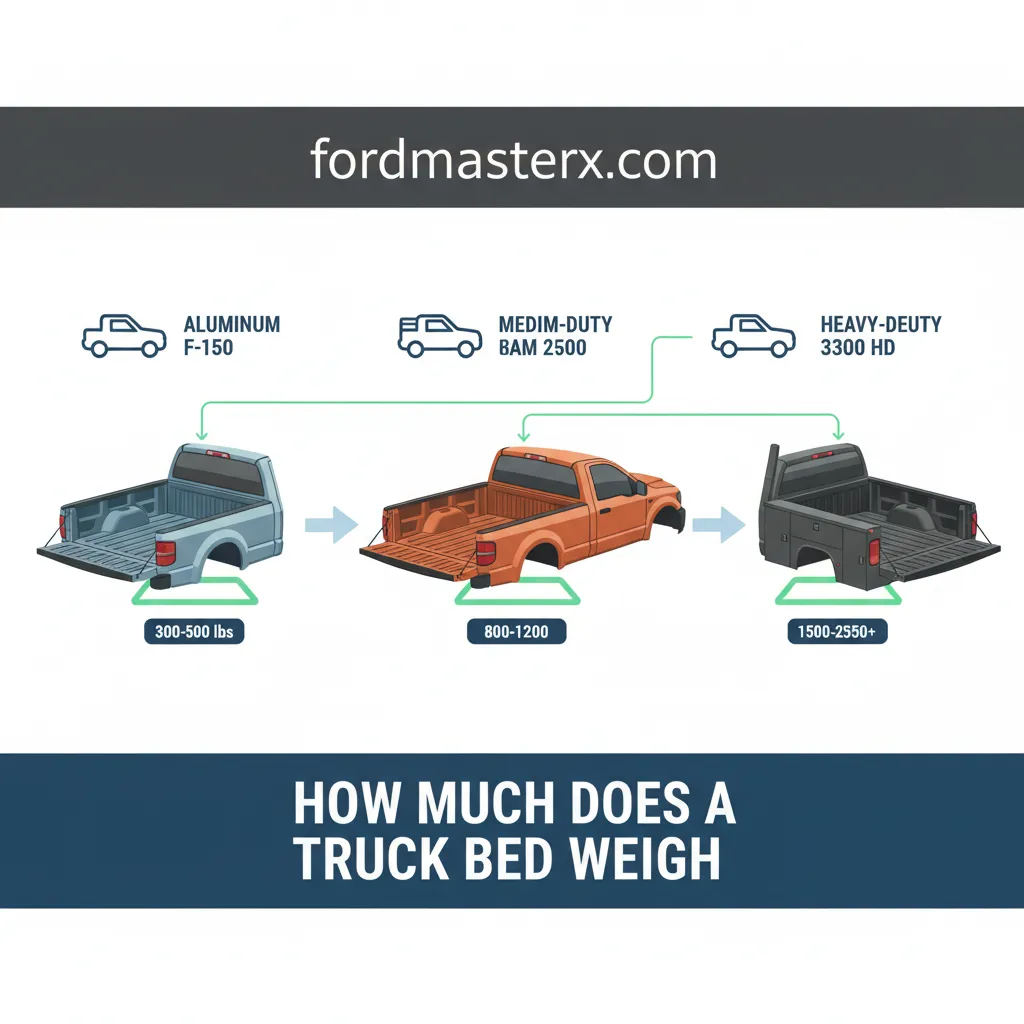
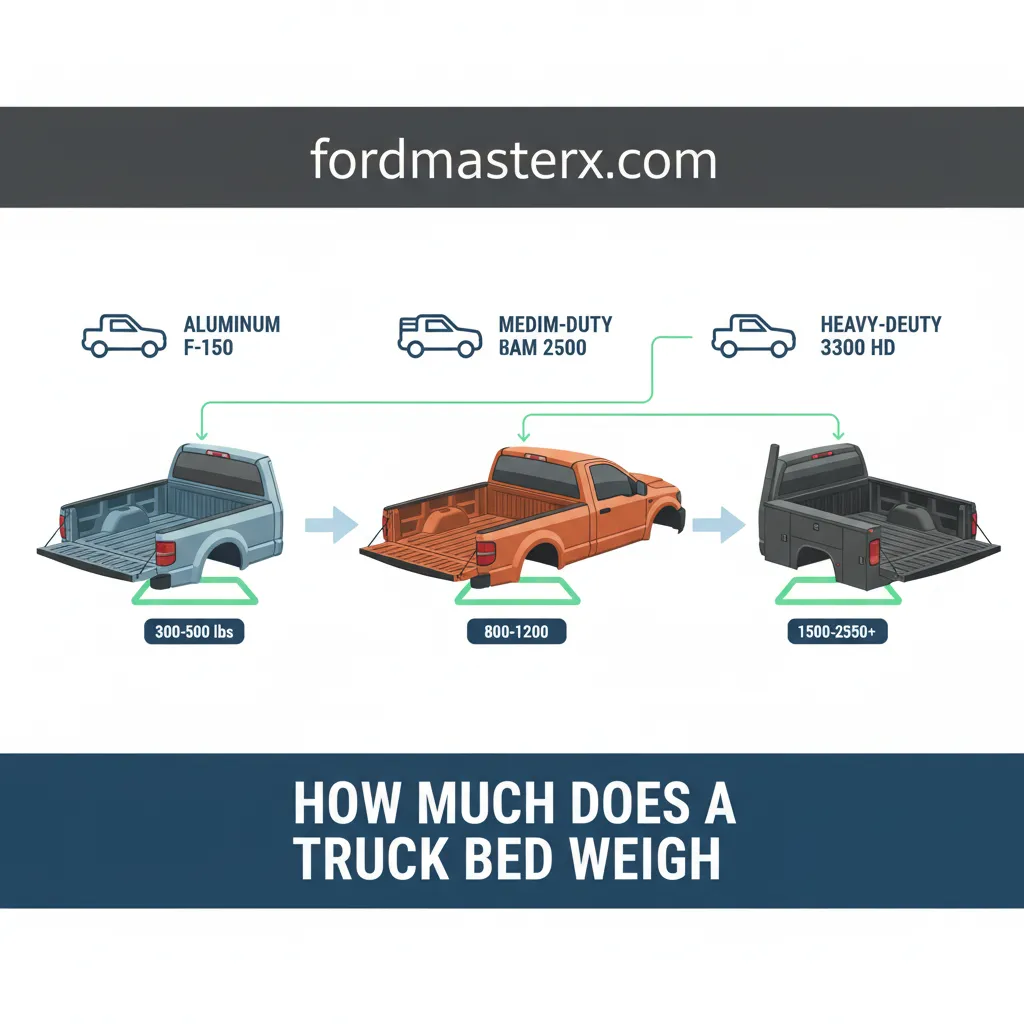
The most significant shift in recent manufacturing history is the transition from high-strength roll-formed steel to military-grade aluminum alloys. Steel beds typically weigh 30% to 40% more than their aluminum counterparts. For instance, a traditional Chevrolet Silverado bed uses roll-formed steel to maximize durability against impact, whereas the Ford F-150 (since 2015) uses a 6000-series aluminum alloy. This material choice alone can account for a weight variance of over 100 lbs for beds of the same length.
Dimensional Variance and Structural Reinforcement
Bed length is not just about floor space; it exponentially increases the structural weight of the assembly. An 8-foot long bed is not just 1.5 feet longer than a 6.5-foot bed; it requires additional cross-members and longer, heavier side panels to maintain rigidity. An 8-foot long bed adds approximately 100-150 lbs over a short bed version due to these reinforcements. These cross-members, along with the bulkheads and wheel wells, form the “skeleton” of the bed and contribute significantly to the overall mass.
By The Numbers: Material Comparison
Weight Premium for Steel
Avg. Increase for 8ft Bed
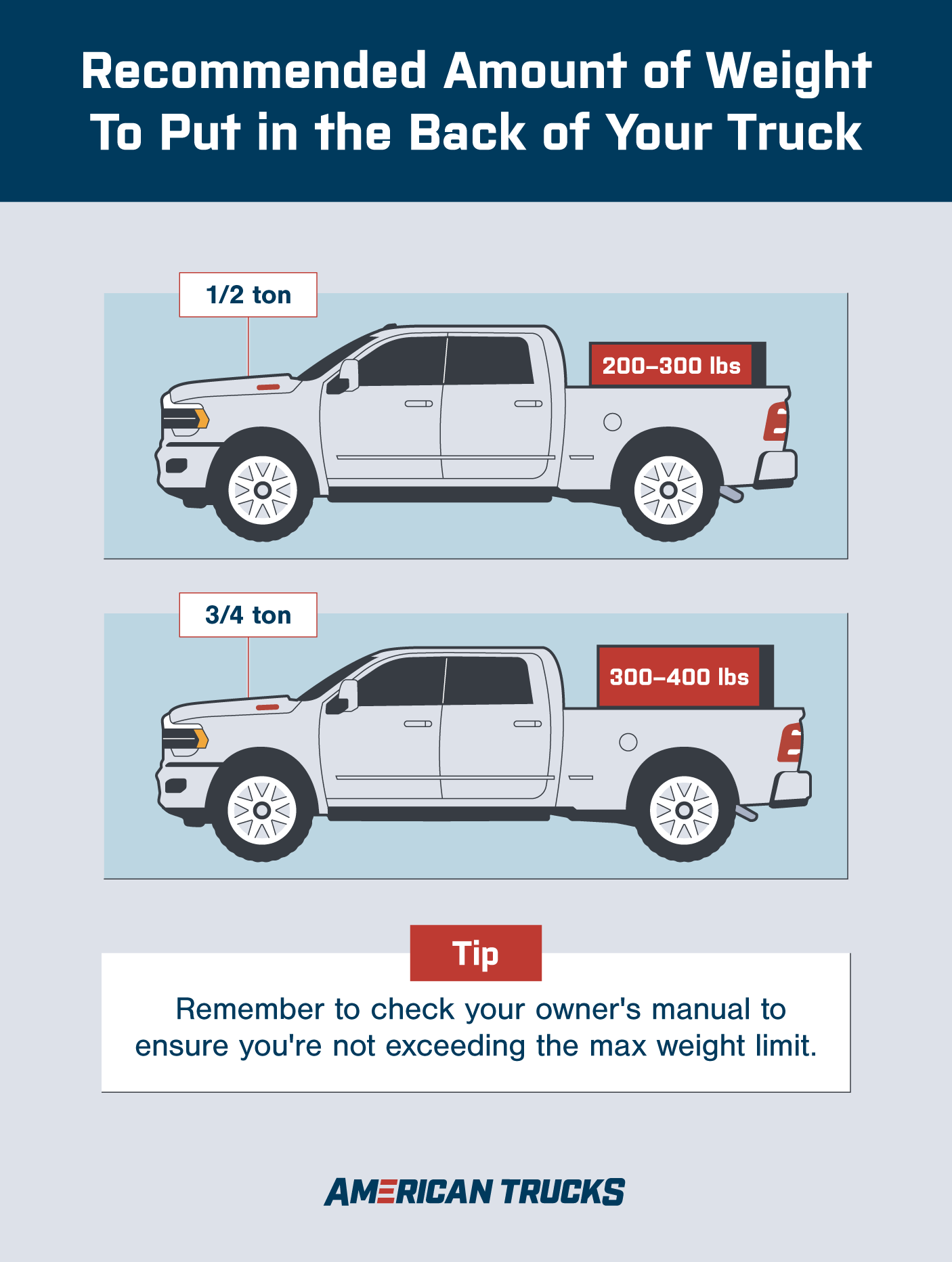
Average Weights for Mid-Size and Compact Truck Beds
The mid-size segment—including the Toyota Tacoma, Chevrolet Colorado, and Ford Ranger—presents a unique set of weight variables. For owners looking to perform a flatbed conversion or optimize their overlanding rig, understanding these weights is critical for maintaining an ideal weight-to-payload ratio. Mid-size truck beds generally range from 150 lbs to 250 lbs.
The Toyota Tacoma Composite Bed
A standout in this category is the Toyota Tacoma. Unlike its competitors that use traditional steel or aluminum, the Tacoma features a sheet-molded composite (SMC) bed. This material is inherently lighter and corrosion-resistant. A Tacoma 5-foot composite bed weighs roughly 160 lbs without the tailgate. When you compare this to the Ford Ranger’s steel construction, the weight savings are substantial, allowing for a higher net payload despite the smaller vehicle footprint.
Configuration Impact: Crew Cab vs. Extended Cab
In the mid-size world, the choice between a 5-foot bed (typically found on Crew Cabs) and a 6-foot bed (found on Extended/Access Cabs) results in a weight difference of approximately 30-50 lbs. While this may seem negligible, it matters when you are operating near the vehicle’s GVWR. For professional upfitters, removing a factory bed and replacing it with an aluminum flatbed can actually result in a “weight-neutral” modification if the factory bed was a heavier steel unit.
Toyota Tacoma (5ft)
Weight: ~160 lbs. Material: SMC Composite. Best for weight optimization.
Chevrolet Colorado (5ft)
Weight: ~210 lbs. Material: Roll-formed steel. Traditional durability.
Standard Half-Ton Full-Size Truck Bed Weight Specifications
The half-ton market (F-150, Silverado 1500, Ram 1500) is where we see the most significant engineering divergence. As a guide for those managing fleet logistics, it is imperative to distinguish between the bare “box” weight and the “fully dressed” weight, which includes tailgates, wiring harnesses, and lights.
Ford F-150 (2015-Present) Aluminum Bed
Ford’s transition to aluminum in 2015 redefined weight expectations. A standard 6.5-foot aluminum bed for an F-150 weighs approximately 200-220 lbs. This is remarkably light for its size, but it requires specific handling during removal to avoid warping the panels. In contrast, the Ram 1500 and Silverado 1500 still utilize high-strength steel for their beds, which results in a weight of approximately 300-350 lbs for a similar 6.5-foot configuration.
The “Tailgate Factor”
One of the most common pitfalls in estimating bed weight is forgetting the tailgate. Modern tailgates are no longer just metal slabs; they contain torsion bars, power-release motors, integrated steps, and cameras. A modern tailgate can weigh between 40 and 70 lbs. If you are removing a bed for shipping or storage, ensure you account for this additional mass. A “fully dressed” steel bed with a tailgate and bedliner can easily exceed 450 lbs.
When removing a bed for a flatbed conversion, always disconnect the wiring harness at the main junction block near the spare tire before unbolting. This prevents damage to the 10-15 lbs of integrated electrical wiring that is often forgotten during the lifting process.
Heavy-Duty (HD) and Long-Bed Truck Weight Requirements
In the 2500 and 3500 series heavy-duty segment, the truck bed is built for maximum durability and high-tonnage hauling. These beds are often the first things removed by commercial fleets to install specialized service bodies or flatbeds, making their weight a reliable data point for calculating final chassis-cab payload capacity.
The 8-Foot Long Bed and Dually Variations
An 8-foot heavy-duty steel bed is a massive assembly. These beds can weigh between 400 lbs and 550 lbs. If the truck is a “dually” (Dual Rear Wheel), the bed weight increases further. Dually fenders, which are often made of heavy fiberglass or reinforced plastic, add an estimated 40-60 lbs to the total width and mass of the bed. Removing a dually bed from a Silverado 3500, for example, is a three-person job or requires a dedicated overhead hoist due to the awkward center of gravity.
Impact of Liners and Protective Coatings
The “as-delivered” weight of an HD bed is also influenced by aftermarket protection. A thick, spray-on bedliner (like Line-X or Rhino Liner) adds approximately 40-70 lbs of weight to the bed floor and sides. While this provides quality protection, it must be subtracted from your total payload capacity if you are running close to your GVWR limits.
Technical Impact of Bed Weight on GVWR and Vehicle Dynamics
As an expert in vehicle dynamics, I cannot overstate the importance of how bed weight—or the lack thereof—affects your truck’s performance. The pickup box is not just for storage; it acts as a critical counterweight for the heavy engine located over the front axle.
Calculating Payload and Center of Gravity (CoG)
Payload capacity is calculated by subtracting the curb weight (which includes the factory bed) from the GVWR. If you remove a 400 lb steel bed and replace it with a 200 lb aluminum flatbed, you have effectively increased your legal payload by 200 lbs. However, removing the bed shifts the weight distribution of the vehicle by 5-8% toward the front. This changes the center of gravity, which can result in “tail-happy” handling and reduced braking stability under empty conditions.
Rear Axle Weight Distribution and Ballast
A common scenario involves a contractor removing a 400 lb bed and seeing an immediate change in rear-wheel traction. Without the weight of the bed over the rear axle, there is less downward force on the tires. In rain or snow, this can be dangerous. Operating a truck without its factory bed often requires 200 lbs of ballast (such as sandbags or a weighted frame) to maintain safe winter driving traction and proper suspension cycling.
Never attempt to lift a truck bed with a single-point hoist attached to the center of the bed floor. The floor is not designed to support the entire weight of the assembly from a single point and will buckle. Always use a four-point lifting harness attached to the corner tie-downs or bed bolts.
📋
Professional Removal Check-List
Unplug the main taillight harness and any auxiliary power outlets or camera cables located in the tailgate.
Removing the 50-70 lb tailgate first makes the bed significantly easier to balance and reduces the risk of back injury.
In summary, truck bed weights vary significantly based on material and size, ranging from a light 150 lbs for aluminum mid-size beds to over 500 lbs for heavy-duty steel long beds. Material choice, specifically the shift from steel to aluminum, remains the single largest factor in weight reduction across the industry. When calculating the total mass of a removed bed, always account for the weight of tailgates, liners, and integrated hardware. If you are planning a flatbed conversion or need quality replacement parts, consult with a trusted professional to ensure your modifications meet GVWR safety standards and maintain vehicle stability.
Frequently Asked Questions
How much does a 6.5-foot Ford F-150 bed weigh?
A modern aluminum 6.5-foot Ford F-150 bed weighs approximately 200 to 220 pounds. This is significantly lighter than the pre-2015 steel versions, which typically weighed over 300 pounds. This weight reduction is a key factor in the F-150’s increased payload capacity and improved fuel efficiency across the lineup.
Can two people lift a truck bed off the frame?
While two people may be able to lift a light aluminum or composite mid-size bed, it is not recommended for safety reasons. A standard steel full-size bed weighs between 300 and 400 pounds, requiring at least four people or a professional hoist to remove safely without damaging the bed or causing personal injury.
Does removing the truck bed improve gas mileage?
Removing the truck bed reduces the vehicle’s curb weight, which can marginally improve fuel economy. However, the loss of aerodynamics—as the bed helps manage airflow over the rear—often offsets the weight benefits. Furthermore, the loss of rear-axle weight can negatively impact traction and braking performance on most pickup platforms.
What is the weight of a standard truck tailgate?
A standard professional-grade tailgate typically weighs between 40 and 70 pounds. Tailgates equipped with integrated steps, electronic locking mechanisms, or power-lift motors will be at the higher end of that range. This weight should always be subtracted if you are weighing only the ‘box’ or ‘shell’ of the truck bed.
How much weight does a spray-in bed liner add?
A high-quality spray-in bed liner typically adds between 40 and 60 pounds to the total weight of the truck bed. This weight depends on the thickness of the application and the specific polyurea or polyurethane material used. While it adds mass, it is a trusted method for protecting the structural integrity of the bed.