Ford Transit Custom Battery Location And Access Procedures For Owners

Finding the battery in a Ford Transit Custom can feel like a scavenger hunt for drivers accustomed to traditional engine bay layouts. The unconventional placement of the battery beneath the driver’s seat often leaves owners frustrated when they need a jump-start or a replacement. This professional guide provides the exact ford transit custom battery location, detailed access instructions, and the essential technical steps for maintenance and replacement to ensure your vehicle remains reliable on the road. Whether you are a fleet operator or a private owner, understanding this system is critical for long-term vehicle health.
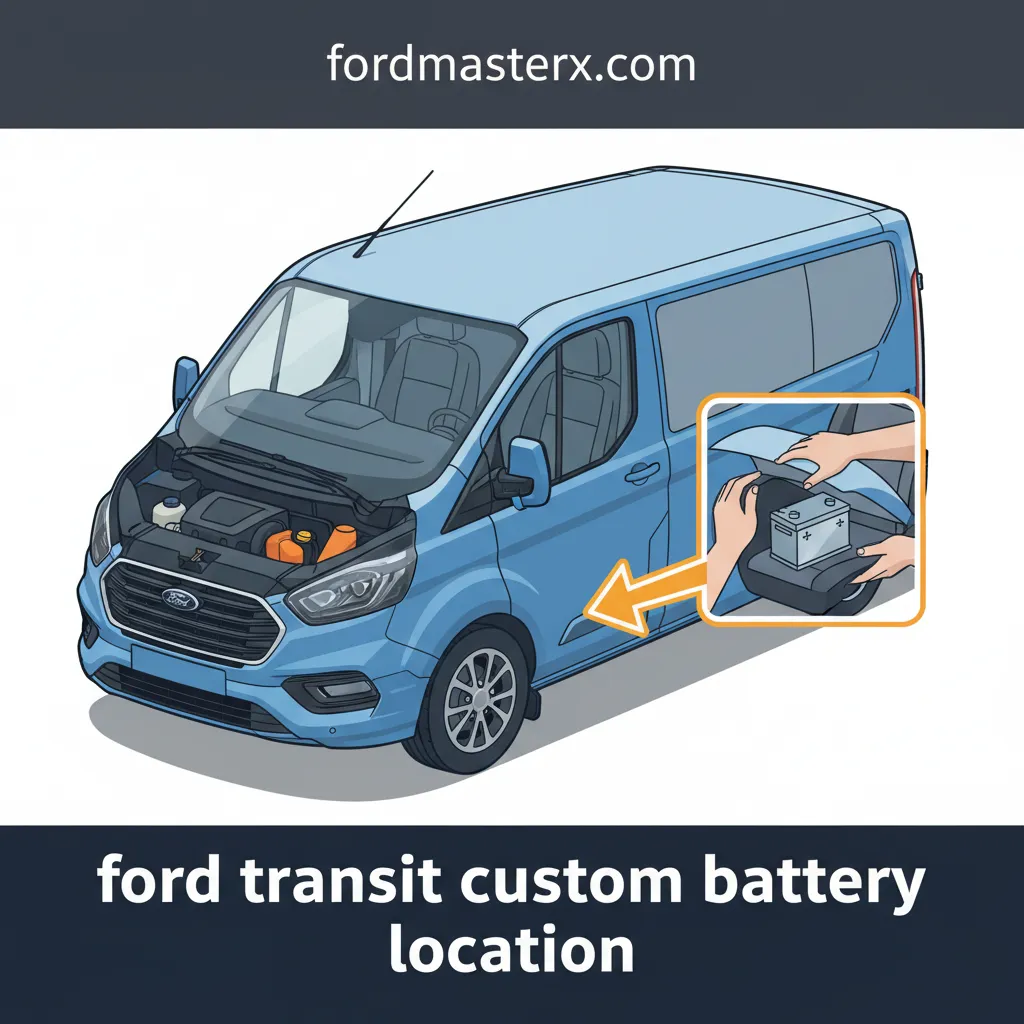
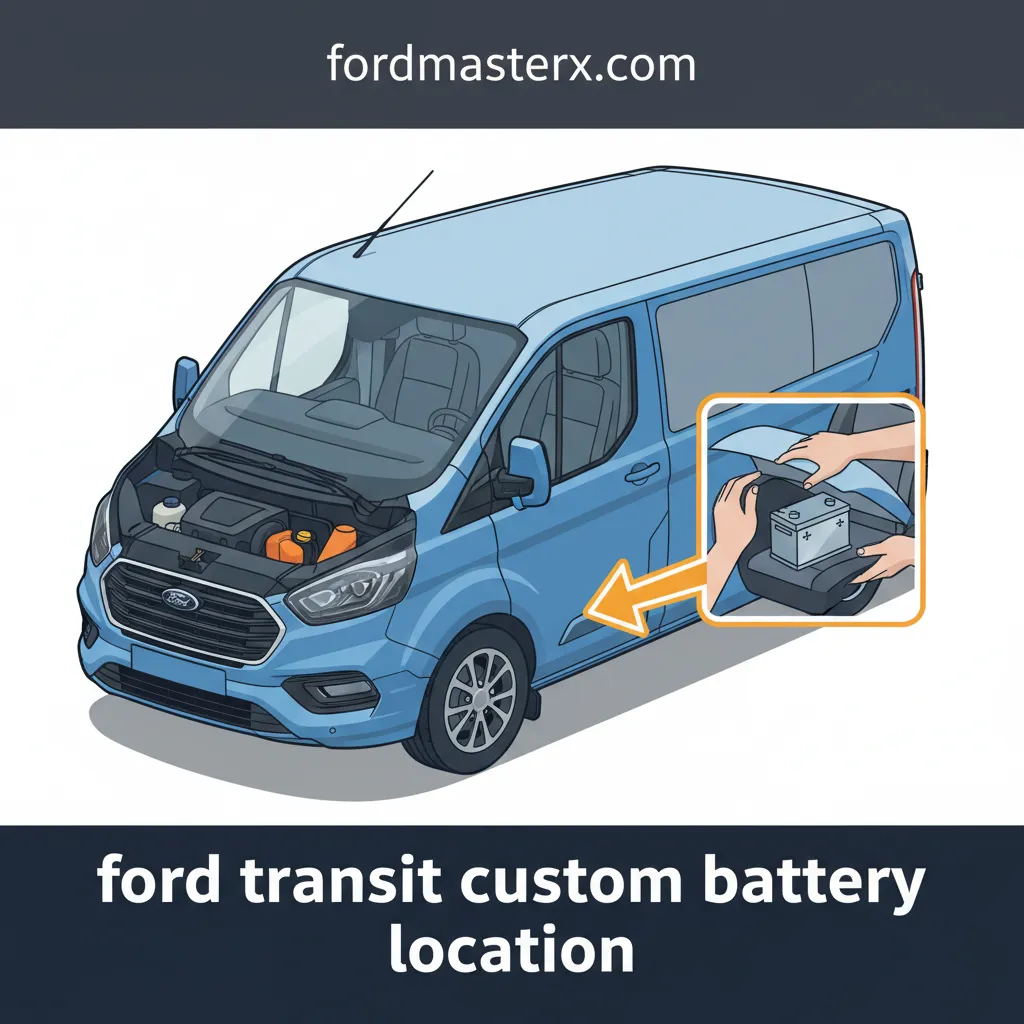
Identifying the Primary Ford Transit Custom Battery Location Under the Driver Seat
📤 Share Image
For the uninitiated, popping the hood of a Ford Transit Custom (2012–present) reveals a crowded engine bay where a battery is conspicuously absent. Approximately 95% of Ford Transit Custom models utilize an under-seat configuration. This design choice by Ford engineers optimizes engine bay space for the compact but complex EcoBlue engine components and emissions hardware. Regardless of whether your vehicle is a Right-Hand Drive (RHD) or Left-Hand Drive (LHD), the battery is always situated beneath the seat assigned to the driver.
To locate the housing, you must look at the base of the driver’s seat. You will notice a series of plastic trim panels and clips that conceal the compartment. On the 2018 facelift models and later, Ford adjusted the seat rail height slightly, which can make clearance for battery removal tighter than on earlier versions. Before you begin disassembly, you can often confirm the battery’s presence by peering through the gap between the seat cushion and the base; a bright red positive terminal cover is usually visible.
Differentiating Between Primary and Auxiliary Batteries
It is vital to distinguish between the starter battery and optional auxiliary setups. High-specification builds or camper conversions often feature a second battery. In these instances, the starter battery remains in the front-most position under the seat, while the auxiliary (leisure) battery sits directly behind it in the same compartment. Understanding this layout prevents the common pitfall of replacing the wrong unit when a “non-start” issue occurs.
By The Numbers
V362 Under-Seat Config
Model Introduction Year
Max Possible Batteries

📋
Step-by-Step Guide for Accessing the Battery
Acquire a T40 or T50 Torx bit for the seat rail bolts and a 10mm socket for the terminals. Slide the driver’s seat to its furthest forward and highest vertical position to maximize the rear access gap.
Trade vehicles often suffer from debris (screws, gravel) in the seat rails. Clear these before sliding the seat; if stuck, do not force it, as you risk damaging the motorized or manual gear mechanism.
Unclip the plastic battery cover shroud. Be gentle in cold climates to avoid snapping the brittle plastic. Carefully move the SRS (Airbag) wiring harness aside; never disconnect this with the ignition on to avoid fault codes.
When reassembling, ensure the seat rail bolts are torqued to 45Nm. Under-tightening can lead to seat movement during transit, while over-tightening can strip the floor pans’ threaded inserts.
Understanding the Twin Battery System vs Single Battery Setup
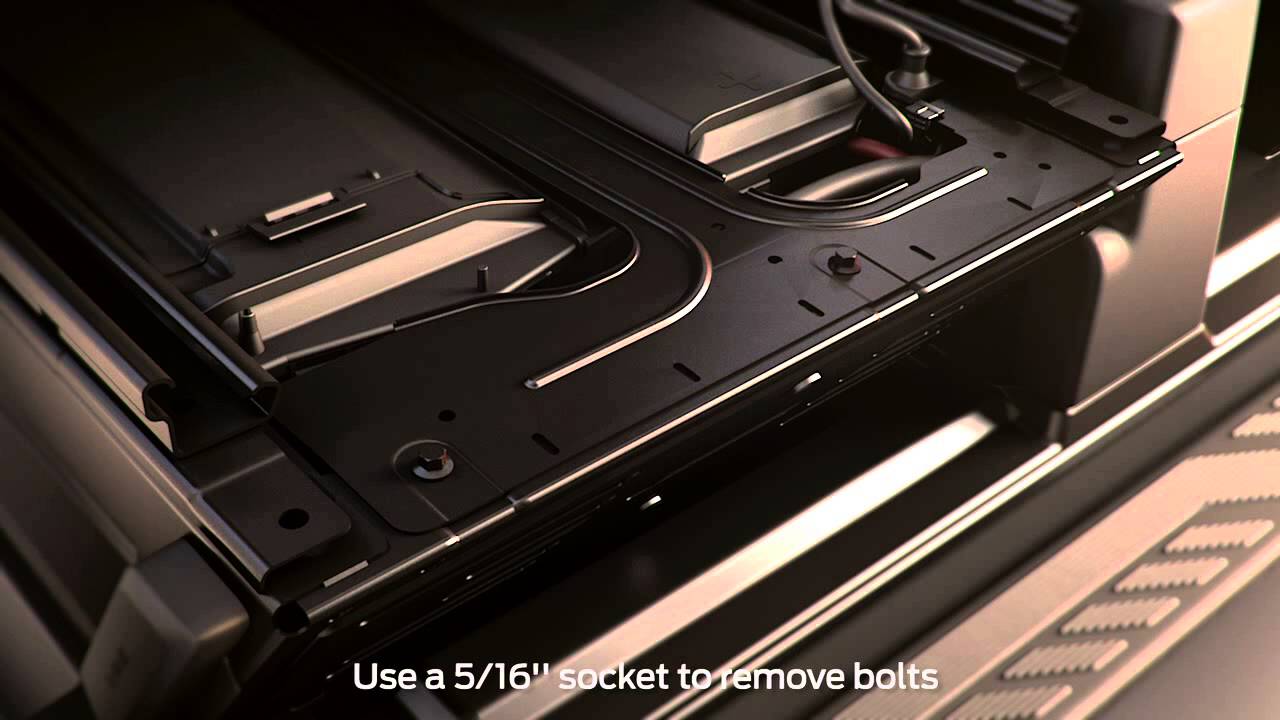
Modern Ford Transit Customs are increasingly equipped with Start-Stop technology, which necessitates the use of high-performance AGM (Absorbent Glass Mat) batteries. Unlike traditional flooded lead-acid units, AGM batteries are designed to handle frequent discharge and recharge cycles. Depending on the electrical load of your specific trim, you may find one or two batteries under that seat.
In a dual battery configuration, the functions are split. The first battery is dedicated to engine cranking (the starter battery), while the second manages auxiliary power, deep-cycle electronics, and the high electrical load of Euro 6 emissions systems. This setup is a lifesaver for tradespeople; for example, if you are running an inverter to charge power tools while the engine is off, the system will drain the auxiliary battery first, ensuring the starter battery retains enough voltage to crank the engine later.
Technical Specifications and Testing
The OEM components are typically 12V 75Ah to 80Ah units. If you suspect a failure, you must test both batteries. Because they are often connected in a parallel circuit via a relay, a failing auxiliary battery can “drag down” the starter battery over time. Use a multimeter to check the resting voltage; a healthy battery should read 12.6V or higher. Anything below 12.2V indicates a battery that is either discharged or reaching the end of its service life.
Jump Starting Locations and Engine Bay Connection Points
Crucially, the ford transit custom battery location under the seat is not where you should connect jump leads for an emergency start. Attempting to clamp leads directly to the battery under the seat is not only physically difficult due to the tight space but also dangerous for the vehicle’s electrical architecture.
Ford has provided dedicated jump-start points within the engine bay for safety and convenience. You will find the positive (+) jump-start point under a red flip-cap near the engine bay fuse box on the passenger side (RHD). For the negative (-) ground, look for a dedicated chassis bolt on the inner wing or a prominent unpainted bolt on the engine block. These points are specifically designed to handle high amperage without spiking the Body Control Module (BCM).
Never connect jump leads directly to the negative battery terminal under the seat. All Transit Customs feature a Battery Management System (BMS) sensor on the negative terminal. Connecting directly bypasses this sensor and can cause the alternator to incorrectly charge the battery, leading to a blown mega-fuse or electrical fires.
Battery Replacement and BMS Reset Requirements
Physically swapping the battery is only half the job in a modern Transit. Once a new unit is installed, the Battery Management System (BMS) must be reset. The BMS tracks the age and resistance of the battery to adjust the alternator’s charging profile. If you fail to reset the system, the van “thinks” the old, high-resistance battery is still installed and will continue to pump high voltage into your brand-new cell.
The consequences of neglecting this step are significant. A new battery can fail in as little as 6 months due to overcharging, and features like Start-Stop will remain disabled. You can perform a manual reset using a sequence of button presses (flashing the high beams and pumping the brake pedal), but for precision, using a professional OBD-II diagnostic tool like FORScan or a high-end workshop scanner is recommended. This ensures the vehicle knows the exact Ah capacity of the new unit.
✅ Why Reset BMS?
- Prevents overcharging
- Extends battery life by 25%
- Restores Start-Stop function
- Calibrates alternator output
❌ Risks of DIY Swaps
- Premature cell death
- SRS/Airbag fault codes
- Incorrect charging profiles
- Loss of radio/sync settings
Finding Professional Battery Services Serving Your Local Community
While the physical replacement is manageable for a dedicated DIYer, the technical intricacies of the Transit Custom’s electrical system often warrant professional intervention. Locating a trusted local technician who specializes in Ford electrical systems is often the most cost-effective path. A professional can perform a high-amperage load test to determine if your battery is truly failing or if the issue lies within the alternator or a parasitic drain.
Using a specialist nearby offers several advantages. Many mobile mechanics are now serving local areas with full OBD-II diagnostic capabilities, allowing them to perform the swap and the BMS reset at your home or job site. Furthermore, purchasing from a local trade counter ensures you receive a fresh, high-quality AGM unit with an available local warranty. This is far more convenient than dealing with the shipping hazards and returns associated with ordering heavy batteries online. Supporting a local garage that understands the nuances of the V362 chassis ensures your van stays on the road with minimal downtime.
Local Specialist Speed
Most local experts can complete a Ford Transit Custom battery swap and digital reset in under 45 minutes.
On-Site Coding
Mobile mechanics bring the diagnostic tools to you, accessible at your location, eliminating the need for a tow.
In summary, the battery in a Ford Transit Custom is strategically located under the driver’s seat to maximize engine bay efficiency, requiring specific tools like Torx bits for access. Remember that jump-starting should always be performed using the dedicated terminals in the engine bay to avoid damaging the BMS. Finally, professional BMS resetting is a non-negotiable step after any battery replacement to ensure vehicle longevity and performance. If you are unsure about the health of your electrical system, contact a technician nearby to perform a professional battery load test today.
Frequently Asked Questions
Can I access the Ford Transit Custom battery without removing the seat?
You can access the terminals by sliding the seat fully forward and removing the plastic shrouds, but for a full replacement, most technicians find it necessary to unbolt the seat rails. This provides the clearance needed to lift the heavy battery out of its recessed tray without damaging surrounding trim or wiring harnesses.
What happens if I don’t reset the BMS after changing the battery?
The Battery Management System (BMS) tracks the age and health of the battery to regulate alternator output. If not reset, the system continues to charge the new battery as if it were an old one. This often leads to overcharging, reduced battery lifespan, and the persistent disabling of fuel-saving features like Auto Start-Stop.
Where is the second battery located in a twin-battery Transit Custom?
In a factory twin-battery setup, both batteries are typically housed in the same compartment beneath the driver’s seat. They sit side-by-side in an enlarged tray. The front battery usually handles the engine starting, while the rear battery powers the vehicle’s auxiliary systems and accessories, managed by a split-charge relay.
Is there a jump start point in the engine bay?
Yes, Ford provides a remote positive terminal in the engine bay, usually identified by a red plastic flip-top cover near the fuse box on the driver’s side. The negative connection should be made to a dedicated grounding stud on the vehicle chassis, not directly to the battery, to protect the sensitive electronic control units.
Which battery type does the Ford Transit Custom require?
Most Ford Transit Custom models, especially those with Start-Stop technology, require an H7 or H8 sized AGM (Absorbent Glass Mat) battery. It is vital to check your specific VIN or the existing label, as using a standard lead-acid battery in an AGM-designed system will lead to rapid degradation and potential charging errors.