Ford Ranger Fuse Box Diagram: Troubleshooting and Identification

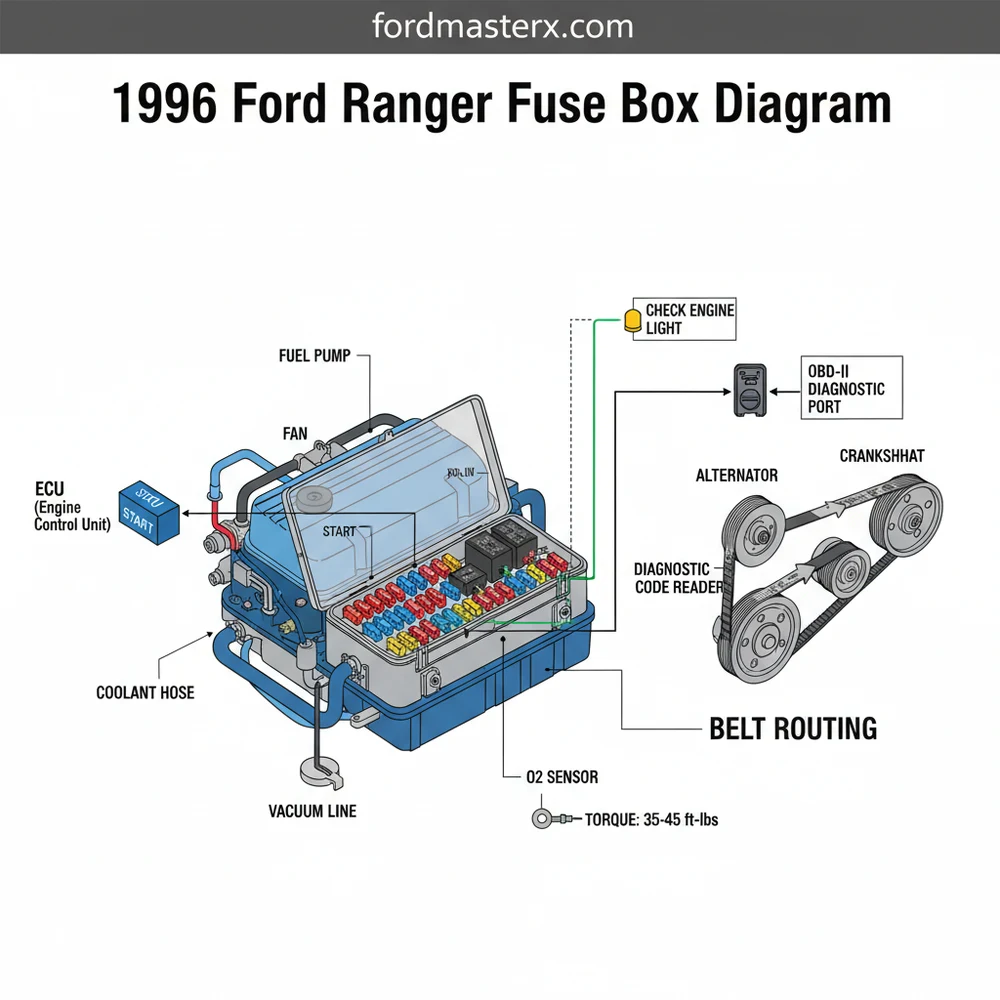
The 1996 Ford Ranger features two main fuse panels: the interior fuse box located behind a removable panel on the driver’s side dashboard and the power distribution box in the engine compartment near the battery. These panels house critical fuses for the ECU, lighting, and internal accessories.
📌 Key Takeaways
- Locate both the cab fuse panel and the engine bay power distribution box.
- The ECU fuse is vital for engine operation and preventing stall conditions.
- Always use the correct amperage to avoid electrical fires or circuit damage.
- Follow the manufacturer’s torque spec when tightening battery terminals or relay bolts.
- Reference the diagram when the OBD-II port fails to communicate with scanners.
Maintaining the electrical integrity of your vehicle requires a reliable 1996 Ford Ranger fuse box diagram to navigate the complex network of circuits that power everything from your headlights to the critical engine management systems. Whether you are a seasoned DIY mechanic or a first-time truck owner, understanding how your fuses and relays are organized is the first step in resolving electrical glitches that can stall your progress. This comprehensive guide provides a detailed breakdown of the fuse locations, amperage ratings, and functional descriptions for both the interior and engine bay panels. By the end of this article, you will be equipped to diagnose power failures, understand the relationship between your fuses and the ECU, and safely perform electrical repairs to keep your Ranger running smoothly.
Understanding the 1996 Ford Ranger Fuse Box Layout
The 1996 Ford Ranger utilizes two primary locations for its electrical protection system: the Passenger Compartment Fuse Panel and the Power Distribution Box located under the hood. The interior panel handles lower-amperage accessories like the radio, instrument cluster, and interior lighting, while the under-hood box manages high-current demands for the starter, cooling fans, and the Electronic Control Unit (ECU).
The 1996 model year is particularly significant because it falls within the early era of OBD-II (On-Board Diagnostics II) implementation. Consequently, the fuse box diagram is not just about lights and wipers; it is an essential map for the diagnostic systems that trigger your check engine light. If your OBD-II scanner cannot establish communication with the vehicle, a blown fuse in the interior panel is often the culprit, as the diagnostic port shares a circuit with other cabin accessories.
I/P Fuse Panel
Blower Motor
Headlamps
ABS Pump
PCM/ECU
Fuel Pump
A/C Clutch
Starter
Note: This is a simplified visual representation. Always refer to the underside of your fuse box cover for the specific factory-printed diagram.
The Power Distribution Box uses “Maxi” fuses for high-amperage circuits and standard relays for switching large loads. Each component is labeled with a number that corresponds to the master legend provided in the owner’s manual. It is vital to note that configurations may vary slightly based on whether your truck features the 2.3L I4, 3.0L V6, or 4.0L V6 engine, particularly regarding the cooling fan and A/C compressor circuits.
In the 1996 Ford Ranger, the fuse for the cigarette lighter (usually Fuse 17 or 22 in the interior panel) also provides power to the OBD-II diagnostic link connector. If your scan tool won’t turn on, check this fuse first!
Step-by-Step Guide: How to Read and Use Your Fuse Diagram
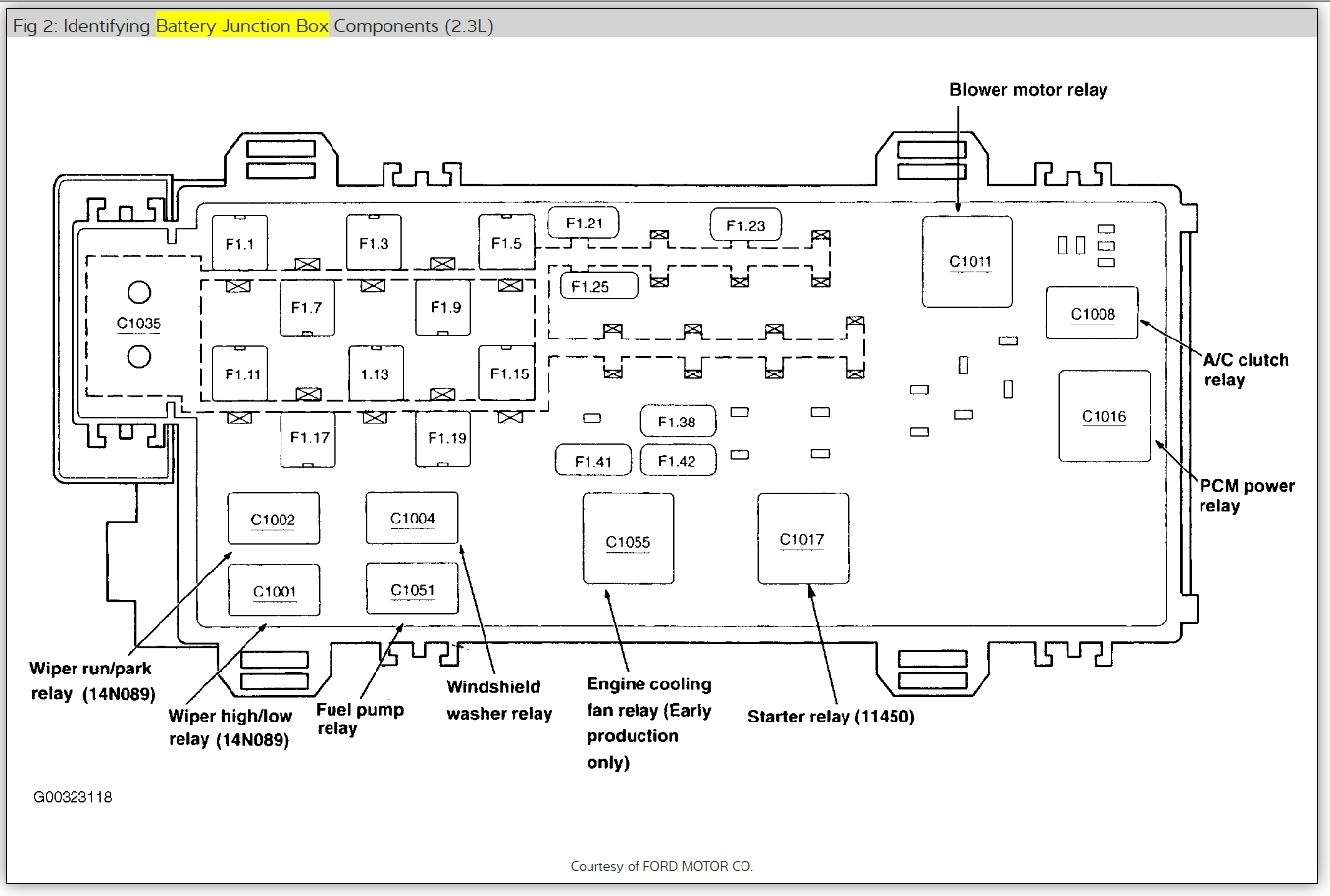
Interpreting a 1996 Ford Ranger fuse box diagram requires a methodical approach. Follow these steps to locate, identify, and replace components safely and effectively.
- ✓ Step 1: Locate the Fuse Panels – The interior panel is found behind a plastic cover on the driver’s side end-cap of the dashboard, accessible only when the door is open. The Power Distribution Box is located in the engine compartment on the driver’s side fender well, near the battery.
- ✓ Step 2: Access the Diagram – If your original owner’s manual is missing, the underside of the plastic fuse box covers usually contains a stamped or printed diagram indicating the number and function of each fuse and relay.
- ✓ Step 3: Identify the Affected Circuit – Use the 1996 Ford Ranger fuse box diagram to match your symptoms to a specific fuse. For example, if the engine cranks but won’t start, look for the Fuel Pump Relay or the PCM (Powertrain Control Module/ECU) fuse in the under-hood box.
- ✓ Step 4: Use a Test Light or Multimeter – Before pulling a fuse, you can test it in place. Turn the ignition to the ‘ON’ position and touch the metal test points on top of the fuse. If one side has power and the other does not, the fuse is blown.
- ✓ Step 5: Safely Remove the Fuse – Use a fuse puller tool (often located inside the fuse box or purchased separately) to grasp the fuse. Avoid using metal pliers unless the battery is disconnected, as you may cause a short circuit.
- ✓ Step 6: Verify the Rating – Always replace a blown fuse with one of the exact same amperage. The 1996 Ford Ranger uses color-coded fuses (e.g., Blue for 15A, Yellow for 20A, Green for 30A). Never use a higher-rated fuse, as this can lead to melted wires or a vehicle fire.
Before working on the Power Distribution Box, ensure the engine is off and the battery negative cable is disconnected if you plan on loosening any nuts or bolts. When reconnecting the battery, ensure you tighten the terminals to the correct torque spec (approx. 10-15 lb-ft) to prevent electrical arcing.
Common Electrical Issues & Troubleshooting

The 1996 Ford Ranger is a robust truck, but its electrical system can age. Frequent issues often involve the Fuel Pump Relay, which can prevent the vehicle from starting, or the PCM relay, which might cause intermittent stalling. If your check engine light is illuminated, you should first use the diagram to ensure the ECU and OBD-II circuits are receiving consistent power.
A common symptom of a failing relay is a “clicking” sound without the component engaging, or a component staying on when it shouldn’t (like a cooling fan running with the engine cold, which disrupts proper coolant flow). If you encounter a diagnostic code such as P0230 (Fuel Pump Primary Circuit Malfunction), the 1996 Ford Ranger fuse box diagram allows you to trace the circuit from the relay to the fuse to the inertia switch.
If you find that the same fuse blows repeatedly, do not simply replace it again. This indicates a short to ground or a failing component drawing too much current. In such cases, professional electrical diagnosis is recommended to prevent damage to the ECU.
Maintenance Tips & Best Practices
Maintaining your Ranger’s electrical system goes beyond just changing fuses. To ensure long-term reliability, follow these expert recommendations:
- ✓ Inspect for Corrosion – The under-hood Power Distribution Box is susceptible to moisture. Periodically open the lid and check for green or white powdery buildup on the terminals. Use a dedicated electrical contact cleaner if needed.
- ✓ Check Engine Bay Proximity – While you are checking the under-hood fuse box, take a moment to inspect the nearby accessory belt. A worn belt can cause the alternator to undercharge, leading to “ghost” electrical issues that might seem like fuse problems but are actually low-voltage symptoms.
- ✓ Listen for Mechanical Cues – On the 2.3L engines of this era, listen for rattling near the front of the engine while checking fuses. While unrelated to fuses, a failing timing chain can cause erratic sensor readings that the ECU may misinterpret as electrical faults.
- ✓ Optimize Coolant Flow – Ensure the relays for the electric cooling fan (if equipped) are seated firmly. Proper fan operation is crucial for maintaining coolant flow and preventing the engine from overheating, which can bake wiring harnesses and cause insulation to fail.
Keep a small kit of spare fuses (5A through 60A) and a spare PCM relay in your glove box. These parts are inexpensive, and having them on hand can save you a costly tow for a simple 1996 Ford Ranger fuse box issue.
By utilizing the 1996 Ford Ranger fuse box diagram as your roadmap, you can confidently manage your truck’s electrical health. From clearing a check engine light to ensuring your ECU has constant power, understanding this system is the key to DIY success and vehicle longevity. Always prioritize safety, use the correct amperage, and keep your connections clean to get the most out of your classic Ford truck.
Frequently Asked Questions
What is Ford Ranger fuse box diagram?
A 1996 Ford Ranger fuse box diagram is a visual map that identifies the location, amperage, and function of every fuse and relay. It helps owners quickly find the specific circuit protecting components like the ECU or headlights, preventing electrical overloads from damaging sensitive truck electronics or wiring.
How do you read Ford Ranger fuse box diagram?
To read the diagram, match the numbered slots in the physical fuse box with the corresponding numbers on the chart. Each entry lists the amperage rating and the specific circuit it protects, such as the fuel pump or radio, allowing you to isolate and test specific electrical lines efficiently.
What are the parts of Ford Ranger fuse systems?
The system consists of the interior fuse panel, the engine bay power distribution box, the ECU, and various relays. These parts work together to manage power distribution. High-current circuits are typically housed in the engine compartment, while lower-draw accessories are located behind the dashboard panel for easier access.
Why is ECU fuse important?
The ECU fuse is critical because it provides power to the vehicle’s engine management computer. If this fuse blows, the truck may fail to start or trigger a persistent check engine light. Ensuring this fuse is functional is the first step when troubleshooting engine performance or diagnostic code issues.
What is the difference between interior fuses and the power distribution box?
The interior fuse box handles low-voltage cabin electronics like lights and gauges. In contrast, the power distribution box, located under the hood, manages high-current components like the cooling fan and starter. Both are essential for protecting the wiring and preventing potential electrical fires during a short circuit event.
How do I use Ford Ranger fuse box diagram?
Use the diagram by first locating the faulty component’s circuit name. Refer to the diagram to find the fuse number and amperage. Pull the fuse to inspect it, replace if blown, and then use an OBD-II scanner to clear any diagnostic code that may have been triggered during failure.