Ford Ranger Fuel System Diagram: Diagnosis & Fix Guide

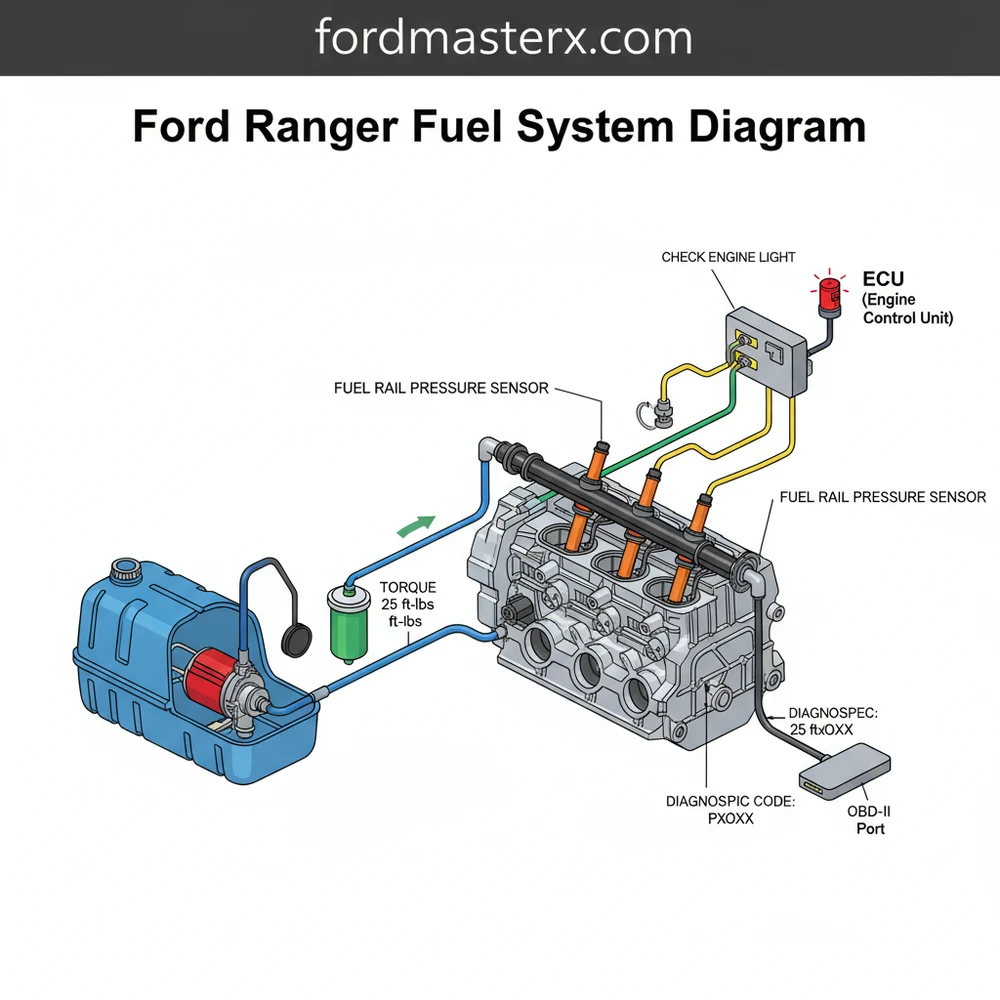
The Ford Ranger fuel system diagram illustrates the complete circuit including the fuel tank, pump, filter, and fuel rail. It traces the delivery of pressurized fuel through the lines to the injectors, while also showing the return lines and vapor recovery components essential for proper engine performance and emissions control.
📌 Key Takeaways
- Visualizes the fuel flow from the storage tank to the engine combustion chamber
- Identifies the location of critical components like the pump, filter, and pressure regulator
- Emphasizes the importance of relieving fuel system pressure before performing maintenance
- Provides a roadmap for testing electrical connections between the pump and the power source
- Essential for diagnosing fuel delivery issues, poor idling, or engine stalling
Navigating the complexities of your vehicle’s inner workings begins with a clear understanding of its architecture. For owners and mechanics alike, a detailed ford ranger fuel system diagram serves as the foundational roadmap for maintenance, performance upgrades, and critical repairs. Whether you are dealing with a stubborn engine hesitation or performing a routine filter replacement, knowing how fuel travels from the rear storage tank to the front combustion chamber is vital. This comprehensive guide will break down every component within the system, explain how to interpret technical schematics, and provide you with the practical knowledge needed to troubleshoot issues like a professional. By the end of this article, you will be equipped to identify specific parts, understand the electronic signals sent by the ECU, and safely perform fuel system diagnostics.
Understanding the Ford Ranger Fuel System Diagram Components
The fuel system in a Ford Ranger is a sophisticated network designed to deliver a precise amount of pressurized fuel to the engine under varying load conditions. When looking at a ford ranger fuel system diagram, the layout typically follows a path that starts at the fuel tank and ends at the fuel injectors. The diagram is more than just lines and circles; it represents a pressurized environment where mechanical parts and electronic sensors must work in perfect harmony.
The primary components identified in most diagrams include the fuel tank, the fuel pump assembly (often housed inside the tank), the fuel lines (supply and sometimes return), the fuel filter, the fuel rail, and the fuel injectors. In older models, you may see a mechanical fuel pressure regulator located on the fuel rail, while newer versions utilize a returnless system where the pressure is regulated electronically by the pump itself.
[DIAGRAM_PLACEHOLDER: A detailed technical illustration showing the Ford Ranger fuel delivery path. Labels include: 1. Fuel Tank, 2. Internal Fuel Pump, 3. High-Pressure Supply Line, 4. Inline Fuel Filter, 5. Fuel Rail, 6. Fuel Injectors, 7. Fuel Pressure Sensor, 8. Connection to ECU.]
The diagram also illustrates the electrical side of the system. The Engine Control Unit (ECU) acts as the brain, receiving data from various sensors to determine exactly when and for how long the injectors should open. This timing is critical and is often synchronized with the movement of the timing chain to ensure fuel is sprayed during the intake stroke. Furthermore, the diagram will highlight the location of the fuel pump relay and the inertia switch—a safety device designed to cut power to the pump in the event of a collision.
Most Ford Rangers utilize a “Quick-Connect” fitting system for fuel lines. While these make assembly faster at the factory, they require specialized release tools for removal to avoid damaging the nylon or steel lines shown in your diagram.
How to Read and Interpret the Fuel System Diagram

Interpreting a ford ranger fuel system diagram requires a systematic approach. You aren’t just looking for parts; you are looking for the flow of energy and fluid. Most diagrams use standardized symbols: solid lines usually represent high-pressure liquid lines, dashed lines may represent electrical connections or vacuum lines, and specific icons denote valves or sensors.
To use the diagram effectively for a repair or inspection, follow these steps:
- Identify the Flow Direction: Always start at the fuel tank. Locate the pump and trace the line toward the engine. This helps you understand which components are “upstream” (closer to the tank) and which are “downstream” (closer to the engine).
- Locate the Fuel Filter: On many Rangers, the filter is mounted on the inner frame rail. The diagram will show its orientation. Note the arrow on the filter; it must match the flow direction indicated on your ford ranger fuel system diagram.
- Check Electrical Junctions: Find the wiring harness leading to the fuel pump. The diagram will specify wire colors, which is essential when using a multimeter to check for power and ground if the pump fails to prime.
- Analyze the Fuel Rail: The rail distributes fuel to individual injectors. The diagram will show how the pressure sensor or regulator is integrated. This is a common area for leaks or pressure drops.
- Reference Related Systems: A comprehensive diagram will show proximity to other engine parts. For instance, notice how fuel lines must be routed away from the accessory belt and high-heat areas like the exhaust manifold to prevent vapor lock or fire hazards.
Before opening any part of the fuel system, you must relieve the residual pressure. Locate the fuel pump relay or the inertia switch (usually in the passenger footwell), disconnect it, and crank the engine until it stalls. Failure to do this can result in a high-pressure spray of gasoline.
When working in the engine bay, tools such as a fuel pressure gauge and an OBD-II scanner are indispensable. The gauge connects to the Schrader valve on the fuel rail (indicated on the diagram) to provide a real-time pressure reading. If the reading is lower than the manufacturer’s torque spec or pressure requirement, you can trace back through the diagram to find the bottleneck.
Common Issues and Troubleshooting with the Diagram

When your “check engine light” illuminates, the ford ranger fuel system diagram becomes your primary diagnostic tool. By using an OBD-II scanner, you can retrieve a specific diagnostic code that points toward a system failure. For example, codes like P0171 or P0174 indicate a “lean” condition, meaning the ECU has detected too much air and not enough fuel.
Common problems you might encounter include:
- ✓ Clogged Fuel Filter: Causes sputtering at high speeds or under load.
- ✓ Failing Fuel Pump: Often manifests as a “no-start” condition or a whining noise from the rear of the truck.
- ✓ Leaking Injectors: Can cause a strong smell of gas and poor fuel economy.
- ✓ Faulty Pressure Regulator: Leads to erratic idling and difficulty starting when the engine is warm.
By referencing the diagram, you can perform a “process of elimination.” If you have low pressure at the rail, the diagram shows only a few components between the rail and the tank: the lines, the filter, and the pump. If the filter is clean, the pump becomes the primary suspect. Additionally, ensure that the coolant flow is not obstructed near the fuel lines, as excessive engine heat can cause the fuel to boil in the lines, leading to a “vapor lock” condition that the ECU might struggle to compensate for.
Pro Tips and Maintenance Best Practices
Maintaining your Ford Ranger’s fuel system is far more cost-effective than replacing major components like the ECU or the fuel pump. A well-maintained system ensures that the engine’s timing chain and internal components aren’t stressed by lean or rich combustion cycles.
Never let your fuel level drop below a quarter tank. The fuel pump is submerged in gasoline, which acts as a coolant. Running on “empty” regularly allows the pump to overheat, significantly shortening its lifespan.
Follow these best practices to keep your system in peak condition:
- Replace the fuel filter every 30,000 miles: This is the cheapest insurance against pump failure.
- Use high-quality fuel: Detergents in Top Tier gasoline help keep fuel injectors clean and prevent carbon buildup on valves.
- Inspect lines during oil changes: Look for cracks in the rubber or corrosion on the metal lines, especially near the accessory belt where vibration is highest.
- Check your gas cap: A loose or faulty cap can trigger a check engine light for the EVAP system, which is a sub-section of your fuel diagram.
When performing repairs, always adhere to the specific torque spec for bolts on the fuel rail and mounting brackets. Over-tightening can crack plastic housings or strip threads in the aluminum intake manifold. Furthermore, ensure that any replacement parts meet or exceed OEM specifications to ensure the ECU can accurately monitor and adjust fuel trims.
Understanding your ford ranger fuel system diagram is the first step toward automotive self-sufficiency. By combining the visual data of the diagram with the diagnostic power of OBD-II tools and basic mechanical safety, you can ensure your Ranger remains a reliable workhorse for years to come. Whether you are chasing a diagnostic code or simply performing preventative maintenance, this roadmap is your best ally in the garage.
Step-by-Step Guide to Understanding the Ford Ranger Fuel System Diagram: Diagnosis & Fix Guide
Identify the fuel tank and pump assembly on the diagram to understand the starting point of the fuel flow.
Locate the fuel filter and lines running along the frame rail to check for potential clogs or leaks.
Understand how the ECU manages fuel pressure by regulating the pump speed or the pressure regulator valve.
Connect an OBD-II scanner to check for a diagnostic code if the check engine light is illuminated on the dash.
Verify that all mounting bolts meet the manufacturer torque spec to prevent leaks or component vibration during operation.
Complete the process by testing the fuel pressure at the rail with a mechanical gauge to confirm system health.
Frequently Asked Questions
Where is the fuel pump located?
The fuel pump on a Ford Ranger is located inside the fuel tank. To access it, you usually need to either drop the fuel tank from the underside of the vehicle or remove the truck bed to reach the access panel on top of the tank assembly for easier replacement.
What does the fuel system diagram show?
This diagram illustrates the fuel delivery path, including the tank, pump, lines, fuel filter, and fuel rail. It also maps the electrical connections to the ECU and the return lines used for the evaporative emissions system, helping you visualize the entire pressurized fuel circuit for troubleshooting purposes.
How many connections does the fuel pump have?
Most Ford Ranger fuel pump assemblies feature a four-pin electrical connector. This includes two wires for the fuel pump motor and two wires for the fuel level sending unit. Additionally, the assembly has three physical hose connections: the main pressure feed, the return line, and the vapor vent line.
What are the symptoms of a bad fuel pump?
A failing fuel pump often triggers a check engine light and causes stalling or hard starting. You might notice a loud whining noise from the tank. If the ECU detects low pressure via a diagnostic code, the truck may enter a limp mode to protect the engine from leaning out.
Can I replace the fuel filter myself?
Yes, replacing the fuel filter is a manageable DIY task. Located along the frame rail, it requires specialized quick-disconnect tools. Ensure you relieve system pressure first to avoid fuel spray. It is a critical maintenance step to prevent debris from reaching and clogging the sensitive fuel injectors over time.
What tools do I need for fuel system work?
Essential tools include a fuel pressure gauge, a set of quick-disconnect fuel line tools, and an OBD-II scanner to read any diagnostic code. You will also need a torque wrench to ensure every bolt meets the specific torque spec during reassembly to prevent leaks and ensure long-term safety.