Ford Oakville Plant News Today: Super Duty Production Shift And Ev Roadmap Updates

The automotive landscape in Ontario is undergoing a seismic shift as the Ford Oakville Assembly Complex pivots to secure its future through a multi-billion dollar manufacturing evolution. With shifting consumer demand and evolving electrification timelines, stakeholders and employees are seeking clarity on the status of the Ford Oakville plant and its long-term viability. This article provides a professional analysis of the latest Ford Oakville plant news, covering the Super Duty production shift, workforce impacts, and the updated EV roadmap.
Ford Oakville Plant News Today Regarding the Super Duty Production Pivot

📤 Share Image
The most significant development in recent months is Ford Motor Company’s decision to broaden the production profile of the Oakville Assembly Complex (OAC). Originally slated to become an exclusive electric vehicle (EV) hub, the facility will now serve as a critical primary production site for the F-Series Super Duty. This decision represents a pragmatic response to the surging, unfulfilled demand for Ford’s heavy-duty truck lineup, which remains the backbone of the company’s profitable Ford Pro commercial division.
Ford is directing a massive $2.3 billion investment specifically into the OAC infrastructure to support this pivot. This is part of a larger $3 billion global commitment to expand Super Duty capacity. By 2026, Oakville will begin rolling out these high-margin trucks, effectively adding 100,000 units of annual capacity to the F-Series family. This production shift is not merely a fallback; it is a calculated expansion of the ‘Built Ford Tough’ legacy into a modern, multi-energy manufacturing environment.
Strategic Benchmarking and Capacity Goals
To understand the scale of this shift, one must look at Ford’s existing heavy-duty footprint. Currently, the Kentucky Truck Plant and the Ohio Assembly Plant are operating at maximum capacity. Despite their record output, the order bank for Super Duty trucks—critical for the construction, utility, and emergency services sectors—remains backlogged. By integrating Oakville as a third Super Duty hub, Ford is mitigating the risks of centralized production while leveraging a professional and highly skilled Ontario workforce. This move ensures that the OAC remains a trusted pillar of Ford’s North American strategy, even as EV market dynamics continue to fluctuate.
By The Numbers
OAC Retooling Investment
Additional Super Duty Units
Super Duty Production Launch

Assessing the Quality and Professional Implementation of the EV Transition Delay
The strategic postponement of the all-electric three-row SUV, originally planned for a 2025 launch at Oakville, has been rescheduled for 2027. From an industry expert perspective, this delay is a hallmark of disciplined capital allocation. Rather than rushing a high-cost product into a cooling EV market, Ford is utilizing this window to refine its next-generation electric utility vehicles. This additional time allows the company to integrate insights from its California-based ‘Skunkworks’ team, which is focused on developing a more cost-competitive, high-efficiency EV platform.
Leveraging Battery Technology Evolution
A critical component of the delay involves the maturation of the supply chain. Ford’s partnership with SK On at the BlueOval SK Battery Park in Kentucky is central to this timeline. By 2027, the battery cell technology will have progressed toward higher energy density and lower cost-per-kilowatt-hour. For Oakville, this means the eventual EV output will be more reliable and price-competitive against global rivals. This comprehensive approach ensures that when the electric three-row SUV finally rolls off the line, it will be supported by a robust and trusted charging and battery ecosystem.
Industry leaders are currently favoring plants that can pivot between ICE, Hybrid, and EV powertrains. The Oakville retooling is specifically designed to handle this “multi-energy” mix, which protects the plant from volatility in consumer EV adoption rates.
Trusted Insights into the Workforce and Unifor Local 707 Economic Impact
The transition at Oakville directly impacts approximately 3,200 employees. While the retooling period necessitated temporary layoffs following the end of Ford Edge production, the Super Duty announcement has significantly bolstered long-term job security. Unifor Local 707 has played a pivotal role in negotiating the 2023 collective agreement, which provides income maintenance and professional transition support for members during the 2024-2025 hiatus.
Economic Multiplier Effects in Ontario
The economic footprint of the Oakville plant extends far beyond its physical gates. In the automotive sector, the indirect job ratio is typically estimated at 5:1. This means the 3,200 direct jobs at OAC support roughly 16,000 additional roles across the Ontario supply chain, from Tier 1 parts suppliers in Brampton to logistics providers in Windsor. The decision to bring Super Duty production to Oakville secures these roles for the next decade, providing a reliable economic anchor for the Greater Toronto Area (GTA).
- Upskilling Programs: Ford is implementing specialized training for assembly workers to master the complex ladder-frame chassis of the Super Duty.
- Skilled Trades Integration: The retooling requires expert electricians and millwrights to install state-of-the-art robotics and conveyance systems.
- Future-Proofing: Training curriculum now includes high-voltage safety and battery module handling for the 2027 EV launch.
Expert Overview of the Plant Modernization and Infrastructure Upgrades
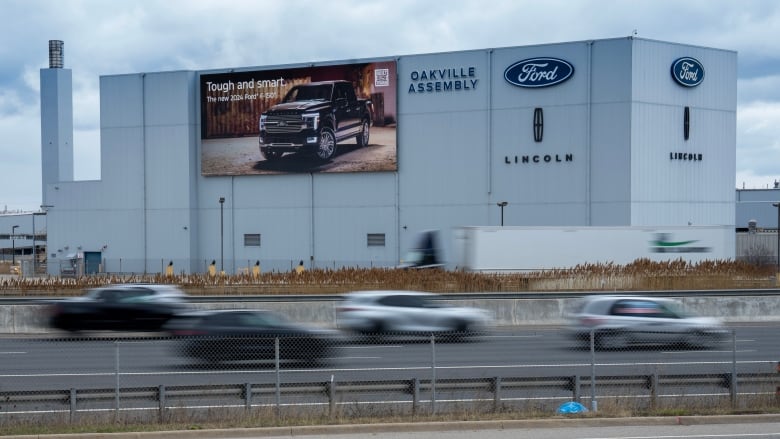
Converting a plant designed for unibody crossovers (like the Ford Edge and Lincoln Nautilus) into a heavy-truck powerhouse is a complete logistical overhaul. The physical footprint of the Oakville Assembly Complex exceeds 5 million square feet, and every inch is being reconsidered. The Super Duty’s larger chassis and increased weight require reinforced flooring and significantly larger workstations than the previous crossover lines.
📋
Modernization Milestones
Massive expansion to accommodate the heavy-duty frames and the unique aluminum-alloy body panels of the F-Series Super Duty.
Installation of new modular stamping dies to produce the larger hoods, fenders, and truck beds locally, reducing logistics costs.
Integration of advanced computer vision and expert sensor arrays to ensure zero-defect assembly on complex commercial configurations.
In addition to production hardware, Ford is investing in sustainability. The modernized OAC will feature energy-efficient paint shop technologies and carbon-capture systems as part of the company’s broader commitment to reach carbon neutrality by 2050. This ensures that the quality of the manufacturing process matches the professional expectations of modern environmental standards.
Reliable Market Positioning of the Ford Oakville Assembly Complex
Oakville’s new role as a Super Duty hub places it at the center of the Ford Pro business model. Ford Pro is the company’s highest-growth segment, focusing on software, service, and high-margin hardware for commercial fleets. The F-Series Super Duty is the undisputed leader in this space, and Oakville’s geographical advantage—close to the U.S.-Canada border—streamlines distribution to the high-demand markets of the Northeastern U.S. and the Canadian industrial heartland.
F-Series Dominance and Profitability
The F-Series has been the best-selling truck in Canada for over 50 years. By adding Super Duty production to Oakville, Ford is doubling down on a winner. These trucks are not just vehicles; they are essential tools for industry. Unlike the consumer-facing EV market, which can be fickle, the demand for professional-grade work trucks is consistently high. This shift provides a trusted revenue stream that will help fund Ford’s long-term electrification goals.
✅ Pros of the Shift
- Immediate high-margin profitability
- Secured job stability for 3,200 workers
- Reduced dependency on volatile EV demand
- Utilization of existing heavy manufacturing expertise
❌ Cons of the Delay
- Temporary hiatus in production for 2024-2025
- Delayed entry into the 3-row electric SUV segment
- Increased complexity of multi-energy retooling
Professional Recommendations for Stakeholders
For investors, employees, and supply chain partners, the message is clear: Ford Oakville is evolving into a more resilient facility. This comprehensive guide recommends that stakeholders prepare for a complete integration into the Super Duty ecosystem by early 2026. Suppliers should anticipate high volumes of heavy-duty components, while employees should take full advantage of Ford and Unifor’s upskilling initiatives during the retooling phase.
While 2026 is the target for Super Duty and 2027 for EVs, global supply chain disruptions can still influence these dates. Stakeholders must maintain a flexible approach to production ramp-up schedules.
The Oakville Assembly Complex remains a crown jewel of the Ontario automotive sector. By pivoting to a multi-energy strategy that includes the world-renowned Super Duty, Ford is ensuring that the plant will remain operational, profitable, and technologically advanced for the next generation of automotive manufacturing. This is a professional, expert-led transition that prioritizes long-term viability over short-term trends.
In summary, Ford is investing $2.3 billion to bring Super Duty production to Oakville by 2026. The 3-row EV project is postponed to 2027 to ensure market-leading quality and technology. The workforce transition remains a priority for Ford and Unifor Local 707 to maintain regional economic stability. Stay tuned to industry-leading automotive reports for the latest updates on Ford’s manufacturing milestones and regional economic developments.
Frequently Asked Questions
What is the latest Ford Oakville plant news today regarding production?
As of today, Ford has confirmed a pivot to produce F-Series Super Duty trucks at the Oakville Assembly Complex starting in 2026. This follows an additional $2.3 billion investment to retool the plant for these high-demand ICE and hybrid vehicles while postponing the launch of their next-generation three-row electric SUVs until 2027.
Will there be job losses at the Ford Oakville plant due to the EV delay?
While the retooling period has led to temporary layoffs, Ford’s plan to introduce Super Duty production is expected to secure jobs for approximately 3,200 employees. By adding the Super Duty line, Ford is mitigating the impact of the EV delay and ensuring the plant operates at high capacity once the new lines are operational in 2026.
When will the Ford Oakville plant begin building electric vehicles?
The current timeline for electric vehicle production at the Oakville Assembly Complex is set for 2027. This delay from the original 2025 date allows Ford to capitalize on more advanced battery technology and align their professional production standards with the actual pace of consumer EV adoption.
Why did Ford choose to build Super Duty trucks in Oakville?
Ford chose Oakville to address significant unfulfilled demand for the Super Duty, which is a key driver for the Ford Pro commercial business. The site’s experienced workforce and strategic location make it a reliable choice for expanding production beyond the existing plants in Kentucky and Ohio, maximizing the company’s high-margin truck portfolio.
How much is Ford investing in the Oakville Assembly Complex retooling?
Ford is investing approximately $2.3 billion specifically for the Oakville Assembly Complex to support the production of the F-Series Super Duty. This is part of a broader commitment to modernize the facility into a world-class manufacturing hub capable of producing both advanced internal combustion engines and future electric powertrains.