Ford Key Chip Location: Quick Identification Guide

The Ford key chip location is typically found inside the plastic head of the key, positioned near the metal blade to communicate with the transceiver ring. In most models, it is a small glass capsule or ceramic wedge embedded within a specific slot or cavity in the key’s internal structure.
📌 Key Takeaways
- Clarify the exact physical layout of the PATS transponder within the key head
- Identify the transponder chip as the most critical electronic component
- Handle components gently to avoid damaging the delicate glass or ceramic structure
- Always verify your specific key configuration before attempting to pry it open
- Use this diagram when replacing key shells or programming new keys
Understanding the specific geometry and internal architecture of your vehicle’s security hardware is the first step toward successful maintenance or repair. When you are dealing with a vehicle that won’t start or you are looking to clone a spare, understanding the precise diagram ford key chip location is absolutely critical. Ford’s security architecture relies on a complex system known as the Passive Anti-Theft System (PATS). This overview will provide you with a detailed schematic and layout of where the transponder chip is housed within your specific key assembly. By following this blueprint, you can avoid costly mistakes like damaging the delicate internal components during a shell swap or repair procedure.
Internal Schematic and Layout Overview
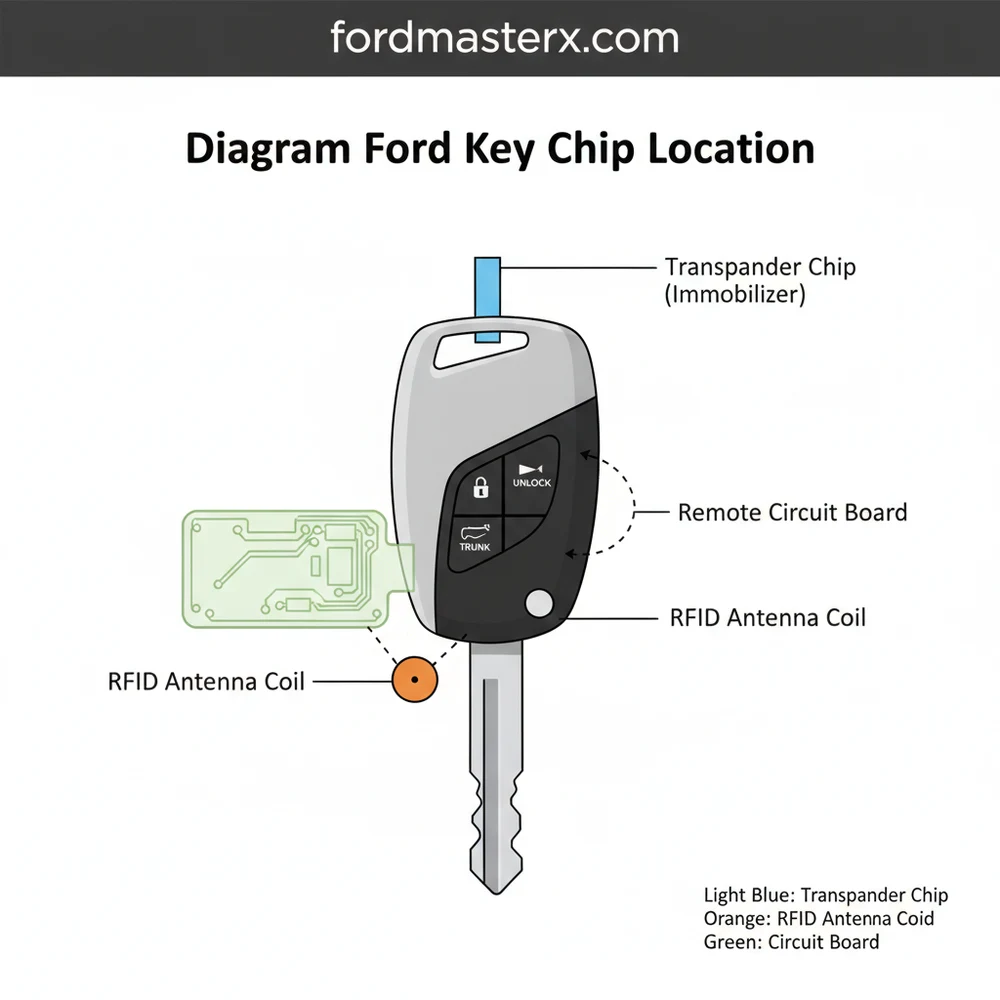
The internal structure of a modern Ford key is a marvel of miniaturization, combining mechanical precision with electronic security. To understand the diagram ford key chip location, one must first recognize that the transponder is a standalone component, separate from the remote-entry circuit board. In most configurations, the transponder chip is a small, rectangular carbon wedge or a tiny glass capsule. Its primary purpose is to communicate via radio frequency with the transceiver ring located around the ignition cylinder.
In a standard Integrated Keyhead Transmitter (IKT), the layout is divided into two main zones. The upper zone, closest to the metal blade, houses the transponder chip. This placement is strategic; the chip must be within a few millimeters of the ignition lock to be energized by the induction coil. The lower zone contains the battery and the printed circuit board (PCB) responsible for locking and unlocking the doors. This dual-system configuration ensures that even if your remote battery dies, the transponder—which is passive and requires no battery power—will still allow the vehicle to start.
The transponder chip is often held in place by a small plastic “cradle” or “reservoir” molded directly into the plastic casing. In many Ford models, this cradle is located at the very top of the key head, specifically on the side opposite the mechanical buttons to prevent electronic interference.
Variations in the blueprint occur based on the specific model series. For example, heavy-duty trucks often use a larger, reinforced head where the chip is embedded deeper into the resin, making it nearly invisible without a backlight. Conversely, smaller sedan keys may feature a snap-fit compartment that allows for easier chip removal. Regardless of the shell’s exterior, the transponder always maintains a proximity-based relationship with the metal blade to ensure the security system recognizes the authorized user.
Step-by-Step Guide to Identifying and Accessing the Chip

Navigating the internal blueprint of your key requires patience and the correct tools. Misidentifying the diagram ford key chip location can lead to prying in the wrong area, which may crack the glass transponder or snap the delicate antenna traces on the remote board. Follow these steps to safely locate and inspect your component.
- ✓ Small flat-head precision screwdriver
- ✓ Plastic prying tool (spudger)
- ✓ Bright LED flashlight or magnifying glass
- ✓ Microfiber cloth
Step 1: External Inspection
Before opening the casing, hold the key up to a strong light source. On many Ford keys, you can see a slight rectangular indentation or a faint seam near the base of the blade. This is the external landmark for the chip’s internal reservoir. Identifying this landmark prevents you from applying pressure to the wrong side of the plastic housing.
Step 2: Separating the Housing Shells
Locate the small notch usually found at the bottom of the key or hidden behind the key ring loop. Insert your plastic prying tool and gently twist. Avoid using metal screwdrivers for the initial separation as they can mar the plastic and compromise the weather seal. Work your way around the perimeter until the two halves click apart.
Step 3: Removing the Remote Circuit Board
In most Ford configurations, the remote PCB sits loosely or is held by small plastic tabs. Lift this out first. This reveals the “skeleton” of the key head. With the board removed, you are looking at the base layer of the plastic shell.
Step 4: Locating the Chip Reservoir
Look at the corner of the key where the metal blade enters the plastic. You will see a small, rectangular pocket. This is the heart of the diagram ford key chip location. The chip is usually tucked tightly into this corner. In some models, there is a small plastic “door” or “lid” that covers this pocket to keep the chip from vibrating loose.
Step 5: Inspecting the Transponder
Use your flashlight to check the condition of the chip. If it is a glass tube, look for any hairline cracks. If it is a carbon wedge, ensure it is not chipped or covered in debris. If you are moving the chip to a new shell, do not use pliers. Instead, use a small dab of adhesive putty to gently “lift” the chip out of its seat.
Step 6: Reassembly and Alignment
When placing the chip into a new housing or back into the original, alignment is vital. Ensure the chip is seated fully at the bottom of the reservoir. If the chip sits too far back (toward the key ring), the induction coil in the steering column might not be able to read it, resulting in a “No Key Detected” error.
Never apply high heat (like a heat gun) directly to the key head to soften the plastic. The transponder chip contains delicate copper windings (in glass versions) or sensitive magnetic material (in carbon versions) that can be permanently de-magnetized or destroyed by excessive thermal exposure.
Common Issues and Troubleshooting the System
Even with a perfect understanding of the diagram ford key chip location, you may encounter issues where the vehicle refuses to recognize the key. The most common problem is “chip migration.” This happens when the internal plastic tabs wear down, allowing the chip to slide just a few millimeters away from its designated spot. While this seems insignificant, the PATS system is highly sensitive to distance.
Another frequent issue involves interference. If you have multiple transponder keys on the same ring, the signals can “clash,” confusing the car’s computer. By referencing the internal layout, you can see that the chip is unshielded. If the chip is damaged or missing, your dashboard will typically show a rapidly flashing security light (the padlock icon) when you attempt to start the engine.
If you have performed a shell replacement and the car won’t start, the first troubleshooting step is to verify the chip’s orientation. Carbon wedge chips often have a “beveled” edge; this edge usually needs to face toward the blade. If the vehicle still doesn’t respond, the chip may have been damaged by static electricity during the transfer process. In such cases, professional diagnostic tools are required to verify if the chip is still broadcasting its unique ID.
Tips and Best Practices for Key Maintenance
Maintaining the integrity of your key’s security system is simple if you follow a few professional guidelines. First, always treat your key as an electronic device rather than just a piece of metal. Dropping your keys on hard surfaces can eventually crack the glass transponders found in older Ford blueprints.
- ✓ Use High-Quality Shells: If you are replacing a cracked housing, avoid the cheapest generic options. Look for shells that have a “tight-tolerance” chip reservoir to prevent the chip from rattling.
- ✓ Avoid Strong Magnets: Keeping your keys near high-powered magnets (like large speakers or magnetic parts trays) can potentially scramble the data on the transponder chip.
- ✓ Clean the Housing: Every few months, use a toothpick to clear debris from the seam of the key head. Dirt buildup can force the shells apart, potentially allowing the chip to fall out.
- ✓ Secure the Chip: If the chip feels loose in its slot during a repair, a tiny drop of non-conductive silicone adhesive can keep it in place. Do not use “super glue,” as it creates fumes that can cloud the PCB and make future repairs impossible.
If you are unsure if your key has a chip, look for the letters “S” or “SA” (for 80-bit systems) or “HA” stamped on the metal blade near the plastic head. These markings indicate the specific transponder protocol used by the Ford system and confirm that a chip is present in the head.
In summary, mastering the diagram ford key chip location is about more than just finding a small piece of hardware; it is about understanding the synergy between the mechanical and electronic components of your car. By recognizing the specific structure and configuration of the keyhead, you can perform DIY repairs with confidence, save money on locksmith services, and ensure your vehicle’s anti-theft system remains fully operational. Always refer back to the schematic if you encounter resistance when opening the case, and remember that the chip is the most vital component of your vehicle’s starting sequence.
Frequently Asked Questions
Where is the Ford key chip located?
The Ford key chip is located inside the plastic housing of the key, usually very close to the base of the metal blade. This specific layout ensures the chip is within range of the ignition cylinder’s transceiver antenna when the key is inserted into the vehicle’s ignition.
What does this diagram show?
This diagram illustrates the internal structure of a Ford transponder key. It highlights the precise configuration of the electronic chip, the plastic casing, and the metal blade, helping you understand how the SecuriLock or PATS system interacts with your vehicle to permit starting.
How many connections does the chip have?
A Ford transponder chip is a passive component and has no physical wire connections. It functions through radio frequency identification (RFID). The system uses an electromagnetic field generated by the ignition lock cylinder to power the chip and read its unique security code wirelessly.
What are the symptoms of a bad key chip?
If the chip is damaged or missing, the vehicle will not start, and the anti-theft light on the dashboard will typically flash rapidly. You may also see ‘Security’ or ‘PATS’ errors, as the system cannot verify the digital handshake required to enable the engine.
Can I replace this chip myself?
Yes, you can physically move a working chip to a new key shell yourself. However, if you are installing a brand-new blank chip, it must be programmed to the vehicle’s computer system using either two existing keys or specialized OBDII diagnostic equipment.
What tools do I need for this?
To access the chip, you typically need a small flat-head screwdriver or a prying tool to carefully separate the key’s plastic casing. If you are replacing the chip, you may also need a small amount of adhesive to secure it in its new location.