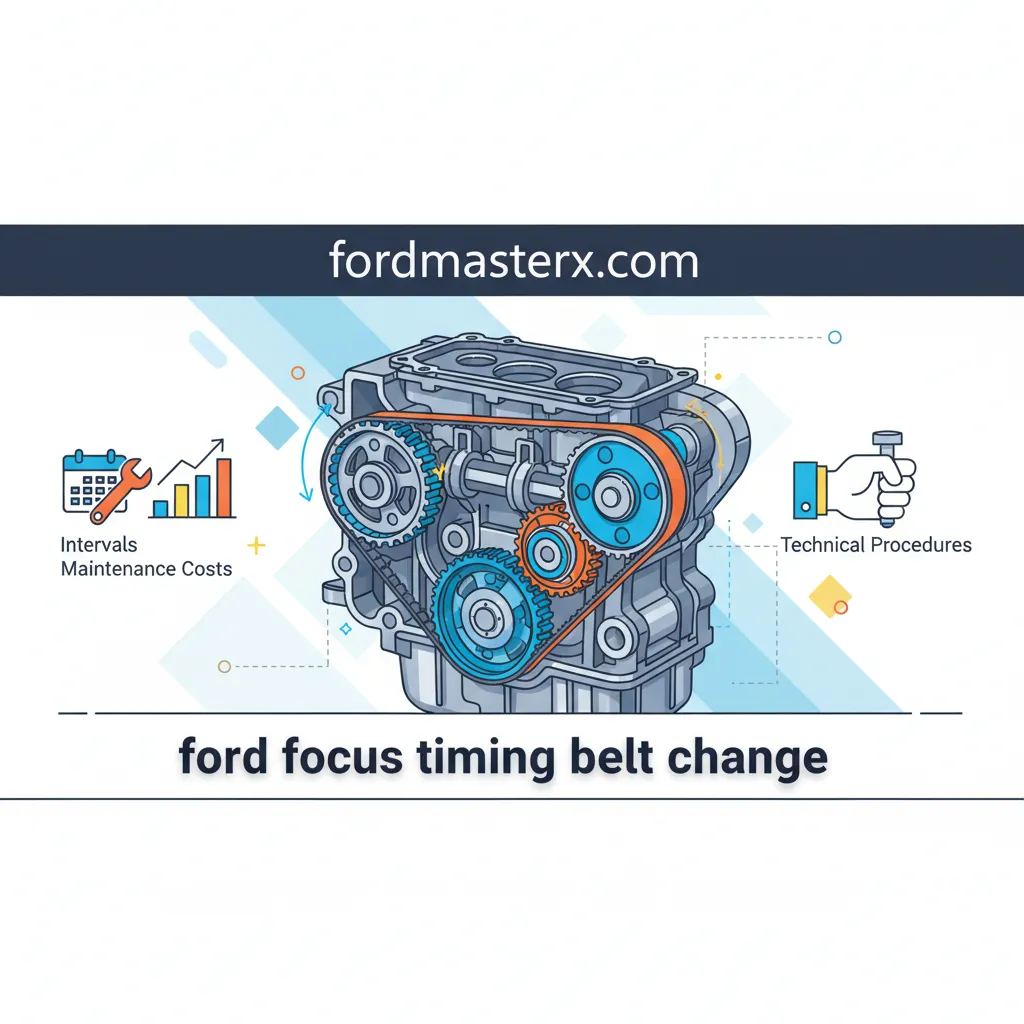
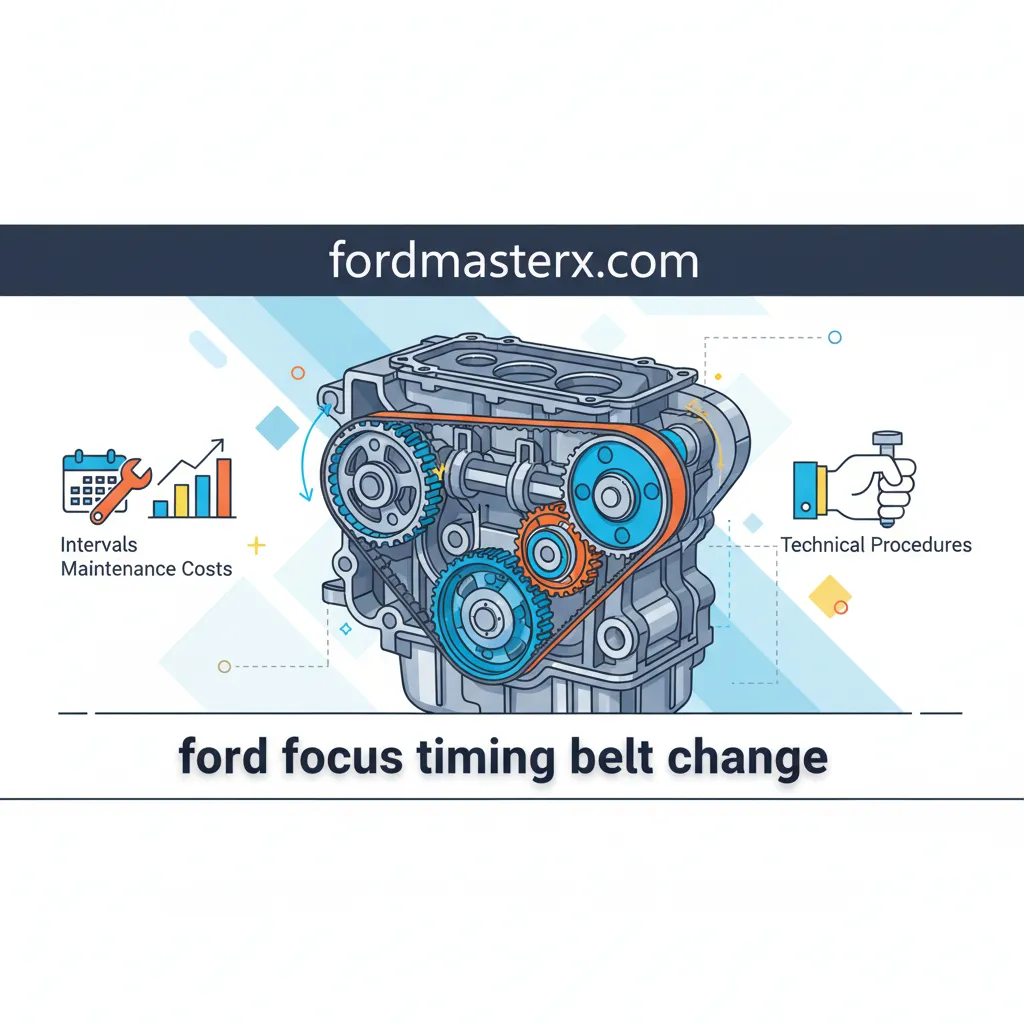
Ford Focus Timing Belt Change Intervals, Technical Procedures, And Maintenance Costs

For the modern Ford Focus owner, the timing belt serves as the critical heartbeat of the engine’s internal synchronization. This precision-engineered component ensures that the camshafts and crankshaft rotate in perfect harmony, allowing valves to open and close at microsecond intervals. Despite its vital role, many owners remain unaware of the specific service intervals or the catastrophic engine damage that occurs when this component fails without warning. This article provides an authoritative analysis of the Ford Focus timing belt change process, covering technical intervals, essential symptoms of wear, and professional replacement protocols to ensure your vehicle remains reliable for years to come.
Understanding Ford Focus Timing Belt Change Intervals and Engine Types
📤 Share Image
The Ford Focus has utilized several engine architectures over the last two decades, each with distinct requirements for timing belt maintenance. The most critical distinction lies between the 1.0L EcoBoost ‘wet belt’ system and the standard 1.6L or 2.0L dry belt configurations found in the Ti-VCT models. In the 1.0L EcoBoost, the belt is submersed in engine oil, a design intended to reduce friction and noise. However, this system is exceptionally sensitive to oil quality; using the wrong oil grade can lead to chemical degradation of the belt material.
Ford’s official service manuals frequently quote an optimistic interval of 150,000 miles or 10 years. In a laboratory environment, this may be achievable. However, in real-world “severe duty” conditions—characterized by frequent short trips, excessive idling in traffic, or extreme temperature fluctuations—belt longevity is significantly compromised. Expert technicians typically advise a more conservative 80,000-mile interval. This is because the Ford Focus utilizes an interference engine design. In these engines, the piston’s path and the valve’s path overlap. If the timing belt snaps or skips, the valves will remain open while the piston rises, resulting in a violent collision that destroys the cylinder head, valves, and often the pistons themselves.
Engine Comparison: Service Intervals
EcoBoost (Wet Belt) – High Complexity
Ti-VCT (Dry Belt) – Standard Service
To confirm your specific requirements, professionals use the Vehicle Identification Number (VIN) to check for revised service bulletins. For example, some 2012-2018 Ford Focus 2.0L models received updated guidance regarding the tensioner assembly, highlighting the importance of verified technical data over generic internet advice.

Identifying Symptoms and Indicators Requiring Professional Timing Belt Inspection
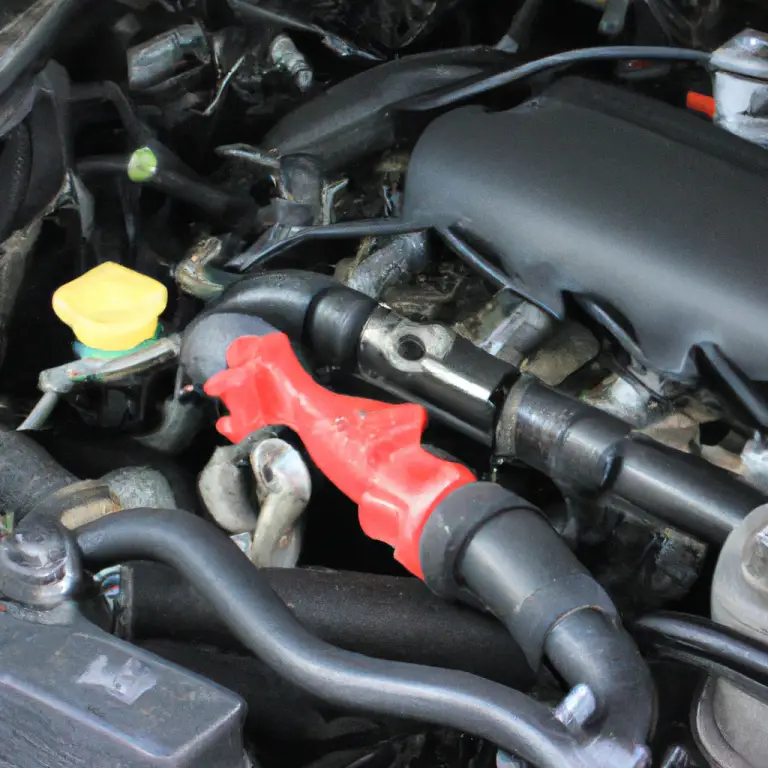
Because the timing belt is shielded by a protective cover, identifying wear requires a combination of auditory diagnostics and partial disassembly for visual inspection. One of the most common early warnings is a rhythmic ticking or slapping noise coming from the front of the engine. This often indicates that the belt has stretched or the tensioner is failing, allowing the belt to vibrate against the housing.
Visual inspection by a certified professional will look for specific “failure modes”:
- Glazing: A shiny, plastic-like appearance on the back of the belt suggesting excessive heat and loss of flexibility.
- Longitudinal Cracking: Small cracks running the length of the belt, indicating the rubber compound is drying out.
- Missing Teeth: If even one tooth shears off, the belt can slip, immediately throwing the engine out of sync.
In 1.0L engines, the primary symptom isn’t noise, but oil pressure warnings. As the wet belt degrades, rubber particulates clog the oil pickup strainer, leading to engine starvation and turbocharger failure long before the belt actually snaps.
Engine performance issues can also signal timing drift. If a belt skips a single tooth on the sprocket, the camshaft timing can shift by 5 to 10 degrees. This results in misfires, rough idling, and “limp mode” activation. Often, a driver might ignore a “Check Engine” light for a Camshaft Position Sensor error, assuming it is a simple sensor failure. In reality, the sensor is accurately reporting that the timing is no longer aligned—a precursor to total belt failure.
The Technical Procedure for a Reliable Ford Focus Timing Belt Replacement
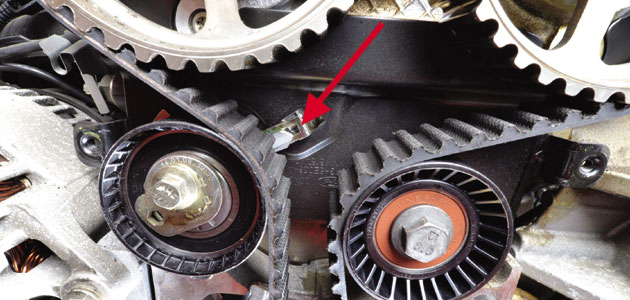
A comprehensive timing belt change on a Ford Focus is not a task for the casual DIY enthusiast. It requires specialized locking tools designed specifically for the Ford Duratec or EcoBoost engine platforms. Because these engines are “frictional fit”—meaning there is often no keyway on the crankshaft to hold it in place—the timing is held strictly by the clamping force of the crankshaft pulley bolt.
📋
Professional Replacement Workflow
The technician inserts a specialized crank peg and camshaft alignment plate to secure the engine at Top Dead Center (TDC). This is mandatory to ensure the valves and pistons stay perfectly indexed during the swap.
Removal of the upper engine mount (requiring the engine to be supported from below), accessory drive belts, and the timing cover. This reveals the primary belt path and the mechanical tensioner.
The new belt and tensioner are installed. The crankshaft pulley bolt (a stretch bolt) must be replaced. On many models, this requires 100Nm of torque followed by an additional 90-degree rotation.
Following the physical installation, the most critical “expert step” is the manual rotation of the engine. The technician will remove the locking tools and rotate the crankshaft by hand through two complete cycles. If the timing marks align perfectly after this rotation, the engine is safe to start. Skipping this step is a recipe for disaster, as any slight misalignment will be corrected by the starter motor with enough force to bend valves instantly.
Essential Complementary Components to Replace During the Service
A quality timing belt service is never just about the belt itself. Because the labor involved in reaching the belt is so extensive, failing to replace peripheral components is a significant maintenance oversight. The primary recommendation from any trusted specialist is the simultaneous replacement of the water pump. On the 1.6L and 2.0L Focus engines, the water pump is either driven by the timing belt or located directly behind it. If the pump fails 10,000 miles after a belt change, you will pay the full labor cost again to replace a $60 part.
Tensioner & Idlers
Bearings in these pulleys have the same lifespan as the belt. A seized pulley will snap a brand-new belt in seconds.
Oil Seals
Replacing the front crankshaft and camshaft seals prevents oil leaks that can chemically soften and destroy the new belt.
Professional service providers utilize a complete Timing Kit from reliable OEM manufacturers like Gates, Dayco, or Ford Motorcraft. This ensures that every component—down to the specific bolts and gaskets—is engineered to work together. Consider a case study of a secondary failure: An owner opted for “belt only” service. Three months later, the original water pump developed a weep, contaminating the new belt with coolant and requiring a $900 redo of the entire job. Bundling the water pump adds roughly 15-20% to parts costs but saves 100% of future labor risk.
Cost Analysis and Selecting a Professional Service Provider
The financial investment for a Ford Focus timing belt change varies significantly based on the engine type and your choice of service facility. For a standard 2.0L Ti-VCT engine, a complete service typically requires 4 to 6 labor hours. In contrast, the 1.0L EcoBoost “wet belt” system is significantly more complex, often requiring 10 to 12 hours of labor due to the need to remove the oil pan and clean the oil pickup system.
When selecting a technician, ask specifically about their experience with Ford’s variable valve timing (Ti-VCT) systems and their possession of the necessary timing locking kits. A shop that attempts to “mark and pray” (marking the gears with a paint pen instead of using locking tools) should be avoided at all costs. The value of a professional warranty on parts and labor cannot be overstated; should a component fail within 12 months, you want the peace of mind that the shop will cover the $3,000+ cost of an engine rebuild.
Always replace the accessory (serpentine) belt during this service. Since it must be removed to access the timing cover, the labor cost is zero—you only pay for the part.
Industry data shows that 75% of timing belt failures occur in vehicles with over 100,000 miles that lack a documented belt change. Investing in this preventative maintenance now is the only reliable way to protect your Ford Focus from catastrophic mechanical failure and preserve its resale value.
In summary, strict adherence to Ford’s mileage and age intervals—adjusted for real-world driving—is the only way to prevent catastrophic engine failure in these interference engines. Professional replacement must include the tensioner, idler pulleys, and water pump to ensure the integrity of the entire system for another 100,000 miles. Utilizing specialized locking tools and following precise torque specifications is non-negotiable for engine timing accuracy. Consult your Ford Focus owner’s manual or contact a trusted certified technician today to schedule a comprehensive timing system inspection and ensure your vehicle remains roadworthy.
Frequently Asked Questions
How do I know if my Ford Focus has a timing belt or a timing chain?
Most Ford Focus models equipped with the 2.0L Duratec or Ti-VCT engines (2005-2011 and 2012-2018) utilize a timing chain, which is designed for the life of the engine. However, the 1.0L EcoBoost, 1.6L Sigma, and 2.0L Diesel variants utilize timing belts that require periodic replacement. You can verify your specific engine type via your VIN or the engine cover specifications.
What is the average cost of a Ford Focus timing belt change?
The cost typically ranges from $600 to $1,200 for standard dry belt systems. For the 1.0L EcoBoost ‘wet belt,’ the complexity of the labor can push costs toward $1,500 to $2,000. These figures generally include the belt, tensioner, and water pump. Prices fluctuate based on regional labor rates and whether you utilize an independent specialist or a Ford dealership.
What happens if the timing belt breaks while I am driving?
Because Ford Focus engines are ‘interference’ designs, the valves and pistons occupy the same space at different times. If the belt breaks, synchronization is lost, causing the pistons to strike the open valves. This typically results in bent valves, damaged pistons, and potentially a cracked cylinder head, necessitating a complete engine replacement or an expensive overhaul costing several thousand dollars.
Is it necessary to replace the water pump at the same time?
It is highly recommended by expert technicians. In most Ford Focus models, the water pump is either driven by the timing belt or accessed only by removing the belt. Since the labor to reach the pump is already being performed during the belt change, replacing the pump as a preventative measure avoids paying for the same 5-8 hours of labor again if the pump fails later.
How long does a Ford Focus timing belt replacement take a professional?
For a standard 1.6L or 2.0L engine, a skilled technician usually requires 4 to 6 hours to complete the job properly, including testing. The 1.0L EcoBoost engine is significantly more labor-intensive due to the wet belt design and oil sealing requirements, often taking 8 to 12 hours. Always factor in additional time for cooling system bleeding and road testing to ensure quality results.