Ford Focus Bonnet Won’T Open: Diagnose And Fix Latch Failures

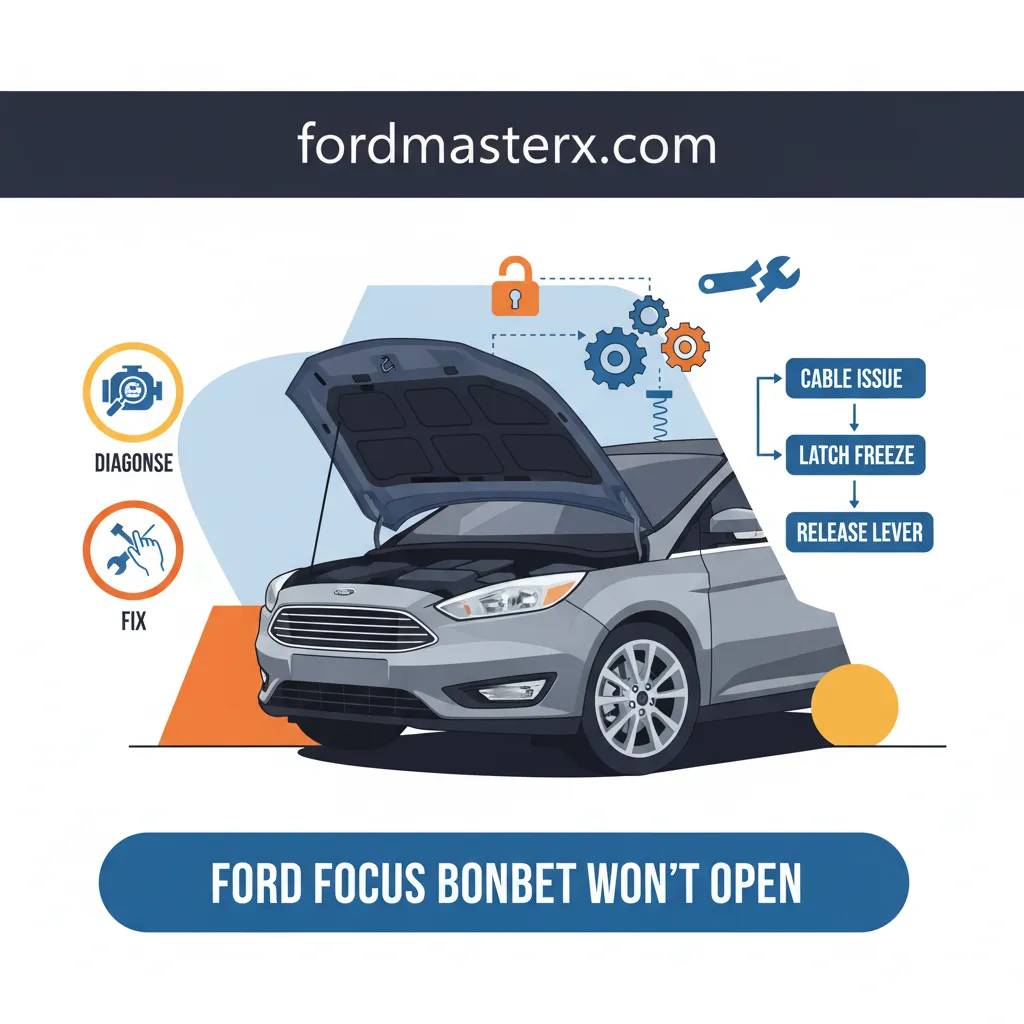
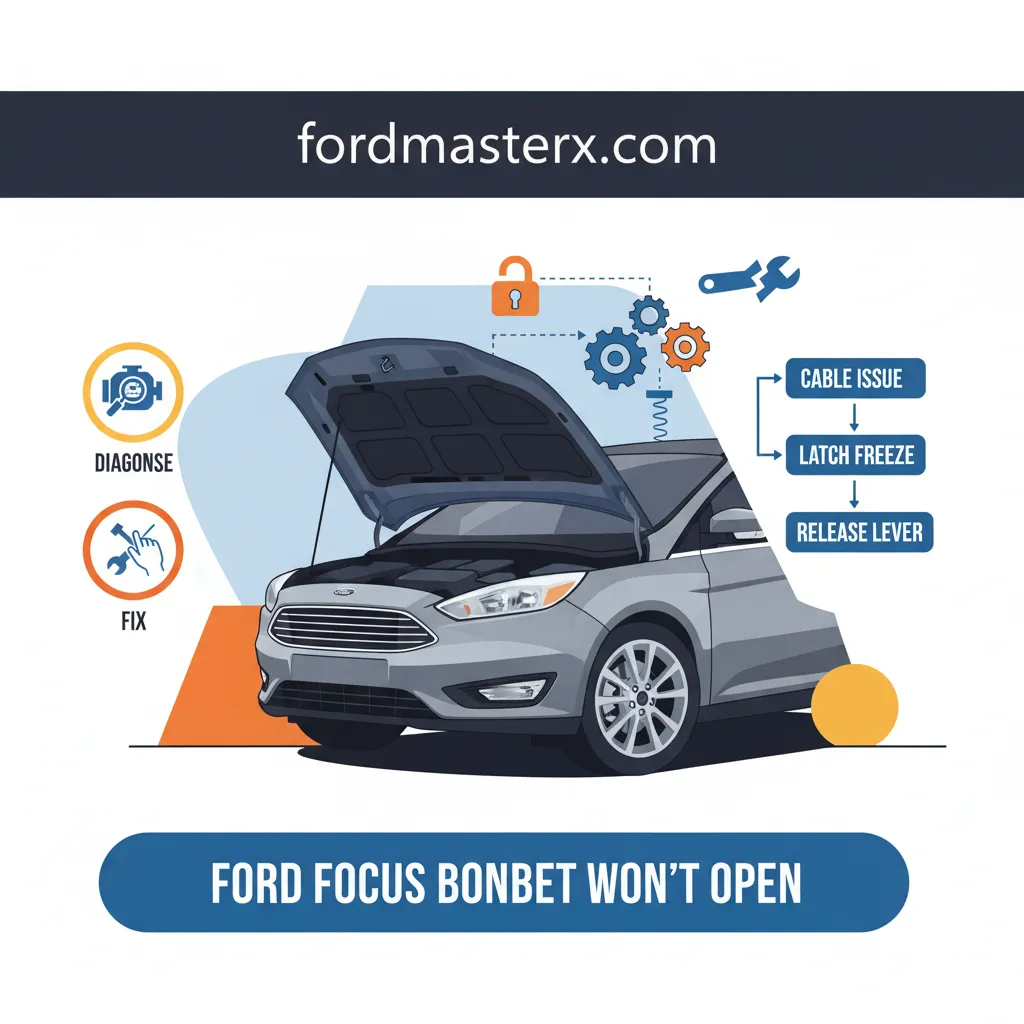
A stuck bonnet on a Ford Focus is more than a minor inconvenience; it is a gatekeeper that prevents essential vehicle maintenance and emergency fluid top-ups. The unique key-operated latch system found in many Ford Focus models, particularly the Mk2 generation, is notorious for mechanical failure. This often leaves drivers unable to access the engine bay despite having the correct key, potentially leading to overheating or battery failure if left unaddressed. This guide provides a professional-grade diagnostic workflow to troubleshoot the release mechanism, execute emergency opening procedures, and implement a permanent fix using upgraded components.
Section 1: Understanding the Ford Focus Key-Operated Latch Mechanism
📤 Share Image
To effectively diagnose why a Ford Focus bonnet remains locked, one must first understand the idiosyncratic engineering behind the release mechanism. Unlike most vehicles that utilize a simple interior cable-pull system, the Ford Focus (specifically models manufactured between 2004 and 2011) employs a grille-mounted, key-operated lock barrel. This system relies on a mechanical bridge known as the ‘butterfly’ or ‘bone’ linkage rod (Part No: 1355231).
The linkage is a plastic rod approximately 4 inches long with ball-and-socket ends. It connects the rear of the lock cylinder (where you insert the key) to the front of the latch assembly. When you rotate the key anti-clockwise, the rod turns a receiver in the latch to release the primary catch. Rotating the key clockwise then releases the secondary safety catch, allowing the bonnet to be lifted. This two-stage mechanical logic is designed for safety, but it introduces multiple failure points.
By The Numbers
Failures due to Plastic Linkage
Rotational Key Logic
The transition from plastic to metal aftermarket linkages has become the industry-standard solution for a permanent repair. The OEM plastic rod is susceptible to “heat-cycling”—the constant expansion and contraction caused by engine heat—which eventually causes the plastic sockets to stretch or the rod itself to snap. Furthermore, the lock barrel cylinder itself can suffer from tumbler misalignment. If the internal pins do not align perfectly with the Tibbe key, the barrel will not rotate the linkage rod, leaving the latch immobile.

Section 2: Primary Causes for a Ford Focus Bonnet That Won’t Release
When a driver identifies that the bonnet won’t open, the cause is usually found within one of four specific mechanical failures. Identifying the symptoms accurately is the first step in a professional troubleshoot workflow.
1. Disconnected or Broken Linkage Rod
The most common failure in Mk2 models is a linkage that has simply “popped out” of its housing. If the key turns with zero resistance—feeling “limp” or spinning freely in both directions—the bone linkage has likely disconnected from either the lock barrel or the white plastic cross-receiver on the latch. Over 70% of Focus bonnet issues stem from this disconnection, often exacerbated by a gentle front-end “tap” or bumper vibration.
2. Seized Latch Assembly
In regions where road salt and winter grit are prevalent, corrosion is a significant factor. Approximately 15% of failures are attributed to a seized latch where the metal components have oxidized to the point that the spring-loaded catch cannot retract. In these cases, the key might feel stiff or provide some resistance, but the mechanism fails to trip. A case study involving a 2009 Focus demonstrated that an owner mistakenly suspected a broken cable, but the actual issue was solved by a high-pressure degreaser treatment followed by PTFE lubrication.
3. Cable Stretch (Post-2012 Models)
For Mk3 Focus models (2012 and later) that utilize an interior lever, the issue shifts to the bowden cable. A mere 5mm of cable stretch can prevent the latch from reaching its full travel. If the interior lever feels loose or has too much “play” before feeling tension, the cable has likely stretched or the plastic housing at the lever end has cracked, preventing a full pull.
4. Sheared Lock Barrel Pins
If the key cannot be turned at all, or if it turns but the internal “drive” end of the barrel does not move, the internal tumblers or the paddle at the back of the cylinder may have sheared. This is common if a driver has attempted to force the lock during a freeze or if the key itself is excessively worn.

Section 3: Step-by-Step Diagnostic Procedures to Fix a Stuck Bonnet
Before resorting to destructive entry, a systematic fix should be attempted using non-invasive methods. The following procedures are designed to bypass common failure points without causing cosmetic damage to the grille or paintwork.
📋
Step-by-Step Diagnostic Guide
Have an assistant apply firm, rhythmic downward pressure on the front edge of the bonnet directly above the latch. While they are pushing down, attempt to turn the key anti-clockwise. This method relieves tension on the primary catch and successfully opens approximately 30% of stuck bonnets where the latch is merely bound by friction.
Use a high-lumen flashlight to peer through the honeycomb grille. Locate the white plastic receiver (the ‘cross’) behind the lock. If the linkage rod is visible but disconnected, use a long, thin flat-head screwdriver to manually guide the rod back into the socket while turning the key. This requires patience but avoids the cost of a new grille.
Apply a penetrating oil, such as WD-40 Specialist or PB Blaster, directly into the lock barrel. Additionally, spray through the grille toward the latch assembly. Allow the lubricant to sit for 15 minutes. This is critical if the failure is due to oxidation or seized tumblers within the barrel itself.
Ford’s Tibbe keys are cylindrical and wear down over time. If your key’s “flats” are rounded, it may not be engaging the lock barrel tumblers correctly. Try your spare key; if the spare works, the solution is a simple key replacement rather than a mechanical repair.
Section 4: Emergency Opening Solutions When the Linkage is Broken
If standard troubleshooting fails and the linkage rod is physically snapped or the barrel is destroyed, you must utilize an alternative opening method. These are advanced techniques used by professionals to gain entry when maintenance is urgent.
Accessing from Underneath
The most non-destructive emergency method involves removing the plastic undertray (splash guard) from beneath the engine. Once removed, a technician can reach up between the radiator and the engine block. You are looking for the two 10mm bolts that secure the latch assembly to the radiator support frame. By unbolting the latch itself, the bonnet can be lifted slightly with the latch still attached to the striker. Once the bonnet is partially open, you can manually trip the release lever with a screwdriver.
The ‘Grille Sacrifice’ Method
In many scenarios, the cost of professional labor to reach the latch from underneath exceeds the cost of a replacement grille. For a standard Zetec model, a replacement grille costs approximately $40–$60. By strategically cutting a small 3×3 inch section of the honeycomb mesh near the Ford badge, you gain direct hand access to the latch. Important Warning: On Focus ST or RS models, the grilles are significantly more expensive; always exhaust the “underneath” method first for performance variants.
Some high-spec Focus models are equipped with an anti-theft shield over the latch bolts. If you encounter a metal plate blocking the 10mm bolts, you may need to use a long-reach chisel to knock the security shear-bolts loose, or continue with the grille sacrifice method.
Section 5: Repairing and Replacing the Bonnet Lock and Linkage
Once the bonnet is finally open, the goal shifts from entry to a permanent fix. Reinstalling the same plastic OEM parts is a mistake that will likely lead to future failure. Instead, follow this professional repair protocol.
Metal Linkage Upgrade
Replace the plastic rod with an aluminum or stainless steel aftermarket version. These do not suffer from heat-cycling and provide a much more positive engagement with the lock barrel.
Barrel Re-Indexing
Ensure the paddle at the back of the lock cylinder is perfectly aligned with the linkage rod. If the barrel is “crunchy,” replace it with a new unit keyed to your original key (Part No: 4894663).
The Critical ‘Screwdriver Simulation’ Test
Never slam the bonnet shut immediately after a repair. Instead, with the bonnet open, use a screwdriver to manually click the latch into the closed position. Insert your key and test both rotations (anti-clockwise then clockwise). If the latch pops open for the screwdriver, it is safe to close the bonnet. This simple test prevents you from being locked out again due to a minor indexing error.
Finally, apply a generous coating of white lithium grease or a silicone-based lubricant to the latch assembly pivot points. Unlike thin oils, these lubricants stay in place despite road spray and engine heat, providing long-term protection against the oxidation that causes latch seizures. A professional technician can typically complete the linkage and latch replacement in 1.0 to 1.5 hours, ensuring the vehicle remains serviceable for years to come.
In summary, most Ford Focus bonnet failures stem from a disconnected or broken plastic linkage rod between the lock and the latch. Initial troubleshooting should focus on non-destructive methods like the two-person pressure technique and external lubrication before considering emergency bypasses. Permanent repairs involve replacing fragile plastic OEM parts with reinforced metal components and performing regular latch maintenance to prevent oxidation. If your linkage has failed, browse our recommended metal replacement kits to ensure you never face a locked bonnet again. For more Ford DIY repairs, subscribe to our technical newsletter.
Frequently Asked Questions
Can I spray WD-40 into the lock barrel if it won’t turn?
Yes, spraying a penetrating lubricant or a specific lock lubricant like graphite can help if the tumblers are seized. However, if the key turns but the bonnet doesn’t pop, the issue is mechanical linkage failure behind the lock, which lubrication alone will not fix. Always clean the key before and after insertion to prevent debris buildup.
Why did Ford use a key-operated lock instead of an interior lever?
Ford implemented the grille-mounted key release as a security feature and to streamline global manufacturing for the Mk2 Focus platform. While intended to prevent unauthorized engine bay access, the design relied on a plastic linkage that became brittle over time due to engine heat, leading to the high failure rate seen in aging vehicles today.
How much does a mechanic charge to fix a Focus bonnet latch?
A professional repair typically costs between $150 and $300. This includes roughly $50-$100 for parts (latch and linkage) and 1-2 hours of labor. If the bonnet is currently stuck and requires emergency opening procedures, labor costs may increase due to the complexity of gaining access without damaging the grille or bodywork.
Is there a way to open the bonnet from inside the car on a Mk2?
No, the Mk2 Ford Focus (2004-2011) does not have a secondary interior release lever. The system is entirely external and mechanical. If the external lock fails, you must use one of the emergency bypass methods, such as accessing the latch from underneath the vehicle or manually manipulating the linkage through the front grille.
Will a metal replacement linkage affect my car’s security?
No, a metal replacement linkage performs the exact same mechanical function as the original plastic part. It connects the existing lock barrel to the latch. Since you still require the specific Tibbe key to rotate the lock barrel and move the linkage, your vehicle’s security remains fully intact while significantly increasing the reliability of the mechanism.