Ford Fiesta Road Tax Rates: A Complete Guide To Ved Costs By Year And Engine

The Ford Fiesta has long been a staple of British motoring, but the cost of keeping one on the road varies dramatically depending on a single date: April 1, 2017. With numerous engine variants and two distinct UK tax systems in play, many owners and prospective buyers struggle to calculate exactly what they owe the DVLA annually. This comprehensive and professional guide provides a granular breakdown of Ford Fiesta road tax rates, ensuring you have the expert data needed to budget for your vehicle’s VED accurately.
Understanding the UK VED Framework for Ford Fiesta Models
📤 Share Image
Navigating the Vehicle Excise Duty (VED) landscape requires a nuanced understanding of how registration dates dictate financial liability. For over a decade, the UK government incentivized low-emission vehicles through a CO2-based hierarchy. However, the system underwent a seismic shift on April 1, 2017, moving toward a standardized flat-rate model for most passenger vehicles. This transition created a significant price disparity between older and newer Ford Fiesta generations that look nearly identical but carry vastly different running costs.
The pre-2017 system was remarkably generous to Ford’s engineering milestones. When Ford introduced the 1.0-litre EcoBoost engine, it was a quality-driven response to tightening emission standards. Because many of these units produced less than 100g/km of CO2, they fell into VED Band A, which carries a £0 annual charge. In contrast, the post-2017 system focuses on a ‘First Year Rate’ (often called showroom tax) followed by a standard rate for subsequent years. For a modern Fiesta, this means you are no longer rewarded for choosing the ultra-efficient engine after the first 12 months of ownership.
The Showroom Tax vs. Standard Rate
For vehicles registered after the 2017 cutoff, the initial tax payment is calculated based on the CO2 figures recorded during the complete WLTP (Worldwide Harmonised Light Vehicle Test Procedure) testing cycle. This first-year payment is typically bundled into the ‘on-the-road’ price of a new car. Once the vehicle enters its second year, the cost reverts to a flat rate—currently £180 for petrol and diesel models. This reliable framework simplifies budgeting for newer cars but eliminates the “tax-free” status enjoyed by older EcoBoost variants.
Direct Comparison: The 2017 Divide
2016 1.0 EcoBoost (Annual Tax)
2018 1.0 EcoBoost (Annual Tax)

Ford Fiesta Road Tax Rates for Vehicles Registered Before April 2017
If you are browsing the used car market, the pre-April 2017 Fiestas represent some of the most trusted and cost-effective options for minimizing VED. During this era, tax was strictly tied to CO2 output, categorized into Bands A through M. Because the Fiesta was engineered to be a class leader in efficiency, a huge volume of these vehicles sit in the bottom three tax tiers.
The “Tax-Free” Band A Fiestas
The “holy grail” for many used car buyers is Band A, which applies to vehicles emitting 100g/km of CO2 or less. Ford achieved this through two primary engine technologies: the 1.0L EcoBoost (99g/km in certain configurations) and the 1.6L TDCi ECOnetic diesel engine. The ECOnetic variant, in particular, was a professional engineering feat, utilizing lowered suspension and aerodynamic tweaks to achieve emissions as low as 87g/km. These models are permanently exempt from annual VED payments under the current rules.
Mid-Range Petrol Variants (Bands C and D)
Not every Fiesta from this era qualifies for free tax. The popular 1.25L Duratec engine, a reliable workhorse of the Mk7 generation, typically produces around 120g/km. This places it in Band C, costing owners a modest £35 per year. Older 1.4L or 1.6L naturally aspirated petrol engines often fall into Band D (121-130g/km), which currently commands a £150 annual fee. Understanding this distinction is vital, as a 1.25L Zetec and a 1.0L EcoBoost might have similar purchase prices but a £150+ difference in tax liability over a few years of ownership.
Post-2017 VED Changes and Current Ford Fiesta Tax Obligations
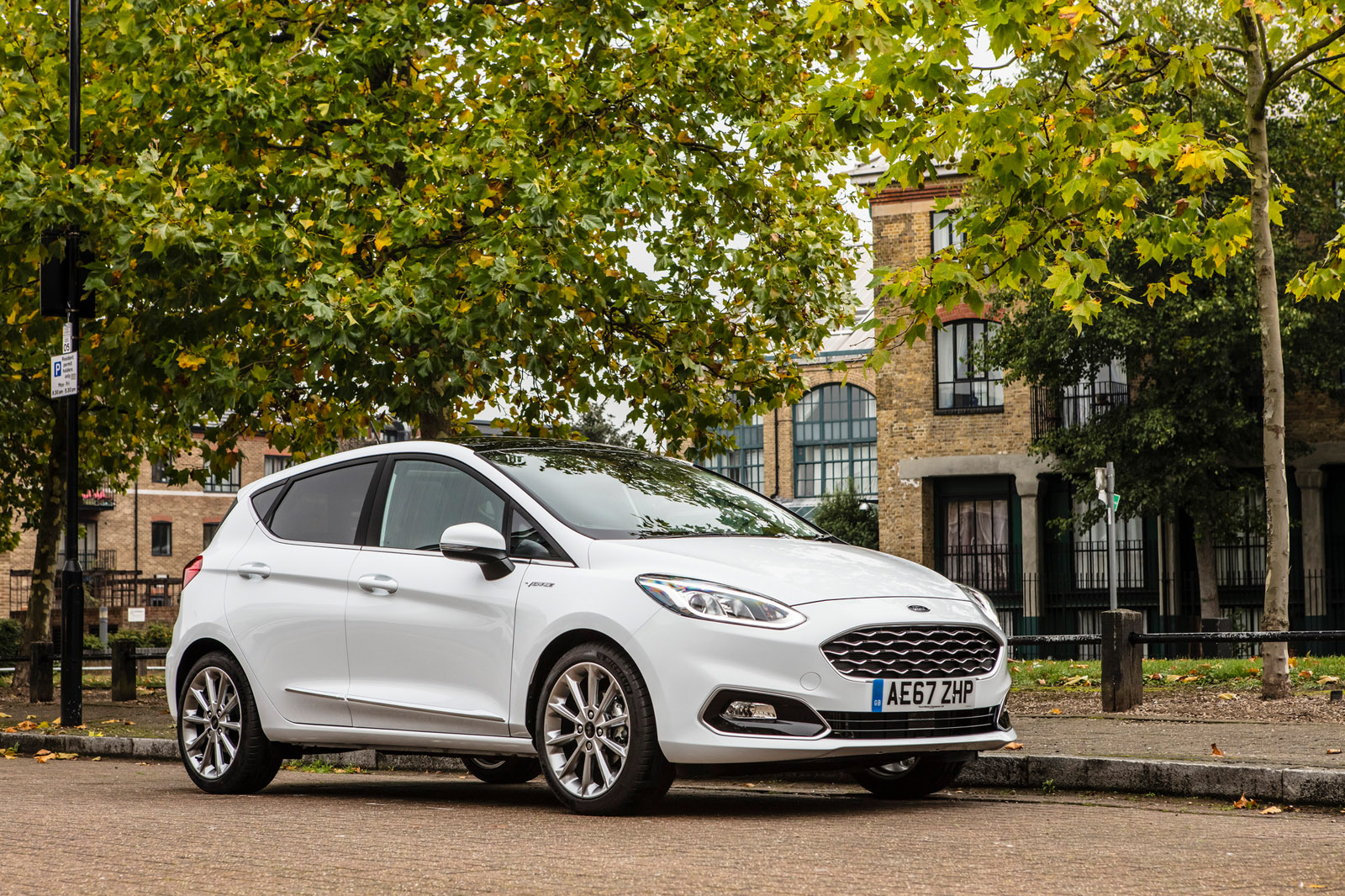
For Fiestas registered on or after April 1, 2017, the game changed entirely. The standard rate for all petrol and diesel cars is now a flat fee of £180 per year. This applies whether you are driving a base-model Trend or a fully-loaded Vignale. This shift was designed to maintain government tax revenue as cars became increasingly efficient, effectively decoupling long-term tax costs from environmental performance.
The Mild Hybrid (mHEV) Discount
In the final years of the Fiesta’s production (Mk8.5), Ford introduced 48V mild-hybrid (mHEV) technology to the 1.0L EcoBoost powertrain. These models qualify as “Alternative Fuel Vehicles” (AFV) in the eyes of the DVLA. As a result, they receive a modest £10 discount on the annual standard rate, bringing the cost down to £170. While £10 may seem negligible, it is a professional indicator of the vehicle’s updated powertrain tech and slightly lower first-year showroom tax.
WLTP and First Year Rates
When a car is first registered, it pays a rate based on its exact CO2 output. Because the WLTP testing cycle is more rigorous than the old NEDC test, modern Fiestas often show higher CO2 figures on paper than their predecessors. For a standard 2022/2023 Ford Fiesta emitting between 111-130g/km, the first-year VED is currently £210. After that initial year, it drops to the reliable £180 standard rate (or £170 for mHEVs).
Luxury cars with a list price over £40,000 pay a £390 annual supplement. Fortunately, even the most expensive Fiesta ST-3 or Vignale models remain safely under this threshold, meaning you will never have to worry about the “Premium Car” surcharge.
The Reliable Impact of Engine Choice on Fiesta VED Costs
As a seasoned industry expert, I often advise clients that the engine choice dictates the long-term “hidden cost” of the vehicle. While the 1.0L EcoBoost is celebrated for its performance-to-efficiency ratio, its tax benefits are era-specific. Choosing a 2016 EcoBoost versus a 2018 EcoBoost results in a £900 difference in tax over five years of ownership. This is a nuanced reality that buyers must factor into their total cost of ownership (TCO).
Diesel vs. Petrol Tax Implications
Ford’s 1.5L TDCi diesel engines are remarkably efficient, but they faced scrutiny during the implementation of RDE2 (Real Driving Emissions Step 2) standards. Most post-2018 Fiesta diesels are RDE2 compliant, which means they avoid the heavy diesel surcharge that previously plagued older oil-burners. However, unless you are doing high motorway mileage, the £180 standard rate for a post-2017 diesel offers no tax advantage over the petrol EcoBoost.
Taxing the Performance Fiesta ST
The performance-oriented ST models have distinct tax profiles. The Mk7 ST (1.6L 4-cylinder) usually sits in Band E or F, costing roughly £180-£210 depending on the specific year. The Mk8 ST (1.5L 3-cylinder) is far more efficient but is hit hard in the first year due to its 151g/km output, resulting in a first-year “showroom tax” of approximately £645. After year one, however, it settles back down to the complete standard rate of £180.
✅ Tax Savings: 1.0 EcoBoost (99g/km)
- £0/year for pre-2017 models
- Over £900 saved over 5 years vs standard cars
- High resale value due to low running costs
❌ Tax Costs: 1.5 ST (151g/km)
- £645 first-year showroom tax
- Standard £180 rate thereafter
- No AFV discount (not a hybrid)
How to Expertly Verify and Renew Your Ford Fiesta Road Tax
Managing your VED compliance is a critical part of vehicle ownership. In the digital age, the process is streamlined, but there are several common pitfalls that can lead to significant fines. It is essential to remember that road tax is no longer transferable between owners; when you buy a used Fiesta, the previous owner’s tax is cancelled, and you must tax it yourself before driving it away.
📋
Step-by-Step VED Compliance Guide
Check section V.7 of your vehicle’s registration document (V5C). This provides the quality data used by the DVLA to set your rate.
Navigate to the official ‘Check if a vehicle is taxed’ service. You only need the registration number to see the current status and expiry date.
To avoid the £1,000 fine for untaxed driving, set up an annual or monthly Direct Debit. This ensures reliable renewal even if you forget the date.
When you sell your Fiesta, the DVLA will only refund full months of remaining tax. If you sell on the 2nd of the month, you lose that entire month’s payment. Plan your sale timing carefully to maximize your refund.
In summary, the Ford Fiesta remains one of the most versatile cars on UK roads, but its tax liability is a tale of two systems. Pre-2017 Fiestas with low emissions can still benefit from £0 or low-cost VED bands, making them exceptional value for money. Post-2017 models generally adhere to a flat standard rate, with slight discounts for mild-hybrid variants. Always verify the specific CO2 output on the V5C document to determine the exact tax liability for older models. Before purchasing your next used Ford Fiesta, use the official DVLA portal to cross-reference the registration date and CO2 emissions to avoid unexpected tax costs.
Frequently Asked Questions
Which Ford Fiesta models are eligible for free road tax?
To qualify for £0 road tax, a Ford Fiesta must have been registered before April 1, 2017, and emit less than 100g/km of CO2. Professional favorites for this category include the 1.0-litre EcoBoost (99g/km) and the 1.6-litre TDCi ECOnetic. Any Fiesta registered after the April 2017 rule change will incur at least a standard annual fee, regardless of its low emissions.
How much is the road tax for a Ford Fiesta 1.25 Zetec?
The 1.25L Zetec is a common engine in Mk7 Fiestas. If registered before April 2017, it typically produces around 120g/km of CO2, placing it in VED Band C, which currently costs £35 per year. However, if the emissions are slightly higher (e.g., 124g/km), it may fall into Band D, costing £150. Always check the V5C logbook for the exact CO2 figure.
Does the Ford Fiesta mHEV qualify for a road tax discount?
Yes, Ford Fiesta models equipped with mild-hybrid (mHEV) technology are classified as ‘Alternative Fuel’ vehicles by the DVLA. This status provides a £10 annual discount on the standard road tax rate. For the 2024/25 tax year, this means owners pay £170 per year instead of the £180 standard rate applied to traditional petrol or diesel models.
What is the first-year road tax for a new Ford Fiesta ST?
The performance-oriented Fiesta ST, featuring a 1.5-litre EcoBoost engine, has higher CO2 emissions (roughly 151g/km). Under the current UK tax system, this results in a significantly higher ‘First Year Rate’ of approximately £645. After the first year, the tax drops to the standard rate for petrol vehicles, which is currently £180 per annum.
Can I transfer road tax when I buy a used Ford Fiesta?
No, road tax is not transferable between owners. When you purchase a used Ford Fiesta, the existing tax is cancelled, and the previous owner can claim a refund for any full remaining months. As the new owner, you must tax the vehicle in your name using the ‘new keeper’ supplement (V5C/2) before driving the car on public roads.