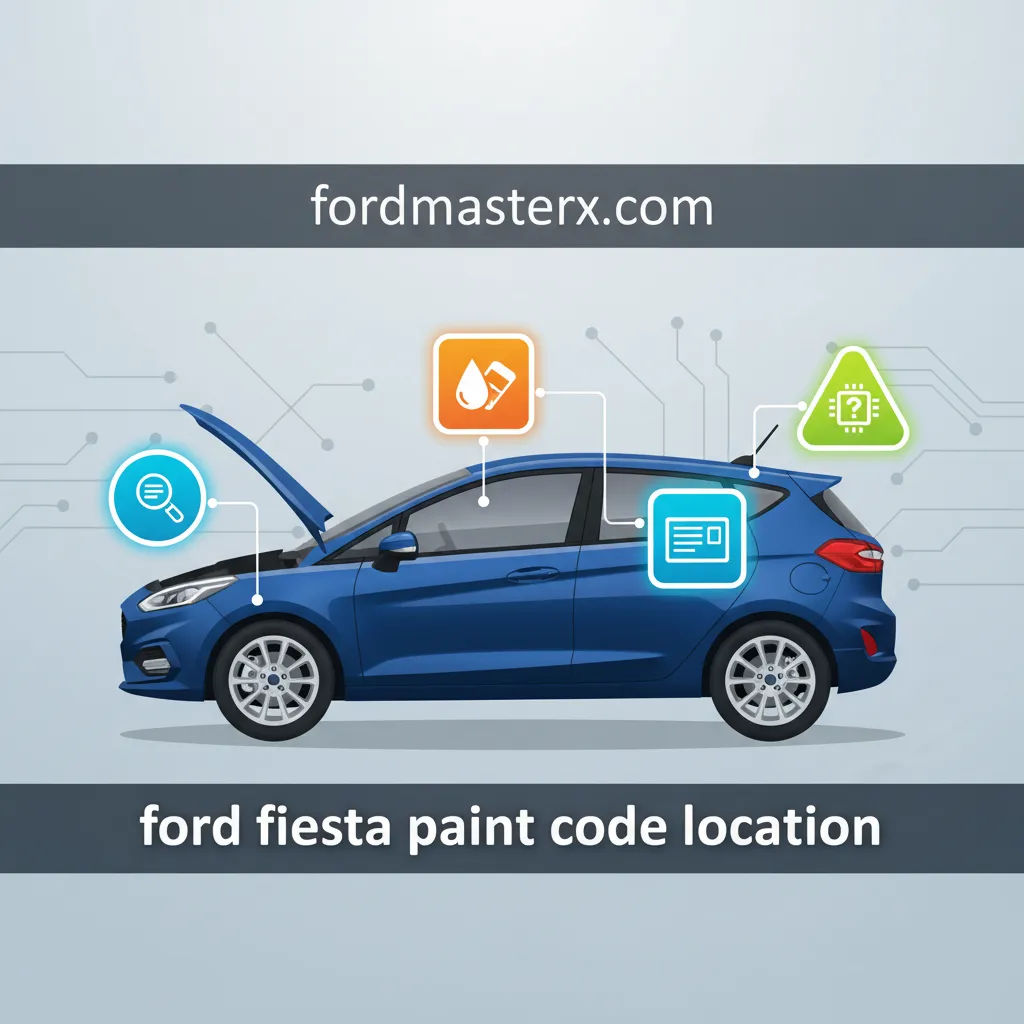
Ford Fiesta Paint Code Location And Vehicle Identification Plate Reference

Precision in automotive refinishing begins with the accurate identification of the manufacturer’s specific color formulation. For Ford Fiesta owners, the path to a seamless repair—whether addressing a minor stone chip or a significant bumper scuff—is often obscured by the complex array of technical data plates affixed to the chassis. Finding the exact alphanumeric string that defines your vehicle’s aesthetic identity is the critical first step in ensuring a match that withstands the scrutiny of direct sunlight. This guide provides a definitive roadmap to finding your Ford Fiesta paint code location, interpreting the VIN plate, and accessing professional color-matching services within your community to achieve a factory-standard finish.
Primary Ford Fiesta Paint Code Location and Door Jamb Identification
📤 Share Image
When initiating a color-matching project, your first point of inspection should always be the driver-side door aperture. On modern Ford Fiestas, specifically the Mk7 and Mk8 generations (2008–present), the manufacturer places a high-durability adhesive label on the B-pillar frame—the vertical metal support where the door latches. This label is the Ford Vehicle Certification Label, a central repository for technical specifications including gross vehicle weight, tire pressures, and, most importantly, the exterior finish code. Data suggests that approximately 85% of Ford Fiestas manufactured after 2008 house their paint identification in this specific location, making it the most accessible and reliable source for owners.
On this sticker, you are searching for a specific field labeled ‘EXT PNT’ (Exterior Paint). Directly below or adjacent to this header, you will find a two-digit code. For example, a 2014 Ford Fiesta (Mk7) finished in the popular Ingot Silver Metallic will display the code ‘UX’. It is essential to differentiate between the primary paint code and other nearby manufacturing digits; the paint code is strictly alphanumeric and adheres to Ford’s global color standard, ensuring that a trusted local supplier can provide an exact chemical match.
If the B-pillar is clear of any stickers, particularly on older European-spec Mk6 variants (2002–2008), the identification plate may be located under the hood. Inspect the radiator support crossmember or the firewall. These older metal plates often use a convenient grid system where the paint code occupies a specific box on the lower left or right edge.
Environmental wear is a common pitfall. Over time, road salt, UV exposure, and abrasive cleaning chemicals can obscure the characters on the certification label. If the sticker is partially illegible, do not guess the characters. Instead, cross-reference any visible markings with the vehicle’s owner manual, which often contains a section on vehicle identification, or use the VIN through an official database. Ensuring the integrity of this code is paramount, as even a single character discrepancy can result in a shade variance that becomes glaringly obvious once the clearcoat is applied.
Global Placement Statistics
Driver B-Pillar Location
Engine Bay / Crossmember

Decoding the Ford VIN Plate to Verify Paint Specifications Nearby
Once you have located the certification label, decoding the information requires a nuanced understanding of Ford’s technical layout. The bottom row of the sticker is typically where the most critical refinishing data resides. While the ‘EXT PNT’ code is your primary lead, modern automotive finishes are rarely simple. Ford utilizes over 40 distinct paint codes for the Fiesta line globally, ranging from basic non-metallic solids to complex pearlescent and tri-coat finishes. Understanding the distinction between these systems is vital for anyone serving the DIY or professional repair community.
When you present a code like ‘Z9’ (Grabber Blue) or ‘H8’ (Race Red) to a nearby mixing center, the technician will look up the formula in their database. However, you must also be aware of the ‘Interior Trim’ code located adjacent to the paint code. On the Fiesta, certain exterior components like side mirror caps, door handles, and fog light surrounds may be keyed to an accent color or a specific trim finish rather than the main body color. Verifying both codes ensures a cohesive aesthetic across the entire vehicle profile.
Specific colors, such as Candy Red (Code RZ), utilize a multi-stage application process known as a tri-coat system. This involves a basecoat, a translucent mid-coat (the “tint”), and a final clearcoat. A simple touch-up pen will rarely suffice for these finishes; they require a professional-grade multi-stage kit to replicate the factory depth and brilliance.
In instances where the physical sticker is missing—perhaps due to a prior accident repair where the B-pillar was repainted—digital verification is your fallback. You can utilize the Ford Etis (Electronic Technical Information System) or visit a local Ford dealership. By providing your 17-digit VIN, parts departments can pull the original “as-built” data for the vehicle. This digital record is the ultimate truth, confirming whether your Fiesta left the factory in Magnetic Metallic (J7) or Shadow Black (G1), regardless of the vehicle’s current state.

Automotive Refinishing Services and Color Matching Available in Your Community
Finding the code is only half the battle; acquiring the correct medium for repair is the next logical step. Fortunately, specialized automotive paint suppliers are available in most urban and suburban areas, offering services that go far beyond the generic “one-size-fits-all” spray cans found in big-box retailers. These trusted local mixing hubs can produce custom-mixed aerosol cans, touch-up pens, or pint-sized containers specifically formulated to your Fiesta’s ‘EXT PNT’ code.
For a truly professional result, particularly on vehicles older than five years, consider location-based services that offer computerized spectrophotometry. Over time, UV radiation and environmental pollutants cause the factory paint to shift in hue—a process known as “fading.” A nearby professional body shop can use a spectrophotometer to scan your car’s actual paint. This technology can account for up to 99.8% of UV-related color shift, allowing the technician to adjust the factory formula (like Magnetic Metallic J7) to match the current state of your vehicle perfectly. This is accessible technology that bridges the gap between a “visible repair” and an “invisible restoration.”
Custom Aerosols
Local paint houses can fill 12oz aerosol cans with professional-grade urethane paint matched to your ‘UX’ or ‘J7’ code for DIY panel repairs.
Paint Correction
Community-trusted detailers can blend new touch-ups into the existing clearcoat using high-speed machine polishing for a seamless finish.
Atmospheric conditions also play a vital role in the application process. When consulting with local technicians, ask about the regional climate’s impact on curing times. In high-humidity coastal areas or extremely dry desert climates, the solvents in the paint may evaporate at different rates. Professional shops serving your area use climate-controlled booths to mitigate these factors, but for a DIY repair, you must choose a day with moderate temperature and low humidity to ensure the Magnetic Metallic or Frozen White pigments settle correctly without “blushing” or mottling.
Accessing Technical Support and Paint Supplies at a Location Near You
Once you’ve identified that your Fiesta is Kona Blue (G3) or the ubiquitous Frozen White (7VTA), the procurement phase begins. Your first destination should be an authorized Ford service center. While independent shops offer competitive pricing, the OEM (Original Equipment Manufacturer) touch-up kits sold at the dealership are chemically identical to what was applied at the assembly plant. These kits are conveniently packaged with a dual-tip applicator—a fine needle for stone chips and a brush for larger scratches—alongside a specialized clearcoat reservoir.
If you prefer accessible independent options, retailers like NAPA or specialized automotive paint stores carry localized inventory tailored to Ford’s most popular regional palettes. In urban locations, Frozen White often accounts for 30% of all Ford touch-up sales, meaning it is likely in stock for immediate pickup. For more niche colors like Blue Candy (L6), these stores can typically mix the paint on-site while you wait, using the code you retrieved from your B-pillar.
📋
Supply Sourcing Steps
Locate the 2-digit code (e.g., UX, J7, Z9) on the driver-side door jamb label.
Call a nearby Ford parts department or paint hub to ensure the pigment is currently in stock.
For bumper scuffs, contact a mobile SMART repair specialist who can provide on-site service in your neighborhood.
For residents with busy schedules, mobile SMART (Small Medium Area Repair Technology) technicians offer a convenient alternative. These specialists travel to your location and perform repairs on-site. Because they carry compact mixing systems, they can use the paint code identified on your VIN plate to mix a small batch of fresh paint in their mobile van. This service is ideal for addressing bumper scuffs using the Kona Blue (G3) code or other metallic finishes that require precise blending into the surrounding panel.
Applying the Ford Paint Code for Professional Results in Body Repair
Once you possess the correctly matched paint, the application process determines the longevity and quality of the repair. Precision is key. Start by cleaning the damaged area and the surface nearby the paint code location with a dedicated wax and grease remover. Even trace amounts of silicone from car waxes can cause the new paint to “fish-eye,” leading to a failed bond and an uneven texture. Surface preparation is 90% of a successful automotive refinish.
If the damage has penetrated the factory clearcoat and reached the bare substrate—be it steel or the plastic of the bumper cover—an appropriate primer is mandatory. Ford’s factory substrate requires an adhesion promoter for plastics or an etching primer for metal. Without this foundation, your carefully matched Magnetic Metallic paint will eventually flake or peel. Utilize the paint code data to order a precision-matched ‘leveling’ kit, which includes high-build primer designed to sit flush with the surrounding paint layers.
Before committing to a visible exterior panel, always perform a test spray on an inconspicuous area, such as the inner door frame near where you found the VIN plate. This allows you to verify the color match and practice the layering technique required for complex shades like L6 Blue Candy Tinted Clearcoat. This specific color requires a meticulous layering process to achieve its high-depth, luminous appearance. Ford’s refinishing guidelines recommend a 15-minute flash-off time between coats in temperate climates to ensure optimal adhesion and to prevent the metallic flakes from “sinking,” which can darken the final color.
✅ Pros of OEM Paint
- Exact chemical formulation match
- Proper UV-resistance additives
- Includes matching clearcoat pens
- Preserves vehicle resale value
❌ Cons of Generic Pens
- Frequent shade variances
- Poor adhesion to Ford primers
- Lack of metallic flake density
- May yellow under sun exposure
By following these professional standards—from the initial identification at the B-pillar location to the final application of clearcoat—you ensure that your Ford Fiesta maintains its factory-fresh appearance. Leveraging the community of serving professionals and available local resources guarantees that your restoration project is backed by technical precision and industry-best practices.
In summary, the primary paint code location for a Ford Fiesta is almost always the driver-side door jamb or B-pillar certification label. Accurate color matching requires decoding the two-digit ‘EXT PNT’ field on this manufacturer’s plate and distinguishing it from interior trim data. Fortunately, local professional resources, specialized paint houses, and authorized dealerships are accessible and ready to provide VIN-matched supplies and expert application advice tailored to your regional climate. Locate your paint code today and visit a nearby authorized Ford parts provider to secure the high-quality materials needed for your vehicle’s restoration. Taking these steps ensures your Fiesta remains a source of pride, reflecting the precise craftsmanship intended by the manufacturer.
Frequently Asked Questions
What does a Ford Fiesta paint code look like on the sticker?
A Ford Fiesta paint code is typically a two-digit alphanumeric sequence located next to the ‘EXT PNT’ or ‘Color’ heading on the VIN label. Common examples include ‘UX’ for Ingot Silver or ‘J7’ for Magnetic Metallic. It is important not to confuse this with the trim or interior codes, which are usually listed in adjacent columns on the same sticker.
Can I find my Ford Fiesta paint code using just my VIN?
Yes, if the physical sticker is missing or unreadable, you can provide your 17-digit Vehicle Identification Number (VIN) to a local Ford dealership’s parts department. They can access the factory build record in their database, which will specify the exact paint code and name used during the assembly of your specific vehicle, ensuring a perfect match for repairs.
Where is the paint code located on a 2011-2019 Ford Fiesta?
For these model years, the paint code is almost exclusively found on the Vehicle Certification Label located on the driver-side B-pillar. Open the driver’s door and look at the frame; the sticker contains the VIN, tire pressure data, and the paint code. In rare cases or for certain international models, you may need to check the passenger-side door jamb.
What should I do if my Ford paint code isn’t listed in the door jamb?
If the code is not in the door jamb, check the engine compartment, specifically on the radiator support bar or the underside of the hood. If the label is entirely absent, contact a nearby professional body shop. They can use a tool called a spectrophotometer to scan the current paint on your vehicle and generate a custom formula that matches the existing color perfectly.
Are local paint shops able to match metallic or pearlescent Ford colors?
Local professional refinishing shops are equipped with advanced mixing systems designed to replicate Ford’s complex metallic and tri-coat pearlescent finishes. By providing your paint code, they can mix the basecoat, mid-coat (if applicable), and clearcoat to factory specifications. This ensures that the flake orientation and depth of the paint match the rest of your Fiesta’s original exterior.