Ford F-250 Years To Avoid: Identifying Reliability Issues In Power Stroke And Triton Engines

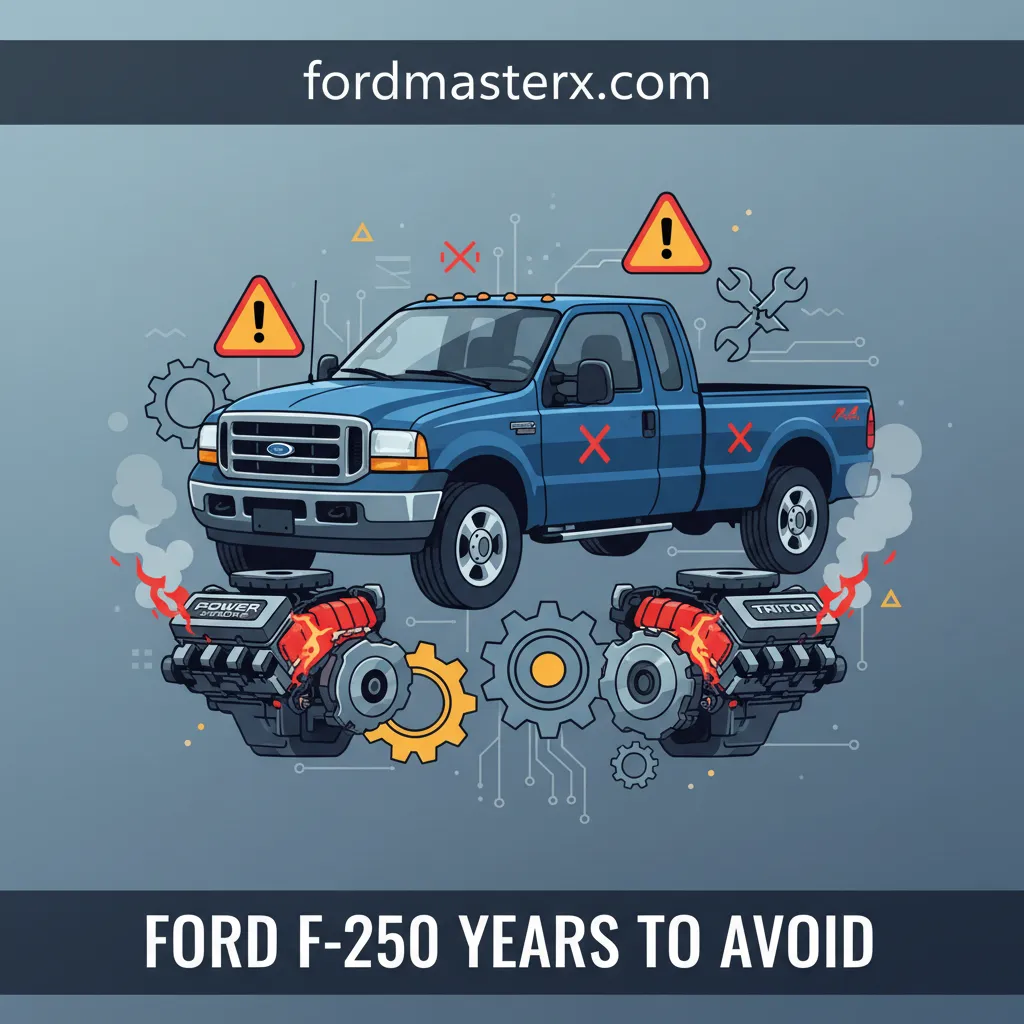
The Ford F-250 Super Duty is an industry icon for heavy-duty capability, yet certain model years can transform from a trusted workhorse into a financial liability. For decades, the F-250 has been the backbone of construction fleets and towing enthusiasts alike, offering a blend of mechanical durability and high-torque performance. However, while the F-250 is synonymous with quality, specific engine designs and suspension configurations have historically led to expensive repairs and safety concerns. Navigating the secondary market requires a nuanced understanding of these fluctuations in reliable engineering. In this comprehensive guide, we will analyze the Ford F-250 years to avoid, detailing the mechanical failures of the 6.0L and 6.4L Power Stroke diesels and the persistent chassis issues that professional buyers must recognize.
The 6.0L Power Stroke Era: Navigating 2003-2007 Model Failures
📤 Share Image
The transition from the legendary 7.3L to the 6.0L Power Stroke in 2003 remains one of the most turbulent periods in Ford’s truck history. While the 6.0L offered higher output and met stricter emissions standards, its initial design was fundamentally flawed. The most significant mechanical risk involves the head gasket failure. The engine utilized only four head bolts per cylinder, which, combined with high cylinder pressures, led to bolt stretching. Once the seal is compromised, coolant enters the combustion chamber, often resulting in cracked heads or a total engine hydrolock.
Further complicating the 6.0L’s reliability is the Exhaust Gas Recirculation (EGR) cooler. In these models, the EGR cooler is prone to clogging with soot. This restriction causes the oil cooler—which resides in the same coolant circuit—to fail. When the oil cooler ruptures, it mixes engine oil and coolant, leading to catastrophic engine overheating. For many owners, the first sign of trouble is a cloud of white smoke from the tailpipe or an inexplicable loss of coolant, signaling an imminent four-figure repair bill.
The 6.0L engine accounted for a significant portion of Ford’s warranty claims between 2003 and 2007, costing the company over $500 million in repairs. If you are inspecting a 2005 F-250 and notice white smoke or “puking” coolant from the degas bottle, the head gaskets or EGR cooler have likely already failed.
Beyond internal hardware, the Fuel Injection Control Module (FICM) is a notorious point of failure. Vulnerable to heat and vibration, the FICM’s internal solder joints often fail, leading to low voltage to the injectors. This manifests as hard-start or no-start conditions, particularly in cold weather. To achieve long-term quality and professional reliability with these years, “bulletproofing” is a necessity. This involves replacing the factory head bolts with high-strength studs, upgrading the EGR system, and installing a high-efficiency oil cooler.
Diesel Deficiencies in the 2008-2010 Ford F-250 6.4L Models
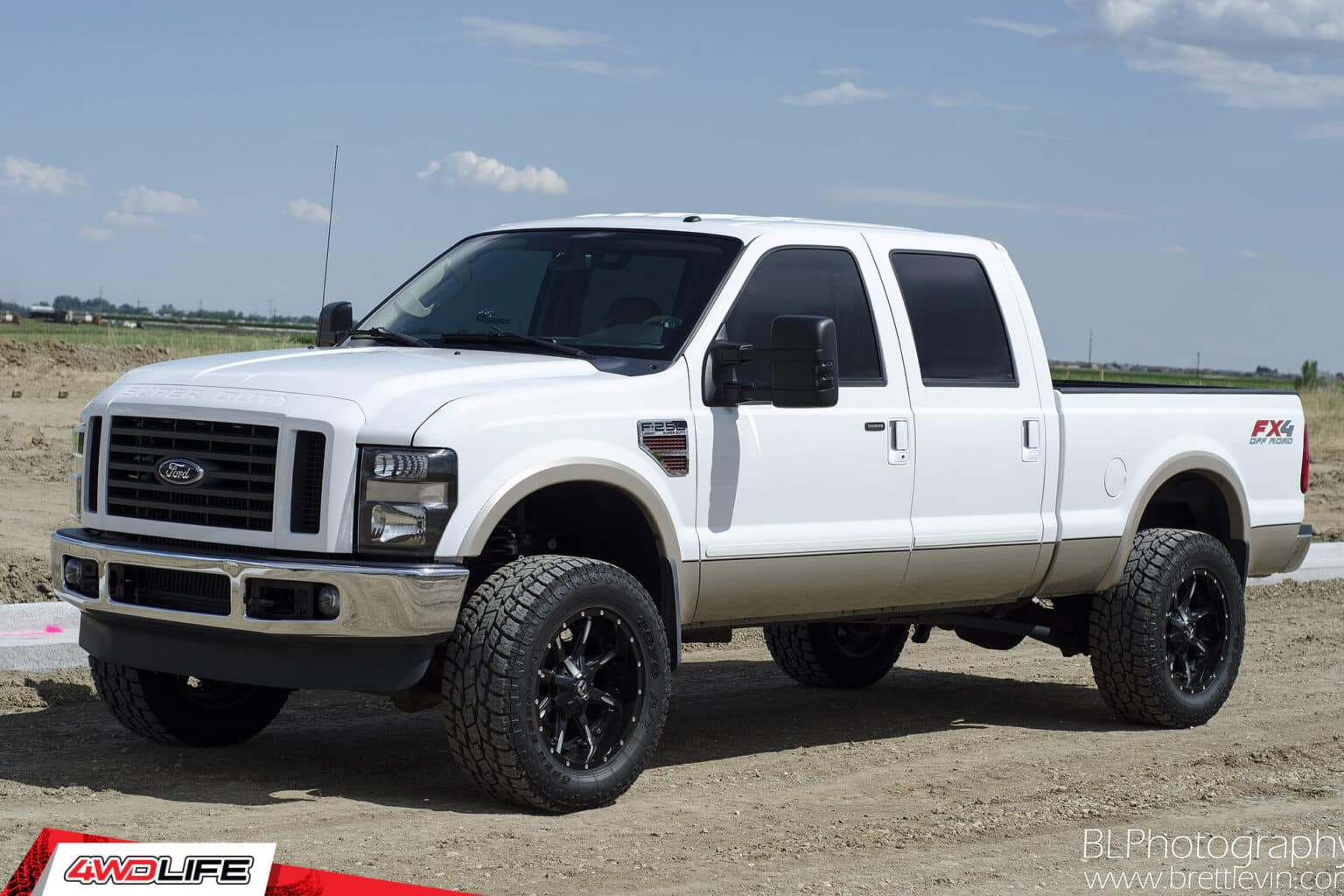
The 6.4L Power Stroke was intended to rectify the sins of the 6.0L, but it introduced a new set of expensive complications. The primary antagonist of this era is the Diesel Particulate Filter (DPF) regeneration cycle. To clean the filter, the engine injects extra fuel into the cylinders during the exhaust stroke. This often leads to fuel dilution in the engine oil, which reduces lubricity and causes premature bearing wear. Professional fleet operators frequently report that 6.4L units require major overhauls before hitting the 150,000-mile mark—a shockingly short lifespan for a heavy-duty diesel.
6.4L Power Stroke Risk Assessment
Avg. Lifespan (Miles)
Short Block Replacement
Cab-Off Requirement
The 6.4L also suffers from cracked pistons and fuel injector tips that can “melt” internal components under heavy towing loads. Because the engine bay is so tightly packed with a twin-turbocharger setup, almost any significant repair requires a “cab-off” procedure. This involves lifting the entire body of the truck off the chassis, which instantly adds thousands of dollars in labor costs to even moderate maintenance tasks. For a contractor relying on a 2008 model, a single DPF clog can snowball into a turbocharger failure and an incapacitated vehicle.
From an expert perspective, the 6.4L is often considered a “throwaway” engine. Unlike the 7.3L or the later 6.7L, which can be rebuilt or repaired incrementally, the 6.4L’s failures are typically catastrophic and cost-prohibitive. Furthermore, the 6.4L’s fuel economy is notably poor compared to its predecessors, making it an inefficient choice for long-haul professional use.
Early 6.7L Transitions and 5.4L Triton Spark Plug Complications
In 2011, Ford introduced the in-house designed 6.7L Power Stroke. While this engine eventually became a trusted and reliable staple, the first-year 2011 models were plagued by “growing pains.” Most notably, the 2011 version utilized ceramic turbocharger bearings. These were prone to disintegration, which would send shrapnel directly into the engine’s intake. Additionally, the Exhaust Gas Temperature (EGT) sensors in early 6.7L units were notoriously fickle; a single sensor failure could trigger an immediate “limp mode,” leaving drivers stranded on the highway with no power.
For those considering the gasoline variant, the 5.4L Triton V8 presents its own set of challenges. Between 2002 and 2005, these engines were famous for ejecting spark plugs directly out of the cylinder head. The heads were designed with insufficient threading, allowing the plugs to vibrate loose and blow out under pressure. In later 3-valve iterations, the issue shifted toward cam phaser failure. A distinct “ticking” sound from the engine often precedes a timing chain failure, which can lead to total engine destruction in this interference-design powerplant.
Addressing the Super Duty Death Wobble: 2005-2019 Chassis Issues
While engine issues capture the most headlines, a persistent safety concern known as the “Death Wobble” has affected F-250 models from 2005 through 2019. This phenomenon is a violent, uncontrollable oscillation of the front wheels, typically triggered after hitting a bump at highway speeds. For a driver at 65 mph, the experience is harrowing—the entire dashboard shakes so violently that maintaining steering control becomes nearly impossible until the vehicle is brought to a near-complete stop.
The technical root of the Death Wobble lies in the F-250’s solid front axle configuration. Over time, the track bar bushings, ball joints, and steering dampers wear down. Even a small amount of play in these components can amplify into a resonant vibration. Furthermore, the common practice of installing aftermarket leveling kits and oversized tires accelerates this wear, significantly increasing the risk of steering instability. A 2019 class-action lawsuit highlighted that thousands of F-250 and F-350 owners reported these issues to the NHTSA, forcing Ford to issue extended warranties on certain steering components.
If you are testing a used F-250, have an assistant move the steering wheel back and forth while you observe the track bar ball joint. Any visible movement or “popping” indicates the truck is a prime candidate for the Death Wobble. Replacing the factory steering stabilizer is a common “band-aid,” but replacing the track bar and bushings is the only expert-approved permanent fix.
Transmission and Electrical System Vulnerabilities in Recent Models
Modern F-250 models (2017+) have transitioned to aluminum bodies and advanced electronics, but they are not without fault. The 2017–2019 models equipped with the TorqShift-G (6R100) transmission have generated numerous complaints regarding harsh shifting, hesitation, and gear searching during acceleration. While the hardware is generally robust, the software tuning in these transition years often feels unrefined, leading to a suboptimal driving experience for those hauling heavy trailers.
2017+ Electrical Issues
Corrosion in rear wiring harnesses often triggers ghost codes, affecting blind-spot monitoring and trailer brake controllers.
Tailgate Recall
The electronic tailgate latches on 2017–2020 models can fail, causing the tailgate to open unexpectedly while the vehicle is in motion.
Electrical harness durability has also become a concern. On many 2017 units, the communication module for the chassis can suffer from water intrusion or vibration damage. This results in “ghost” dashboard codes where the truck reports sensor failures that don’t exist, often disabling safety features like the trailer brake controller at critical moments. According to RepairPal, the F-250’s average annual repair cost is roughly $1,241, which is significantly higher than the average full-size truck. This disparity is largely driven by the high cost of components and the specialized labor required for these complex comprehensive electrical systems.
📋
Professional Buyer’s Inspection Guide
For any diesel F-250, insist on a cold start. Rough idling or hesitation indicates FICM issues or failing injectors.
If buying a 6.0L, verify if it has ARP head studs. Without them, the engine is a ticking time bomb.
Use a professional OBD-II scanner to check for “Pending” codes that might not have triggered the Check Engine Light yet.
In summary, the Ford F-250 remains a pinnacle of heavy-duty performance, but its history is marked by specific eras of mechanical instability. To protect your investment, avoid the 2003-2007 6.0L and 2008-2010 6.4L Power Stroke engines unless they have been fully “bulletproofed” by a diesel specialist who understands the complete scope of these platforms. Be cautious of the 2011 and 2017 model years due to first-year production glitches in turbochargers and electrical systems. Finally, always inspect the steering and suspension components on any model between 2005 and 2019 to mitigate the risk of the notorious Death Wobble. Before purchasing a used F-250, request a comprehensive service history and a professional pre-purchase inspection from a technician specializing in Ford Super Duty platforms to ensure your truck is a reliable asset rather than a liability.
Frequently Asked Questions
What is the most reliable Ford F-250 engine ever made?
The 7.3L Power Stroke diesel (1994.5–2003) is widely considered the most reliable engine in the F-250’s history. Known for its simple design and cast-iron components, it frequently exceeds 300,000 miles with basic maintenance. In the modern era, the 6.7L Power Stroke (2015–present) is also highly regarded for its refined power and improved durability over its predecessors.
Can a 6.0L Power Stroke be made reliable?
Yes, the 6.0L engine can be made reliable through a process called ‘bulletproofing.’ This involves replacing the factory head bolts with high-strength studs, installing a more robust EGR cooler or an EGR delete, and upgrading the oil cooler and water pump. While expensive—often costing between $5,000 and $10,000—it addresses the primary failure points of these model years.
Which gasoline engine is best for a used F-250?
The 6.2L Boss V8, introduced in 2011, is the most trusted gasoline engine for the F-250. It lacks the complex turbocharging systems of diesels and the spark plug issues of the older 5.4L Triton. It is a professional choice for those who need heavy-duty capability without the high maintenance costs and emissions complexities associated with modern diesel engines.
How do I identify if an F-250 has the ‘Death Wobble’ during a test drive?
To test for the ‘Death Wobble,’ drive the truck at speeds between 45 and 65 mph and safely navigate over a small bump or expansion joint. If the steering wheel begins to vibrate uncontrollably or the front end feels loose and unstable, the vehicle likely has worn suspension components. A professional inspection of the track bar and steering damper is required immediately.
Is the 2017 Ford F-250 a bad year to buy?
The 2017 F-250 isn’t necessarily a ‘bad’ year, but it was the first year of the aluminum body and a major redesign, which led to higher-than-average complaints. Issues included electrical harness glitches, tailgate latch recalls, and steering stability problems. If buying a 2017, ensure all TSBs and recalls have been addressed by a certified Ford technician.