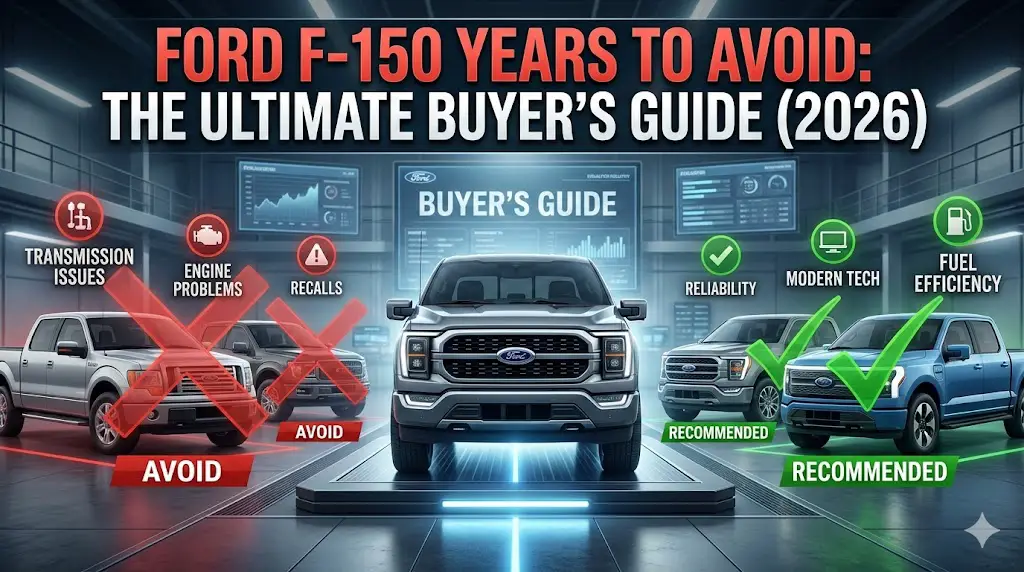
Ford F-150 Years to Avoid: The Ultimate Buyer’s Guide (2026)

The Ford F-150 remains the absolute cornerstone of the North American automotive market, holding the title of best-selling vehicle for over four decades. From its utilitarian origins in 1948 to the sophisticated, aluminum-bodied hybrid configurations of the modern era, the F-150 is celebrated for its robust engineering, impressive payload capabilities, and continuous technological evolution.
However, the legacy of this iconic pickup truck is interspersed with specific model years and powertrain configurations plagued by catastrophic mechanical failures, widespread safety recalls, and exorbitant repair costs.
For buyers navigating the secondary market, understanding the specific manufacturing eras that present severe financial and safety risks is critical. Evaluating the reliability of the Ford F-150 requires moving beyond generalized generational complaints to isolate the precise mechanical engineering flaws—such as variable cam timing defects, transmission clutch drum failures, and aluminum-body transition issues—that define the worst model years.
This report provides an exhaustive breakdown of these failure points, synthesizes component-level repair data, and identifies the optimal model years for long-term ownership.
FordMasterX Exclusive Research
Ford F-150 Years to Avoid: The Ultimate Data-Driven Buyer’s Guide
Deep automotive research, historical defect tracking, and expert mechanical analysis to help you avoid the dreaded “money pits” and find a reliable used F-150.
Introduction: Navigating America’s Best-Selling Minefield
The Ford F-150 has held the crown as America’s best-selling vehicle for decades. It is a testament to American engineering, towing capacity, and job-site reliability. However, mass production over generations inevitably leads to engineering missteps. If you are in the market for a used F-150, buying blindly based on exterior looks or trim packages is a guaranteed path to financial distress. As automotive researchers at FordMasterX, we have analyzed thousands of technical service bulletins (TSBs), consumer reports, and mechanical tear-downs to bring you the definitive guide on the Ford F-150 years you must absolutely avoid.
In short, while the F-150 is generally a robust platform, specific engine choices and transitional model years have plagued owners with catastrophic engine failures, shattered windows, and transmission hard-shifts that cost thousands to repair. Our analysis relies heavily on defect reporting data compiled by authoritative sources like NHTSA and historical trend data from CarComplaints.com.
⚠️ The Quick Answer: The Absolute Worst Years
- 2004 – 2008 (11th Generation): The era of the catastrophic 5.4L Triton V8 spark plug and cam phaser disasters.
- 2010: Plagued by bizarre window shattering issues and premature transmission failures.
- 2015 – 2016 (Early 13th Gen): Teething issues with early 10-speed transmissions, Sync 3 infotainment bugs, and 2.7L EcoBoost oil pan leaks.
The Data: Historical Complaint Volume
To truly understand which years pose the highest risk, we must look at the volume of registered mechanical complaints. The chart below aggregates major component failure reports across nearly two decades of F-150 production. Notice the massive spike during the 11th generation (2004-2008) and the sharp anomaly in 2010. These peaks represent thousands of owners experiencing catastrophic failures, directly correlating with the implementation of deeply flawed engine architectures.
Data points represent aggregated mechanical complaint volume across major automotive reporting agencies.
The Dark Era: 2004-2008 (The 11th Generation)
If there is one absolute rule in buying a used Ford truck, it is to approach the 2004-2008 F-150s with extreme caution. This generation is notorious in the automotive repair industry, primarily due to the implementation of the 3-valve 5.4L Triton V8 engine. While Ford marketed this engine as a powerhouse, it harbored two devastating design flaws that turned these trucks into financial black holes.
The Spark Plug Catastrophe
Ford utilized a unique, two-piece spark plug design in the 3-valve 5.4L Triton engine from 2004 until late 2008. Carbon buildup would accumulate around the lower sleeve of the plug inside the cylinder head. When mechanics or owners attempted to remove the plugs for routine maintenance, the plug would shear in half, leaving the lower portion permanently seized in the engine block. Removing these broken pieces required specialized extraction tools, and if the extraction failed, the entire cylinder head had to be removed—a repair bill frequently exceeding $2,500 for a simple tune-up.
Cam Phaser and Timing Chain Failures
The second, arguably more severe issue with the 5.4L Triton was its variable valve timing (VVT) system, specifically the cam phasers. The system relied on engine oil pressure to adjust timing. However, the oil passages were incredibly narrow and prone to clogging from even minor sludge buildup. Once oil flow was restricted, the cam phasers would starve for lubrication, resulting in a loud, distinct “diesel-like” ticking or knocking noise from the upper engine. Left unaddressed, this would lead to timing chain stretch, guide failure, and ultimately, catastrophic engine death requiring a total replacement.
Anatomy of 2004-2008 Failures
Breakdown of the most frequent catastrophic failures in the 11th Gen F-150.
The 2010 Anomaly: Shattered Glass and Clunky Shifts
While the 12th generation (2009-2014) largely corrected the sins of the Triton era by introducing the highly reliable 5.0L Coyote V8 and the first-generation 3.5L EcoBoost, the 2010 model year stands out as a bizarre statistical anomaly that buyers should avoid.
The most prevalent and alarming issue reported for the 2010 F-150 was spontaneous rear window shattering. Owners reported the rear cab glass exploding inward while driving, often sounding like a gunshot. Investigations pointed to a defect in the rear window defroster circuit, which would overheat and shatter the tempered glass. Beyond the glass, the 2010 models equipped with the 6R80 transmission frequently exhibited harsh, jarring downshifts, particularly from 2nd to 1st gear, caused by flawed transmission control module software and early molded lead frame degradation.
EcoBoost Growing Pains: 2015-2016
The 13th generation debuted in 2015 with a revolutionary military-grade aluminum-alloy body. This transition shaved hundreds of pounds off the truck, dramatically improving fuel economy and towing figures. However, buying the first two years of a totally redesigned generation is always risky, and the 2015-2016 F-150s were no exception.
⚙️ Transmission Hard Shifts
Early adoptions of Ford’s transmission programming led to harsh engagements. Furthermore, the introduction of the 10-speed (10R80) in late 2016/2017 models suffered from CDF clutch cylinder failures, leading to delayed engagements and slipping gears.
🛢️ 2.7L EcoBoost Oil Pans
Ford utilized a composite (plastic) oil pan on the 2.7L EcoBoost engine during these years. Due to poor RTV sealant adhesion to the composite material, these oil pans leaked relentlessly. Replacing them required a complex curing process that many dealerships struggled to perform correctly, leading to repeat failures.
📻 Infotainment Blackouts
The transition from MyFord Touch to early Sync 3 systems resulted in frozen screens, unresponsive touch inputs, and failing APIM modules, requiring expensive dashboard tear-downs.
🚪 Frozen Door Latches
Water intrusion into the door latch assemblies would freeze during winter, preventing the doors from opening or, far more dangerously, preventing them from latching shut while driving. Ford issued massive recalls for this issue.
Generational Reliability Comparison
To summarize the structural integrity and mechanical reliability across different eras, we evaluated each generation across five key metrics. As visualized below, the 12th and late 13th/early 14th generations vastly outperform the problematic 11th generation in almost every category.
The Absolute Worst Ford F-150 Model Years to Avoid
Historical reliability data, technical service bulletins (TSBs), and advanced repair metrics isolate several specific model years that buyers must avoid entirely. These vehicles suffer from systemic design flaws that routinely lead to catastrophic powertrain failure or pose immediate safety hazards.
2004–2006: The 5.4L Triton V8 Catastrophe
The introduction of the eleventh generation of the Ford F-150 in 2004 represents the lowest point in the platform’s modern reliability history. The 2004 model alone holds the record for the most problematic F-150 ever manufactured, accumulating over 2,400 complaints with the(https://www.nhtsa.gov/recalls) and triggering 16 distinct safety recalls.
The primary catalyst for this disastrous rating is the 5.4L Triton 3-Valve V8 engine. Ford engineered a highly flawed two-piece spark plug design for this powertrain that fundamentally failed in real-world applications. Carbon buildup within the cylinder head would seize the lower portion of the spark plug. During routine maintenance removal, these spark plugs would frequently snap in half, leaving the lower porcelain and electrode permanently lodged inside the cylinder head. In other instances, poor thread design caused the plugs to eject completely from the engine block while driving under load, destroying the ignition coil and the internal threads in the process. Standard spark plug replacements escalated into complex extraction procedures requiring specialized tools, often driving repair costs to $1,200 to $1,500.
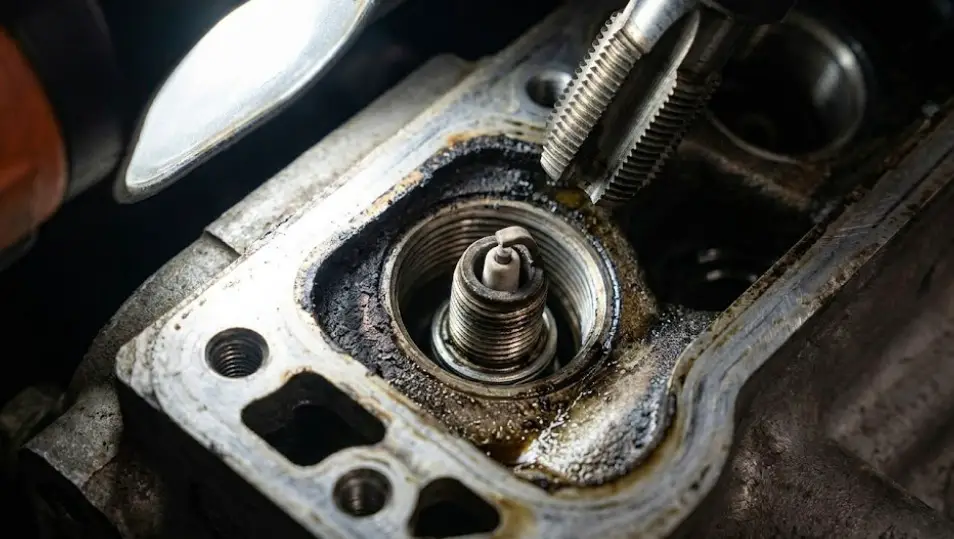
Beyond the spark plug defect, the 2004–2006 models suffered from widespread variable cam timing (VCT) system failures. The cam phasers would develop a loud, terminal knocking noise caused by oil pressure loss and premature wear, requiring complete timing chain, tensioner, and phaser replacements that cost owners between $2,000 and $5,500. Environmental factors heavily compounded the vehicle’s structural issues; in salt-heavy regions, premature corrosion of the fuel tank straps caused active, heavy fuel tanks to dislodge and drag beneath the moving vehicle, creating an extreme fire hazard.
2010: The Unexplained Regression
Following a highly praised and reliable redesign in 2009 that introduced the twelfth generation, the 2010 Ford F-150 experienced an inexplicable regression in manufacturing quality, amassing over 1,000 complaints. The mechanical ecosystem of the 2010 model was disrupted by persistent engine oil leaks from the oil pan and head gaskets, premature ignition coil failures resulting in severe engine misfires, and a return of variable cam timing issues in the remaining 5.4L V8 variants.
This specific year was also defined by a surge in electrical and infotainment glitches. Owners reported unresponsive center console screens, backup camera failures, and sudden instances of the 6-speed automatic transmission harsh-shifting or unexpectedly dropping into second gear. Structural degradation also returned as a primary concern, with rocker panels, tailgates, and cab corners exhibiting rapid rust and corrosion well before standard lifecycle expectations, particularly in northern climates.
2013: The Highway Downshift Hazard
The 2013 F-150 introduced one of the most terrifying safety hazards in the history of the F-Series, making it a critical year to avoid. Vehicles equipped with the 6R80 6-speed automatic transmission developed a fault within the transmission lead frame and the molded lead frame’s output shaft speed sensor. This defect caused the vehicle’s powertrain control module to lose the speed signal, forcing the transmission to abruptly and violently downshift into first gear while traveling at highway speeds of 65 mph or greater.
The sudden mechanical deceleration forced the rear wheels to lock up entirely, frequently resulting in a total loss of vehicle control, skidding, and collisions. The severity of this transmission lockup led to a massive federal investigation and a subsequent recall affecting over 1.3 million vehicles. Additionally, the 2013 model year experienced high rates of intermittent Electronic Power-Assisted Steering (EPAS) failure, where drivers would suddenly lose power steering assistance mid-turn, drastically increasing steering effort and collision risk.
2015–2017: Aluminum Transition and Master Cylinder Failures
The introduction of the thirteenth generation in 2015 marked a revolutionary shift for the F-150, transitioning from a traditional steel body to a military-grade aluminum alloy to shed nearly 1,000 pounds and improve fuel efficiency. However, the initial 2015 to 2017 production years were hampered by significant structural and mechanical teething problems.
The most alarming defect involved the brake master cylinder. Internal seals within the master cylinder would fail prematurely, allowing brake fluid to leak directly into the brake booster. This hidden fluid loss resulted in a sudden, complete loss of front braking capability without prior warning, significantly increasing stopping distances and leading to reported crashes.
Furthermore, the 2015–2017 models suffered from defective door latches. In cold or highly humid weather, water intrusion would freeze the internal latch mechanisms. Drivers found that doors would either refuse to close securely or, more dangerously, fly open randomly while the vehicle was in motion, leading to a massive safety recall heavily impacting Canadian and northern US drivers. Late 2017 also saw the introduction of the 10-speed automatic transmission (10R80), which immediately began exhibiting harsh shifting, gear hunting, and internal clutch failures.
2018–2020: The 5.0L V8 Oil Consumption Crisis
While the overall aluminum chassis and technological integration improved significantly in the late thirteenth generation, models equipped with the 5.0L Coyote V8 engine from 2018 to 2020 experienced severe oil consumption anomalies. Drivers reported the engine burning between 1 to 3 quarts of oil every 1,000 to 3,000 miles, completely draining the oil reservoir between standard service intervals despite no visible external leaks.
Engineering analysis determined that during Deceleration Fuel Shut Off (DFSO) events, high intake manifold vacuum pressures were aggressively pulling oil past the piston rings, valve guides, and positive crankcase ventilation (PCV) system directly into the combustion chamber where it was burned off. Ford responded with Technical Service Bulletin (TSB) 19-2365, which involved reprogramming the Powertrain Control Module (PCM) to reduce engine vacuum during deceleration and replacing the oil dipstick with a wider tolerance indicator to mask the visual severity of the consumption. This mechanical defect resulted in widespread engine stalling, premature internal wear, and a multi-state class-action lawsuit filed in Michigan federal court alleging Ford knowingly sold defective powertrains.
Engine Reliability Analysis: Which Powertrain is Best?
Selecting a reliable F-150 requires a deep understanding of the engine options, as the aluminum chassis itself often outlasts the powertrain. An analysis of the three primary modern engine configurations reveals distinct maintenance profiles and localized reliability concerns.
| Engine Platform | Ideal Model Years | Common Failure Points & Mechanical Defects | Long-Term Reliability Verdict |
| 2.7L EcoBoost V6 | 2018 – Present | Gen 1 (2015-2017): Prone to leaking plastic oil pan gaskets and early cam phaser wear. Gen 2 (2018+): Extremely reliable with no major systemic flaws. | Highest. The Gen 2 variant is widely considered the most durable modern F-150 engine, heavily overbuilt with a compacted graphite iron block. |
| 3.5L EcoBoost V6 | 2018 – Present | Pre-2015: Intercooler condensation causing misfires in wet conditions. All Years: Variable Cam Timing (VCT) phaser rattle and timing chain stretch. | Moderate. Excellent power delivery for heavy towing, but buyers must budget for inevitable cam phaser replacements occurring between 80,000 and 120,000 miles. |
| 5.0L Coyote V8 | 2015 – 2017, 2021 – Present | 2018-2020: Excessive oil consumption due to high intake vacuum during DFSO. All Years: Harmless “typewriter” ticking noise at idle. | High. Aside from the 2018-2020 oil consumption anomaly, the naturally aspirated V8 provides steady performance under load and avoids twin-turbocharger replacement risks. |
The 3.5L EcoBoost Cam Phaser Expense
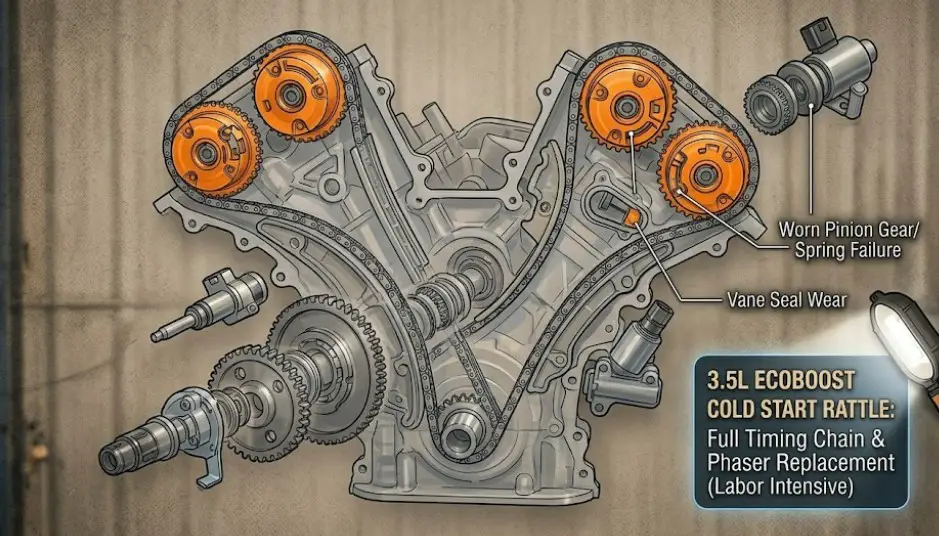
A critical financial consideration for any used F-150 buyer evaluating the 3.5L EcoBoost is the notorious cam phaser rattle. Upon a cold start, failing cam phasers produce a distinct, loud rattling or knocking sound for several seconds as oil pressure builds within the top end of the engine. Repairing this issue is incredibly labor-intensive, requiring the complete removal of the engine’s front cover and valve covers. Dealership and independent shop invoices place the cost of a full timing job—including intake and exhaust phasers, timing chains, tensioners, guides, and the water pump—between $3,500 and $6,500 depending on regional labor rates.
The 5.0L Coyote “Typewriter Tick”
A frequent source of anxiety for 5.0L V8 owners is a distinct tapping or “typewriter” ticking sound emanating from the bell housing or oil pan area when the engine is warm and idling. According to Ford’s internal Special Service Message (SSM 52334), this noise is a normal characteristic of the direct injection system and lower-end rod clearances operating with hot, low-viscosity oil. It does not indicate impending failure, and no repairs are necessary, separating it entirely from the fatal valvetrain knocking found in the older 5.4L Tritons.
Transmission Deep Dive: 6R80 vs. 10R80 Reliability
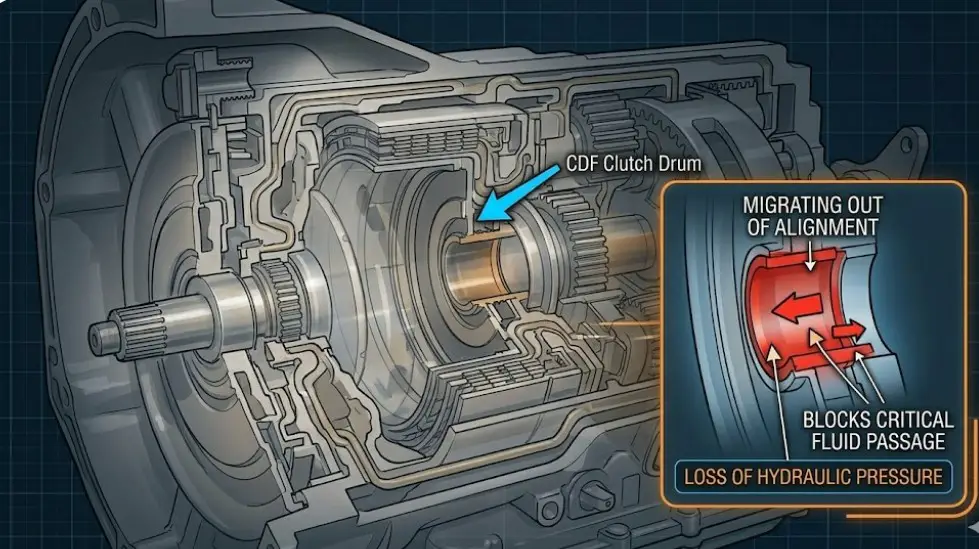
The transition from the 6-speed to the 10-speed automatic transmission marked a significant shift in F-150 driving dynamics, improving fuel economy and towing optimization, but it also introduced severe new maintenance liabilities.
| Transmission Type | Years Active | Core Reliability Issues & Symptoms | Average Repair Cost |
| 6R80 (6-Speed) | 2009 – 2017 | Lead frame failures causing loss of output shaft speed sensor signal, resulting in sudden, violent downshifts to 1st gear. | $1,200 – $2,000 (Often covered under extended NHTSA recalls for 2011-2013 models). |
| 10R80 (10-Speed) | 2017 – Present | CDF Clutch Drum Failure. The bushing inside the drum slips out of alignment, causing a loss of hydraulic pressure. Symptoms include delayed engagement, harsh shifting (especially gears 1-3), and slipping into a false neutral. | $6,000 – $8,500 for total transmission overhaul or replacement. |
The 6R80 is fundamentally simpler and is widely considered more predictable and reliable in high-mileage scenarios, provided the lead frame recall has been addressed. Conversely, the 10R80, co-developed with General Motors, suffers from a critical internal design flaw. The CDF clutch drum bushing has a tendency to migrate out of its pressed alignment, blocking vital fluid passages and destroying the clutch packs. A CDF drum failure requires a total transmission tear-down, generating repair bills that routinely exceed $6,500. While Ford introduced a redesigned CDF drum with a physical retaining lip to prevent bushing migration in newer models, early 10R80s (2017-2022) remain highly susceptible to this catastrophic mechanical failure.
The Hybrid Dilemma: 2021-2023 PowerBoost Reliability
The introduction of the fourteenth generation brought the highly anticipated 3.5L PowerBoost Hybrid V6. While innovative, providing massive torque and exportable Pro Power Onboard capabilities, early iterations proved highly unreliable.(https://www.edmunds.com/car-news/is-the-ford-150-hybrid-the-least-reliable-vehicle-you-can-buy.html) awarded the 2021-2023 F-150 PowerBoost its lowest possible reliability score (4 out of 100), ranking it among the least reliable vehicles on the market for three consecutive years.
The complex integration of the hybrid battery system with the traditional powertrain resulted in deep electrical gremlins, sudden starter battery drain, and complete climate control failures. The advanced technology required to bridge the internal combustion engine and the electric motor resulted in continuous software faults, module communication losses, and safety recalls regarding trailer brake functionality, making these specific early-hybrid years highly risky on the secondary market.
The Safest Ford F-150 Model Years to Buy Used
Conversely, certain eras of the Ford F-150 represent the pinnacle of truck reliability, offering robust performance, predictable maintenance costs, and high mileage longevity. By analyzing long-term ownership data, these specific windows emerge as the best used values.
| Generation | Recommended Years | Key Strengths and Powertrain Highlights |
| Late 11th Gen | 2008 – 2009 | Ford resolved the catastrophic two-piece spark plug designs by late 2007. The 2008-2009 models offer incredibly durable, low-tech platforms perfect for budget-conscious buyers seeking a dependable work truck free of modern electronic complexities. |
| Late 12th Gen | 2011 – 2014 | This era represents the pinnacle of the traditional steel-body generation. The introduction of the 5.0L Coyote V8 and the first-generation 3.5L EcoBoost offered excellent power balances and high durability. (Note: 2013 models must be verified for the 6R80 lead frame recall completion). |
| Late 13th Gen | 2018 – 2020 | Often cited as the ultimate sweet spot for value, modern safety technology, and reliability. By 2018, the aluminum body manufacturing quirks (door latches, master cylinders) were fully resolved. Models equipped with the 2.7L EcoBoost in this era are considered nearly bulletproof. |
For buyers targeting the modern aluminum chassis to avoid rust concerns in northern climates, the 2018 to 2020 models (specifically paired with the 2.7L EcoBoost V6) yield the highest long-term satisfaction rates. The 2.7L EcoBoost received a secondary generation update in 2018, featuring dual port and direct injection. This upgrade constantly washes the intake valves with fuel, making the engine highly resistant to the carbon buildup that plagues purely direct-injected engines, resulting in an incredibly durable powerplant.
High-Mileage F-150 Maintenance Strategy (150,000+ Miles)
Procuring an F-150 with over 100,000 to 150,000 miles requires a stringent mechanical audit. Deferring preventative maintenance on these complex powertrains inevitably leads to the premature failure of the exact components discussed above. When evaluating a high-mileage Ford F-150, or seeking to push a current vehicle past the 200,000-mile mark, the following service intervals must be strictly managed:
- Transmission Fluid Servicing (Avoid Flushes): Both the 10R80 and 6R80 require standard fluid drain-and-fill procedures and filter changes, strictly avoiding pressurized system flushes. Pressurized flushes dislodge embedded clutch material and push metallic debris into the delicate valve body and shifting solenoids, rapidly expediting failure.
- Spark Plug and Coil Boot Replacement: To maintain fuel efficiency and prevent ignition coil burnout, spark plugs must be replaced every 60,000 to 100,000 miles. For EcoBoost engines, misfires under heavy load or rapid acceleration are frequently resolved by installing new Motorcraft spark plugs gapped to specific factory tolerances and replacing the rubber ignition coil boots.
- Cooling System and Water Pump Maintenance: Ford’s specialized yellow/orange coolant should be entirely flushed and replaced by the 100,000-mile mark. Because the engine coolant also acts as a primary lubricant for the internal water pump bearings, running degraded, acidic coolant accelerates water pump bearing failure and subsequent overheating.
- Differential and Transfer Case Fluids: Often neglected during standard oil changes, the rear axle, front differential, and transfer case fluids must be drained and refilled by 100,000 miles to prevent internal gear and bearing wear, particularly in trucks used primarily for towing.
- Serpentine and Accessory Drive Belts: The engine’s drive belts should be thoroughly inspected for micro-cracking and replaced immediately upon reaching the 150,000-mile threshold to prevent a sudden loss of alternator and water pump drive power.
In-Depth FAQs
Which Ford F-150 engines have the most problems?
The 5.4L Triton V8 (manufactured heavily from 2004 to 2010) is universally recognized as the most problematic engine in the truck’s modern history due to the catastrophic two-piece spark plug design that breaks off in the cylinder head, alongside widespread variable cam timing (VCT) failures. In modern iterations, the 2018-2020 5.0L Coyote V8 suffers from excessive oil consumption requiring PCM software flashes and, in severe cases, complete engine block replacements.
What are the exact symptoms of the Ford 10-speed transmission (10R80) failure?
The primary indicator of a failing 10R80 transmission is a harsh, jerking sensation or loud “clunk” during the 1-to-3 or 3-to-5 upshifts, particularly when the transmission fluid is cold. Advanced symptoms include delayed engagement when shifting from Park into Drive or Reverse, the transmission dropping into a false neutral while driving on the highway, and severe RPM slipping under load. These are hallmark indicators of internal CDF clutch drum bushing migration, necessitating a complete rebuild.
Is a Ford F-150 with 150,000 miles a good purchase?
A high-mileage F-150 can be an exceptional investment, but strictly if comprehensive maintenance records are provided. For older steel-bodied models (2011-2014) or newer aluminum models (2018+), a 150,000-mile odometer reading is not inherently detrimental provided the vehicle has received regular 5,000-mile synthetic oil changes, 60,000-mile spark plug intervals, and has no history of heavy commercial towing that deteriorates the transmission bands.
What year did Ford officially fix the 3.5L EcoBoost cam phaser issues? While Ford has continuously updated the cam phaser part numbers to improve durability (most notably after the 2020 redesign), the 3.5L EcoBoost engine remains fundamentally susceptible to phaser wear across its entire lifespan due to the sheer weight of the timing chains. Strict adherence to 5,000-mile full synthetic oil changes is the only proven preventative measure to delay cam phaser degradation, as dirty oil clogs the variable cam timing solenoids and starves the phasers of lubrication upon startup.
How do I determine the actual towing capacity of a used F-150?
Towing capacity varies wildly based on engine, axle ratio, and cab configuration. Buyers must calculate capacity by finding the Gross Combined Weight Rating (GCWR) on the driver’s door sticker and subtracting the truck’s exact curb weight. Additional payload, including passengers and aftermarket accessories, strictly reduces the available towing limit. Detailed payload configurations can be verified through(https://realtruck.com/blog/how-to-determine-towing-capacity/).
Conclusion
The Ford F-150 is a definitive testament to automotive capability, but its expansive history is marked by profound peaks and valleys in reliability. Navigating the used truck market requires actively avoiding the engineering disasters of the past: namely, the 2004–2006 Triton V8 engines, the sudden highway downshift perils of the 2013 6R80 transmission, and the severe oil-burning anomalies found in the 2018–2020 5.0L V8 powertrains. Furthermore, buyers must approach the modern 10-speed 10R80 transmission with a highly critical eye, prioritizing extended powertrain warranties or thorough pre-purchase mechanical inspections to rule out imminent, multi-thousand-dollar CDF clutch drum rebuilds.
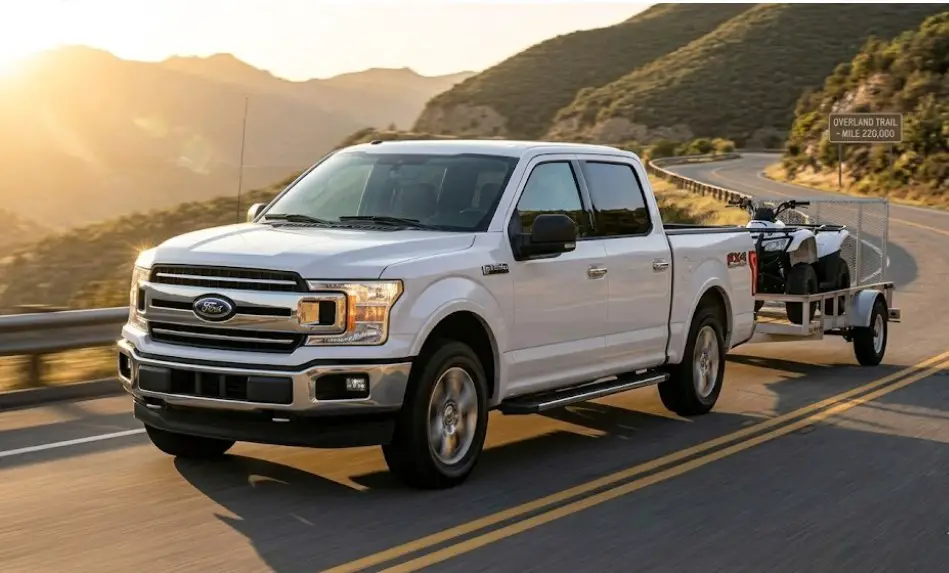
By strategically targeting the safest production windows—such as the late steel-body era of 2011–2014 or the highly refined 2018–2020 models equipped with the heavily overbuilt Gen-2 2.7L EcoBoost—buyers can secure a vehicle fully capable of effortlessly surpassing the 200,000-mile mark. Consistent preventative maintenance, particularly aggressive fluid interval management, remains the ultimate deciding factor in the longevity, reliability, and total cost of ownership of any modern Ford F-150.