Ford Everest Coming To Us: Market Analysis, Technical Specifications, And Release Potential

For years, American off-road enthusiasts have watched from the sidelines as the rest of the world enjoyed the Ford Everest—a sophisticated, body-on-frame SUV that blends Bronco-level capability with Explorer-level refinement. Despite high demand for a rugged, three-row 4×4, the US market remains limited to unibody crossovers or specialized off-roaders that sacrifice daily utility. In this comprehensive analysis, we evaluate the latest rumors, technical specifications, and manufacturing hurdles to determine if and when the Ford Everest is coming to US showrooms.
The T6 Platform Synergy and Manufacturing Logistics of the Ford Everest Coming to US Markets
📤 Share Image
To understand the viability of the Ford Everest for North American consumers, one must first look beneath the sheet metal. The Everest is built on the trusted T6.2 platform, the same architecture that underpins the current Ford Ranger and the Ford Bronco. This shared DNA is not merely a cost-saving measure; it represents a professional engineering foundation designed for global durability and high-stress off-road environments. The Everest shares approximately 80% of its front-end architecture with the Ford Ranger, which is already manufactured at the Michigan Assembly Plant (MAP) in Wayne, Michigan.
Engineering Commonalities and Distinctions
While the Ranger uses a traditional leaf spring rear suspension to maximize payload for hauling, the Everest utilizes a more sophisticated Watt’s link coil-spring setup. This expert engineering shift provides a quality ride that rivals unibody SUVs like the Explorer while maintaining the structural integrity of a truck. For the US market, this means Ford could leverage existing domestic supply chains for the powertrain, frame rails, and front suspension components, significantly lowering the barrier to entry for localized production.
The Michigan Assembly Challenge
The primary hurdle remains production capacity. Currently, the Michigan Assembly Plant is tasked with meeting the massive demand for both the Bronco and the Ranger. Integrating a third body-on-frame vehicle would require an expert-level logistics overhaul or a strategic shift in shift-scheduling. However, from a technical standpoint, the line is already configured for the T6.2 dimensions. The tooling for the Everest’s body panels would be the primary investment required to bring this reliable 7-seater to American shores.
Shared Platform Efficiency
Utilizes the T6.2 chassis, meaning 80% of parts are already in the US supply chain.
Superior Ride Quality
Watt’s linkage and coil springs offer a more refined experience than standard leaf-spring trucks.
Performance and Powertrain Options for a Reliable American Ford Everest
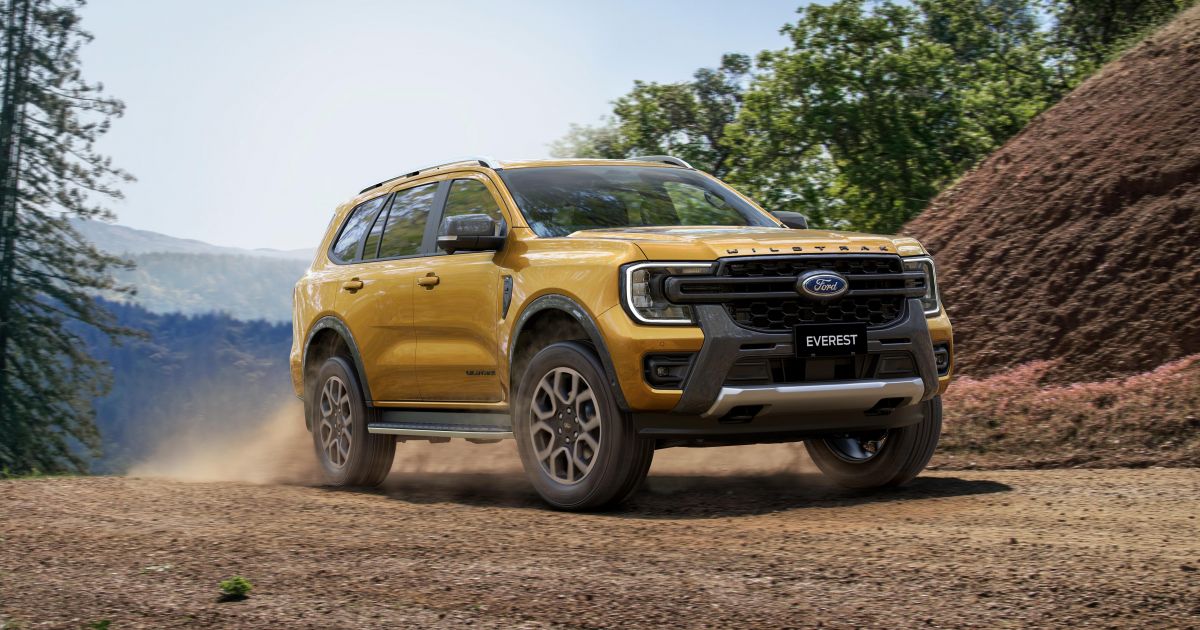
In international markets, the Everest is lauded for its 3.0-liter Power Stroke V6 diesel. However, US emissions standards and consumer preferences dictate a different path. For a complete US launch, Ford would likely pivot to its trusted EcoBoost lineup. The 2.3-liter EcoBoost I-4 and the 2.7-liter EcoBoost V6 are the most logical candidates. To be competitive, a US-spec Everest would likely target 315+ hp to compete directly with the Toyota 4Runner’s new i-FORCE MAX hybrid system.
Drivetrain and Transmission
Central to the Everest’s performance is the 10R80 10-speed automatic transmission. This unit is already a staple in the F-150 and Bronco, offering the quality shifting and highway efficiency necessary for a 5,000-pound SUV. When paired with Ford’s Advanced 4×4 system—featuring an electronically controlled two-speed transfer case—the Everest becomes a professional-grade tool for both rocky trails and snowy commutes.
Towing and Capability Benchmarks
For the Everest to succeed in the US, it must hit specific towing benchmarks. We anticipate a rating of at least 7,500 lbs, placing it ahead of the Ford Explorer (5,600 lbs) and in direct competition with the Jeep Grand Cherokee. This reliable towing capacity is a key differentiator for families who need to haul boats or horse trailers but prefer the maneuverability of a mid-size SUV over a full-size Expedition.
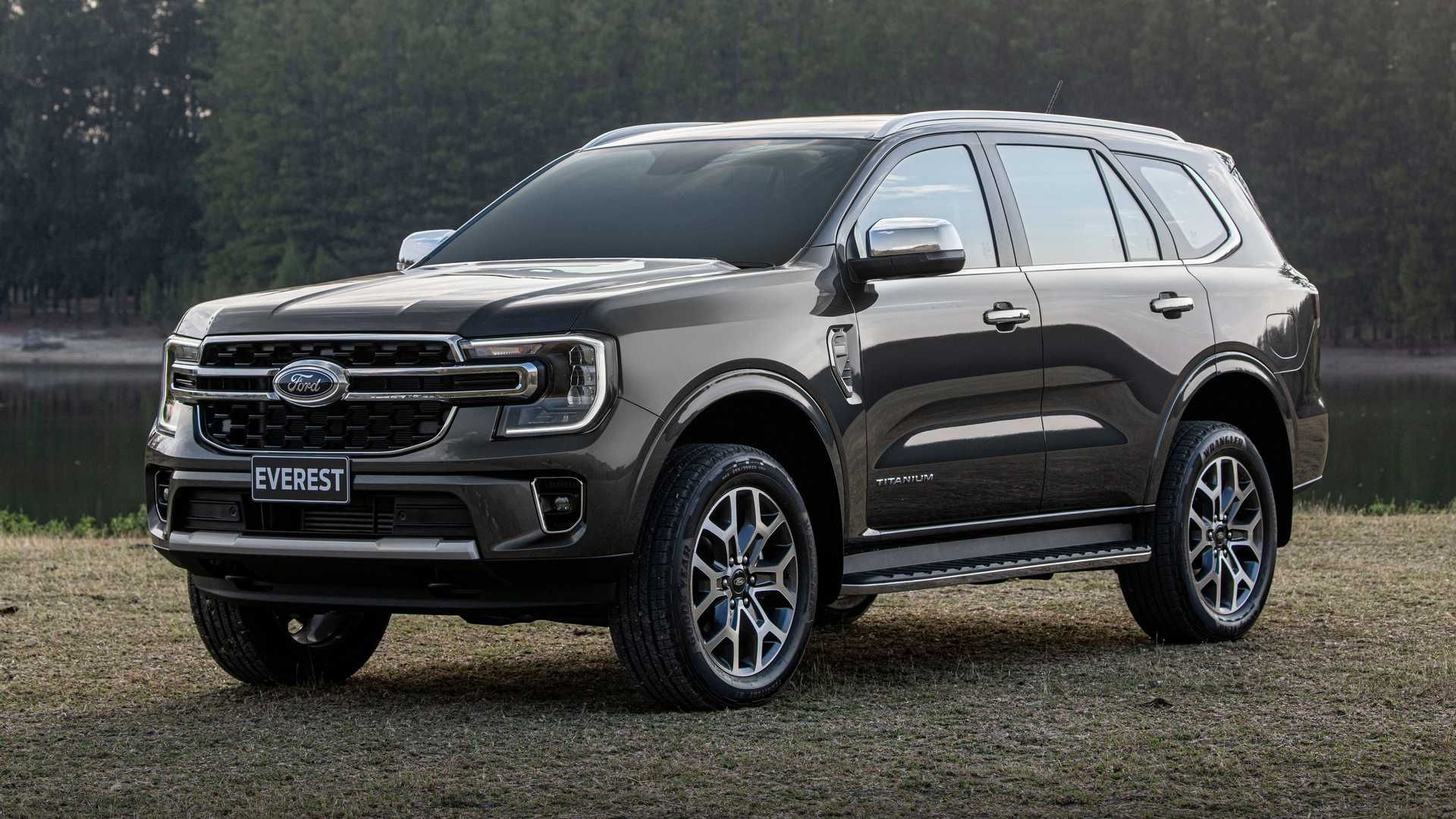
Strategic Market Positioning Against Established Professional SUV Competitors
The US SUV market is currently divided into two camps: car-based unibody crossovers and rugged, enthusiast-focused off-roaders. There is a significant “white space” between the unibody Ford Explorer and the enthusiast-focused Ford Bronco. The Everest fills this gap perfectly as a dedicated family off-roader. The mid-size SUV segment in the US accounts for over 2.5 million units annually, with body-on-frame models seeing a 15% increase in market share since 2020.
The 4Runner and GX Factor
Toyota has long dominated this segment with the 4Runner. However, the Everest offers expert technical advantages that the 4Runner has historically lacked: a more modern interior, superior towing technology, and a quality third row that is actually usable for adults. By positioning the Everest in the $45,000 to $65,000 range, Ford can capture premium buyers who want the ruggedness of a Bronco but need the three-row utility of an Explorer.
When evaluating SUVs in this class, always look at the frame architecture. The Everest’s fully boxed frame provides the rigidity needed for serious off-roading without the chassis flex found in older C-channel designs.
Interior Craftsmanship and Professional Grade Technology Integration
Inside, the Everest is far removed from its Ranger roots. It is designed to be a professional-grade sanctuary. The cabin features a quality finish, especially in the Platinum trim, which includes leather-accented heated and ventilated seating. Ford has focused heavily on Noise, Vibration, and Harshness (NVH) levels, utilizing acoustic glass and extensive sound deadening to ensure a quiet cabin environment—a reliable necessity for long-distance American road trips.
SYNC 4A and Trail Tech
The centerpiece of the interior is the SYNC 4A infotainment system, featuring a 12-inch vertical touchscreen. This system provides expert trail navigation and 360-degree camera views, which are essential for navigating tight trails or maneuvering a trailer into a campsite. Furthermore, the 12.4-inch digital instrument cluster provides real-time data on pitch, roll, and drivetrain status, allowing for a complete understanding of the vehicle’s behavior in extreme conditions.
By The Numbers
Water Wading Depth
Digital Display Size
Passenger Capacity
The Expert Verdict: Why Consumer Demand Might Finally Bring the Everest Home
The ultimate question isn’t whether the Everest is a good vehicle—we already know it is an expertly engineered SUV. The question is one of economic policy and production. The ‘Chicken Tax’—a 25% tariff on imported light trucks—effectively mandates that the Everest be built in the US to be price-competitive. With Ford’s 2023 financial reports indicating a strategic pivot toward high-margin, ‘iconic’ vehicles like the Mustang, Bronco, and Raptor-variants, the Everest fits the brand’s future perfectly.
📋
The Path to a US Everest Release
Ford must finalize US-specific crash testing and engine calibrations for the 2.7L EcoBoost.
The Michigan Assembly Plant must clear Bronco backlogs to make room for a third line.
The most likely entry window is the 2025-2026 mid-cycle refresh of the T6.2 platform.
✅ Pros
- Proven T6.2 platform durability
- Superior towing vs. unibody SUVs
- Advanced interior technology (SYNC 4A)
- True three-row off-road capability
❌ Cons
- Domestic production constraints
- No diesel option for US market
- Potential cannibalization of Explorer sales
- High price point for top trims
The Ford Everest’s shared platform with the Ranger makes US production technically feasible and economically viable. A US version would likely swap diesel power for EcoBoost engines to meet domestic performance and emissions standards. Ultimately, the vehicle would serve as a professional-grade alternative to the Toyota 4Runner and a more refined sibling to the Ford Bronco. Stay tuned for the latest updates on Ford’s 2025-2026 lineup by subscribing to our automotive industry newsletter and following our expert reviews.
Frequently Asked Questions
Is Ford officially bringing the Everest to the United States?
As of current reporting, Ford has not officially confirmed the Everest for the US market. However, industry insiders and recent patent filings suggest that Ford is evaluating the feasibility of a US-spec Everest. The vehicle’s shared T6.2 platform with the Michigan-made Ranger makes a domestic launch more likely than ever before for this professional-grade SUV.
How much would a US-spec Ford Everest cost?
Based on its positioning in global markets and the current US Ford lineup, an American Ford Everest would likely start around $45,000 for a base trim and exceed $65,000 for a high-end Platinum or Raptor variant. This price point ensures it remains competitive with the Toyota 4Runner while offering a more refined, quality interior experience.
What engines would the Ford Everest use in America?
While global versions rely heavily on diesel, a US Everest would almost certainly feature the 2.3-liter EcoBoost four-cylinder as standard, with the 2.7-liter or 3.0-liter EcoBoost V6 as an optional upgrade. These engines are trusted for their reliable performance in the Bronco and Ranger, providing the necessary horsepower for American highway and towing needs.
Why would Ford sell the Everest if they already have the Explorer?
The Explorer uses a unibody construction designed for on-road comfort, whereas the Everest is a body-on-frame SUV built for heavy-duty off-roading and superior towing. Ford’s expert strategists recognize that a segment of buyers wants the ruggedness of a Bronco with the seven-passenger capacity of an Explorer, a niche the Everest fills perfectly with professional-grade capability.
Can the Everest compete with the new Toyota 4Runner?
Yes, the Everest is positioned as a direct competitor. It offers more modern interior technology, such as the 12-inch SYNC 4A screen, and a more sophisticated rear suspension system compared to traditional off-roaders. Its blend of quality craftsmanship and reliable mechanical underpinnings makes it a formidable threat to Toyota’s long-standing dominance in the segment.