The Definitive Ford Escape Oil Change Reset Guide: Procedures, Troubleshooting, and Maintenance Specifications (2007–Current)

The maintenance minder system in the Ford Escape, officially known as the Intelligent Oil-Life Monitor (IOLM), is a crucial component of modern engine management. Unlike legacy systems that relied solely on fixed mileage or time intervals, the IOLM uses sophisticated software and sensors to dynamically calculate the remaining useful life of the engine oil. This algorithm ensures the vehicle receives service only when necessary, maximizing efficiency and protecting critical engine components.
Introduction to the Intelligent Oil-Life Monitor (IOLM) System
The IOLM is an advanced, vehicle-use-based algorithm that determines the necessary oil change service intervals by analyzing a variety of operational parameters. This system moves far beyond simplistic schedules by factoring in variables that directly impact oil degradation. These factors include ambient temperatures, engine revolutions per minute (RPMs), vehicle load conditions (suchg as towing), and the amount of time spent idling. By tracking this data, the IOLM provides a personalized maintenance schedule that reflects how the vehicle is actually being driven.
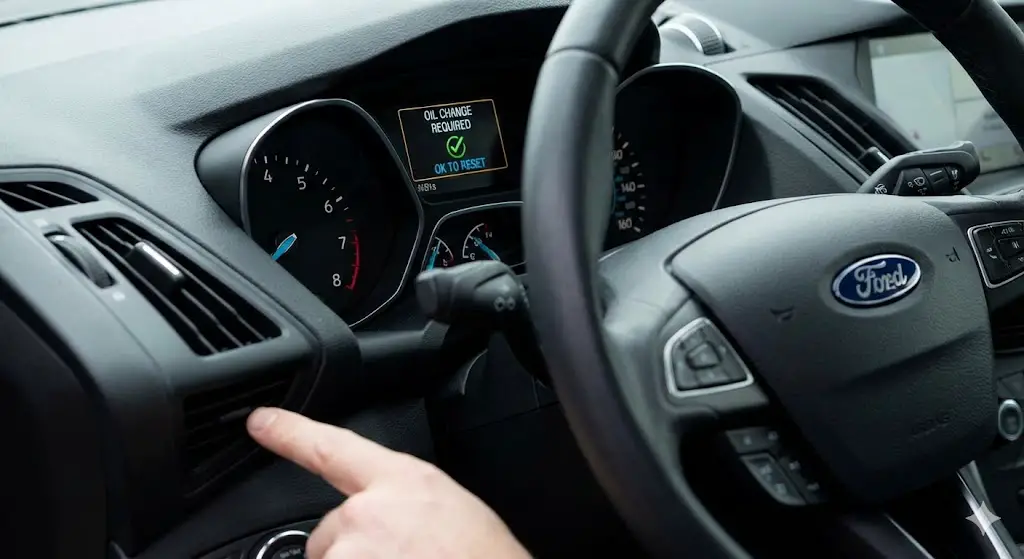
When the system determines that the oil is nearing the end of its effective life, it displays a message on the information screen, alerting the driver that service is due. The fundamental purpose of performing the oil change reset procedure is to communicate to the IOLM computer that the engine has received new, fresh engine oil and a new filter. This action sets the internal calculation counter back to 100% oil life, allowing the monitoring system to begin its calculations anew until the next service is required.
Decoding the “Oil Change Required” Message and Warning Indicators
Ford vehicles utilize specific indicators to alert the driver to routine maintenance requirements. The two primary methods the Ford Escape uses to signal a required oil change are a dedicated text message displayed on the instrument cluster information screen (such as “Oil Change Required” or “Service Oil Soon”) or the illumination of a small, orange wrench symbol. This symbol, often referred to as the maintenance wrench, is specifically reserved for scheduled service reminders, including oil life.
FORD ESCAPE Maintenance Intelligence & Reliability Analytics
Decoding the “Change Oil Soon” light: An analysis of the Intelligent Oil Life Monitor (IOLM), generational reliability trends, and the economics of vehicle maintenance.
It’s Not Just Mileage
Many drivers believe the “Oil Change Required” light is a simple timer set to 5,000 miles. This is false. Since 2013, the Ford Escape has utilized an Intelligent Oil Life Monitor (IOLM).
The chart to the right visualizes the five key variables the onboard computer analyzes to determine oil degradation. High engine loads (towing), extreme temperatures, and excessive idling will drain your “Oil Life %” significantly faster than highway cruising.
Figure 1: IOLM Input Weighting Factors
Generational Reliability Index
Comparing the four generations of the Ford Escape based on reported maintenance frequency and transmission/engine reliability scores. Higher scores indicate better reliability and lower frequency of “Check Engine” incidents.
Gen 1 (2001-2007)
The workhorse. Simple mechanics but prone to rust and age-related seal failures.
Gen 3 (2013-2019)
The tech leap. Introduced the IOLM widely, but EcoBoost engines require strict oil discipline to protect turbos.
Gen 4 (2020-Present)
The modern era. High reliability scores, but complex electronics mean resets must be done via screens, not pedals.
The Cost of Neglect: Cumulative Maintenance
This projection compares the cumulative maintenance cost over 10 years between a strict adherence to the IOLM (Standard) versus delayed maintenance (Neglected).
- 1 Years 1-4: Costs are similar. Oil changes are cheap, and modern synthetic oils are forgiving.
- 2 Year 5 (The Tipping Point): Sludge buildup in “Neglected” engines begins to affect Variable Valve Timing (VVT) solenoids.
- 3 Years 7-10: Catastrophic divergence. Turbo failure and timing chain stretch in neglected engines cause costs to skyrocket.
What Breaks When You Don’t Reset?
Failing to reset the oil light leads to inaccurate tracking. The driver believes they have life left, while the oil turns to sludge. Here is the breakdown of major component failures directly linked to poor oil maintenance in EcoBoost engines.
Synthetic Oil Viscosity Trends
A 3D breakdown of recommended oil viscosity usage across model years. As engines became more precise (Gen 3 & 4), the shift moved from 5W-30 to the thinner, more efficient 5W-20 and 0W-20 to improve fuel economy and cold starts.
Which Reset Method Fits Your Car?
The Critical Distinction: IOLM Warning vs. Check Engine Light (CEL)
A frequent point of confusion for vehicle owners performing their own maintenance is the difference between the oil life indicator and more serious dashboard warnings. It is important to understand that the Check Engine Light (CEL), also known as the Malfunction Indicator Lamp (MIL), operates independently of the IOLM system.
The Check Engine Light is strictly reserved for failures detected within the vehicle’s emission control system or for severe issues such as an engine misfire. If the CEL illuminates continuously while the engine is running, it indicates the On-Board Diagnostics (OBD) system has detected an error. If the light flashes, it signals a potentially damaging engine misfire, which requires immediate attention to prevent severe component damage that may not be covered by the vehicle warranty.
An oil change reminder will never trigger the Check Engine Light. Therefore, if a driver sees the oil life warning and the CEL illuminated simultaneously, it signals two distinct problems. The oil life monitor simply needs to be reset, while the CEL indicates a separate, potentially more serious fault that requires an immediate diagnostic scan using an OBD-II tool to identify the specific error code, such as a failing thermostat. Recognizing the independence of these systems is crucial, as it directs the owner toward the correct diagnostic path should both warnings appear.
Ford Escape Oil Change Reset Procedures by Generation: A Definitive Guide
Due to various mid-cycle refreshes and technological updates, Ford Escapes spanning from the classic 2007 models to the current generation utilize three distinct methods for resetting the oil life monitor. The correct procedure depends heavily on the model year and, in some cases, the specific trim level of the vehicle.
Quick Reference: Which Ford Escape Reset Method Do You Need?
The following table provides a systematic breakdown of the primary oil life reset procedures by model year, serving as a critical guide for quick identification.
Table 1: Ford Escape Oil Life Reset Procedures by Model Year (2007–Current)
| Model Year Range | Primary Reset Method | Procedure Summary | Key Hold Time |
| 2013 – Current (Most Models) | Pedal Dance | Key ON, Engine OFF. Press Gas and Brake simultaneously. | 25–30 Seconds |
| 2013 – Current (Alternative/Trim Specific) | Menu Navigation | Key ON, Engine OFF. Navigate to Oil Life menu via steering controls. | 5–10 Seconds |
| 2007 – 2012 (Classic Generation) | Setup Button | Key ON, Engine OFF. Use SETUP until Oil Life appears, then hold RESET. | 2 Seconds |
The Accelerator/Brake “Pedal Dance” Procedure (Typical for 2013–Current Models)
This procedure is common for the third and fourth generations of the Ford Escape (2013 onward) and is frequently cited in official Ford owner’s manuals. It requires precise timing and execution.
Step 1: Vehicle Preparation
Ensure the vehicle is parked safely and the engine is off. The ignition key must be available.
Step 2: Ignition ON, Engine OFF
Turn the key to the ‘ON’ position without starting the engine. If the vehicle is equipped with a push-button start, press the button once or twice without depressing the brake pedal to engage the accessory mode and the ignition, but keep the engine off.
Step 3: Simultaneous Pedal Press
Fully press down and hold both the accelerator pedal (gas pedal) and the brake pedal at the exact same time.3 It is essential to ensure both pedals are pressed completely to the floor.
Step 4: The Critical Wait (25 Seconds)
Maintain constant, full pressure on both pedals. This is the most crucial step, as premature release is the most common reason the procedure fails. After approximately three seconds, the instrument cluster display should show a message confirming that the reset procedure is “in progress.” Continue holding the pedals firmly for a full 25 to 30 seconds. The system will then display a message confirming the “Reset procedure complete”. If the pedals are released before this confirmation, the computer will not register the reset command successfully.
Step 5: Completion
Release the accelerator and brake pedals. Turn the ignition completely off to exit the procedure and lock in the reset.
Instrument Cluster Menu Navigation Reset (Applicable to Newer Trims)
Some newer Ford Escape trims (also generally 2013–Current) utilize a menu-driven interface accessible via the steering wheel controls. This method is often preferred by drivers who find the “Pedal Dance” cumbersome.
Step 1: Ignition ON, Engine OFF
Turn the ignition to the “ON” or “RUN” position without actually starting the engine.
Step 2: Navigate the Display
Use the directional buttons, typically located on the right-hand side of the steering wheel, to scroll through the instrument cluster display menus. Navigate to the main menu and select the “Settings” option.
Step 3: Access Oil Life
From the Settings menu, scroll down and select “Vehicle,” and then locate and select the “Oil Life” option.
Step 4: Hold OK/Reset
Once the Oil Life screen is visible (often displaying the current oil life percentage), press and hold the “OK” or “Reset” button (depending on the specific steering wheel configuration) for approximately five to ten seconds. The display will confirm the reset by showing a message like “Oil Life Set to 100%” or “Reset Successful”.
Step 5: Turn Off the Ignition
Turn the ignition completely off to finalize the reset procedure.
Resetting the Classic Ford Escape (2007–2012)
Older generations of the Ford Escape utilized a simpler, button-based system often located directly on the gauge cluster near the speedometer.
Step 1: Ignition ON, Engine OFF
Insert the key and turn the ignition to the “Run” position, one position before starting the engine.
Step 2: Use SETUP Button
Press the physical “SETUP” button on the dashboard or gauge cluster repeatedly until the information screen displays the specific message: “OIL LIFE XXX% HOLD RESET = NEW”.
Step 3: Reset Confirmation
While this message is displayed, press and hold the “RESET” button. Unlike the newer models, this requires only a brief hold—typically around two seconds—until the message confirms “OIL LIFE SET TO 100%”.
Step 4: Verification
Turn the ignition off, then start the engine briefly to ensure the warning indicator has cleared completely.
Advanced Troubleshooting: Why Your Ford Escape Reset Failed
If the correct reset procedure has been followed meticulously yet the “Oil Change Required” message persists or returns immediately, the issue may stem from either a procedural error or an underlying mechanical fault.
Diagnosis Checklist: Did You Miss a Step?
The vast majority of procedural failures in modern Ford Escapes (2013–Current) are attributed to insufficient hold time during the Pedal Dance. The driver must maintain constant, full pressure for the required 25 to 30 seconds for the system to confirm the reset. If the reset failed, the following checklist should be used:
- Ignition State: Was the engine fully OFF, but the accessories and ignition system fully ON (Run position)? This is critical for both the Pedal Dance and Menu methods.
- Pedal Pressure: If using Method A, were both the brake and accelerator pedals fully depressed to the floor simultaneously?.
- Confirmation: Did the instrument cluster explicitly display the message “Reset procedure complete”? If not, the procedure was unsuccessful, and the steps must be repeated.
Troubleshooting: The Oil Life Message Immediately Comes Back On
If the IOLM successfully resets to 100% (or clears the message) but an oil-related warning light reappears shortly thereafter—especially if a low oil pressure warning light illuminates—the cause is mechanical, not electrical.
It is crucial to understand that the IOLM system is an electronic calculation based on usage parameters; it does not track actual physical oil pressure or fluid level. Therefore, if the reminder was successfully reset but a severe warning persists (such as a Low Oil Pressure indicator), the vehicle is signaling a physical fault.
In this scenario, immediate action is required. The vehicle must be stopped, and the engine must be turned off to prevent damage. The owner should check the engine dipstick immediately. A persistent warning after a fresh oil change often points to critically low oil due to a failure during the service (such as a loose drain plug or filter), or a significant leak. Other indicators of mechanical trouble include contaminated oil (which may appear milky if water or coolant is present, or smell strongly of fuel), or active oil pooling underneath the vehicle, indicating an oil leak. Oil and coolant leaks are noted as common maintenance concerns for Ford Escape models.
When to Use an OBD-II Scanner for Electronic Reset
In rare and complex electronic scenarios, particularly after major electrical work or if the vehicle’s diagnostic system has stored fault codes, the manual reset procedures may fail, sometimes resulting in a “Reset Impossible” message. When standard manual methods are ineffective, an OBD-II scanner is required to perform an electronic service reset.
This procedure involves connecting the scanner to the diagnostic port located under the dashboard. Once connected, the ignition is turned to the “ON” position. The technician or owner navigates the scanner’s menu to find the “Reset Oil Life” or similar service function. This tool communicates directly with the Powertrain Control Module (PCM) and can sometimes override electronic locks or glitches that prevent manual resets.
Ford Escape Oil Specifications and Intervals
Proper long-term engine health requires not only performing the reset procedure correctly but also using the manufacturer-specified engine oil and adhering to appropriate service intervals. Ford Escapes, especially those equipped with EcoBoost and Hybrid powertrains, require specific synthetic formulations due to high operating temperatures and specialized lubrication needs.
Detailed Fluid Recommendations by Engine Type
The modern Ford Escape lineup features specialized engines that require specific viscosity grades and oil types to ensure longevity and warranty compliance. Using the incorrect oil type can drastically reduce lubrication effectiveness, particularly during extreme temperature operations.
Table 2: Recommended Ford Escape Engine Oil Specifications and Intervals
| Engine Type (Generation) | Recommended Oil Viscosity (SAE) | Recommended Oil Type | Normal IOLM Interval (Miles) |
| 2.0L EcoBoost (2020+) | 5W-30 | Synthetic Blend (Motorcraft Recommended) | 7,500–10,000 |
| Hybrid Models (2020+) | 0W-20 | Full Synthetic (Motorcraft Recommended) | 7,500–10,000 |
| Severe Driving Condition (All) | Consult Owner’s Manual | Full Synthetic Recommended | ~5,000 |
For 2020–Present Ford Escape models equipped with the 2.0L EcoBoost engine, the manufacturer specifies Motorcraft SAE 5W-30 synthetic blend oil.
For Hybrid models from 2020 to the present, the requirement shifts to a lighter viscosity: Motorcraft SAE 0W-20 full synthetic oil. The specification for a full synthetic 0W-20 oil in Hybrid powertrains is particularly important. Hybrid engines frequently cycle on and off, meaning they endure repeated cold starts and thermal cycling. The lighter 0W-20 viscosity ensures rapid lubrication across all critical components during these frequent start-stop events, minimizing initial wear and maximizing fuel efficiency by reducing viscous drag.
Understanding IOLM Service Intervals (Normal vs. Severe Duty)
The Intelligent Oil-Life Monitor (IOLM) eliminates the need for rigid mileage tracking by calculating the precise moment service is due based on vehicle usage. Under standard, normal driving conditions, owners can generally expect the IOLM to trigger a service reminder approximately every 7,500 to 10,000 miles. This extended interval is possible due to improvements in engine technology and the formulation of modern synthetic and synthetic blend oils.
However, the IOLM system is designed to accelerate the service timeline if the vehicle is subjected to severe driving conditions. Severe duty includes conditions such as:
- Frequent short trips (especially in cold weather).
- Heavy towing or carrying heavy loads.
- Operation in extreme temperature environments (very hot or very cold).
- Excessive engine idling.
If the vehicle operates under these stressed conditions, the IOLM may trigger a service alert much sooner. Generally, reputable service providers recommend reducing the service interval to around 5,000 miles under consistent severe driving conditions to ensure optimal engine protection. It is always recommended to consult the vehicle’s specific Owner’s Manual or the official Ford Maintenance Schedule to confirm the IOLM alerts.
Related Ford Escape Maintenance and Dashboard Warning Lights
Successfully resetting the oil life monitor is often part of a larger maintenance session. Understanding other common warning lights and routine service needs provides a comprehensive approach to Ford Escape ownership.
Diagnosing Low Oil Pressure and Fluid Leaks
If the oil pressure light illuminates or a persistent “Service Oil” message remains despite a successful IOLM reset, the focus must shift to diagnosing mechanical faults. Ford Escape models are known to occasionally develop oil or coolant leaks. The owner should inspect common leak points such as the oil pan gasket, the oil filter housing, and engine seals.
Furthermore, physical inspection of the oil using the dipstick can reveal significant problems. If the oil appears milky, it indicates water or coolant contamination, likely from an internal leak such as a blown head gasket. If the oil smells strongly of gasoline, excessive fuel dilution is occurring. Both scenarios render the oil useless for lubrication and require immediate professional diagnosis, regardless of the IOLM status.
Addressing Cooling System Warnings
The low coolant warning light, typically symbolized by a thermometer or a container with wavy lines, is an urgent indicator that the engine cooling system requires immediate attention. Modern vehicles, including the Ford Escape, use a “closed” cooling system, meaning there should be no coolant loss under normal operating conditions.
If the light activates, it signals that the coolant level has dropped below the safe threshold, usually due to an active leak. Possible causes include a defective hose clamp, a blown radiator hose, or a failure in a major component like the head gasket or radiator core. Addressing this immediately is paramount, as ignoring a low coolant warning can lead to severe engine overheating and catastrophic damage. For a more detailed guide on addressing this critical fluid, consult our specialized content on maintaining your Ford Escape’s cooling system.
Resetting the Tire Pressure Monitoring System (TPMS)
The Tire Pressure Monitoring System (TPMS) warning light is another common indicator encountered after routine service or seasonal temperature changes. Resetting the TPMS light usually involves one of two primary methods:
- Driving Reset: The easiest method involves driving the vehicle above 50 mph for a minimum of 10 minutes. This often allows the sensors to recalibrate and reset automatically.
- Button Reset: Some Escapes feature a physical TPMS reset button, typically located beneath or near the steering column. Turning the ignition to the “ON” position (engine off) and holding this button until the light blinks three times can initiate a manual sensor reset.
To ensure full coverage of this necessary maintenance step, drivers may wish to refer to our comprehensive guide on how to reset your Ford Escape TPMS light.
Transmission and Powertrain Fluid Service
Beyond oil changes, maintaining other critical powertrain fluids is essential for the long-term reliability of the Ford Escape. Some older Ford Escapes, particularly those based on the Ford Focus platform, are known for transmission issues. For models equipped with the DPS6 dual-clutch transmission, fluid renewal is recommended approximately every 60,000 miles to preserve the properties of the fluid and maintain smooth operation. Regular component inspections, including the replacement of filters (engine air, fuel, cabin air) and spark plugs, along with monitoring for common failures like ignition coil issues, are fundamental steps in long-term vehicle care. For detailed service schedules and troubleshooting for these major systems, review our resource on Ford Escape engine and transmission fluid issues.
Conclusion and Actionable Recommendations
Successfully resetting the Ford Escape oil life monitor relies heavily on identifying the correct procedure for the specific model year and ensuring the necessary steps—particularly the ignition state and the pedal hold time—are executed precisely. The evolution of the Ford Escape platform necessitated three distinct reset methods, ranging from the mechanical button press of the classic 2007–2012 models to the complex, timing-dependent “Pedal Dance” of the 2013-Current vehicles.
The key takeaway for owners performing this maintenance is the distinction between procedural failure and mechanical failure. If the system fails to reset, repeat the steps, paying close attention to the 25-second minimum hold for the Pedal Dance. If the system resets but a warning light immediately returns, the issue is mechanical and requires prompt investigation for fluid leaks or contamination, as the IOLM does not monitor physical oil level or pressure. Adhering to the manufacturer’s precise oil specifications, particularly the use of 0W-20 full synthetic for Hybrid models and 5W-30 synthetic blend for EcoBoost engines, ensures the IOLM can accurately calculate and notify the owner of the correct service interval, optimizing engine life under both normal and severe driving conditions.
Frequently Asked Questions (FAQs)
Q1: Do I need a special tool or OBD scanner to reset the Ford Escape oil life?
A: No. Ford designed the reset process to be performed manually by the vehicle owner using either the instrument cluster controls (Menu Navigation) or the accelerator/brake pedal procedure (Pedal Dance). An OBD-II scanner is generally only necessary in rare cases where the manual reset fails due to complex electronic fault codes.
Q2: What happens if I forget to reset the oil life monitor after changing the oil?
A: If the oil life monitoring system is not reset, the IOLM computer will continue counting down from the previous oil change point based on its usage calculations. This means the warning message will likely reappear prematurely, even though fresh oil is installed. While this will not directly damage the engine, it defeats the purpose of the sophisticated IOLM system and reduces its effectiveness as a preventative maintenance tool.
Q3: Can a dirty air filter affect my oil change interval?
A: Indirectly, yes. The IOLM calculates oil life based on operating conditions and engine stress. A severely clogged engine air filter can increase engine load and decrease overall efficiency. If this additional stress leads to sustained higher engine temperatures or heavy-duty operation profiles, the IOLM algorithm may interpret these conditions as “severe use” and consequently shorten the calculated remaining oil lifespan.
Q4: I have a 2017 Ford Escape. Should I use the menu or the pedal method?
A: The 2017 Ford Escape (part of the 2013-Current generation) most frequently utilizes the Pedal Dance method, which involves pressing the gas and brake simultaneously. You should attempt this method first, ensuring you hold the pedals down for the full 25 to 30 seconds until the reset confirmation message appears. If the Pedal Dance fails after multiple attempts, you can then try the Menu Navigation method via the steering wheel controls (Method B).