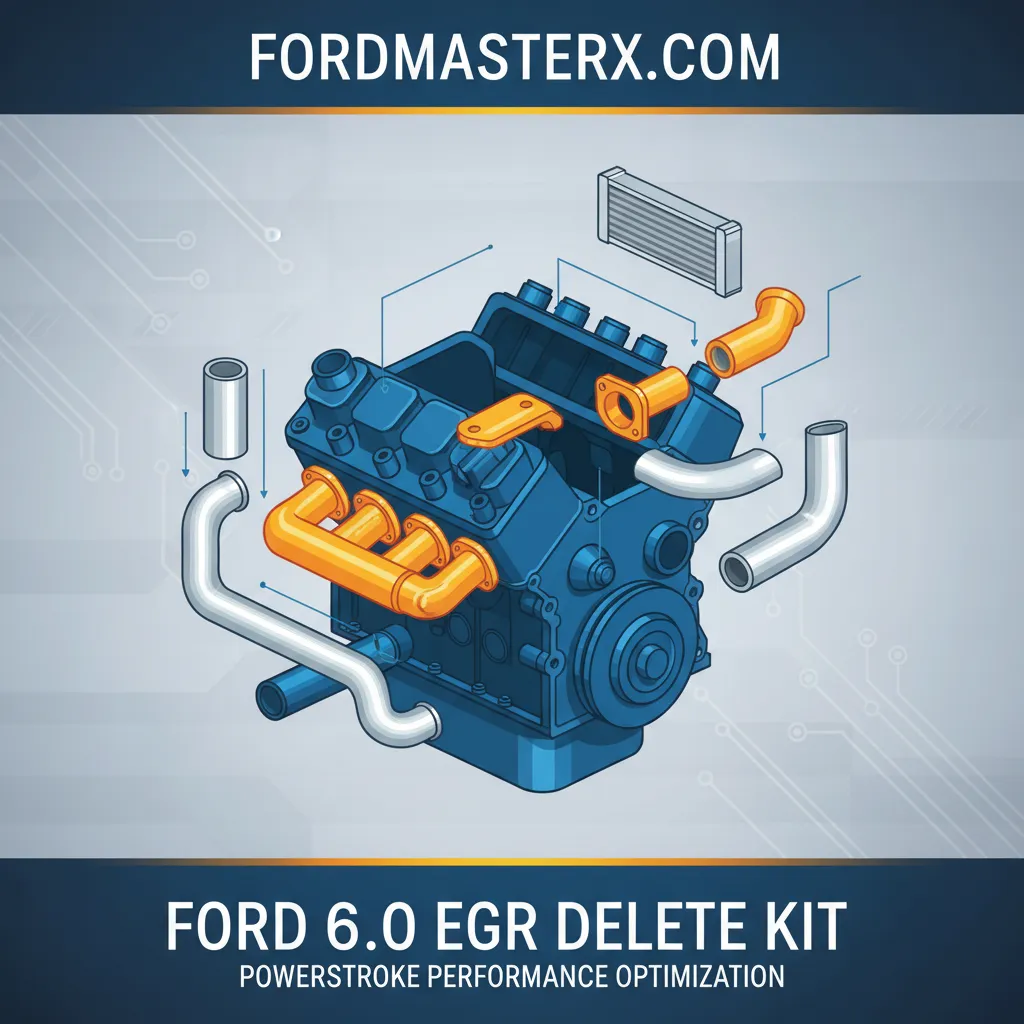
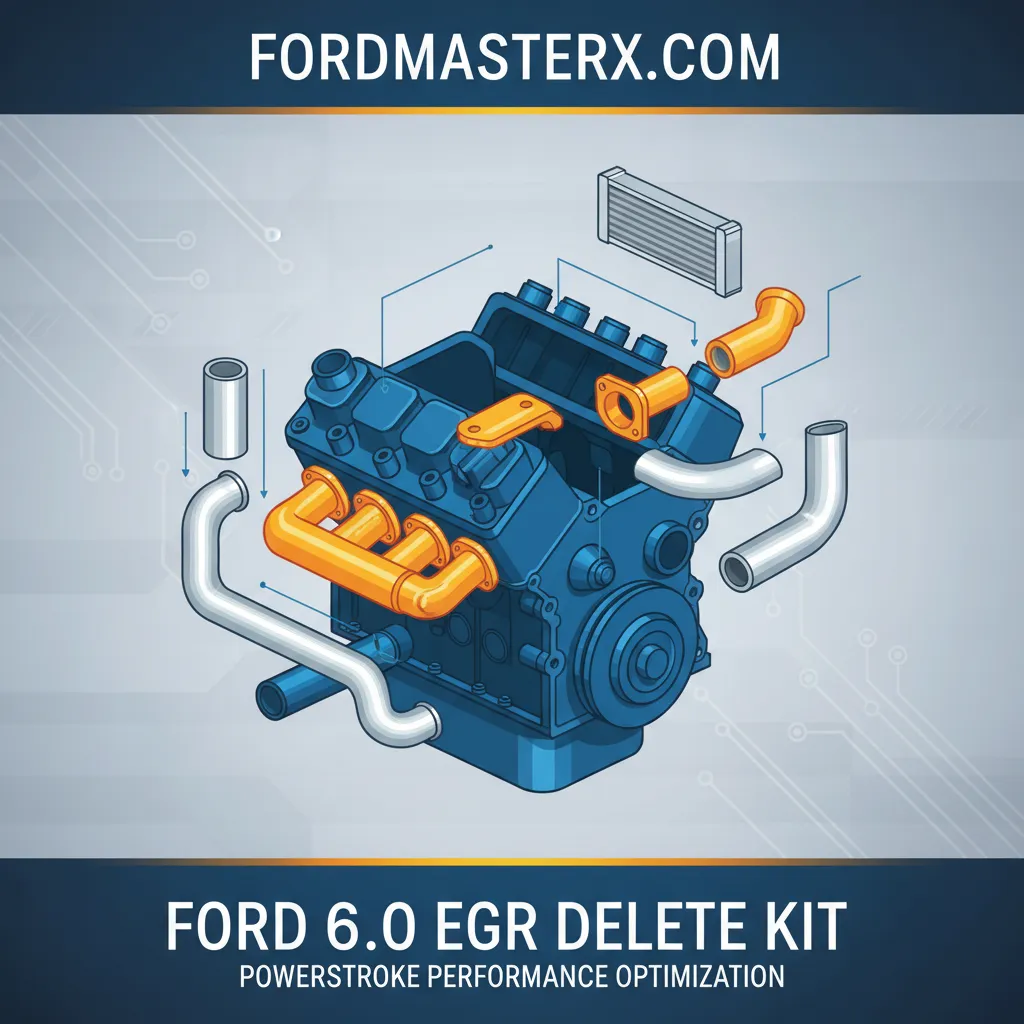
Ford 6.0 Egr Delete Kit Technical Specifications And Powerstroke Performance Optimization

The Ford 6.0L Powerstroke is a powerhouse of an engine, yet its reputation is frequently marred by a single, systemic failure point: the Exhaust Gas Recirculation (EGR) system. While designed to reduce NOx emissions, the factory hardware introduces severe mechanical risks that can compromise the entire powertrain. Factory EGR coolers are prone to thermal fatigue and clogging, often leading to blown head gaskets or catastrophic engine failure. In this comprehensive guide, we will analyze how a professional-grade Ford 6.0 EGR delete kit resolves these inherent flaws, improves thermal management, and restores engine reliability. By understanding the technical specifications and the engineering necessity of this modification, owners can make an informed decision to protect their investment and optimize long-term reliable performance.
Engineering Vulnerabilities in the Stock 6.0 Powerstroke EGR System
📤 Share Image
To understand the value of an EGR delete, one must first diagnose the catastrophic design flaws inherent in the factory Ford 6.0L cooling architecture. The factory Exhaust Gas Recirculation cooler functions as a heat exchanger, using engine coolant to lower the temperature of exhaust gases before they are reintroduced into the intake manifold. However, the extreme thermal fatigue cycle—where the cooler is subjected to 1,200°F+ exhaust on one side and 190°F coolant on the other—eventually causes the internal stainless steel tubes to expand and contract until internal weld fractures occur.
A significant expert insight into these failures involves the relationship between the oil cooler and the EGR cooler. In the 6.0L Powerstroke, coolant flows through the oil cooler before reaching the EGR cooler. Over time, silicate dropout or debris in the coolant clogs the tiny passages in the oil cooler. This restriction starves the EGR cooler of necessary coolant flow, leading to “flash boiling” scenarios. When coolant vaporizes inside the cooler, the resulting pressure spike often ruptures the internal core. This allows pressurized coolant to stream directly into the intake manifold, leading to catastrophic hydrolock or “blown” head gaskets as the cylinders attempt to compress non-compressible liquid.
Industry data confirms that the factory EGR cooler is a top 3 failure point for this platform. Reliable diagnostic practice dictates monitoring Engine Oil Temperature (EOT) vs. Engine Coolant Temperature (ECT). If the delta between these two exceeds 15 degrees Fahrenheit at cruising speed, your oil cooler is clogged, and an EGR cooler rupture is likely imminent.
Beyond structural failure, soot accumulation poses a constant threat. The EGR valve frequently becomes encrusted with carbon deposits, causing it to stick. This results in poor idle, engine surging, and excessive particulate matter recirculating into the intake, which “chokes” the engine’s volumetric efficiency. Consider the case of a 2005 F-250 experiencing white smoke and rapid coolant loss during heavy towing; this is the classic symptom of a ruptured internal core, a situation that often necessitates a multi-thousand dollar repair if not addressed proactively with a trusted delete kit.

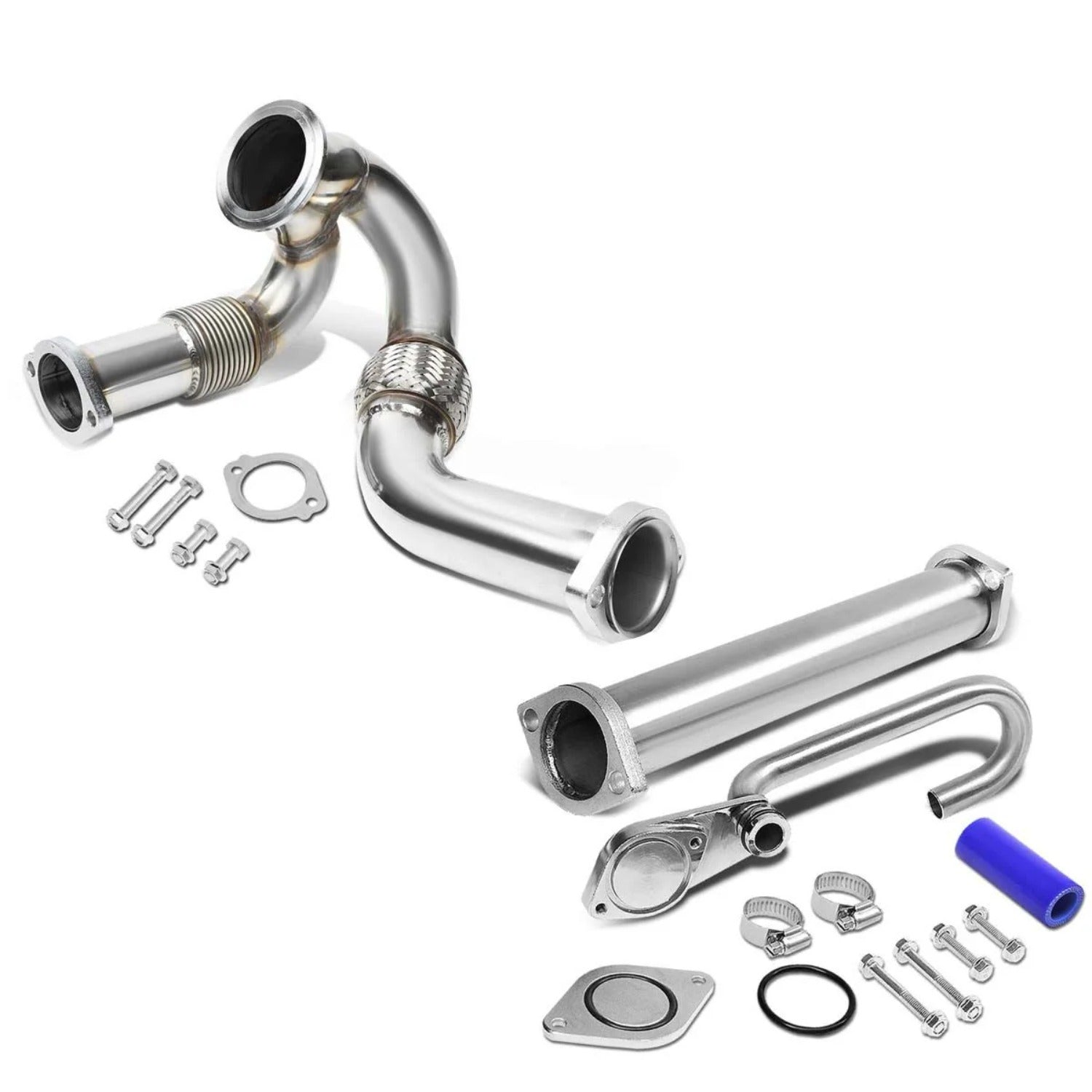
Technical Components of a Quality Ford 6.0 EGR Delete Kit
When selecting a delete kit, material science is the barrier between a permanent fix and a future leak. A professional-grade kit is not merely a collection of pipes, but a precision-engineered system designed to withstand the harsh environment of a diesel engine bay. The centerpiece of any trusted kit is the replacement up-pipe. High-quality kits utilize 304-grade stainless steel for the up-pipes to resist corrosion and handle Exhaust Gas Temperatures (EGTs) that frequently exceed 1,200 degrees Fahrenheit during regeneration or heavy towing.
Material Excellence: Stainless Steel vs. Budget Alternatives
I have witnessed many “budget” kits fail due to thin-walled tubing that cracks under vibration. A professional kit will feature tubing with a 0.120-inch wall thickness. Furthermore, the use of mandrel-bent J-tubes is critical. Unlike factory castings or cheaply bent pipe, mandrel-bent components maintain a consistent diameter throughout the curve, which significantly improves exhaust flow and reduces parasitic backpressure at the turbine inlet.
Technical Component Specifications
Stainless Grade
Viton Seal Rating
Wall Thickness
The sealing components are equally vital. Generic kits often include standard Nitrile O-rings, which degrade rapidly when exposed to diesel fuel and high heat. Expert installers insist on high-temperature Viton O-rings, which are rated for temperatures up to 400 degrees Fahrenheit. These are paired with CNC-machined billet aluminum or steel block-off plates. These plates must be perfectly flat to ensure a leak-proof seal against the intake manifold and the exhaust bypass port. A complete kit will also include new intake manifold gaskets and high-tensile hardware, ensuring the technician can perform a professional-grade reseal during reassembly.
Performance Impacts and Thermal Management Gains
Removing the EGR system is one of the most effective ways to optimize Powerstroke performance. By eliminating the re-introduction of hot, oxygen-depleted exhaust gases into the combustion chamber, you allow the engine to pull in a cooler, denser air charge. This directly translates to a significant reduction in Exhaust Gas Temperatures (EGTs). In expert testing, intake manifold temperatures have been observed to drop by as much as 100 degrees Fahrenheit under heavy load once the EGR system is bypassed.
Turbo Spool Optimization
More consistent exhaust pressure at the turbine inlet leads to faster turbocharger spool-up and improved throttle response.
Internal Engine Hygiene
Eliminates carbon-rich soot buildup in the intake manifold, preserving cross-sectional area and volumetric efficiency.
Furthermore, the elimination of the EGR cooler removes a substantial heat-exchange load from the cooling system. This provides long-term protection for the oil cooler, as the coolant is no longer subjected to the extreme temperatures of the exhaust gas within the EGR cooler. Dynamometer testing often reveals more consistent power delivery across the RPM range, as the engine no longer suffers from EGR-induced surging or fluctuating air-fuel ratios. This reliable increase in efficiency is noticeable not just on a graph, but in the seat-of-the-pants feel of the truck, especially when merging onto highways with a trailer.
Expert Installation Procedures and Tuning Requirements
The installation of a Ford 6.0 EGR delete kit is a labor-intensive process that requires a comprehensive understanding of the Powerstroke top-end. A standard installation typically requires 6 to 8 hours of labor for a technician familiar with the platform. The process involves the removal of the intake manifold, which necessitates unbolting the turbocharger and carefully disconnecting the complex engine wiring harness. Expert best practice is to replace the oil cooler and perform a thorough cooling system flush with distilled water and a trusted cleaner during this time to ensure the new components aren’t immediately contaminated by old debris.
📋
Professional Installation Roadmap
Drain the cooling system and remove the turbocharger, alternator, and intake manifold to gain access to the factory EGR cooler and up-pipes.
Install the new stainless steel up-pipe and block-off plates. Adhere strictly to torque specifications for intake bolts (approx. 96 lb-in) to prevent boost leaks.
Use an SCT X4 or HP Tuners platform to disable EGR logic in the PCM. This prevents P0401 and P0404 diagnostic trouble codes and prevents “limp mode.”
Software calibration is not optional. Without a tuner, the engine’s Power Control Module (PCM) will detect the lack of EGR flow and trigger a Check Engine Light (CEL). In some calibration versions, the truck may enter a reduced-power “limp mode.” Using a trusted tuning platform allows the engine to operate optimally without the factory emissions hardware, effectively “telling” the computer that the EGR system is no longer present.
Legal Considerations and Regulatory Compliance Standards
Before proceeding with any emissions modification, it is essential to understand the legal landscape. Under the EPA Clean Air Act, tampering with or removing emissions control devices on vehicles operated on public highways is strictly regulated. Most expert suppliers and installers market EGR delete kits for “Competition Use Only” or off-road applications. It is the responsibility of the vehicle owner to ensure compliance with local and state laws.
In states with stringent emissions testing, such as California (CARB compliance), a missing EGR cooler will result in an immediate visual smog inspection failure. Some owners opt for “Stealth” kits, which use a modified factory cooler shell to maintain a stock appearance while internally bypassing the flow. However, the legal penalties for commercial shops performing these deletes on street vehicles are severe, with federal fines exceeding $40,000 per violation. Furthermore, such modifications will typically void any remaining powertrain warranties from the manufacturer. Always consult with a professional installer regarding the specific regulations in your jurisdiction.
Don’t stop at the EGR delete. For a truly “bulletproof” 6.0L, combine your kit with an upgraded coolant filtration system. This removes the silicates that clog oil coolers, which is the root cause of both EGR and oil cooler failures.
In summary, the transition to a reliable Ford 6.0 EGR delete kit is a significant step toward engine longevity. Removing the EGR cooler eliminates the primary source of coolant-to-exhaust contamination and protects against hydrolock. High-quality stainless steel components and high-temperature Viton seals are essential for withstanding the extreme heat of the 6.0 Powerstroke. Remember that electronic tuning is a mandatory secondary step to ensure the engine operates correctly without the factory emissions hardware. Consult with a trusted diesel technician to evaluate your Powerstroke’s cooling system health before beginning your performance upgrades to ensure a complete and successful optimization.
Frequently Asked Questions
Will a Ford 6.0 EGR delete kit cause a Check Engine Light?
Yes, on most 6.0L models, especially 2005–2007 variants, removing the EGR system will trigger a Check Engine Light (CEL) and potential diagnostic codes like P0401. To prevent this, professional electronic tuning is required to recalibrate the Powertrain Control Module (PCM) and disable the EGR monitoring logic.
What is the difference between an EGR delete and an EGR bypass?
A delete kit completely removes the EGR cooler and up-pipe, replacing them with new hardware to maximize exhaust flow. A bypass kit usually leaves the cooler in place but uses internal plugs or diverted paths to stop the flow of exhaust through the cooler core, often used for a more stock appearance.
Do I need to replace my oil cooler when installing an EGR delete?
While not strictly mandatory, experts highly recommend replacing the oil cooler at the same time. A clogged oil cooler is often what causes the EGR cooler to fail by restricting coolant flow. Installing a new, high-quality oil cooler ensures the entire thermal management system is refreshed for long-term reliability.
Is a Ford 6.0 EGR delete legal for street use?
In the United States, removing or tampering with emissions control equipment on a vehicle used on public roads is a violation of the Clean Air Act. These kits are intended and marketed for off-road competition or closed-course use only. You should check your local and state regulations before installation.
How does an EGR delete affect fuel economy?
Many users report a slight increase in fuel economy, typically 1-2 MPG. This is primarily because the engine is no longer breathing in hot, oxygen-depleted exhaust gases, allowing for more efficient combustion. Additionally, the reduction in intake manifold soot buildup helps maintain optimal airflow over the life of the engine.