Ford 4.6 Coolant Flow Diagram: Step-by-Step Instructions

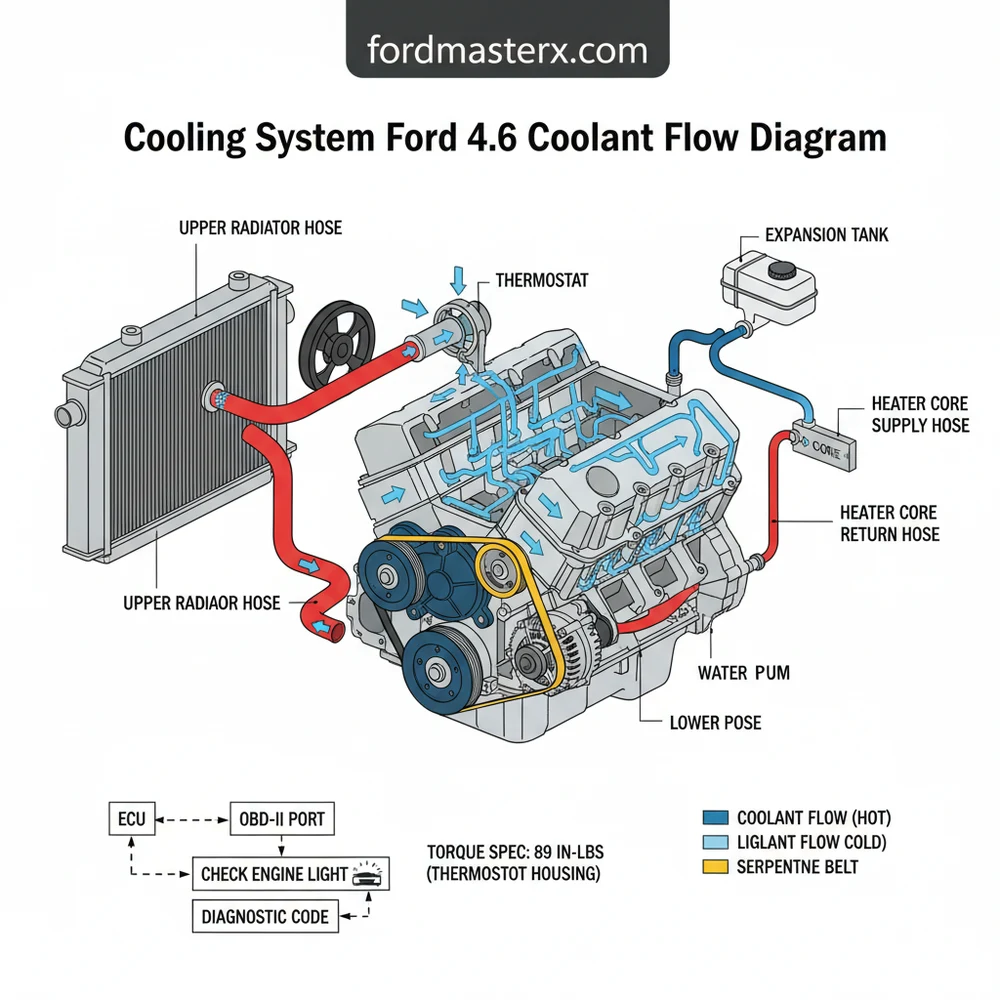
The Ford 4.6 coolant flow diagram shows coolant being drawn from the radiator by the water pump, forced through the engine block and heads, and returned via the thermostat. This cycle prevents the check engine light from illuminating due to overheating. Understanding this flow helps in diagnosing blockages or trapped air.
📌 Key Takeaways
- The water pump is the primary driver of coolant through the 4.6 block
- The thermostat dictates when coolant returns to the radiator for cooling
- Air pockets often get trapped in the crossover tube of the intake manifold
- Proper hose routing is essential for the heater core to function correctly
- Use this diagram to trace leaks that cause high-temperature diagnostic codes
The Ford 4.6L V8 engine, a staple of the Modular engine family, relies on a high-efficiency thermal management system to maintain its performance and longevity. Whether you are working on a Mustang, an F-150, or a Crown Victoria, understanding the cooling system ford 4.6 coolant flow diagram is the first step toward successful DIY maintenance or complex repairs. This diagram illustrates the precise path liquid coolant takes as it moves from the radiator through the engine block and cylinder heads. By mastering this flow, you can pinpoint leaks, prevent catastrophic overheating, and ensure your engine operates within its optimal temperature range. This guide will walk you through every component, from the water pump to the thermostat, providing the technical clarity needed for a professional-grade repair.
Detailed Breakdown of the Ford 4.6 Coolant Flow Diagram
The cooling system in the Ford 4.6L engine is a pressurized, “reverse-flow” influenced design that prioritizes cooling the cylinder heads where combustion temperatures are highest. To read the diagram correctly, you must understand the distinction between the “degas” loop and the primary cooling loop. The diagram typically begins at the bottom of the radiator, where the coolest liquid resides.
On the 4.6L V8, the water pump is located on the front of the engine block, driven by the accessory belt. It acts as the heart of the system, pushing coolant into the engine block and through the cooling jackets surrounding the cylinders.
As the coolant moves through the engine block, it travels upward into the cylinder heads, passing near the timing chain guides and valves. After absorbing heat from the combustion chambers, the hot coolant gathers at the front of the intake manifold in a component known as the coolant crossover. Depending on the position of the thermostat, the coolant is either sent back into the radiator to be cooled by airflow or recirculated through a bypass tube to maintain engine temperature during warm-up.
– Ford 4.6L V8 Coolant Flow: Radiator (Bottom) -> Water Pump -> Engine Block -> Cylinder Heads -> Coolant Crossover/Thermostat -> Radiator (Top).
In many variations of the 4.6L engine, such as the 2V (2-valve) and 3V (3-valve) versions, the heater core loop remains active regardless of the thermostat’s state. This ensures that the cabin heater works quickly and provides a secondary path for coolant flow, which helps prevent localized hotspots in the rear of the engine block.
Step-by-Step Guide to Interpreting and Servicing the System

To effectively use a cooling system ford 4.6 coolant flow diagram for repairs, you must be able to translate the lines on the page to the hardware under the hood. Follow these steps to diagnose or service your cooling system.
Never open the cooling system while the engine is hot. The system is under high pressure, and escaping steam or boiling coolant can cause severe burns. Wait at least one hour after driving before performing service.
Step 1: Identify the Mechanical Components
Locate the water pump, which is centrally mounted. Verify the condition of the accessory belt; if the belt is slipping or snapped, the pump will not circulate coolant, leading to immediate overheating. Check the radiator hoses for soft spots or cracks.
Step 2: Trace the Lower Radiator Hose
The lower hose is the suction side. Follow it from the bottom of the radiator to the inlet of the water pump. If this hose collapses while the engine is running, it indicates a restriction in the radiator or a faulty hose with a broken internal spring.
Step 3: Inspect the Thermostat Housing
The thermostat on the 4.6L is typically located where the upper radiator hose meets the engine. Using your diagram, identify if your specific model uses a “cold-side” or “hot-side” thermostat. Most Modular engines use a housing that requires a specific torque spec of 15 to 22 lb-ft for the bolts to prevent cracking the often-plastic intake manifold.
Step 4: Monitor the Bypass and Heater Lines
The small hoses leading toward the firewall go to the heater core. If you notice a sweet smell inside the cabin or foggy windows, these lines or the heater core itself may be leaking. The flow diagram shows these as a constant-flow circuit.
Step 5: Use Diagnostic Tools
If the check engine light is illuminated, connect an OBD-II scanner to the vehicle. Look for a diagnostic code such as P0128 (Coolant Thermostat Malfunction) or P1289 (Cylinder Head Temperature Sensor Signal High). These codes often point to a flow issue identified by the ECU.
Required Tools and Materials:
- ✓ Socket set (8mm, 10mm, 13mm)
- ✓ Torque wrench (for accurate assembly)
- ✓ New Motorcraft Gold or Orange coolant (model dependent)
- ✓ Coolant pressure tester
Common Issues and Troubleshooting

The Ford 4.6L engine is famous for its durability, but its cooling system has specific weak points. One of the most frequent issues is the failure of the plastic intake manifold crossover. Over time, the plastic housing around the thermostat and the front coolant passage cracks, leading to a steady leak. By referencing the flow diagram, you can see that this area is under maximum pressure when the engine is at operating temperature.
Another common problem is air pockets trapped in the system. Because the 4.6L has high points in the cylinder heads, air can become trapped during a coolant flush. This “air lock” prevents the coolant flow from reaching the sensors, which can confuse the ECU and cause the temperature gauge to fluctuate wildly. If your check engine light flashes while the car is idling but the radiator is cool, an air pocket is the likely culprit.
When refilling the 4.6L cooling system, use a “burping” funnel attached to the degas bottle. Start the engine with the heater on full blast and let it run until the thermostat opens. This allows air to escape through the highest point of the flow path.
Best Practices for Maintaining Your 4.6L Cooling System
To keep your Ford 4.6L running cool, consistency in maintenance is vital. Always use the specific type of coolant recommended in your owner’s manual. Mixing different types of coolant (like old-style green with newer OAT-based orange) can lead to “sludging,” which restricts the narrow passages in the coolant flow path.
- ✓ Inspect the Water Pump: During every accessory belt change, wiggle the water pump pulley. Any play or “wobble” indicates the internal bearings are failing.
- ✓ Check Torque Specs: When replacing a water pump or thermostat, always use a torque wrench. Over-tightening can crack the timing cover or the intake manifold.
- ✓ Monitor the ECU: Use an OBD-II device to monitor “Live Data” for Cylinder Head Temperature (CHT). This is more accurate than the dashboard gauge.
- ✓ Replace the Cap: The degas bottle cap is designed to vent pressure at a specific PSI. If the spring inside fails, the system may boil over even if the engine isn’t technically overheating.
In summary, the cooling system ford 4.6 coolant flow diagram is an indispensable tool for anyone looking to maintain or repair this iconic V8 engine. By understanding the path from the pump to the heads and back to the radiator, you can accurately diagnose diagnostic codes, replace components to the correct torque spec, and ensure the ECU receives accurate temperature readings. Regular inspections of the accessory belt and cooling hoses will prevent the most common causes of engine failure, keeping your Ford on the road for hundreds of thousands of miles.
Frequently Asked Questions
Where is the thermostat located?
The thermostat on a Ford 4.6 engine is typically located at the end of the upper radiator hose, housed within the water outlet on the front of the intake manifold. On some later models, it may be positioned lower. This component is essential for regulating the coolant flow shown in the diagram.
What does a 4.6 coolant flow diagram show?
A Ford 4.6 coolant flow diagram shows the directional movement of fluid through the radiator, water pump, engine block, cylinder heads, and heater core. It identifies how the thermostat directs flow back to the radiator once the ECU detects the engine has reached its optimal operating temperature range.
How many sensors monitor the coolant system?
Most Ford 4.6 engines use a single or two-wire Cylinder Head Temperature (CHT) sensor. This sensor communicates directly with the ECU to monitor engine heat. If the sensor fails, it may trigger a P1285 diagnostic code and put the vehicle into a fail-safe cooling mode to prevent damage.
What are the symptoms of a bad cooling system?
Symptoms of a failing cooling system include an illuminated check engine light, fluctuating temperature gauges, or steam from the engine bay. If you retrieve an OBD-II diagnostic code related to engine over-temperature, check for leaks at the intake manifold or water pump, as these are common failure points.
Can I replace the water pump myself?
You can replace most cooling components yourself using a Ford 4.6 coolant flow diagram as a reference. Swapping a thermostat or water pump is straightforward, but you must ensure every bolt meets the specific torque spec to prevent leaks. Always bleed the system thoroughly to remove air pockets.
What tools do I need for cooling system repair?
To work on the 4.6 cooling system, you will need a basic socket set, pliers for hose clamps, a torque wrench, and a drain pan. Using an OBD-II scanner is also highly recommended to clear any stored codes or to monitor live temperature data from the ECU.