Ecoboost 2.0L I4 Gtdi Dohc Turbocharged Vct: Technical Specifications And Performance Analysis

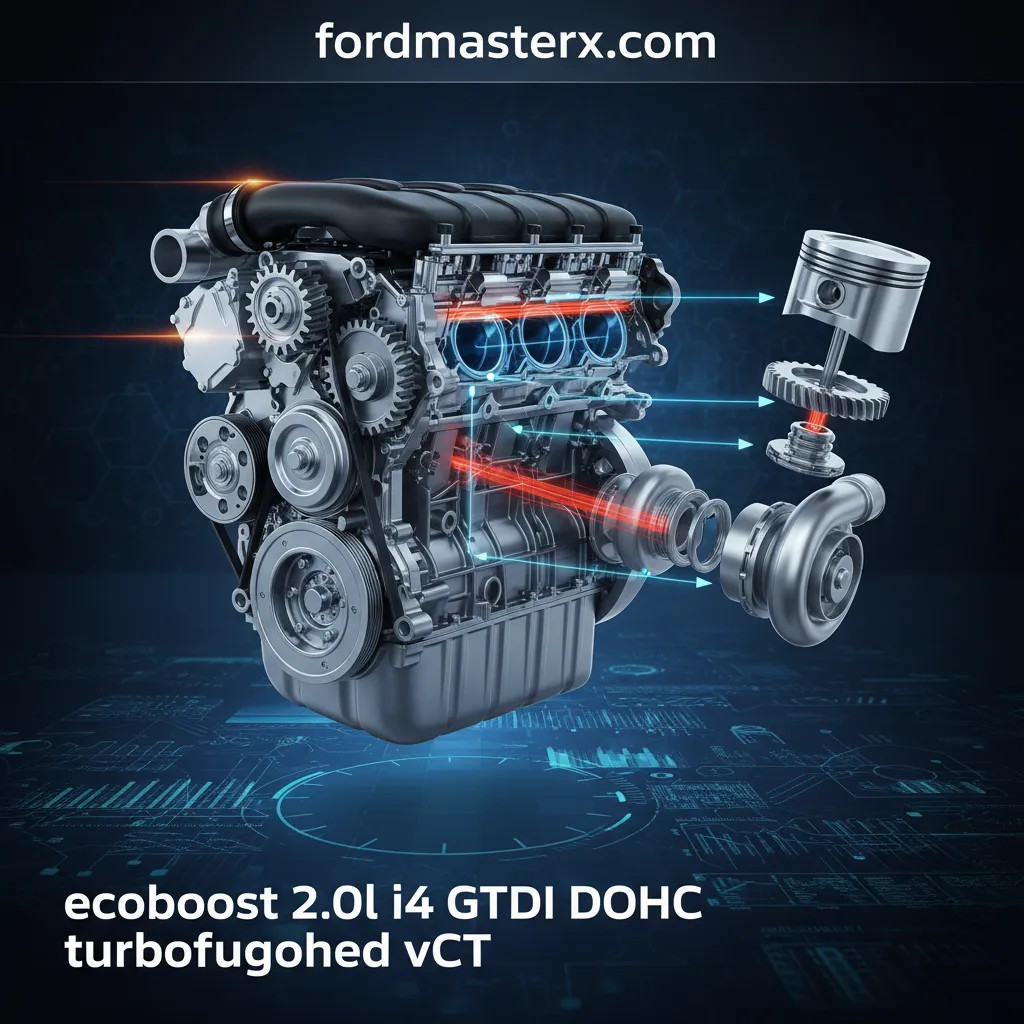
The Ecoboost 2.0L I4 GTDI DOHC Turbocharged VCT engine represents a pivotal shift in automotive engineering, proving that four-cylinder efficiency can rival traditional V6 performance. As a cornerstone of Ford’s global engine strategy, this power plant successfully bridged the gap between fuel economy mandates and the consumer demand for robust torque delivery. Despite its widespread use in everything from the spirited Focus ST to the family-oriented Explorer, the technical complexities of GTDI (Gasoline Turbocharged Direct Injection) and Ti-VCT (Twin Independent Variable Cam Timing) systems often lead to confusion regarding maintenance requirements and performance potential. This article provides a professional-grade technical deep dive into the specifications, engineering innovations, and reliability protocols of this versatile power plant, serving as a comprehensive guide for technicians and owners alike.
Core Architecture and GTDI Technology Integration
📤 Share Image
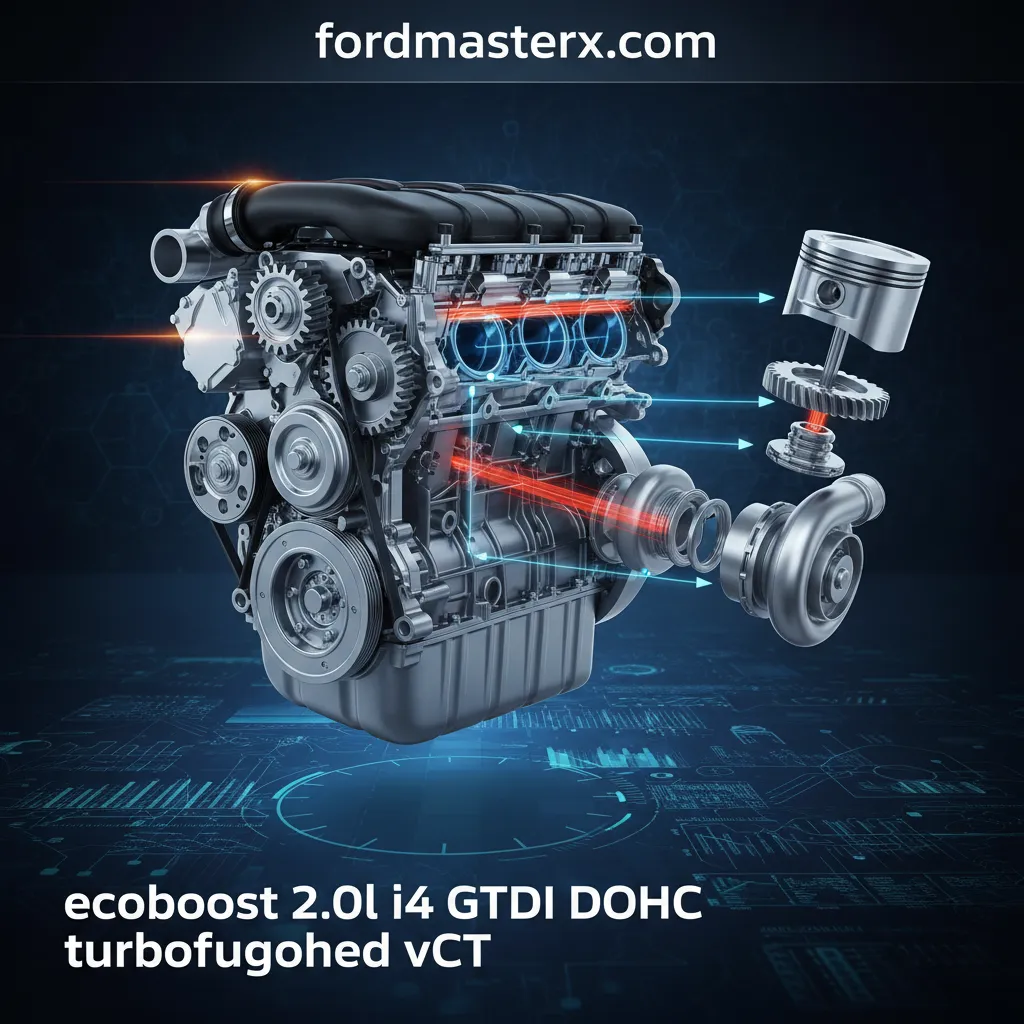
At the heart of the 2.0L EcoBoost lies a 1999cc displacement engine featuring a high-pressure die-cast aluminum cylinder block and a precision-machined aluminum cylinder head. This lightweight construction is essential for modern vehicle weight distribution, yet it is engineered to withstand the significant internal stresses of forced induction. The engine utilizes an 87.5 mm bore and an 83.1 mm stroke, creating a slightly oversquare configuration that favors rapid engine response. The 1-3-4-2 firing order is a hallmark of this inline-four design, balanced meticulously to reduce the NVH (Noise, Vibration, and Harshness) levels typically associated with smaller engines.
The Precision of Direct Injection
The “GTDI” acronym—Gasoline Turbocharged Direct Injection—is the defining feature of this engine’s efficiency. Unlike traditional port injection, where fuel is sprayed into the intake manifold, the EcoBoost system injects fuel directly into the combustion chamber at pressures up to 2,150 psi. This allows for a much cooler intake charge and extremely precise fuel metering. By controlling the timing of the fuel spray down to the millisecond, the engine can run a higher compression ratio—typically 9.3:1 or 9.7:1—without the immediate risk of detonation (knock). This high compression ratio is the key to maintaining thermal efficiency even when the turbocharger is not providing boost.
Optimized Airflow
The DOHC configuration with four valves per cylinder ensures maximum volumetric efficiency at high RPMs.
Thermal Management
Aluminum construction allows for faster heat dissipation, critical for high-boost applications.
Advanced Variable Cam Timing and Induction Systems
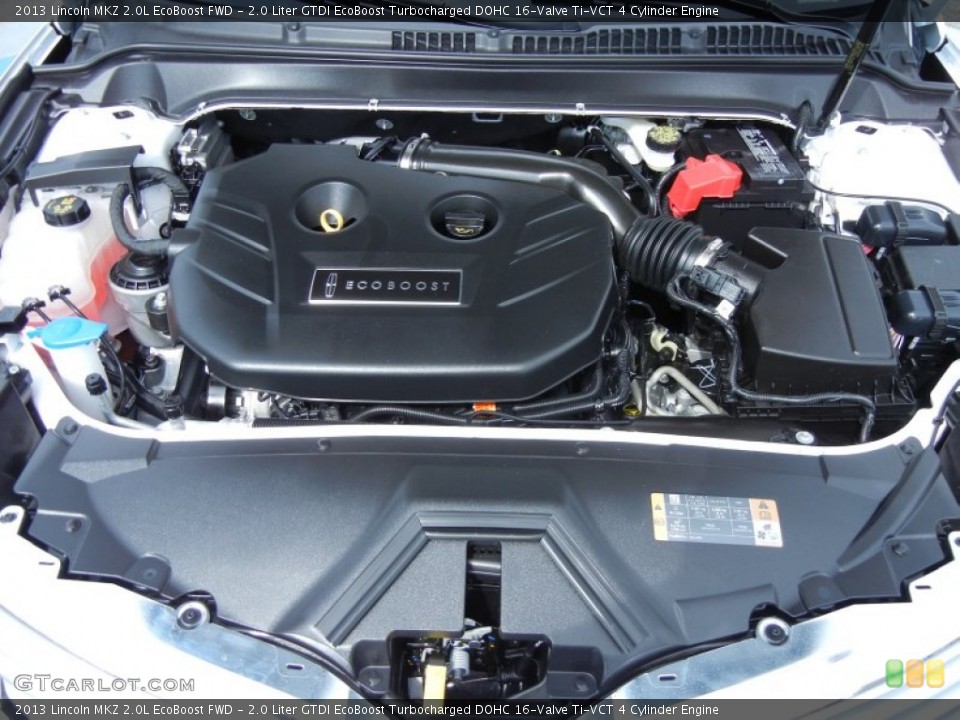
The 2.0L EcoBoost employs Twin Independent Variable Cam Timing (Ti-VCT), a sophisticated system that allows the engine computer to advance or retard the timing of both the intake and exhaust camshafts independently. In a professional tuning environment, we see this as the “secret sauce” that eliminates the traditional trade-off between low-end torque and high-end horsepower. By overlapping the valve opening times, the engine can achieve “scavenging,” where the incoming air helps push exhaust gases out, effectively spooling the turbocharger much faster than a fixed-timing engine ever could.
The Evolution of the Turbocharger
While the initial “Cleveland” iterations used a reliable single-scroll turbocharger, the platform evolved into a twin-scroll turbocharger design for newer iterations. This design separates the exhaust pulses from cylinders 1 and 4 from cylinders 2 and 3, preventing exhaust gas interference and allowing the turbo to react almost instantaneously to throttle inputs. Under high load, these units typically reach maximum boost levels of 16-18 psi. To ensure long-term quality and durability, the turbocharger center housing is cooled by both oil and dedicated water jackets, preventing the oil “coking” that plagued turbocharged engines of the 1980s and 90s.
A standard 3.5L naturally aspirated V6 often struggles to provide peak torque until 4,000+ RPM. In contrast, the 2.0L EcoBoost delivers nearly its full 270 lb-ft of torque as low as 2,500 RPM, providing a much more “responsive” feel in daily city driving.

Performance Metrics Across Major Vehicle Applications
One of the primary reasons the 2.0L EcoBoost became a trusted choice for engineers was its sheer versatility. Depending on the vehicle application, the engine management software is tuned to emphasize either raw performance or fuel efficiency. This flexibility is evidenced by the wide range of outputs seen across the Ford and Lincoln lineups. The engine provides reliable power delivery across a wide band, typically from 2,500 to 5,000 RPM, making it an ideal candidate for heavy-duty utility vehicles and lightweight sport hatches alike.
In the 2013 Focus ST, the engine was pushed to its performance limits, featuring an “overboost” function that allowed for increased torque for up to 15 seconds. Conversely, in the 2015 Ford Escape, the engine was paired with all-wheel-drive systems where torque management was prioritized to prevent drivetrain shock while maintaining a respectable towing capacity. This expert level of calibration allows the same basic hardware to serve diverse consumer needs without sacrificing the core identity of the EcoBoost brand.
Professional Maintenance for Long-Term Reliability
While the 2.0L EcoBoost is a robust engine, it is not immune to the specific pitfalls of modern GTDI technology. As an expert in the field, I recommend moving beyond the generic manufacturer “oil life monitor” and adopting a proactive maintenance stance. The high-heat environment of a turbocharged engine, combined with the lack of fuel washing over the intake valves (a side effect of direct injection), creates two major challenges: carbon buildup and Low-Speed Pre-Ignition (LSPI).
📋
Professional Maintenance Protocol
Use only 5W-30 full synthetic oil rated API SN Plus or SP. These formulations contain specific detergents to prevent LSPI, which can cause catastrophic piston failure. Change intervals should not exceed 5,000 miles.
Turbocharged engines are hard on ignition components. Replace spark plugs every 30,000 to 40,000 miles. For tuned applications, ensure a tight spark plug gap of 0.028 to 0.030 inches to prevent spark blowout under high boost.
Early production blocks (pre-2019) were susceptible to coolant intrusion into the cylinders due to a groove-cut design in the cylinder block face. Regularly monitor coolant levels; a “white smoke” exhaust or rough cold start is an immediate red flag for head gasket or block failure.
Evolutionary Changes and Gen 2 Improvements
The transition from the original “Gen 1” 2.0L EcoBoost (often referred to as the Cleveland engine) to the “Gen 2” Twin-Scroll version in 2015 marked a significant leap in quality. The newer design wasn’t just a minor update; it involved a comprehensive redesign of the cylinder block and head. The goal was to mitigate the cracking and gasket failures that occasionally haunted the first generation while simultaneously improving the engine’s response time.
Structural Enhancements
One of the most notable visual differences in the Gen 2 is the integrated exhaust manifold within the cylinder head. This allows the coolant to reach operating temperature faster and provides better cooling for the exhaust gases before they reach the turbo. Furthermore, the high-pressure fuel pump and rail assembly were upgraded to handle higher demands with less noise. These structural enhancements resulted in a 10% increase in low-end torque response, making the Gen 2 feel even more like a larger displacement engine.
By The Numbers
Torque Response Gain (Gen 2)
Peak Injection Pressure
Max Factory Boost
✅ Pros
- Exceptional power-to-weight ratio
- Broad torque curve for daily drivability
- Highly tunable for aftermarket enthusiasts
- Twin-scroll design virtually eliminates lag
❌ Cons
- Susceptible to intake valve carbon buildup
- Coolant intrusion risks on early models
- Sensitive to fuel and oil quality
- High thermal stress on spark plugs
The 2.0L EcoBoost combines direct injection and twin-independent variable cam timing for superior power density. Its evolution from single-scroll to twin-scroll has solidified its place as a trusted performer in both sport and utility segments. Reliability is maximized through strict adherence to high-quality synthetic oil standards and regular induction system inspections. For those seeking professional results and longevity, ensure your maintenance logs prioritize SN Plus/SP rated oils and frequent spark plug inspections. By understanding the technical nuances of the GTDI and VCT systems, owners can enjoy the impressive performance of this engine for hundreds of thousands of miles.
Frequently Asked Questions
What does GTDI stand for in the 2.0L EcoBoost?
GTDI stands for Gasoline Turbocharged Direct Injection. This means fuel is sprayed directly into the combustion chamber at high pressure (up to 2,150 psi) rather than the intake port. This expert engineering allows for a cooler intake charge and higher compression, resulting in improved efficiency and a significant reduction in turbo lag.
Is the 2.0L EcoBoost engine reliable?
Yes, when maintained with quality fluids, the 2.0L EcoBoost is a reliable and trusted engine. Early models had some reports of coolant intrusion, but later revisions and professional maintenance practices—specifically using API SP rated oils to prevent LSPI—have made it a staple for high-mileage drivers across the Ford and Lincoln lineups.
Does this engine have a timing belt or a timing chain?
The 2.0L I4 GTDI DOHC engine utilizes a robust timing chain rather than a belt. This design is preferred for professional-grade durability as it is intended to last the life of the engine. However, maintaining consistent oil pressure through regular changes is vital to ensure the chain tensioners remain functional and reliable.
Why is oil quality so important for the 2.0L EcoBoost?
Turbocharged engines like the 2.0L EcoBoost subject oil to extreme thermal stress. Furthermore, direct injection engines are prone to Low Speed Pre-Ignition (LSPI), which can cause catastrophic piston failure. Using a professional-grade, full synthetic oil that meets Ford’s WSS-M2C946-B1 specification is essential for engine longevity and safety.
What is the benefit of Twin Independent Variable Cam Timing (Ti-VCT)?
Ti-VCT allows the engine’s ECU to adjust both the intake and exhaust camshafts independently. This professional level of control means the engine can optimize for fuel economy during highway cruising or maximize torque during acceleration. It significantly enhances the engine’s ‘breathability’ across a wide range of operating conditions.