Chevy Tow Mirror Wiring Diagram: Easy Setup Guide

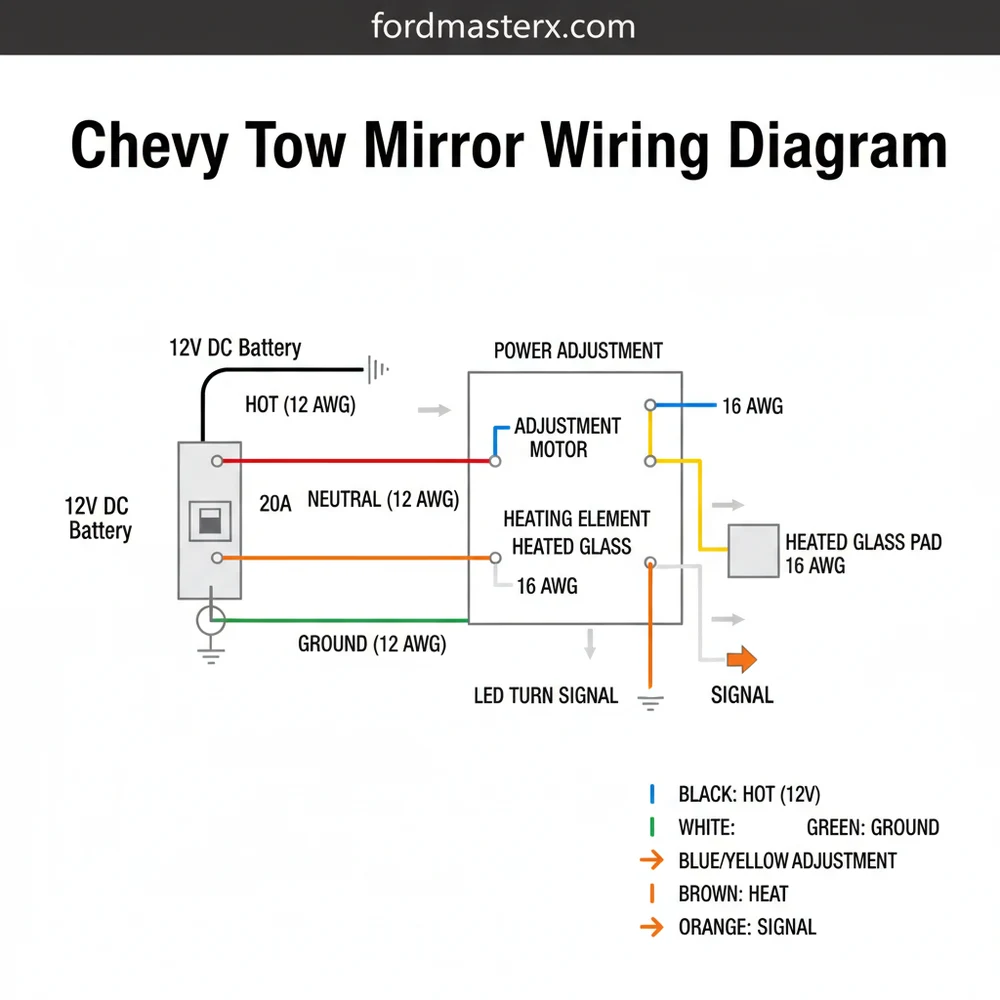
A Chevy tow mirror wiring diagram illustrates the connection between the door harness and mirror functions like heat, signals, and power. It typically features a hot wire for power, a ground wire for the circuit, and specific pins for turn signals. Identifying the common terminal and traveler wire is crucial for multi-function mirrors.
📌 Key Takeaways
- Maps out specific pinouts for power, heat, and signal functions
- The ground wire is the most critical connection for circuit completion
- Always disconnect the vehicle battery before handling door harness wiring
- Use a multimeter to verify signal pulse before final pin insertion
- Essential for upgrading base mirrors to full-feature towing mirrors
Upgrading to heavy-duty tow mirrors is one of the most practical modifications a Chevy Silverado or GMC Sierra owner can make. Whether you are hauling a travel trailer or a wide flatbed, the increased field of vision is essential for safety. However, the complexity of a Chevy tow mirror wiring diagram often intimidates DIY enthusiasts. Between the different generations—NBS (New Body Style), NNBS (Next Generation), K2XX, and the modern T1XX—General Motors has changed connector types, pin locations, and wire colors several times. Understanding how these circuits integrate with your truck’s Body Control Module (BCM) and door switches is the key to a successful installation that looks and functions like it came from the factory.
Main Components and Features of Chevy Tow Mirrors
Modern Chevy tow mirrors are much more than just glass and plastic. They are sophisticated electronic components that interface with multiple vehicle systems. Depending on the trim level of your truck (WT, LT, LTZ, or High Country), your wiring harness may support various features. Understanding these components is the first step in deciphering a wiring diagram.
- Power Adjust Glass: The basic function that uses two motors (horizontal and vertical) to move the upper mirror glass.
- Heated Glass: A heating element behind the glass, usually activated by the rear defrost button, designed to clear ice and fog.
- Turn Signal Indicators: Integrated LEDs (often in an arrow pattern behind the glass or a strip on the outer cap) that flash with the vehicle’s blinkers.
- Puddle Lamps: Downward-facing lights located on the bottom of the mirror housing to illuminate the ground when the doors are unlocked.
- Cargo/Reverse Lights: High-intensity rear-facing white LEDs that help with visibility when backing up or working near the truck bed.
- Power Folding: Motors that allow the mirrors to fold inward against the door for tight parking spaces.
- Running/Marker Lights: Low-intensity amber lights that stay on with the truck’s headlights to signal the vehicle’s width.
How to Read and Use a Chevy Tow Mirror Wiring Diagram

Reading a wiring diagram for a Chevy truck requires identifying the connector type first. For trucks built between 2014 and 2018 (the K2XX platform), mirrors typically use either an 8-pin or a 22-pin connector. If you are upgrading from small mirrors to tow mirrors, you are likely moving from an 8-pin to a 22-pin setup, which requires an adapter or manual repinning.
When looking at a diagram, the “Pin Number” refers to the position of the wire in the plastic harness plug. The “Wire Color” is the jacket color of the wire, though be aware that aftermarket mirrors often use different colors than OEM GM harnesses. Here is a breakdown of the standard 22-pin layout for 2014-2018 Chevy Silverado 1500/2500 trucks:
| Pin Number | Function | Standard OEM Color |
|---|---|---|
| Pin 1 | Cargo/Reverse Light | White |
| Pin 2 | Marker/Running Light | Yellow/Blue or Grey |
| Pin 9 | Turn Signal | Green/White (Left) / Blue/White (Right) |
| Pin 11 | Puddle Lamp | Violet/White |
| Pin 15 | Mirror Heat | Green |
| Pin 18-20 | Power Adjustment Motors | Various (Yellow, Light Blue, White) |
To use this information, you will need a digital multimeter. Set the meter to DC Volts and ground the black probe to a metal part of the door frame. Insert the red probe into the pin you want to test. For example, if you turn on your hazard lights, you should see the voltage pulse on Pin 9. If you are installing aftermarket mirrors that don’t match these colors, use the multimeter to identify which wire on the mirror side corresponds to each function before hard-wiring.
Practical Installation Tips for DIYers

The physical installation of the mirrors is usually the easy part—three to four bolts hold the mirror to the door. The challenge lies in the wiring. If your truck didn’t come with certain features (like cargo lights or running lights), the wires for those features may not exist in your door harness. You will have to run “add-on” wires from the BCM or the fuse box located under the dashboard.
When running new wires through the door, always use the factory rubber boot (the “accordion” tube). Use a plastic fish tape or a coat hanger with the end taped to pull your new wires through. This protects the wires from being pinched or sheared when the door opens and closes. For the cargo/reverse light function, many DIYers find it easiest to tap into the cargo lamp circuit at the BCM located in the driver-side footwell. This allows the mirror lights to turn on whenever the bed light is activated.
Another tip involves the power-fold feature. If your truck was not originally equipped with power-folding mirrors, simply installing the mirrors and a new switch is often not enough. You may need to have the dealership perform a “flash” on the BCM to enable the power-folding software, or use an aftermarket programmer to unlock the feature.
Troubleshooting Common Wiring Issues
If you have followed the diagram and your mirrors still aren’t functioning correctly, check these common failure points:
- Vibration or “Ghosting” Movement: This is often caused by a poor ground connection. Ensure Pin 4 (Ground) is securely seated in the harness and the wire is not frayed.
- Reverse Lights Don’t Work: In many Chevy trucks, the cargo/reverse light circuit on the mirror requires a specific trigger. If you have tapped into the BCM, check the fuse for the “Cargo Lamp.” Also, ensure you haven’t swapped the puddle lamp wire with the cargo lamp wire, as they often look similar.
- Turn Signals Flash Rapidly: This is known as “hyper-flashing.” It happens when the BCM detects a change in resistance (usually from switching to LED tow mirrors). You may need to install a load resistor or use an OBDII tool to adjust the light outage detection settings in the BCM.
- Power Adjustment is Reversed: If pushing “Up” moves the mirror “Down,” you have likely swapped the polarity on the motor pins (Pins 18-20). Refer back to your specific year’s diagram and swap the two motor leads.
Final Thoughts on the Chevy Tow Mirror Project
Successfully wiring Chevy tow mirrors requires patience and a systematic approach. By utilizing a proper wiring diagram and a multimeter, you can bridge the gap between basic factory mirrors and fully-featured towing equipment. Whether you are repinning a 22-pin connector for a K2XX truck or running new signal wires on an older NBS model, the goal is a clean, secure connection. Avoid using “T-taps” or “Scotch locks,” as these are prone to failure due to the constant vibration of the door. Instead, opt for soldered connections with heat-shrink tubing for a professional, long-lasting result. With the right wiring, your Chevy will be safer and more capable for your next hauling adventure.
Step-by-Step Guide to Understanding the Chevy Tow Mirror Wiring Diagram: Easy Setup Guide
Identify the pinout configuration using the Chevy tow mirror wiring diagram for your specific model.
Locate the main harness behind the interior door panel trim and remove the factory plug.
Understand how the hot wire and ground wire interface with the mirror’s internal motors and LEDs.
Connect the traveler wire and other signal pins to the matching common terminal on the vehicle side.
Verify that all functions, including turn signals and glass heat, operate correctly using a multimeter.
Complete the assembly by securing the mirror bolts and reinstalling the door panel snugly.
Frequently Asked Questions
Where is the mirror connector located?
The mirror connector is located behind the interior door panel, typically near the top corner closest to the A-pillar. You must remove the door trim and the plastic weather seal to access the harness where the mirror’s electrical plug connects to the vehicle’s main wiring system.
What does this wiring diagram show?
The Chevy tow mirror wiring diagram shows the specific pin locations for every mirror function, including power adjustment, heated glass, integrated turn signals, and puddle lights. It identifies the hot wire for constant power and the traveler wire used for directional signal communication between the switch and the motor.
How many wires does a Chevy tow mirror have?
Most modern Chevy tow mirrors have between 8 and 22 wires, depending on features like power folding or memory. A standard setup usually includes a neutral wire for returns, a ground wire, and several signal wires for the glass movement, temperature sensors, and LED turn indicators.
What are the symptoms of a bad mirror connection?
Symptoms of a bad connection include intermittent power to the glass, non-functioning turn signals, or the heating element failing to clear frost. Often, a loose common terminal or a frayed ground wire is the culprit behind these electrical failures, leading to erratic mirror behavior or blown fuses.
Can I install these mirrors myself?
Yes, you can install Chevy tow mirrors yourself with basic hand tools and a proper wiring diagram. The process involves removing the door panel and swapping the harness. However, some advanced features like power-folding might require a dealer flash or additional relay modules to function correctly.
What tools do I need for this task?
You will need a plastic trim removal tool set to pop the door panel, a 10mm socket for the mirror bolts, a screwdriver set, and a multimeter. Electrical tape, wire strippers, and heat-shrink tubing are also recommended for securing any spliced wires during the installation process.