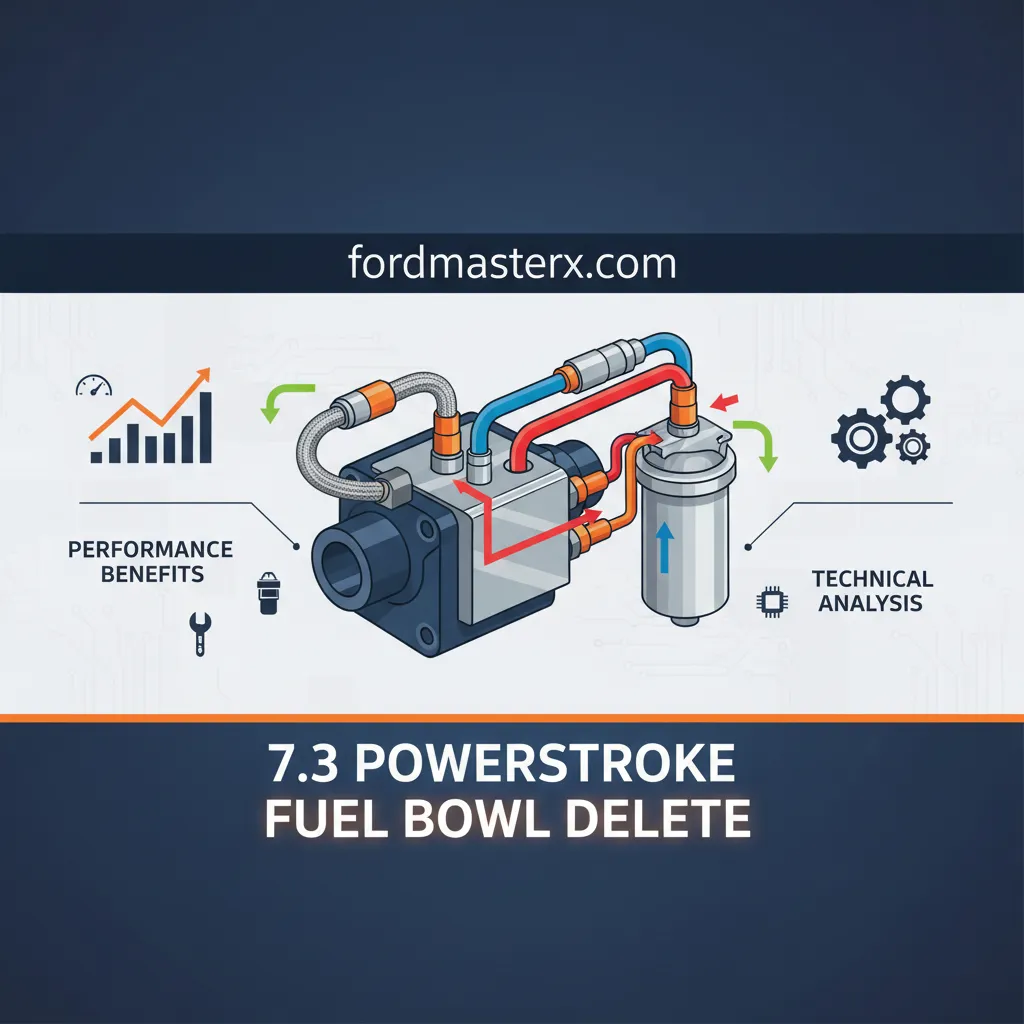
7.3 Powerstroke Fuel Bowl Delete: Technical Analysis And Performance Benefits

For the 7.3L Powerstroke enthusiast, few components are as notorious for causing reliability headaches as the factory fuel bowl. While the original equipment was designed to meet the filtration standards of the late 1990s, the passage of time and the demands of modern performance have revealed its significant shortcomings. The original fuel bowl assembly is prone to persistent leaks, electrical failures in the heating element, and serves as a significant restriction for high-performance fuel delivery. This article provides a professional analysis of the 7.3 Powerstroke fuel bowl delete process, examining the technical benefits, required components, and long-term reliability of a regulated return fuel system. By understanding the architectural limitations of the stock system, owners can make an informed decision to transition to a more comprehensive and trusted fuel delivery solution.
Technical Architecture of the Factory 7.3 Powerstroke Fuel Bowl
📤 Share Image
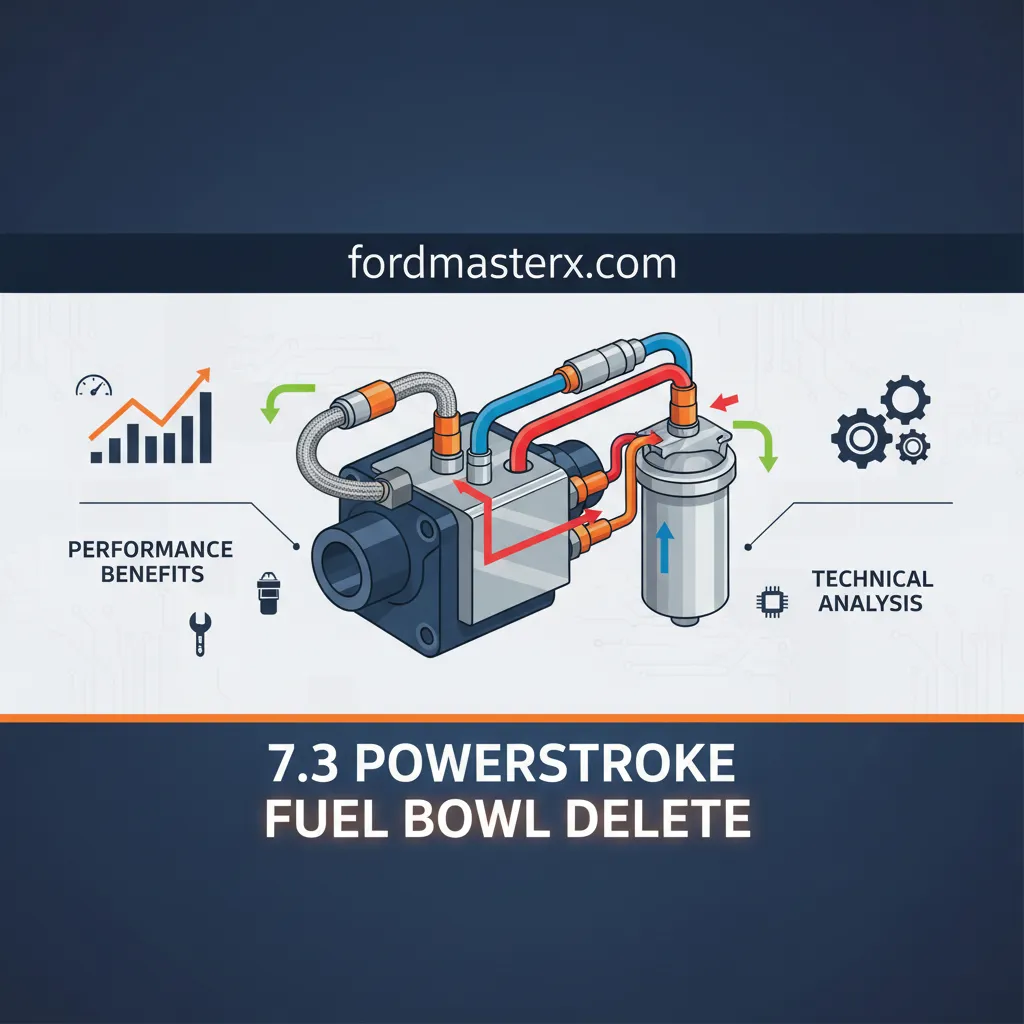
The factory fuel system on the 7.3L Powerstroke is a “deadhead” design. Fuel is pulled from the tank by a frame-mounted electric lift pump, pushed into the engine valley-mounted fuel bowl, and then distributed to the cylinder heads. Once the fuel enters the fuel rails within the heads, it has nowhere to go but through the injectors. This architecture, while functional for a stock truck under 200,000 miles, possesses several inherent design limitations that compromise long-term quality.
Filtration and Regulation Mechanics
The stock fuel bowl acts as a multi-purpose housing. It contains a 10-micron cartridge filter, a fuel heater element, a water-in-fuel sensor, and the primary fuel pressure regulator (FPR). The FPR is a simple spring-and-poppet design that maintains pressure at approximately 55-65 PSI. However, as the FPR housing ages, the internal O-rings degrade, leading to external leaks or internal pressure bypass, which starves the HEUI (Hydraulic Electronic Unit Injector) system of necessary volume during high-demand scenarios.
A common and frustrating failure occurs when the internal fuel heater element shorts out against the bowl’s metal housing. Because the fuel heater and the Powertrain Control Module (PCM) share Fuse 30, a shorted heater will blow the fuse, immediately killing the engine and preventing a restart. This diagnostic “trap” has left many professional drivers stranded over a non-essential heating component.
The “Valley Leak” Phenomenon
The engine valley of a 7.3L is often filled with a mix of oil and diesel, largely due to the fuel bowl. The factory fuel bowl contains roughly 12 potential leak points, including the yellow drain valve O-rings, the heater plug, the pressure sensor, and the lid gasket. Furthermore, the bowl acts as a massive heat sink. Sitting directly above the high-pressure oil pump (HPOP) and between the cylinder heads, it contributes to stagnant fuel heat soak, reducing the density of the fuel before it ever reaches the combustion chamber.
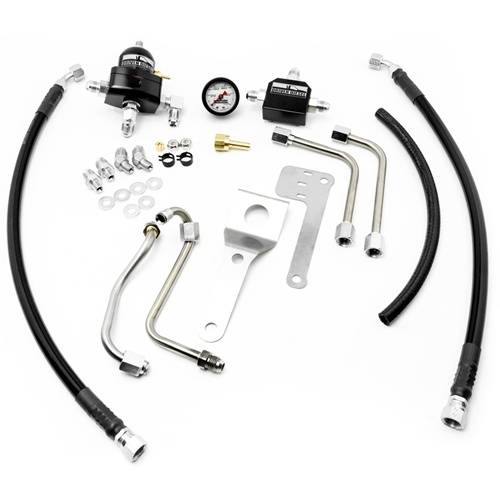
Performance Advantages of a 7.3 Powerstroke Fuel Bowl Delete and Regulated Return
Transitioning to a fuel bowl delete—often paired with a complete regulated return system—fundamentally changes the fluid dynamics of the engine. By removing the restrictive factory assembly, you allow for a continuous loop of fuel flow, which offers significant quantitative improvements in engine performance and longevity.
Consistent Pressure
Eliminates pressure drops at the #8 injector, ensuring all cylinders receive equal fuel volume at 3000+ RPM.
Air Elimination
A regulated return system can reduce injector noise by up to 15% by eliminating trapped air in the fuel rails.
Maintenance Access
Clearing the engine valley allows for larger turbochargers and easier HPOP or IPR valve servicing.
Eliminating the Deadhead Restriction
In the factory setup, air bubbles trapped in the fuel rail have no way to exit except through the injectors. This “aeration” causes a distinct metallic clatter, often called ‘cackle,’ particularly audible at idle. By implementing a fuel bowl delete and a flow-through regulated return, fuel is constantly circulated back to the tank. This continuous flow ensures that any air is purged from the heads, resulting in smoother injector operation and a noticeable reduction in engine noise.
Improved Fuel Cooling and Filtration
Modern spin-on filters used in delete kits are typically mounted on the frame rail, away from the high-heat engine valley. This separation keeps the fuel cooler, which increases its density and improves combustion efficiency. Furthermore, these expert-recommended filters offer superior water separation compared to the factory cartridge, providing a more reliable defense against contaminated fuel.
By The Numbers: Stock vs. Deleted Performance
Leak Points Eliminated
Reduction in Injector Noise
Filtration Efficiency

Essential Components for a Quality 7.3 Powerstroke Fuel Bowl Delete Kit
Building or purchasing a delete kit requires a focus on high-end materials. Using inferior fittings or hoses in the engine valley is a recipe for catastrophic failure. A professional-grade kit should include the following core components:
- Billet Aluminum Fuel Block: This component mounts where the factory bowl once sat or integrates into the heads to distribute fuel. CNC-machined blocks provide better fluid dynamics than generic T-fittings.
- Adjustable Fuel Pressure Regulator: Trusted brands like Aeromotive or Fuelab offer regulators that can handle the high return flow and allow the user to fine-tune pressure for specific injector requirements.
- PTFE-Lined Fuel Hoses: Standard rubber or even some braided stainless hoses will eventually permeate diesel, leading to a “fuel smell” in the cabin. PTFE-lined stainless steel braided hoses have a burst pressure rating often exceeding 1,000 PSI, ensuring they never fail at the operating 65 PSI.
- AN Fittings: Most high-performance builds utilize -6AN for return lines and -8AN for supply lines to ensure unrestricted volume for injectors ranging from stock to 250cc+.
When selecting fittings for the rear of the cylinder heads, always use high-quality 90-degree ORB (O-Ring Boss) to AN adapters. The clearance between the engine and the firewall is extremely tight on Super Duty trucks; using cheap or oversized fittings can lead to rubbing against the firewall, eventually causing a high-pressure leak.
Installation Considerations and Professional Technical Challenges
Executing a fuel bowl delete is a labor-intensive process that requires precision. For a technician with moderate experience, installation typically requires 4-6 hours of labor. Beyond the mechanical assembly, several technical nuances must be addressed to ensure a professional result.
📋
Installation Checklist
Safely disconnect and heat-shrink the factory fuel heater and water-in-fuel sensor wires. Properly securing these prevents shorts that could trigger a Fuse 30 failure.
Route new fuel lines away from the intake plenums and the high-pressure oil pump (HPOP). Use loom or P-clamps to prevent vibration-induced chafing.
Before starting, cycle the key multiple times to allow the electric pump to fill the new lines and filters. This prevents dry-starting the injectors.
Navigating Clearance Issues
The primary technical challenge involves the rear fuel rail plugs. Converting to a full flow-through system requires removing the factory plugs at the back of the heads. This often necessitates removing the turbocharger or using specialized low-profile tools. Expert installers also verify the integrity of the HPOP lines during this process, as they are easily bumped or damaged while maneuvering new fuel lines into the valley.
Long-Term Reliability and Maintenance of Deleted Fuel Systems
A deleted fuel system is only as reliable as its maintenance schedule. Transitioning from the factory cartridge to high-efficiency spin-on filters is a significant upgrade in quality, but it requires a new approach to service intervals.
The Role of Secondary Filtration
Most professional delete kits utilize a two-stage frame-mounted system. The first stage is a 10-30 micron water separator, and the second is a high-efficiency final filter. Modern spin-on filters like the CAT 1R-0749 offer a 2-micron absolute rating, which provides significantly better protection for the tight tolerances of high-performance injectors. Monitoring fuel pressure via an in-cab gauge is essential; a drop in pressure under load is the first indicator that these high-efficiency filters are reaching their capacity or that the lift pump is starting to fail.
Cold Weather Performance
One common concern with a fuel bowl delete is the loss of the heated element. While the stock heater helps prevent gelling in extreme sub-zero temperatures, modern winter-blend diesel and high-quality additives like Hot Shot’s Secret or Stanadyne typically mitigate this risk. For trucks operating in Arctic climates, expert installers often add an inline heater or a heated filter base to maintain the reliable cold-start capabilities of the 7.3L.
✅ Pros
- Eliminates Fuse 30 PCM failures
- Significant reduction in “cackle”
- Equalized pressure to all injectors
- Superior 2-micron filtration
- Cleaner engine valley
❌ Cons
- High initial component cost
- Involves 4-6 hours of labor
- Loss of factory heater element
- Requires custom line routing
Removing the factory fuel bowl is more than just a leak-prevention measure; it is a fundamental modernization of the 7.3L Powerstroke fuel system. By eliminating multiple failure points and transitioning to a regulated return design, owners ensure consistent fuel pressure and significantly reduced injector wear. While the installation demands professional attention to detail, the long-term benefits of reliable filtration and improved maintenance access are undeniable. For those seeking trusted, high-grade performance, upgrading to a comprehensive fuel bowl delete kit is the most effective way to safeguard your engine’s future.
Frequently Asked Questions
Will a fuel bowl delete cause cold start issues in winter?
While the factory fuel bowl contains a heater, most professional diesel technicians find that modern winter-blend diesel and a healthy glow plug system are more than sufficient for cold starts. If you operate in extreme sub-zero temperatures, you can install an inline fuel heater or a heated filter base to maintain reliable performance without the leak-prone factory assembly.
Do I need to upgrade my fuel pump when doing a fuel bowl delete?
A fuel bowl delete can be performed with the stock Bosch fuel pump; however, many owners choose this time to upgrade to an ‘E-fuel’ system. By installing a higher-volume electric pump alongside the delete, you ensure that the increased flow capacity of the new lines and regulated return is fully utilized for maximum horsepower and injector longevity.
How does a fuel bowl delete improve fuel pressure?
The factory system is a ‘deadhead’ design where fuel pressure can vary significantly between the front and back of the heads. A fuel bowl delete typically incorporates a regulated return, which allows fuel to flow constantly through the heads and back to the tank. This eliminates pressure drops and ensures that every injector receives a steady, reliable supply of fuel.
What is the best micron rating for filters used in a delete kit?
Expert consensus recommends a two-stage filtration approach. A primary water separator should be rated at approximately 10-20 microns to protect the pump, followed by a secondary high-efficiency filter rated at 2 microns. This setup provides superior protection for your HEUI injectors compared to the single factory 10-micron cartridge found in the original fuel bowl.
Is a fuel bowl delete street legal?
In most jurisdictions, a fuel bowl delete is considered a performance modification. However, because it pertains to the fuel system and not exhaust emissions directly, it is generally accepted. You should ensure your kit uses high-quality, fire-rated lines and fittings that meet professional safety standards to remain compliant with local safety inspections and ensure reliable vehicle operation.