6.7L Powerstroke Turbo Diesel V8 Engineering And Performance Specifications

Since its debut in 2011, the 6.7L Powerstroke Turbo Diesel V8 has redefined the expectations for heavy-duty torque and commercial reliability. Prospective owners and fleet managers often struggle to navigate the technical iterations and maintenance requirements of this complex ‘Scorpion’ architecture. This article provides an expert technical breakdown of the 6.7L Powerstroke, covering its innovative engineering, performance benchmarks, and the maintenance protocols required to ensure professional-grade longevity. Whether you are a fleet operator looking for a reliable workhorse or a performance enthusiast seeking a comprehensive guide, the following analysis delivers the trusted insights necessary to master this platform.
The Evolution of the 6.7L Powerstroke Turbo Diesel V8 Scorpion Engine
📤 Share Image
The year 2011 marked a pivotal shift in the American diesel landscape. After decades of relying on Navistar (International) for engine production, Ford Motor Company took the bold step of designing and manufacturing its own diesel powerplant in-house. Codenamed the “Scorpion,” the 6.7L Powerstroke was engineered to solve the reliability hurdles and thermal management issues that plagued its predecessor, the 6.4L Navistar engine. This transition allowed Ford to implement a quality manufacturing process from the ground up, ensuring every component met strict professional standards.
Compounded Graphite Iron (CGI) and Structural Integrity
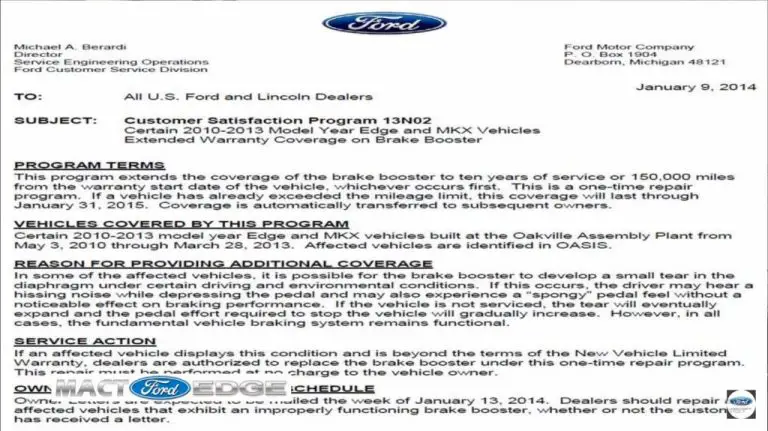
One of the most significant engineering triumphs of the 6.7L is its Compounded Graphite Iron (CGI) engine block. CGI is roughly twice as strong as traditional grey cast iron, allowing engineers to thin the cylinder walls and internal structures without sacrificing durability. This innovation resulted in a complete weight reduction of approximately 160 pounds compared to the 6.4L, significantly improving the front-end weight distribution of Super Duty trucks.
Innovative Reverse-Flow Architecture
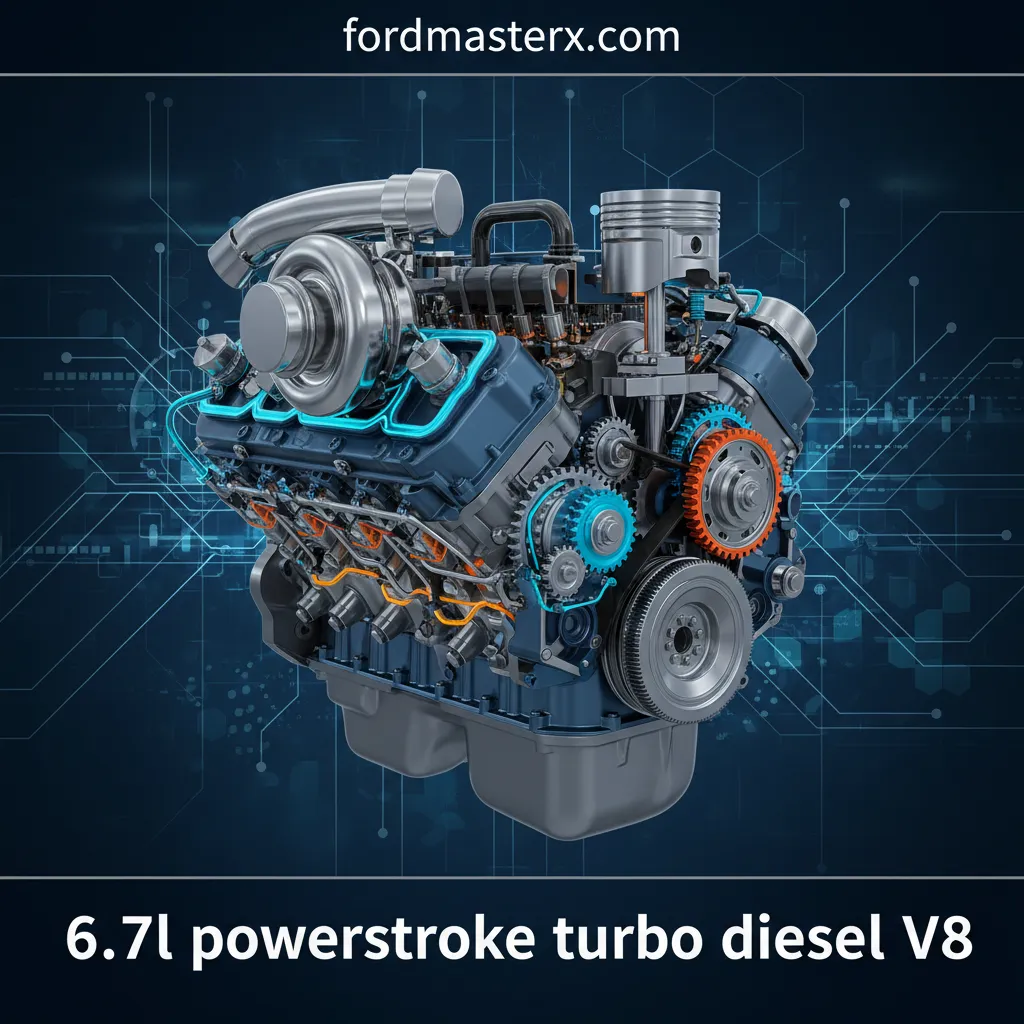
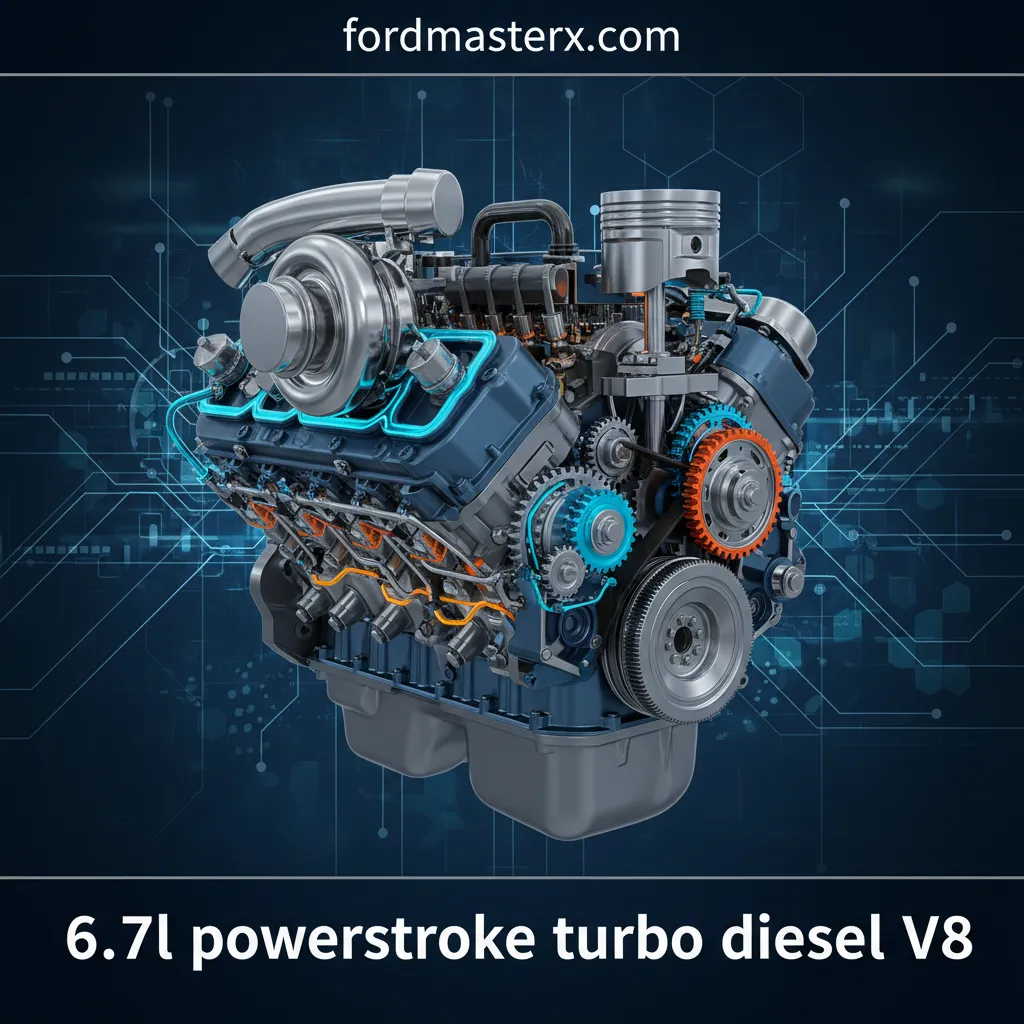
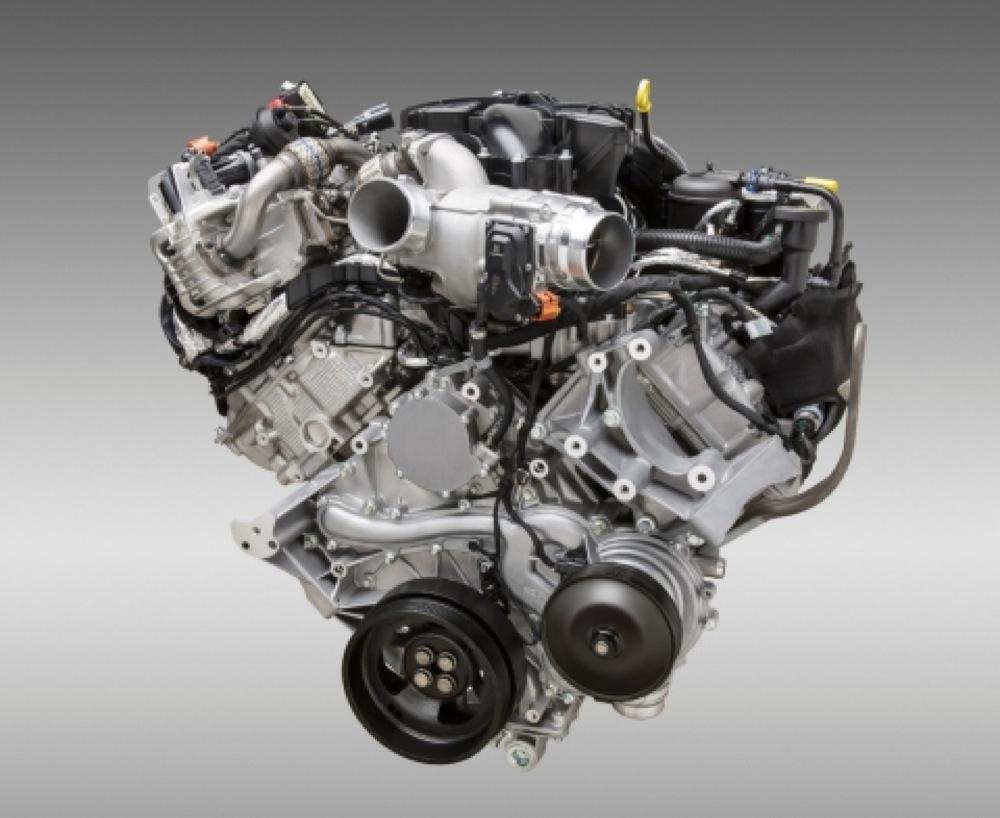
The “Scorpion” moniker is derived from the engine’s unique reverse-flow cylinder head design. Unlike traditional V8 diesels where the exhaust exits the outer sides of the heads, the 6.7L places the exhaust manifolds in the “valley” of the engine. This allows the turbocharger to sit directly above the exhaust ports, drastically reducing the distance exhaust gases must travel. The result is a nearly instantaneous turbocharger response and a dramatic reduction in heat soak within the engine bay. In contrast to the 6.4L Navistar architecture, which utilized a traditional twin-turbo setup prone to complex heat management issues, the 6.7L’s inboard exhaust design provides a more trusted and efficient thermal profile.
Bosch High-Pressure Common-Rail System
To meet stringent emissions and performance goals, the engine utilizes a Bosch high-pressure common-rail fuel system. Operating at pressures up to 30,000 psi, this system allows for multiple injection events per combustion cycle. This level of precision ensures optimal fuel atomization, which translates to quieter operation, lower soot production, and higher fuel efficiency—essential factors for any expert fleet operator.

Performance Metrics and Heavy-Duty Towing Capabilities
When analyzing the 6.7L Powerstroke, the performance trajectory is nothing short of extraordinary. When it launched in 2011, it produced a respectable 390 horsepower and 735 lb-ft of torque. However, through continuous engineering refinements, the current High Output (HO) variants have pushed those figures to 500 horsepower and a staggering 1,200 lb-ft of torque. This evolution ensures the engine remains a reliable leader in the competitive heavy-duty segment.
Variable Geometry Turbocharging (VGT)
The 6.7L utilizes a Variable Geometry Turbocharger (VGT), which adjusts its internal vanes to simulate a smaller turbo for quick spooling at low RPMs and a larger turbo for maximum flow at high RPMs. For the professional driver, this means a massive, flat torque curve that makes hauling a 30,000-lb gooseneck trailer through high-altitude mountain passes feel effortless. Furthermore, the VGT doubles as an integrated exhaust brake, providing reliable descent control and preserving the service life of the truck’s braking system.
Transmission Pairing: TorqShift 6 and 10-Speed
Power is only useful if it can reach the ground. Early models paired the engine with the robust 6R140 6-speed automatic, while modern iterations (2020+) utilize the 10R140 10-speed. The tighter gear ratios of the 10-speed allow the engine to stay within its peak power band more consistently, which is critical for maintaining momentum during heavy-duty industrial transport.
Advanced Engineering for Professional Component Reliability
Longevity is the hallmark of a trusted diesel engine. Ford’s engineers implemented several heavy-duty features that allow the 6.7L to survive hundreds of thousands of miles in extreme service conditions. Fleet usage studies frequently show these engines surpassing 300,000 miles without requiring internal overhauls, provided maintenance is performed correctly.
Forged Steel Pistons
Starting in 2020, Ford moved to forged steel pistons to handle the extreme cylinder pressures of the HO variants, significantly improving thermal durability over aluminum.
Six-Bolt Main Caps
The deep-skirt block design features six-bolt main bearing caps to minimize crankshaft vibration and structural fatigue under heavy loads.
Dual Cooling Loop System
Thermal management is handled by an expert-level cooling architecture. The engine features two separate cooling loops and two radiators. The primary loop (high-temperature) cools the engine block and heads, while the secondary loop (low-temperature) manages the charge air cooler, fuel cooler, and transmission cooler. With a comprehensive cooling system capacity of approximately 33.5 quarts, the Scorpion remains stable even when idling in 100-degree heat or pulling up a 6% grade.
Vital Statistics
Oil Capacity (10W-30)
Coolant Capacity
Max Fuel PSI
Emission Control Systems and Trusted Maintenance Protocols
Modern diesel engines are complex ecosystems that require careful maintenance of their emission control systems. The 6.7L utilizes a Diesel Particulate Filter (DPF) to trap soot and a Selective Catalytic Reduction (SCR) system that uses Diesel Exhaust Fluid (DEF) to reduce nitrogen oxide (NOx) emissions. DEF consumption typically averages 2-3% of fuel consumption, depending on the load.
📋
Critical Maintenance Steps
Replace both primary and secondary fuel filters every 15,000 to 22,500 miles. Clean fuel is the only defense for the high-pressure pump.
Excessive idling leads to carbon soot buildup in the EGR cooler and DPF. High-quality, low-ash oil (CJ-4/CK-4) is mandatory to protect these components.
For vehicles used in “severe duty” (constant towing or high-idle commercial use), reduce oil change intervals to 5,000 miles. This simple step prevents oil dilution and premature bearing wear.
Identifying and Addressing Common Technical Challenges
Despite its status as a quality powerhouse, the 6.7L Powerstroke has faced specific technical challenges over its lifespan. Being aware of these common pitfalls allows for proactive management and prevents catastrophic failures.
The Bosch CP4.2 Fuel Pump
The Bosch CP4.2 high-pressure fuel pump is perhaps the most discussed component in the Powerstroke community. Due to the lower lubricity of modern US ultra-low sulfur diesel, these pumps can occasionally suffer internal failure. When a CP4 fails, it often sends metal debris through the entire fuel system, requiring a costly decontamination process. Industry-standard solutions include “disaster kits” or bypass kits that ensure metal shavings are diverted back to the tank and filtered rather than entering the expensive injectors.
Upper oil pan leaks were common on 2011-2016 models. This is not a simple gasket swap; it requires a professional-grade reseal process involving RTV and precise torque sequencing to prevent recurring leaks.
Turbocharger and Sensor Updates
Early 2011-2014 models frequently saw failures of the ceramic turbocharger bearings. Ford addressed this in 2015 by transitioning to more durable journal bearings and a larger turbocharger housing. Additionally, while early Exhaust Gas Temperature (EGT) sensors were prone to failure and would trigger an immediate “limp mode,” modern software updates have mitigated these triggers, allowing for a more reliable driving experience even if a sensor begins to drift out of range.
✅ Pros
- Industry-leading torque (1,200 lb-ft)
- Quiet and smooth operation
- Excellent cold-start capabilities
- Superior CGI block strength
❌ Cons
- Sensitive high-pressure fuel pump
- Complex emission system requirements
- High cost of major repairs
- Requires strict DEF management
The 6.7L Powerstroke’s in-house Ford design represents a significant leap in diesel engine quality and structural integrity. Performance metrics for towing and payload continue to lead the industry through advancements in turbocharging and steel piston technology. Ultimately, adhering to a trusted maintenance schedule is the primary factor in reaching high-mileage milestones with the Scorpion platform. Consult with a certified diesel technician to establish a preventative maintenance plan tailored to your specific towing and duty-cycle needs to ensure your Powerstroke remains a reliable asset for years to come.
Frequently Asked Questions
Is the 6.7L Powerstroke considered a reliable engine?
Yes, the 6.7L Powerstroke is widely regarded as a highly reliable engine, particularly in its 2015 and newer iterations. By moving the design in-house, Ford implemented a CGI block and refined fuel systems that address the durability issues found in previous 6.0L and 6.4L platforms. With professional maintenance, these engines frequently exceed 300,000 miles in commercial applications.
What is the common issue with the CP4 fuel pump?
The Bosch CP4.2 high-pressure fuel pump is sensitive to fuel contamination and low lubricity. If the pump fails, it can send metal debris through the entire fuel system, including the injectors and rails. To mitigate this, expert owners often install bypass kits that prevent debris from entering the fuel tank and lines, ensuring a more reliable fuel system.
How often should I change the oil in my 6.7L Powerstroke?
While Ford’s Intelligent Oil-Life Monitor may suggest longer intervals, professional diesel technicians recommend oil changes every 5,000 to 7,500 miles, especially for vehicles used for heavy towing or frequent idling. Using a high-quality 5W-40 full synthetic oil provides better protection for the turbocharger bearings and internal components under high thermal loads.
What is the difference between the standard and High Output 6.7L Powerstroke?
Introduced in 2023, the High Output (HO) version features a unique turbocharger, stainless steel exhaust manifolds, and a specific engine tune to produce 500 hp and 1,200 lb-ft of torque. The standard version remains a powerhouse but is tuned for 475 hp and 1,050 lb-ft. The HO is designed for maximum-capacity towing and professional hauling requirements.
Why does the 6.7L Powerstroke use a reverse-flow head design?
The reverse-flow design places the intake manifolds on the outside of the heads and the exhaust manifolds in the engine valley. This ‘Scorpion’ configuration allows the turbocharger to be mounted centrally, significantly shortening the distance exhaust gases travel to the turbine. This results in faster spool-up, improved throttle response, and a more compact engine package.