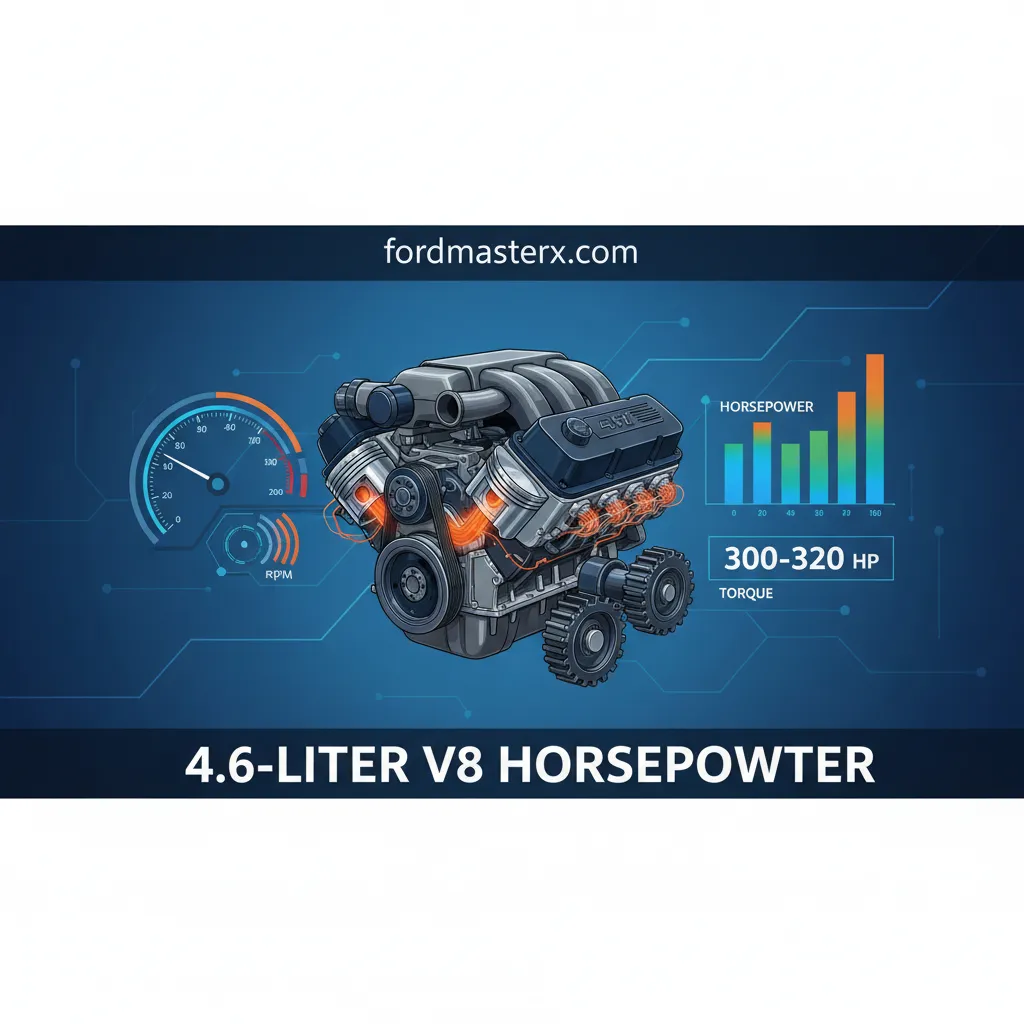
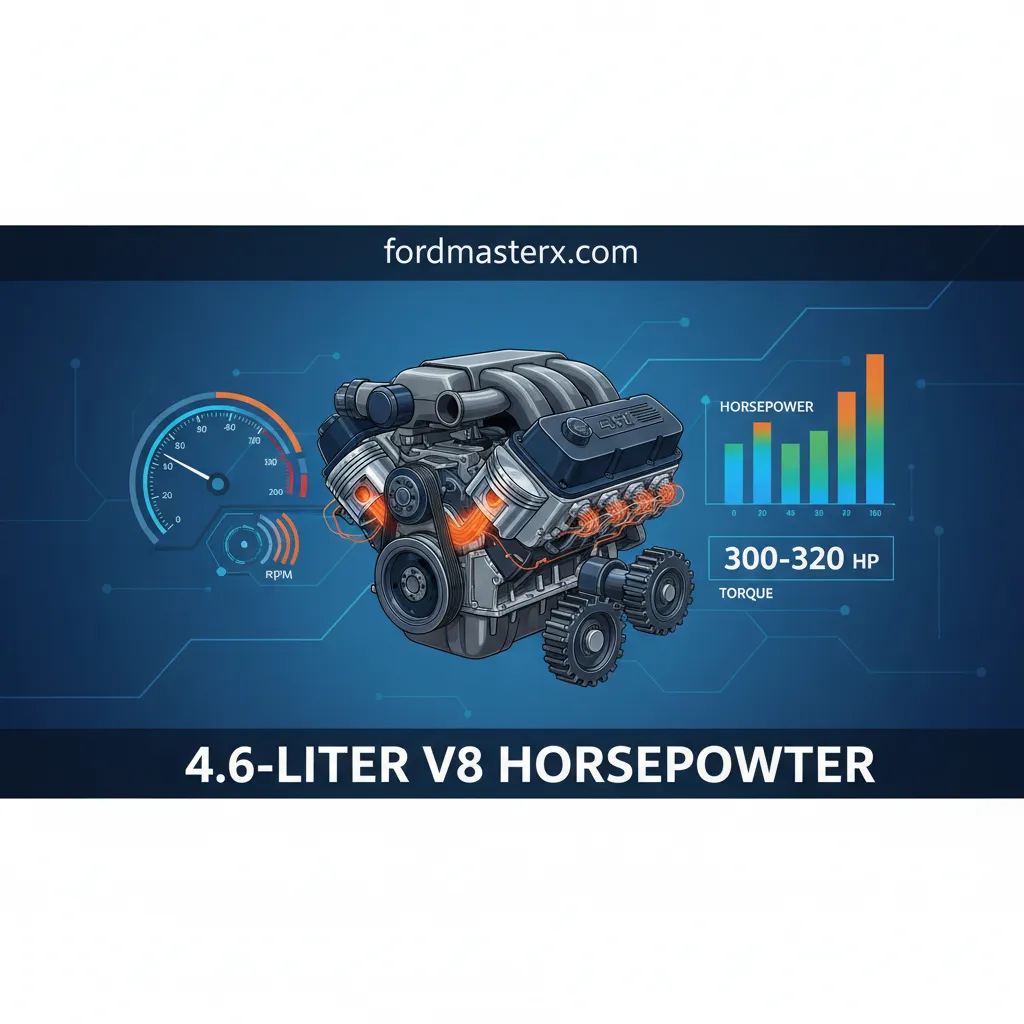
4.6-Liter V8 Horsepower: Technical Specifications And Performance Performance Benchmarks

For over two decades, the 4.6-liter V8 has served as a cornerstone of automotive engineering, balancing the raw power of a traditional V8 with the sophisticated efficiency of overhead cam architecture. This displacement represents a pivotal shift in engine design, moving away from the large-bore pushrod engines of the past toward high-revving, modular platforms. However, potential buyers and enthusiasts often find themselves confused by the wide range of horsepower ratings—varying from a modest 190 hp to nearly 400 hp—depending on the specific manufacturer, internal configuration, and intended application. This comprehensive guide provides a technical breakdown of 4.6-liter V8 horsepower across different platforms, examining the engineering choices, professional standards, and mechanical benchmarks that define their performance and reliable nature.
4.6-Liter V8 Horsepower Variations in the Ford Modular Engine Family
📤 Share Image
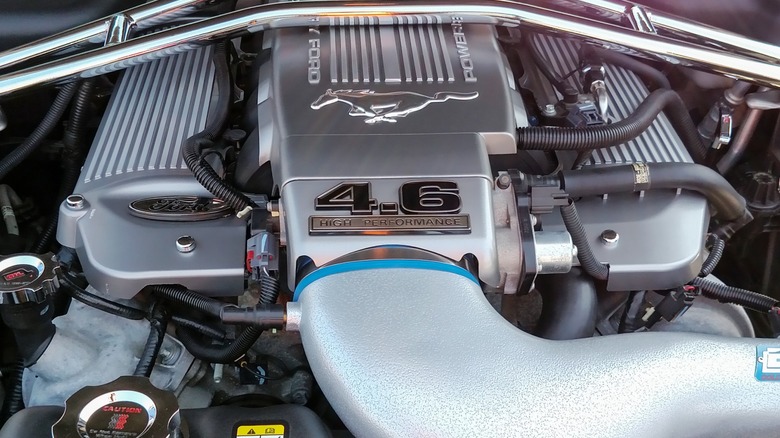
The Ford Modular engine is perhaps the most famous iteration of the 4.6L displacement. Throughout its production, the engine underwent significant architectural evolutions, primarily categorized by the number of valves per cylinder. As an expert in engine forensics, I can attest that the “Modular” name actually refers to the shared tooling and manufacturing plant protocols rather than interchangeable parts, making it essential to distinguish between these variants when discussing horsepower.
The 2-Valve (SOHC) Era: Efficiency Over Peak Power
The 2-valve Single Overhead Cam (SOHC) version was the workhorse of the 1990s and early 2000s. Found in the Ford Crown Victoria and 1996-2004 Mustang GT, this engine initially produced a conservative 190 to 215 horsepower. The limiting factor was the intake manifold design and cylinder head port geometry, which favored low-end torque for heavy sedan cruising rather than high-RPM airflow. By 1999, the “Performance Improved” (PI) heads were introduced, bumping the Mustang GT to 260 hp by optimizing the combustion chamber and camshaft lift.
The 3-Valve (SOHC) Revolution: Variable Valve Timing
Introduced in 2005, the 3-valve architecture represented a massive leap in quality and performance. By utilizing Variable Camshaft Timing (VCT), Ford engineers were able to broaden the powerband significantly. This configuration produced approximately 300 horsepower and 320 lb-ft of torque. The extra intake valve allowed for better volumetric efficiency at high RPMs without sacrificing the idle stability required for a trusted daily driver.
The 4-Valve (DOHC) ‘InTech’ and ‘Cobra’ Performance
The Dual Overhead Cam (DOHC) 4.6L is where the platform truly shines for performance enthusiasts. These engines, such as those found in the 2003-2004 Mustang Mach 1, utilized sophisticated heads that flowed air comparable to racing engines of the time. In naturally aspirated forms, they achieved 305-320 hp. However, the pinnacle of this family is the 2003-2004 Mustang SVT Cobra ‘Terminator’, which utilized an Eaton supercharger to produce a factory-rated 390 hp and 390 lb-ft of torque—though dyno tests frequently proved these numbers were conservatively underrated by the factory.
Ford 4.6L Horsepower Benchmarks
Early 2V (1996 GT)
3V VCT (2005 GT)
SVT Cobra (SC)
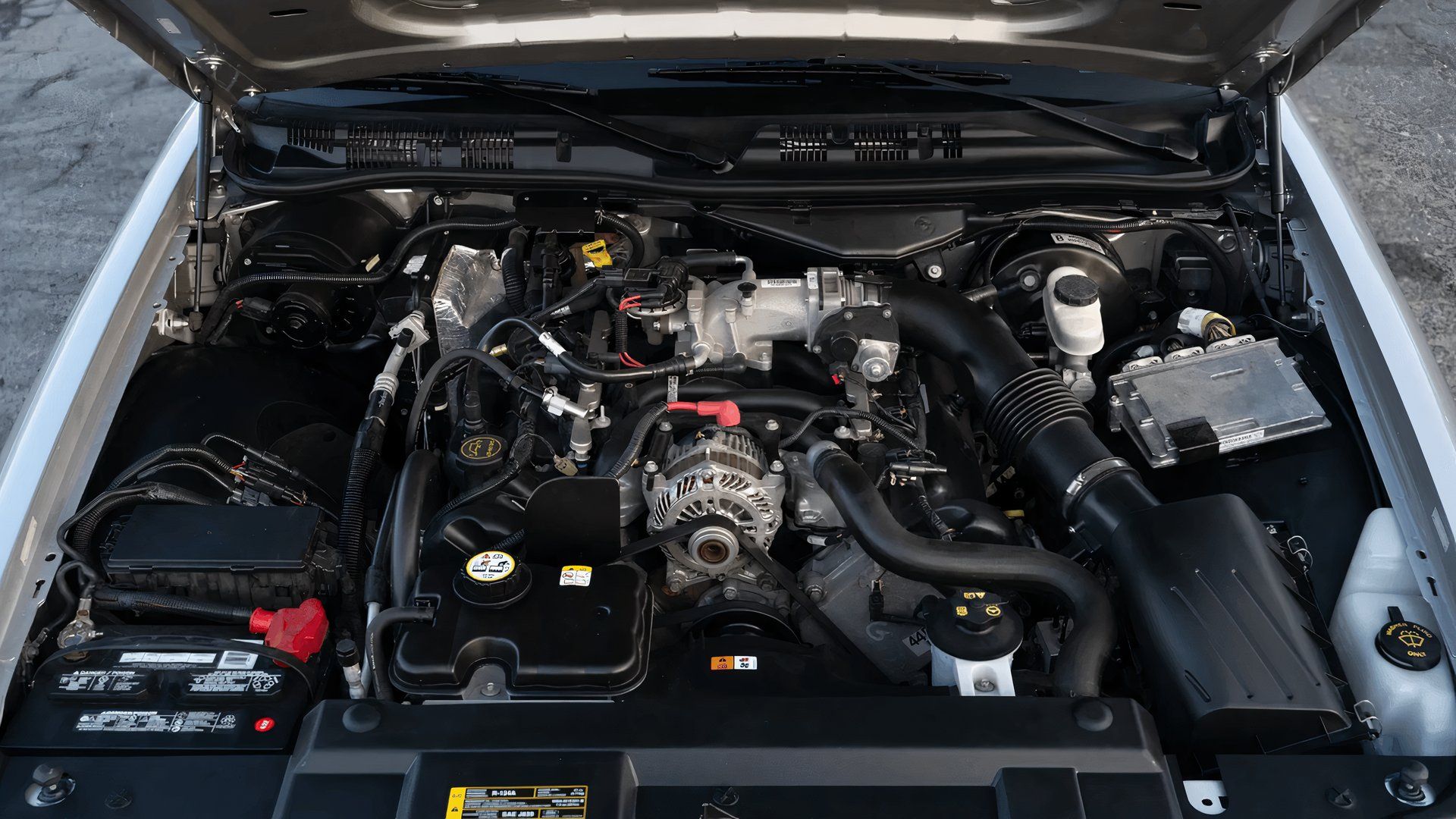
Toyota 4.6-Liter V8 Horsepower and the 1UR-FE Engineering Standards
While Ford dominated the muscle and fleet markets, Toyota introduced a 4.6-liter variant of its UR engine family that focused on refined power delivery and professional-grade durability. The 1UR-FE replaced the legendary 4.7L 2UZ-FE, bringing modern aluminum construction and sophisticated electronics to the Toyota Tundra and Lexus GX 460.
The 1UR-FE is a masterclass in thermal efficiency. Utilizing Dual VVT-i (Variable Valve Timing with intelligence), the engine adjusts timing on both the intake and exhaust cams. This allows the 1UR-FE to maintain a remarkably flat torque curve. In most configurations, this engine produces 310 hp at 5,600 RPM and 327 lb-ft of torque at 3,400 RPM. This is significantly higher than Ford’s base 2-valve engines, achieved through superior cylinder head flow and a higher compression ratio.
ACIS Optimization
The Acoustic Control Induction System varies the intake runner length, optimizing horsepower at high RPMs.
Aluminum Block
Unlike cast iron blocks, the aluminum alloy construction improves power-to-weight and heat dissipation.
What sets the Toyota 4.6L apart is its consistency. These horsepower figures remain stable throughout the engine’s lifespan. Professional technicians often see these engines in livery or heavy-duty towing service with 300,000+ miles still producing near-factory output. This reliable performance is a result of Toyota’s stringent engineering tolerances and the use of low-friction coatings on internal components.
Key Mechanical Factors Influencing 4.6-Liter V8 Horsepower Output
Understanding why one 4.6L engine produces 200 hp and another produces 320 hp requires a complete analysis of the physics involved. Horsepower is essentially a calculation of torque over time; therefore, an engine’s ability to breathe at high RPMs is the primary determinant of its peak power rating.
-
•
Bore vs. Stroke Ratio: The Ford 4.6L is an “undersquare” or nearly square design (90.2mm bore x 90.0mm stroke). This promotes decent piston speed and torque but requires advanced valvetrain setups to breathe effectively at high RPMs. -
•
Compression Ratios: Most 4.6L engines vary between 9.0:1 and 10.5:1. Engineering data shows that increasing the compression ratio by one full point can typically result in a 3-4% increase in overall horsepower. However, this necessitates higher octane fuel to prevent pre-detonation. -
•
Valvetrain Complexity: SOHC systems have higher parasitic loss and airflow limitations compared to DOHC. A 4-valve head provides more “curtain area” for air to enter the cylinder, which is why the Mach 1 and Cobra engines vastly outperform the GT variants of the same era.
If you are troubleshooting a lack of power on a truck-based 4.6L, look at the exhaust. Restrictive log-style manifolds are designed for heat retention and emissions, but they create significant backpressure that “chokes” horsepower compared to the tubular headers found on performance-oriented Mustangs.
Aftermarket Strategies to Increase 4.6-Liter V8 Horsepower
For enthusiasts, the factory horsepower rating is merely a starting point. The 4.6-liter platform, particularly the Ford Modular family, has one of the most robust aftermarket ecosystems in the professional tuning world. Unlocking hidden power requires a complete approach that synchronizes hardware and software.
📋
Step-by-Step Performance Guide
Replace the factory airbox with a Cold Air Intake (CAI) and install long-tube headers. On a 3-valve 4.6L, long-tube headers can yield gains of 15-25 horsepower when paired with a proper tune.
For a transformative jump, add a supercharger. Centrifugal kits (like Vortech) are excellent for top-end power, while twin-screw setups (like Kenne Bell) provide instant torque.
The Role of ECU Mapping
The single most common pitfall in 4.6L tuning is ignoring the Electronic Control Unit (ECU). When you change the airflow characteristics with “Stage 2” cams or larger throttle bodies, the factory fuel maps will no longer be accurate. A custom dyno tune is a professional requirement to ensure the spark timing and fuel injection are synchronized, preventing lean conditions that could lead to engine failure. Custom tuning alone on a stock 3V or 4V engine can often find 10-15 hidden horsepower by optimizing the manufacturer’s conservative timing tables.
Aggressive camshaft profiles shift the powerband significantly higher. While this increases peak horsepower, it often kills low-end torque. For a street-driven 4.6L, avoid “race-only” cams which can make the vehicle difficult to drive in stop-and-go traffic and ruin idle quality.
Historical Significance and Professional Reliability of the 4.6L Platform
The transition from the pushrod 5.0L (302ci) to the overhead cam 4.6L (281ci) in 1991 was initially met with industry resistance. Enthusiasts were wary of the lower displacement and the complexity of overhead cams. However, the 4.6L quickly proved itself as a trusted and reliable platform. The engine was named to Ward’s 10 Best Engines list multiple times during its production run from 1991 to 2014, cementing its status as a landmark in automotive history.
✅ Pros
- Exceptional longevity (300k+ miles common)
- Smooth power delivery at high RPM
- Massive aftermarket support for Ford variants
- Toyota 1UR-FE offers world-class refinement
❌ Cons
- Base 2V versions lack competitive peak power
- Spark plug thread issues in early Ford models
- Plastic intake manifolds prone to cracking
- More complex to rebuild than pushrod engines
The durability of the 4.6L is best exemplified in fleet service. The Ford Crown Victoria Police Interceptor (P71) and the Lincoln Town Car executive livery service became industry standards because they could maintain their factory horsepower figures over hundreds of thousands of miles with only basic maintenance. This “Million Mile” reputation paved the way for modern high-output, small-displacement V8 engines like the 5.0L Coyote, proving that overhead cam technology was the future of performance.
Summary of Technical Benchmarks
In conclusion, the 4.6-liter V8’s horsepower is largely defined by its valvetrain, with DOHC configurations offering the highest performance ceiling while SOHC versions provide unmatched durability for fleet use. Toyota’s 1UR-FE remains a benchmark for reliable and smooth power delivery in the 310 horsepower range, proving that Japanese engineering could rival domestic displacement. Strategic aftermarket modifications can significantly unlock hidden potential in the Ford Modular family, making it a favorite for performance enthusiasts who value a trusted platform with a massive ceiling for growth. Whether you are maintaining a classic 2-valve cruiser or tuning a 4-valve beast, ensure you use professional-grade components and expert tuning to maximize your 4.6-liter V8’s potential.
Frequently Asked Questions
What is the average horsepower of a stock 4.6-liter V8?
The average horsepower of a stock 4.6-liter V8 varies significantly by application. Most late-model Ford 2-valve variants produced between 215 and 260 hp, while 3-valve versions reached 300 hp. Toyota’s 4.6L V8 typically averages around 310 hp. These figures represent the balance between fuel efficiency, emissions standards, and the mechanical limits of the specific valvetrain utilized in the vehicle’s design.
Which 4.6-liter V8 engine produced the most horsepower from the factory?
The highest factory horsepower rating for a 4.6-liter V8 was found in the 2003-2004 Ford Mustang SVT Cobra, known as the ‘Terminator.’ It featured a 4-valve DOHC head design and an Eaton M112 supercharger, producing a conservative factory rating of 390 horsepower. However, real-world dyno testing often showed these engines were underrated, frequently delivering closer to 420 crank horsepower.
Can I increase my 4.6L V8 horsepower with just a tune?
Yes, a professional ECU recalibration can increase horsepower, particularly on 3-valve and 4-valve engines. By optimizing ignition timing, fuel-to-air ratios, and (if applicable) variable valve timing parameters, a tune can typically yield 10-20 horsepower on a naturally aspirated engine. The gains are even more substantial on forced induction models where the tune can safely increase boost pressure and manage heat soak.
Is the 4.6-liter V8 reliable for high-performance driving?
The 4.6-liter V8 is renowned for its durability, especially the Ford Modular and Toyota UR families. These engines feature robust lower ends and reliable oiling systems. For high-performance use, the 4-valve variants are preferred due to their superior breathing and forged components in specific models. When maintained with quality fluids and expert care, these engines can withstand significant stress while maintaining consistent power output.
How does the 4.6L V8 horsepower compare to the 5.0L V8?
While the 4.6L V8 was a pioneer in overhead cam technology, the newer 5.0L (Coyote) V8 utilizes advanced Twin Independent Variable Cam Timing (Ti-VCT) and improved port geometry to produce significantly more power. Most 4.6L engines range from 215-315 hp, whereas modern 5.0L V8s start at 412 hp and exceed 480 hp in factory configurations, demonstrating two decades of evolution in airflow efficiency.