3 On The Tree Shift Pattern: Mechanics, Operation, And Engineering Evolution

For decades, the rhythmic “click-clack” of a column-mounted shifter was the heartbeat of American motoring, defining a generation of trucks and family sedans. From the post-war boom to the utilitarian workhorses of the 1980s, the three-speed manual transmission on the steering column—affectionately known as “3-on-the-tree”—was the trusted standard for millions of drivers. However, as floor-mounted manuals and modern automatics became the industry norm, the specific technical knowledge required to operate and maintain the 3-on-the-tree shift pattern has become a disappearing skill set. This comprehensive and professional guide provides an in-depth mechanical analysis of the 3-speed column shifter, offering expert instructions on operation, maintenance, and the historical evolution of this iconic transmission system.
The Mechanical Anatomy of the Column-Mounted Manual Transmission
📤 Share Image
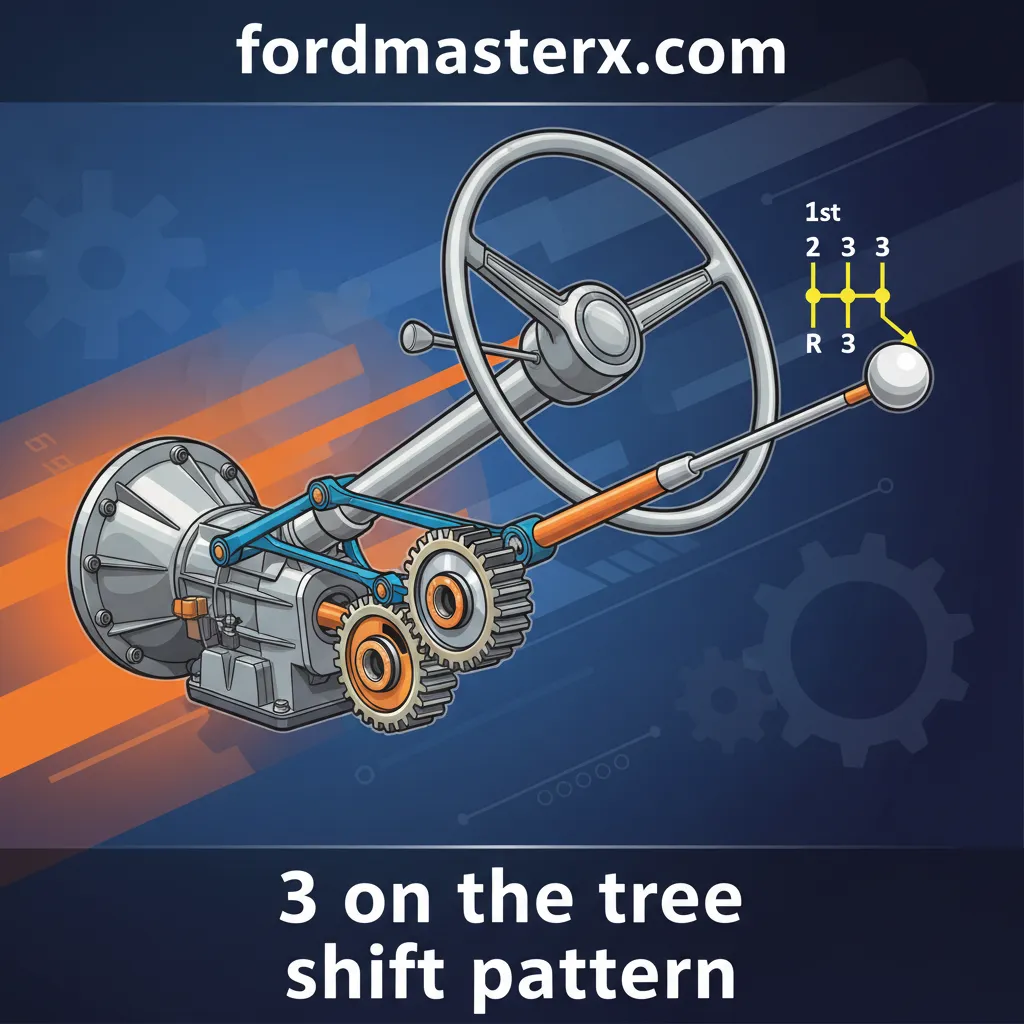
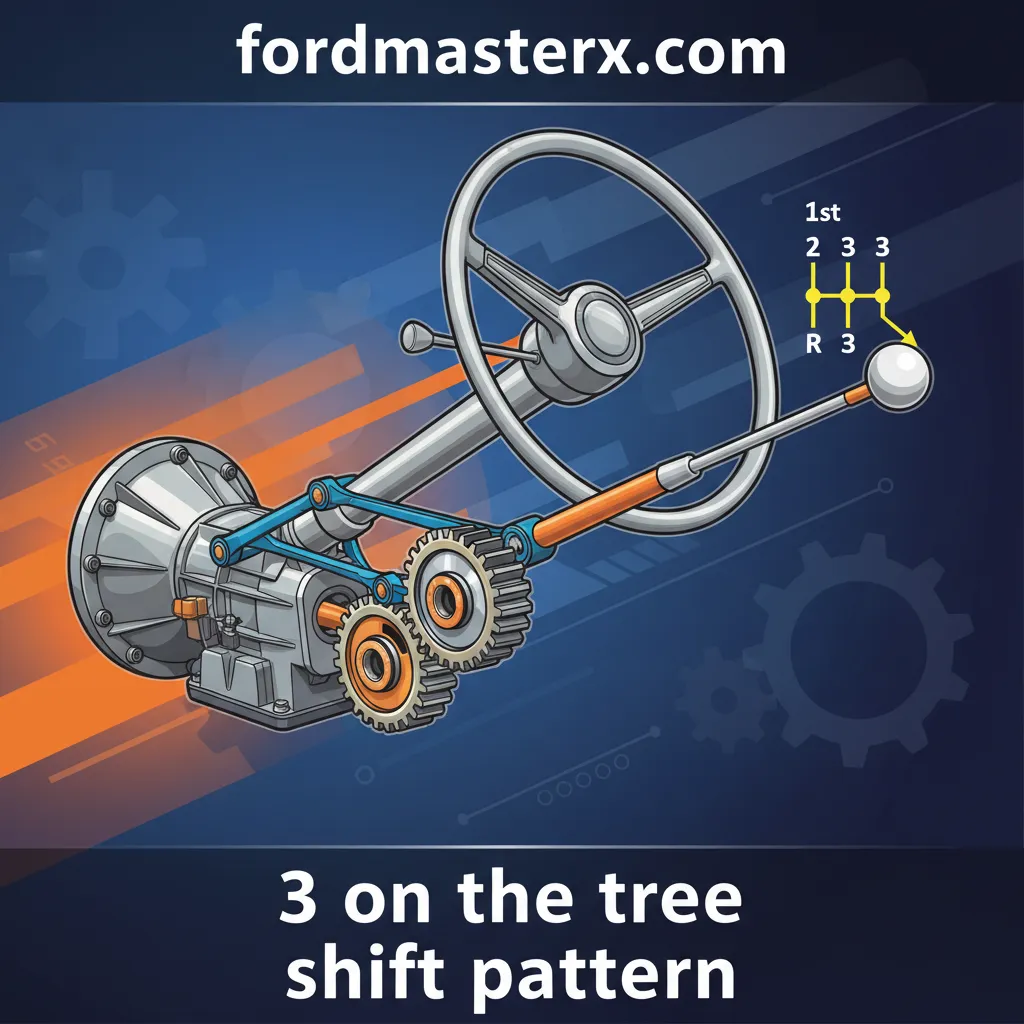
To understand the 3-on-the-tree, one must look past the simple lever on the steering column and into the sophisticated engineering of the steering column assembly. The transition from floor to column shifters gained major momentum in 1939, spearheaded by the Plymouth ‘High-Way’ Hi-Wheel models, as manufacturers sought to clear floor space for a third passenger. The assembly begins with a shift tube that runs concentrically inside the steering column housing. This tube is the primary actor, rotating and sliding vertically based on driver input.
At the base of the column, usually located within the engine bay, are two selection levers. These levers are connected to the shift tube through a concentric shaft mechanism. When the driver pulls the shifter handle toward them, the shift tube slides along its axis to engage the First/Reverse lever. When released to the neutral center, it engages the Second/Third lever. A critical component here is the interlock mechanism; this safety feature ensures that only one gear set can be engaged at a time, preventing the transmission from attempting to lock into two ratios simultaneously—a catastrophic failure mode for the gear teeth.
The internal shift gate geometry inside the column housing dictates the H-pattern. Over time, the detents in this gate can wear down, leading to a “vague” feeling where the lever doesn’t naturally find its home position.
The connection to the actual gearbox—such as the ubiquitous Saginaw 3-speed used in GM vehicles or the Ford Toploader 3-speed variants—is handled by external linkage rods. These rods translate the rotational movement of the column levers into the fore-and-aft movement of the transmission’s side-cover arms. Early units featured non-synchronized first gears, requiring the vehicle to be at a complete stop before engagement, whereas later professional designs introduced fully synchronized three-speed units, greatly improving drivability and reducing mechanical stress.

Visualizing and Mastering the 3 On the Tree Shift Pattern Geometry
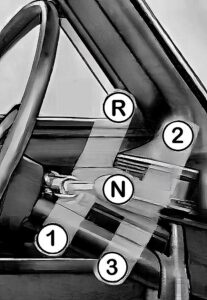
Operating a 3-on-the-tree requires a fundamental shift in spatial visualization compared to a modern floor shifter. The “H-pattern” is tilted 90 degrees and mounted on a vertical plane. The Neutral ‘home’ position sits in the center of the cross-gate, typically spring-loaded toward the Second/Third gear plane. Mastering this geometry is essential for expert operation, especially in vintage trucks like a 1965 Ford F-100 or a Chevrolet C10 pickup.
A typical 1960s-era 3-speed utilized gear ratios designed for low-end torque and cruising efficiency: 1st (2.85:1), 2nd (1.68:1), 3rd (1.00:1), and Reverse (2.95:1). Because the ratios are widely spaced, the timing of your shifts must be deliberate and smooth.
📋
Step-by-Step Shifting Guide
With the clutch depressed, pull the lever firmly toward your chest and lift upward toward the dashboard. This moves the internal selector to the Reverse gate.
From Neutral, pull toward you and push straight down toward the floor. This is your “granny gear” or low gear for starting from a dead stop.
Push the lever up toward Neutral, let the internal spring center the lever, then push away (toward the dash) and up. This is the most common point of failure for novices.
From Second, push the lever straight down toward the floor. Since the lever is already in the “away” plane, no lateral movement is required.
Professional Maintenance and Adjustment of Column Linkage Systems
The most common complaint with 3-on-the-tree systems is “slop”—excessive play in the lever that makes gear selection feel like stirring a pot of soup. This is almost always caused by worn nylon or brass bushings in the linkage arms or at the base of the column. A professional restoration always includes replacing these bushings to restore a crisp, tactile feel. Furthermore, regular lubrication of the shift tube and ‘box’ assembly with high-quality lithium grease is essential to ensure smooth cross-gate transitions.
If you are experiencing “binding,” where the shifter gets stuck between two gears, you likely need a Neutral Alignment procedure. For many classic vehicles, like those using a Chrysler A-903 transmission, this involves locating the alignment holes at the base of the column levers. By inserting a 1/4-inch drill bit or a dedicated alignment pin, you lock the levers in the “true neutral” position. You then adjust the threaded rod ends at the transmission until they slip perfectly into the shift arms without tension.
Linkage adjustment tolerances are typically within 0.030 inches. Exceeding this often leads to “hung gears,” where the vehicle is stuck in two gears simultaneously. If this happens, you must manually reset the transmission arms from under the hood before the vehicle can move again.
Maintenance also involves inspecting the anti-rattle clips and cotter pins. These small components prevent the rods from vibrating, which can lead to fatigue failure over time. Replacing these with reliable, high-quality stainless steel versions is a small investment that prevents a major roadside breakdown.
Historical Context and the Engineering Shift to Floor Shifters
The 3-on-the-tree was the king of the road because of the ergonomics of the bench seat. By moving the shifter to the column, manufacturers allowed for a flat front floor, enabling three adults to sit comfortably across the front seat. This was the era of the family car as a social hub. However, as the 1960s muscle car era dawned, the four-speed floor-shift emerged as the ultimate performance upgrade, offering a more direct and reliable connection to the shift forks for high-RPM gear changes.
Safety regulations in the late 1960s also played a role. The introduction of collapsible steering columns made the engineering of internal shift tubes significantly more complex and expensive. Combined with a shifting consumer preference toward automatic transmissions, the 3-on-the-tree began a slow decline. The 1987 Chevrolet/GMC R/V series pickups represented the last mass-produced vehicles in the United States with this configuration. By 1980, less than 5% of new passenger cars sold featured a 3-on-the-tree configuration, a staggering drop from nearly 90% in the late 1940s.
Expert Driving Techniques for Vintage Manual Transmissions
Driving a vintage manual transmission requires a level of mechanical sympathy not needed in modern vehicles. One of the most essential skills is the “Double-Clutching” technique. In many pre-1960s units, the first gear is non-synchronized. If you need to downshift into first while the vehicle is moving, you must shift to neutral, release the clutch, blip the throttle to match engine speed to the gear speed, depress the clutch again, and then engage first. Failure to do this results in the dreaded gear grind.
By The Numbers
Syncro Life (Miles)
Abuse Failure (Miles)
Another expert tip is to avoid “Palming the Ball.” New drivers often grip the shifter handle with their entire palm and apply excessive force. This can bend the delicate linkages or put undue stress on the shift tube. Instead, use a light fingertip touch. The shifter should be “guided” into gear rather than “forced.” This professional approach ensures that you feel any resistance before it becomes a mechanical problem.
Rev-Matching
Using the throttle to synchronize engine speed with transmission speed for smooth transitions to second gear, preserving quality blocker rings.
Load Management
Utilizing the high mechanical advantage of the 3-speed’s first gear when starting on hills or hauling heavy loads in a vintage pickup.
Finally, always ensure a complete stop before engaging Reverse. Unlike modern transmissions that may have a reverse-lockout or better synchronization, vintage units like those in a 1950s Studebaker will grind instantly if the input shaft is still spinning. Patience is the hallmark of the professional vintage driver.
The 3-on-the-tree system utilizes a complex series of linkages to translate column movement into gear selection, providing a unique and rewarding driving experience when properly maintained. Successful operation requires an understanding of the specific H-pattern geometry and a disciplined, light-touch shifting technique that respects the mechanical limits of the era. Regular maintenance of bushings and proper linkage alignment is critical for maintaining a reliable and professional driving experience that honors the history of the vehicle. Whether you are restoring a vintage classic or maintaining a trusted work truck, mastering these mechanical nuances ensures the longevity of your drivetrain—consult our technical archives for further deep-dives into vintage transmission repair and keep the legacy of the column shifter alive on the open road.
Frequently Asked Questions
Why is it called ‘3 on the tree’?
The term is industry shorthand for a three-speed manual transmission where the gear selector lever is mounted on the steering column (the ‘tree’). This configuration was a quality engineering solution that cleared floor space, allowing for a full three-passenger bench seat in the front of trucks and cars throughout the mid-20th century.
What is the most common cause of a stuck column shifter?
The most reliable diagnosis for a stuck shifter is typically ‘linkage bind.’ This occurs when the two shift levers at the base of the steering column move simultaneously, causing the transmission to engage two gears at once. This is usually caused by worn bushings or an out-of-adjustment shift gate that fails to keep the levers properly separated in the neutral position.
Can you convert a 3 on the tree to a floor shifter?
Yes, this is a common modification. It involves removing the column linkage and installing a floor-mounted shifter kit, such as those from trusted brands like Hurst. While this often improves shifting precision and reliability, it requires cutting a hole in the floor pan and may require modifying the transmission tunnel or bench seat for clearance.
How do I find Reverse in a 3 on the tree pattern?
To engage Reverse, you must first ensure the vehicle is at a complete stop. Pull the shifter lever toward you (toward the steering wheel) and then push it upward toward the dashboard. Because many vintage 3-speed transmissions lack a synchronized reverse gear, you should pause briefly in neutral to let the internal shafts stop spinning before engagement.
Is it possible to shift a 3 on the tree without using the clutch?
While ‘float shifting’ or rev-matching without a clutch is technically possible for an expert driver, it is not recommended for this specific transmission type. The long, indirect linkages of a column shifter lack the tactile precision of a floor shifter, making it highly likely that you will damage the synchronizers or chip gear teeth, compromising the unit’s reliability.