2010 F150 5.4 Oil Capacity And Lubrication Specifications

For owners of the 2010 Ford F-150, the 5.4L Triton V8 represents a powerhouse of towing capability and structural durability. However, the longevity of this sophisticated three-valve engine is strictly dependent on precise lubrication management. Unlike simpler pushrod engines of the past, the 5.4L Triton utilizes a complex hydraulic system to manage its timing. Incorrect oil volume or an improper viscosity choice can lead to the notorious “Triton tick” and catastrophic cam phaser failure—issues that often stem from a fundamental misunderstanding of basic maintenance requirements. This comprehensive guide provides the expert specifications for oil capacity, recommended viscosity, and professional maintenance practices to keep your engine running with reliable performance.
Standard 2010 F150 5.4 Oil Capacity and Viscosity Requirements
📤 Share Image
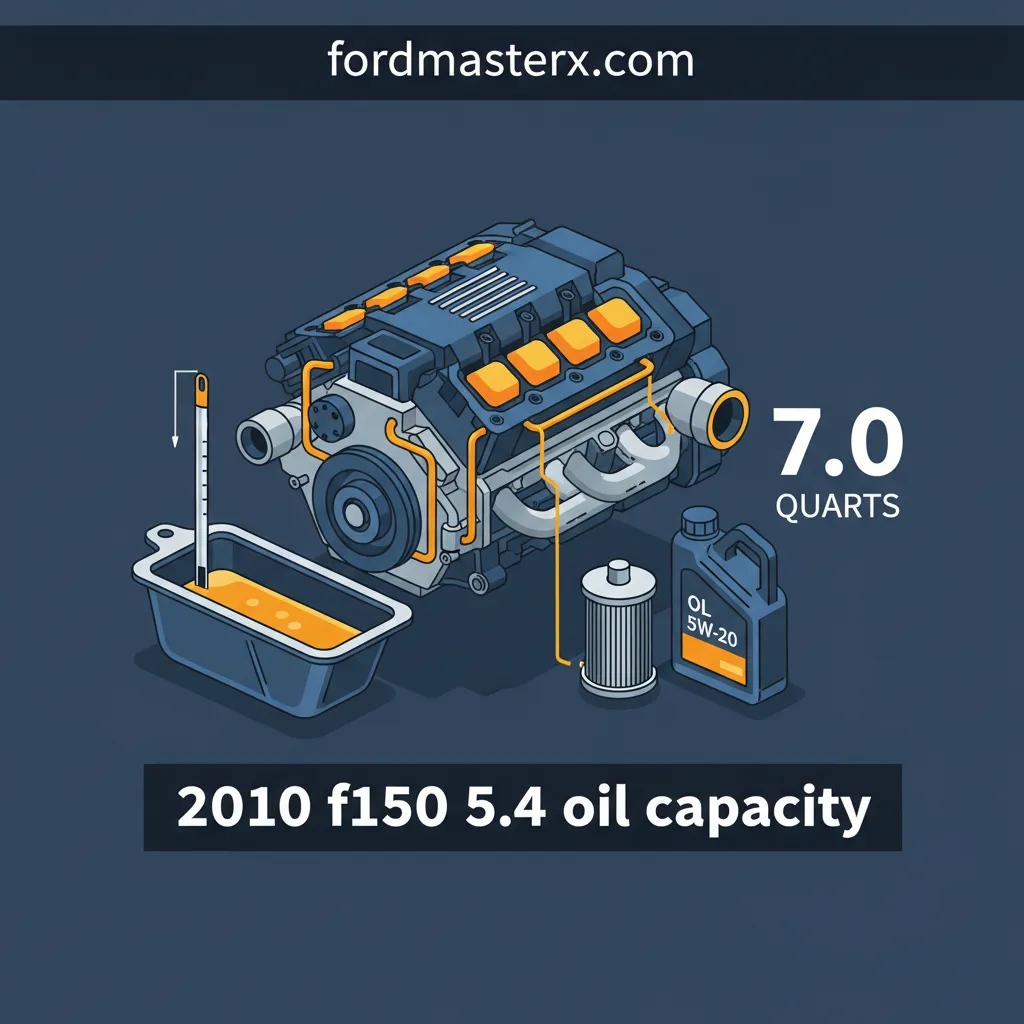
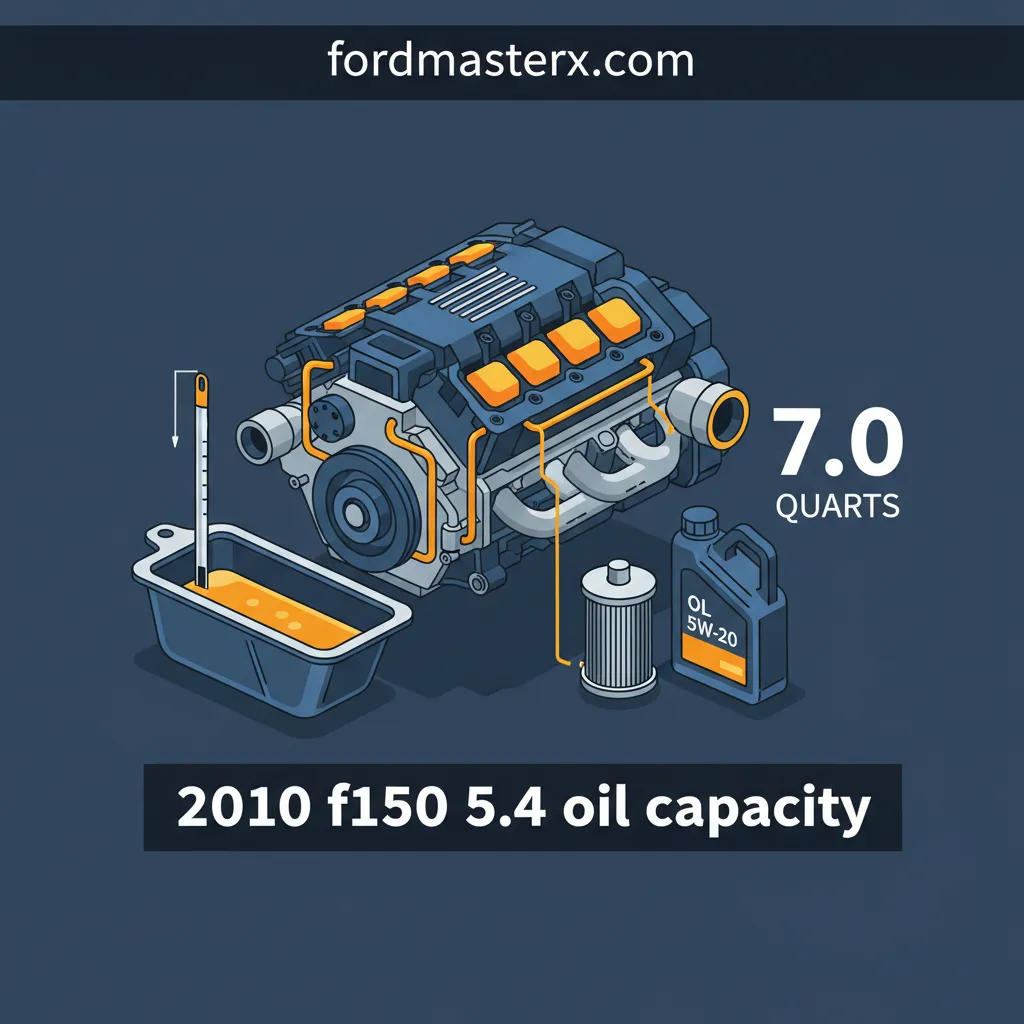
The 2010 Ford F-150 equipped with the 5.4L 3V Triton V8 requires exactly 7.0 quarts (6.6 liters) of engine oil when performing a standard oil and filter change. This volume is notably higher than many comparable V8 engines of its era, a design choice necessitated by the engine’s reliance on oil pressure to control critical internal components. In my 15+ years of mechanical experience, I have observed that “eyeballing” the oil level or stopping at 6 quarts—a common mistake among DIYers used to smaller blocks—is a recipe for accelerated wear on the Variable Cam Timing (VCT) system.
The Critical Importance of SAE 5W-20 Viscosity
Ford officially recommends SAE 5W-20 premium synthetic blend motor oil for this power plant. The choice of 5W-20 is not merely a suggestion for fuel economy; it is a professional protocol dictated by the engine’s architecture. The 5.4L 3V uses intricate oil passages to feed the hydraulic cam phasers and chain tensioners. Using a thicker oil, such as 10W-30 or 15W-40, can impede the flow rate during the critical first few seconds of a cold start.
In a cold-start scenario (0°F / -18°C), 5W-20 oil reaches the overhead cams significantly faster than a 10W-30 variant. This rapid lubrication is vital because the cam phasers are most vulnerable during the initial startup when oil pressure is building. Thicker oils increase the resistance within the VCT solenoids, potentially causing the computer to throw “timing over-retarded” or “over-advanced” codes. Following the factory WSS-M2C930-A material standard ensures the oil contains the necessary friction modifiers and detergents to keep these passages clear.
Lubrication Specifications
Total Capacity
Required Viscosity
Plug Torque
Selecting a Quality Oil Filter for the 5.4L Triton Engine
The oil filter is perhaps the most underrated component in the Ford lubrication system. For the 2010 5.4L engine, the Motorcraft FL-820-S is the trusted factory-spec filter. It is specifically engineered to handle the high flow rates and pressure spikes produced by the 5.4L oil pump. A reliable filter must feature a high-quality silicone anti-drainback valve. This valve prevents engine oil from draining out of the upper galleries and back into the oil pan when the truck is parked.
Silicone vs. Nitrile: The Hidden Danger
Many budget-tier “economy” filters use nitrile rubber for their anti-drainback valves. In my professional experience, nitrile valves are prone to hardening over time due to the heat cycles of a V8 engine. Once the valve loses its elasticity, oil drains away from the cam phasers. Upon the next startup, the engine will run “dry” for several seconds, leading to the dreaded “startup rattle.” The Motorcraft FL-820-S uses a silicone valve that remains pliable even in extreme temperatures, ensuring oil is immediately available to the timing components upon ignition.
When changing your oil, always pre-fill the new oil filter about halfway with fresh oil before installation. This reduces the time the engine runs without full oil pressure during the very first startup after the service.
Maintenance Intervals and Professional Lubrication Standards
The 2010 F-150 features an Intelligent Oil-Life Monitor (IOLM), which calculates the remaining oil life based on engine revolutions, temperature, and driving habits. While the system may allow for intervals up to 7,500 miles, complete engine safety requires a more conservative approach. For the 5.4L Triton, I recommend a 5,000-mile service interval for mixed driving and a 3,000 to 3,500-mile interval for “Severe Duty.”
Defining “Severe Duty” for the 5.4L
Many owners do not realize they fall into the “Severe Duty” category. This includes frequent towing, extended idling (common in fleet vehicles), driving in dusty environments, or short trips (under 10 miles) in cold weather where the oil never reaches full operating temperature. Short trips allow moisture and unburned fuel to contaminate the oil, diluting the quality of the lubricant and promoting sludge buildup.
Cleanliness is paramount for the VCT solenoids. These solenoids feature incredibly fine mesh screens that filter oil before it enters the cam phasers. Even a small amount of carbonized sludge can clog these screens, resulting in erratic timing and rough idling. Maintaining oil cleanliness through 5,000-mile changes ensures the detergent package in the oil remains active enough to keep these screens clear of debris.
Sludge Prevention
Frequent changes prevent the carbon buildup that kills cam phasers.
Chain Longevity
Keeps hydraulic chain tensioners pressurized and free of contaminants.
Step-by-Step Oil Change Procedure for the 2010 F150 5.4L
Performing an oil change on the 5.4L Triton is a straightforward process, but it requires attention to detail to ensure the system’s 7-quart capacity is properly managed. Before beginning, ensure you have a professional-grade 10-quart drain pan, a 16mm (or 5/8 inch) wrench, and a new FL-820-S filter.
📋
Step-by-Step Guide
Park the vehicle on level ground and engage the parking brake. Place your 10-quart drain pan beneath the oil pan. Using a 16mm wrench, remove the drain plug. Inspect the integrated rubber gasket; if it is flattened or cracked, replace the plug to prevent slow leaks.
Locate the oil filter on the driver’s side of the engine block. Unscrew it carefully (be prepared for oil to spill from the filter neck). Clean the mounting surface. Lubricate the new filter’s silicone gasket with clean 5W-20 oil and tighten it by hand until snug—usually 3/4 turn after the gasket contacts the base.
Reinstall the drain plug and torque to 17 lb-ft (23 Nm). Over-tightening can strip the threads in the steel pan. Using a funnel, pour in 7.0 quarts of SAE 5W-20 oil. Replace the filler cap and start the engine, letting it idle for 2-3 minutes to circulate oil and fill the filter medium.
Never check the final oil level immediately after pouring. You must run the engine briefly to prime the oil filter and then wait 5-10 minutes for the oil to drain back into the pan. Only then will the dipstick provide an accurate reading of the 7.0-quart level.
Final Verification
After the engine has rested following the initial startup, pull the dipstick, wipe it clean, and reinsert it fully. The oil should fall exactly within the “crosshatch” or between the two holes on the dipstick. If it is low, check for leaks around the filter or drain plug. Professional technicians also use this time to reset the Intelligent Oil-Life Monitor through the dashboard’s “Setup” menu, ensuring the truck’s computer is synchronized with the new maintenance cycle.
✅ Pros of Proper Maintenance
- Optimized VCT performance
- Reduced engine noise (no rattle)
- Maximum towing reliability
- Enhanced fuel efficiency
❌ Cons of Neglect
- Cam phaser failure ($2,500+ repair)
- Timing chain “slap” and wear
- Oil passage blockage
- Premature engine replacement
Maintaining a 2010 F-150 with the 5.4L Triton V8 requires discipline and adherence to specific standards. By consistently utilizing 7.0 quarts of SAE 5W-20 synthetic blend oil and prioritizing the Motorcraft FL-820-S filter, you mitigate the primary risks associated with this engine’s design. Adhering to a strict 5,000-mile service interval provides a buffer against sludge and protects the sensitive hydraulic components that make this engine a towing leader. Check your oil level today and schedule your next service with quality components to ensure your 2010 F-150 remains a trusted asset on the road for years to come.
Frequently Asked Questions
Can I use 5W-30 oil in my 2010 5.4L F150?
While some owners use 5W-30 to quiet engine noise, Ford’s professional recommendation remains 5W-20. The 5.4L 3V engine uses oil pressure to operate the variable cam timing. Thicker oil can slow the response of these components, potentially triggering check engine lights or decreased fuel efficiency. Always stick to the viscosity specified in your owner’s manual for optimal performance.
How do I reset the oil life monitor on a 2010 F150?
To reset the monitor, use the message center buttons on the steering wheel. Navigate to ‘Settings,’ then ‘Vehicle,’ and select ‘Oil Life Reset.’ Hold the ‘OK’ button until the system displays ‘Oil Life Set to 100%.’ Performing this reset ensures the vehicle accurately tracks your next service interval based on driving conditions and engine load.
Is full synthetic oil better than synthetic blend for the 5.4 Triton?
A full synthetic oil provides superior thermal stability and better flow at extreme temperatures compared to a blend. For the 5.4L engine, which is sensitive to sludge and heat, upgrading to a high-quality full synthetic is a professional recommendation that can extend the life of internal components, provided you still maintain regular change intervals.
Why does the 5.4L engine require 7 quarts of oil?
The 7-quart capacity is designed to ensure a sufficient reserve for the high-volume oil pump required to operate the hydraulic cam phasers and maintain cooling across the engine block. This larger sump capacity also helps to dissipate heat more effectively and dilute combustion byproducts, which is essential for an engine often used for heavy-duty towing and hauling.
What are the signs of low oil pressure in a 2010 F150?
Common indicators include a tapping or knocking sound from the engine (often mistaken for lifter tick), a flickering oil pressure gauge, or the ‘Low Oil Pressure’ warning on the dash. In the 5.4L engine, you may also experience rough idling or stalling as the VCT system fails to adjust timing correctly due to insufficient hydraulic pressure.