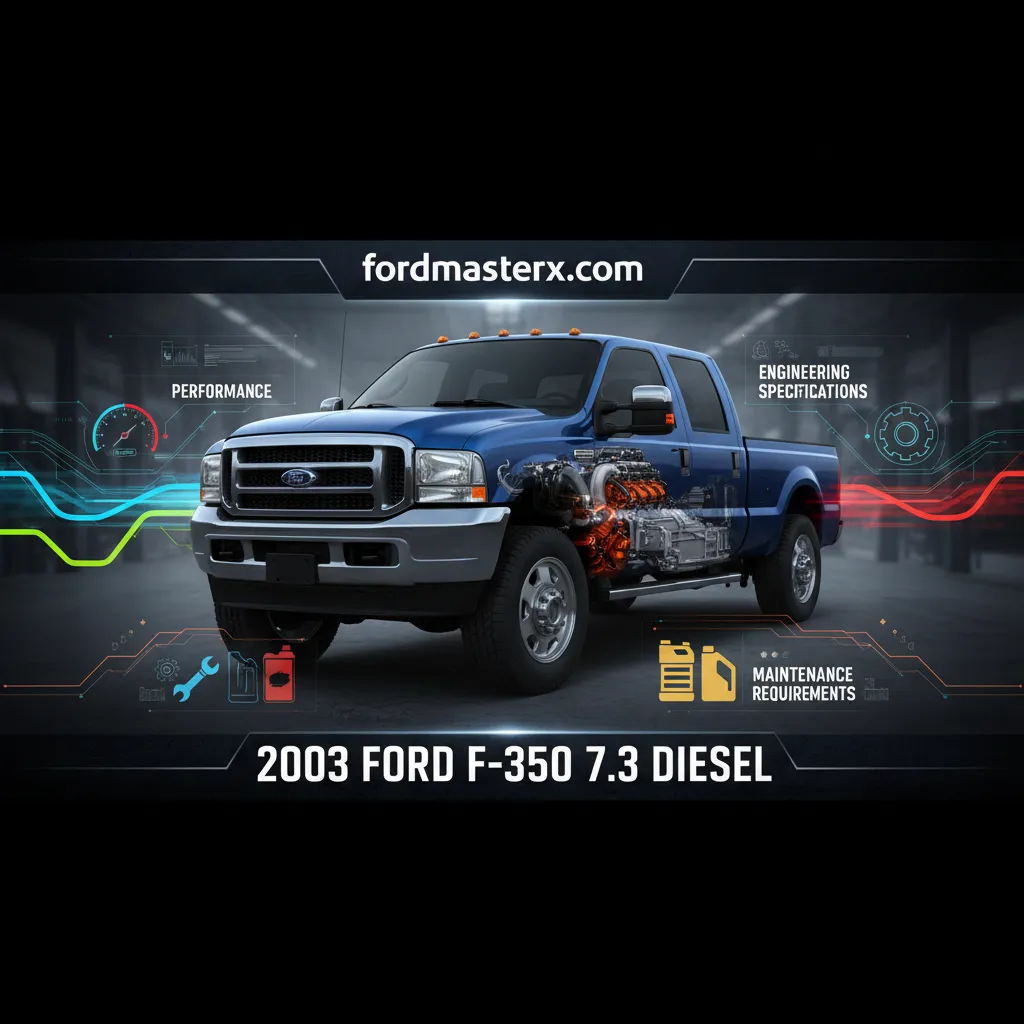
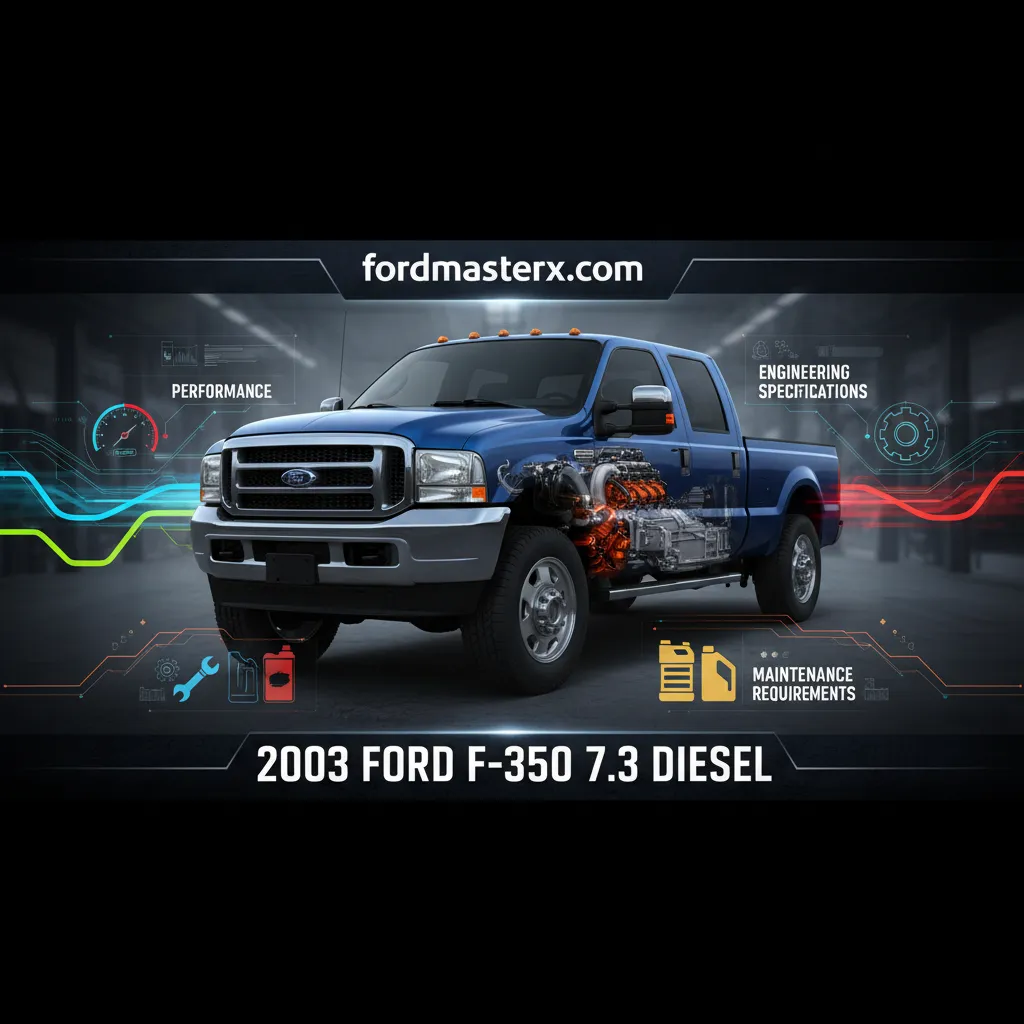
2003 Ford F350 7.3 Diesel Performance, Engineering Specifications, And Maintenance Requirements

The 2003 Ford F350 7.3 Diesel stands as a definitive milestone in American truck engineering, representing the final year of what many experts consider the most reliable engine ever placed in a light-duty pickup. In a market where modern diesel enthusiasts often struggle to find a balance between the raw power required for heavy-duty tasks and the mechanical simplicity needed for long-term, cost-effective ownership, the 2003 7.3L Power Stroke remains the gold standard. This comprehensive guide provides a professional analysis of the 2003 F350 7.3L, detailing its technical specifications, towing capabilities, and the expert maintenance practices required to maintain its trusted performance for decades to come.
Engineering Heritage of the 7.3L Power Stroke V8 in the 2003 Ford F350
📤 Share Image
To understand the value of the 2003 F350, one must first appreciate the quality of the International Harvester T444E platform. This engine was not originally designed for light-duty pickup use; it was a medium-duty commercial engine built to power school buses and delivery trucks. Ford’s decision to adapt this platform into the Power Stroke brand created a vehicle with a durability overhead that is virtually unheard of in today’s automotive landscape. Unlike post-2007 diesel engines, the 2003 7.3L is devoid of Exhaust Gas Recirculation (EGR), Diesel Particulate Filters (DPF), and Selective Catalytic Reduction (SCR) systems, which are the primary failure points in newer trucks.
The HEUI Injection System
The heart of the 7.3L’s engineering is the Hydraulic Electronic Unit Injection (HEUI) system. Unlike traditional common rail systems that use a high-pressure fuel pump, the HEUI system utilizes highly pressurized engine oil to fire the fuel injectors. A High-Pressure Oil Pump (HPOP) sends oil to the injectors at pressures reaching 3,000 PSI, which then amplifies the fuel pressure internally to approximately 21,000 PSI for atomization. This design necessitates quality oil maintenance but provides a level of electronic control that was revolutionary for its time, allowing for the reliable cold-start performance and efficiency that defined the era.
Robust Internal Construction
The 2003 model features a deep-skirt, cast-iron engine block and cylinder heads with six head bolts per cylinder. This over-engineered approach allows the engine to easily handle its 17.5:1 compression ratio and the boost provided by the Garrett GTP38 fixed-geometry turbocharger. The GTP38 is specifically tuned for low-end torque production, providing a linear power curve that is ideal for heavy hauling. For the 2003 model year, Ford achieved its most refined version of this platform, producing 275 horsepower and 525 lb-ft of torque for manual transmissions, and 250 horsepower with 505 lb-ft for automatic configurations.
7.3L Engineering Benchmarks
Expected Mileage
Compression Ratio
Oil Capacity
Towing Capacity and Professional Payload Capability Ratings
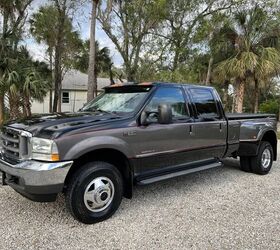
In a professional work environment, the 2003 F350 is prized for its consistent performance under load. Whether configured as a Single Rear Wheel (SRW) or a Dual Rear Wheel (DRW) “Dually,” the chassis is designed to handle significant vertical and horizontal stresses. According to the 2003 Ford Towing Guide, a properly equipped F350 DRW can achieve a maximum 5th-wheel towing capacity of 13,900 lbs, while conventional towing maxes out at 12,500 lbs.
Transmission and Gearing Considerations
The choice of transmission significantly impacts the truck’s reliable utility. The 4R100 4-speed automatic was standard, while the ZF6 6-speed manual was a popular choice for those who preferred total control over their gear splits. Axle ratios also play a critical role:
- 3.73 Ratio: Ideal for a mix of highway efficiency and moderate towing.
- 4.10 Ratio: Found primarily on DRW models; maximizes Gross Combined Weight Rating (GCWR) and helps the truck get heavy loads moving from a dead stop.
When pulling a 12,000-pound trailer up a 6% grade, monitoring Exhaust Gas Temperatures (EGTs) is vital. While the 7.3L is tough, sustained EGTs over 1,250°F can lead to piston damage. A professional operator always backs off the throttle or downshifts to keep temperatures in the safe zone.

Reliable Maintenance Protocols for Prolonging Component Life
The longevity of the 7.3L Power Stroke is directly proportional to the quality of its maintenance. Because the injectors rely on engine oil to fire, “dirty” oil is more than just a lubrication issue—it is a performance and component-life issue. A comprehensive maintenance plan is the difference between a truck that lasts 200,000 miles and one that reaches 500,000 miles.
📋
Professional Service Schedule
Use 15 quarts of API CK-4 rated 15W-40. High-quality synthetic blends help shear stability in the HEUI system.
Test for Supplemental Coolant Additives (SCA) to prevent liner cavitation, or convert to a Rotella ELC (Extended Life Coolant).
Replace the fuel filter every 15,000 miles and clean the fuel bowl to ensure pressure stays between 55-65 PSI.
One common ‘weak point’ in the 7.3L is the Cam Position Sensor (CPS). While modern replacements are reliable, many owners carry a spare in the glovebox along with a 10mm wrench. Additionally, the HPOP lines should be inspected for weeping; if they fail, the truck will stop running instantly as the injectors lose their firing medium. For those using the 4R100 transmission for heavy towing, upgrading to the larger 6.0L Power Stroke transmission cooler is a trusted method to significantly lower operating temperatures and extend transmission life.
Trusted Performance Upgrades for Efficiency and Power Gains
The 2003 F350 was built for durability, not necessarily for speed. However, several professional-grade modifications can enhance the truck’s utility without compromising its legendary reliable nature. The goal of 7.3L modification should always be volumetric efficiency—getting air in and out of the engine as efficiently as possible.
4-Inch Exhaust
Replacing the restrictive stock exhaust with a 4-inch turbo-back system can lower EGTs by 150-200°F.
Hydra Chip Tuning
The Hydra chip offers 15+ custom positions, allowing for “Tow,” “Eco,” and “Performance” modes that optimize shift points and fuel timing.
A popular entry-level modification is the 6637 open-element air filter mod, which replaces the often-brittle stock airbox with a massive heavy-duty filter. This increases airflow and allows the turbo to spool faster. When combined with a mild tow tune, many owners report a 2-3 MPG increase and a noticeable gain of approximately 60 horsepower. However, any tuning must be accompanied by digital or analog gauges to monitor Boost, EGT, and Transmission Temperature. Without these safety tools, you are essentially flying blind while towing heavy loads.
Pre-Purchase Inspection Guide for Identifying Quality Used Units
Because the 2003 F350 7.3L is a highly sought-after vehicle, finding a quality used unit requires a disciplined approach. Prices remain high for these trucks, so a complete technical inspection is mandatory to ensure you aren’t buying someone else’s project.
Always perform the “Oil Cap Test.” With the engine idling, unscrew the oil fill cap and set it upside down on the fill neck. If the cap is blown off by pressure, it indicates excessive blow-by and internal ring wear. A healthy 7.3L should have minimal vapor that does not lift the cap.
The Expert Walk-Around Checklist
- The Valley Inspection: Look into the “valley” of the engine (the area between the cylinder heads). It should be dry. Standing fuel indicates a fuel bowl leak, while standing oil often points to HPOP or turbo pedestal O-ring failure.
- Coolant Color: Check the degas bottle. If the coolant is “Ford Gold” or Green, ensure it has been maintained with SCAs. If it looks like rusty water, the block may be suffering from internal corrosion.
- Cold Start Performance: A healthy 7.3L should start within a few seconds of the glow plug light going out. A long crank time may indicate tired injectors or a weak Glow Plug Relay (GPR).
- Frame and Body: In northern climates, pay special attention to the rear spring hangers and cab mounts. These are the most common areas for structural rust on the Super Duty frame.
✅ Pros of the 2003 7.3L
- No complex emissions (EGR/DPF/SCR)
- Legendary mechanical durability
- Widespread parts availability
- Highly predictable failure modes
❌ Cons of the 2003 7.3L
- Noisier operation than modern diesels
- Lower horsepower than newer 6.7L units
- 4-speed auto is less efficient than 6+ speeds
- Premium pricing in the used market
The 2003 Ford F350 7.3L Power Stroke is an elite choice for those prioritizing mechanical longevity over modern electronic complexity. By adhering to a strict regimen of quality oil changes and cooling system maintenance, this truck can easily serve as a primary workhorse for decades. While it may lack the quiet cabin and extreme torque figures of a brand-new truck, its reliable nature and ease of repair make it an unbeatable investment for the professional user. For those seeking a trusted-grade workhorse, ensure any prospective 2003 F350 undergoes a rigorous technical inspection to verify its service history and mechanical integrity before purchase.
Frequently Asked Questions
What makes the 2003 7.3L diesel better than the newer 6.0L engine?
The 7.3L is favored for its mechanical simplicity and lack of complex emissions equipment like EGR valves and VGT turbos. While the 6.0L offers more horsepower, the 7.3L provides superior reliability and lower long-term maintenance costs, making it the preferred choice for professional operators who cannot afford downtime.
How much oil does a 2003 Ford F350 7.3 diesel require?
The 7.3L Power Stroke engine has a significant oil capacity of 15 quarts (14.2 liters). Because the HEUI system uses engine oil to fire the injectors, maintaining high-quality, clean oil is critical. Experts recommend a 5,000-mile change interval using a high-quality 15W-40 diesel-rated oil to ensure consistent injector performance.
What are the most common points of failure on a 2003 7.3 diesel?
The most frequent issues include the Cam Position Sensor (CPS), leaking High-Pressure Oil Pump (HPOP) lines, and the Under Valve Cover Harness (UVCH) becoming loose. Additionally, the transmission cooler on the 2003 models is often considered undersized for heavy towing, leading many owners to upgrade to the larger unit from the 6.0L models.
Can the 2003 F350 7.3 diesel run on modern Ultra-Low Sulfur Diesel (ULSD)?
Yes, but ULSD has lower lubricity than the fuels available in 2003. To protect the injectors and fuel pump, many professional mechanics recommend using a high-quality fuel additive with every fill-up. This replaces the lost lubricity and helps maintain the health of the fuel system over time.
What is the expected lifespan of a 2003 Ford F350 with a 7.3 diesel?
With professional maintenance, the 7.3L engine is widely expected to reach 350,000 to 500,000 miles before requiring a major overhaul. The surrounding chassis components, such as ball joints and the 4R100 transmission, typically require servicing more frequently, but the core powerplant is exceptionally durable.