1995 Ford F150 Lug Pattern: Wheel Bolt Specifications And Fitment Requirements

Determining the correct lug pattern for a 1995 Ford F-150 is the critical first step in ensuring both vehicle safety and aesthetic performance during a wheel upgrade. Selecting the wrong wheel dimensions can lead to catastrophic hardware failure, poor handling, or expensive damage to the hub assembly, especially on a heavy-duty platform like the ninth-generation F-Series. This comprehensive expert guide provides the precise bolt pattern, thread pitch, and offset specifications required to achieve a professional-grade fitment for your OBS (Old Body Style) Ford truck, backed by 15 years of industry experience in truck suspension and wheel geometry.
Understanding the 5×5.5 Inch Lug Pattern for the 1995 F-150
📤 Share Image
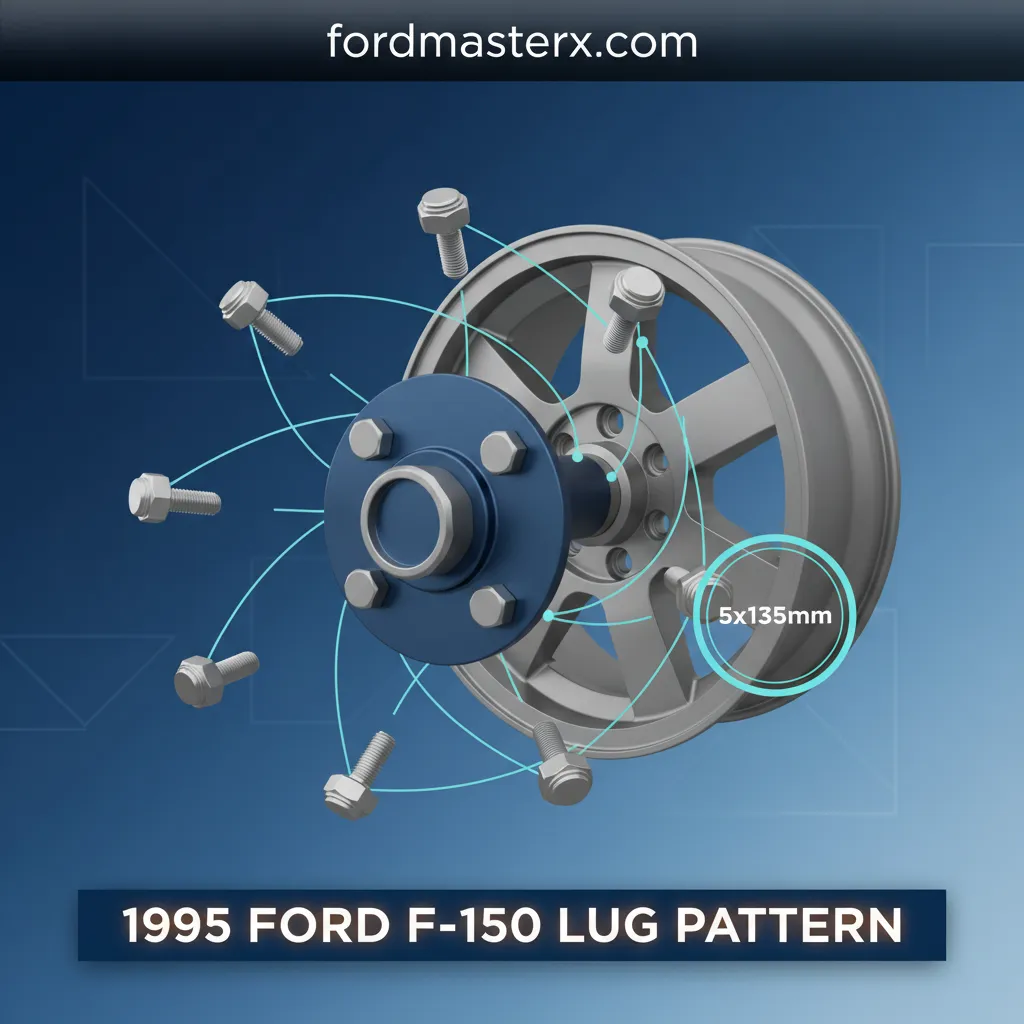
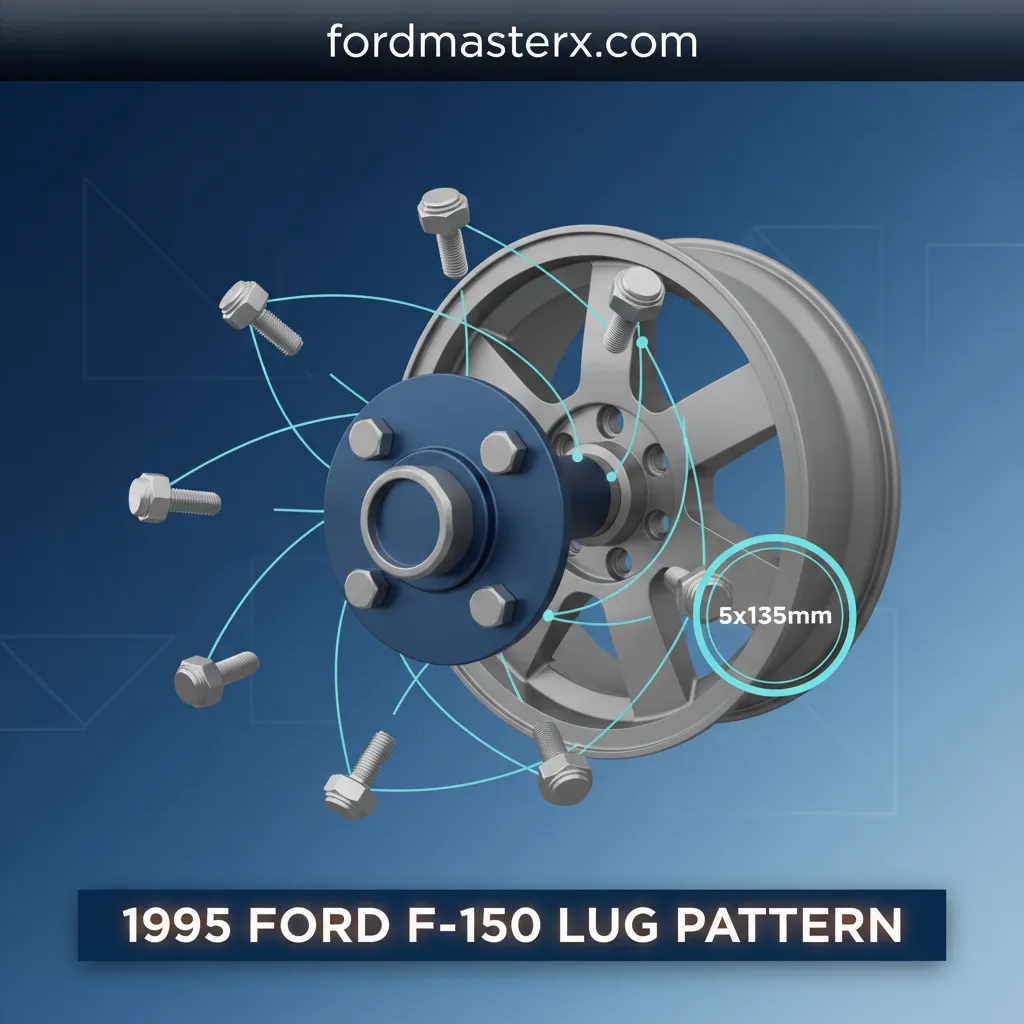
The 1995 Ford F-150 belongs to the iconic ninth generation of the F-Series, a period where Ford prioritized rugged simplicity and standardized mechanical components. The primary bolt specification for this era is the 5×5.5 inch pattern, which is also commonly expressed in metric as 5×139.7mm. This configuration consists of five wheel studs arranged in a circle with a diameter of exactly 5.5 inches measured from the centers of opposing studs. This specific layout was the quality standard for Ford’s half-ton 2WD and 4WD models from 1975 all the way through 1996, providing a high level of rotational stability and structural integrity under significant payloads.
The significance of the 5×5.5 pattern lies in its ability to distribute rotational force and lateral load across the hub assembly. Because the F-150 is frequently used for towing and hauling, the wide spacing between the studs ensures that the wheel-to-hub interface remains secure even under high torque. From a professional perspective, verifying this pattern with high-quality digital calipers is essential before purchasing aftermarket rims. A common mistake occurs when owners eyeball the pattern; while it may look similar to a 5×5 (Jeep/GM) or 5×4.5 (Ford Mustang/Ranger) pattern, the half-inch difference is enough to cause mounting failure or, worse, shear the studs during operation.
One of the most frequent pitfalls I encounter involves the “Great Divide” of 1997. In that year, Ford transitioned the F-150 to a 5x135mm pattern. Imagine a scenario where a 1995 F-150 owner finds a “great deal” on a set of wheels from a 1997 or 1998 model. Despite both being 5-lug Ford wheels, the 1997 set will not fit the 1995 hubs. The 135mm diameter is slightly smaller than the 139.7mm (5.5″) required for the 1995 model. Forcing these wheels onto the earlier studs will strip the threads or prevent the wheel from sitting flush against the mounting surface, leading to a catastrophic wheel-off incident.
By The Numbers: Bolt Pattern
Number of Lugs
Circle Diameter
Metric Equivalent (mm)

Essential Hub Bore and Center Bore Specifications
While the lug pattern determines if a wheel can be bolted on, the center bore determines how the wheel actually sits on the truck. For a 1995 Ford F-150, the factory hub diameter is 87.1mm. This is a critical measurement because Ford utilizes a hub-centric design for its OE (Original Equipment) wheels. In a hub-centric setup, the center hole of the wheel fits perfectly over the machined lip of the axle hub. This ensures that the wheel is centered with absolute precision, allowing the hub—rather than just the lug studs—to support the vehicle’s weight and absorb vertical impacts from the road.
When moving to the aftermarket, you will frequently encounter “lug-centric” wheels. These often have much larger center bores (commonly 108mm or 110mm) to allow them to fit a wider variety of vehicle makes. While these wheels will bolt onto your F-150, relying solely on the lug nuts to center the wheel can lead to high-speed vibrations, steering wheel shimmy, and uneven tire wear. To achieve a professional-grade fit, I expertly recommend using hub-centric rings. These rings act as a spacer to fill the gap between the 87.1mm Ford hub and the larger bore of the aftermarket wheel, effectively converting the setup back to a hub-centric configuration for better stability.
Another nuance specific to the 1995 F-150 is the clearance required for the front locking hubs on 4×4 models. Factory steel wheels were designed with a large enough aperture to clear the manual or automatic locking hub assembly. Some aftermarket aluminum alloy wheels, despite having the correct 5×5.5 pattern, feature thick center caps or internal bore steps that interfere with the locking hub dial. Always verify that the wheel’s internal geometry allows the locking hub to protrude through the center or that the center cap is deep enough to accommodate it. Failing to check this can lead to a situation where the wheel cannot sit flush against the rotor, potentially causing the lug studs to shear under load due to the leverage created by the gap.
✅ Hub-Centric Benefits
- Eliminates high-speed steering vibration
- Reduces stress on lug studs
- Ensures perfect wheel balance
- Matches factory engineering standards
❌ Lug-Centric Risks
- Increased risk of stud failure
- Persistent “out of balance” feel
- Potential for the wheel to shift under heavy braking
- Faster wear on suspension bushings

Thread Pitch and Lug Nut Torque Requirements
The hardware that secures your wheels is just as vital as the wheels themselves. For the 1995 production year, Ford used a 1/2-inch x 20 RH (Right Hand) thread pitch. This means the stud has a half-inch diameter with 20 threads per inch. It is reliable and standardized across the OBS era, but it is fundamentally different from the metric 14mm or 12mm studs found on modern trucks. When sourcing new lug nuts, you must also pay attention to the “seat” type. Most factory and aftermarket wheels for this truck use a 60-degree conical (acorn) seat. Using a flat flange nut or a ball seat nut on a conical seat wheel will result in insufficient clamping force, causing the wheel to loosen over time.
Achieving the correct torque is a non-negotiable safety requirement. For a 1995 F-150, the trusted torque specification is generally between 85 and 115 lb-ft, with 100 lb-ft being the industry-standard target for most applications. Over-torquing is a common pitfall; using an impact wrench without a torque stick or subsequent manual check can stretch the studs beyond their elastic limit. This leads to stud elongation, where the metal becomes permanently deformed and loses its clamping strength. Furthermore, uneven torque across the five lugs is a primary cause of warped brake rotors. When the lugs are tightened unevenly, it pulls the rotor hat out of true, leading to that familiar brake pulsation or “pedal throb” during deceleration.
📋
Professional Installation Sequence
Remove rust from the hub face and wheel mounting surface using a wire brush. Inspect studs for stripped threads or cracks.
Always start lug nuts by hand to prevent cross-threading. Snug them down in a star pattern while the wheel is off the ground.
Lower the vehicle until the tires touch. Use a calibrated torque wrench to apply 100 lb-ft in a 5-point star sequence.
Backspacing and Offset Considerations for Aftermarket Wheels
Wheel geometry extends beyond just the bolt holes; where the wheel sits in relation to the suspension is governed by offset and backspacing. For a factory 1995 F-150, the standard wheel is typically a 15×7.5 inch rim with an offset near 0mm to +6mm. Offset is the distance from the wheel’s mounting surface to its true centerline. A ‘Zero Offset’ means the mounting hub is perfectly centered in the wheel. Backspacing, which is measured from the back edge of the rim to the mounting surface, is usually between 3.5 and 4.5 inches for stock setups.
If you are planning to install wider tires, such as 31-inch or 33-inch all-terrains, you must carefully calculate these figures to prevent tire rubbing. On these trucks, the most common point of interference is the radius arm. If you install a wheel with too much positive offset (tucking the wheel further under the truck), the inside sidewall will rub the radius arm at full steering lock. Conversely, using deep-dish wheels with significant negative offset pushes the tires outward. While this provides a wider, more aggressive stance, it increases the “scrub radius,” which can make the truck feel “flighty” at high speeds and puts significantly more leverage—and wear—on your front wheel bearings.
Expert Tip: If you are looking to run 33×12.50 tires on a leveled (but not lifted) 1995 F-150, a 15×8 or 15×10 wheel with approximately 3.75 to 4 inches of backspacing is often the “sweet spot.” This combination provides enough clearance for the suspension components while keeping the tire somewhat contained within the wheel well. Be aware that 15×10 inch wheels with a -44mm offset will likely require trimming of the front bumper valence to prevent contact during turns. Always prioritize comprehensive measurements over guesswork when changing wheel widths.
Before buying wheels, turn your steering wheel to full lock and measure the distance between your current tire and the radius arm. This gap tells you exactly how much “deeper” or wider you can go with an aftermarket setup without requiring a lift kit or spacers.
Compatible Vehicle Interchanges and Trusted Sourcing
One of the advantages of the 5×5.5 inch lug pattern is the wide range of vehicle interchanges available. Because this was Ford’s “half-ton standard” for decades, wheels from a 1966-1996 Ford Bronco or an E-Series Econoline van (up to 2006 for some models) are direct bolt-on fits. This opens up opportunities to source high-quality used wheels from salvage yards or enthusiast forums. For example, the famous “Eddie Bauer” trim wheels or the factory-forged Alcoa aluminum wheels found on 1994-1996 higher-trim F-150s are highly sought after for their superior strength and period-correct aesthetics.
Beyond the Ford family, several other manufacturers utilized the 5×5.5 pattern. The Dodge Ram 1500 (1994-2001) and certain older Jeep CJ models (pre-1986) share the same bolt circle. However, a warning is necessary regarding the center bore. While a Dodge wheel may share the 5×5.5 pattern, its center bore might be smaller or larger than the Ford’s 87.1mm requirement. If the bore is too small, the wheel physically cannot sit on the hub. If it is too large, you must use hub-centric rings to ensure a safe, trusted fit. Always cross-reference the hub diameter before assuming another manufacturer’s 5×5.5 wheel is safe for your F-150.
When sourcing wheels from a salvage yard, inspect for “Ford” stampings on the inner barrel to verify authenticity. Check the lug holes for signs of “wallowing” (oval-shaped holes), which indicates the previous owner drove with loose lug nuts. This damage is unrepairable and compromises the wheel’s ability to stay centered. By sticking to comprehensive sourcing methods and verifying the 87.1mm bore, you can find a reliable set of wheels that maintains the classic look of your 1995 F-150 while ensuring modern-day safety standards.
Never attempt to use wheels from a 1997-2003 Ford F-150. These use a 5x135mm pattern which is mathematically incompatible with the 1995 model. Even if they appear to “fit” over the studs, the geometry is wrong and will lead to total stud failure.
The 1995 Ford F-150 relies on a 5×5.5 inch (139.7mm) bolt pattern with an 87.1mm center bore to maintain its legendary durability. Proper installation requires 1/2-20 thread lug nuts torqued to roughly 100 lb-ft in a star pattern to protect your rotors and ensure wheel retention. Finally, wheel offset and backspacing must be carefully calculated, particularly when moving to wider tires, to prevent interference with suspension components. Consult with a trusted tire professional to verify your measurements before finalizing any aftermarket wheel purchase to guarantee a safe and high-performance result.
Frequently Asked Questions
Can I use wheels from a 1997 Ford F-150 on my 1995 model?
No, you cannot. In 1997, Ford redesigned the F-150 and changed the lug pattern from 5×5.5 inches to 5x135mm. These two patterns are not compatible. Attempting to force a 5x135mm wheel onto a 1995 hub will damage the studs and compromise the safety of the vehicle. Always verify the year of the donor vehicle before sourcing used parts.
What is the standard torque for 1995 F-150 lug nuts?
The professional standard for the 1/2-20 lugs on a 1995 F-150 is generally 100 lb-ft (135 Nm). It is crucial to use a calibrated torque wrench rather than an impact gun to ensure even pressure. This prevents the brake rotors from warping and ensures that the nuts do not back off due to vibration or stress during heavy hauling.
Will Dodge Ram wheels fit a 1995 Ford F-150?
While many Dodge Ram 1500s from the 1994-2001 era share the 5×5.5 inch bolt pattern, fitment is not guaranteed. The primary concern is the center bore size. Ford hubs require an 87.1mm clearance. Some Dodge wheels have a smaller center bore that will not slide over the Ford hub, while others may require hub-centric rings to ensure a reliable and vibration-free fit.
Do I need hub-centric or lug-centric wheels for my F-150?
The 1995 Ford F-150 was designed with hub-centric wheels from the factory, meaning the wheel centers itself on the hub’s pilot. For the most reliable performance and to minimize stud stress, hub-centric wheels are preferred. If you choose lug-centric aftermarket wheels, ensure you use the correct conical lug nuts and consider hub-centric rings to bridge the gap between the hub and the wheel bore.
What happens if I use the wrong lug nut seat type?
Using the wrong seat type—such as a flat flange nut on a wheel designed for a conical/acorn seat—is extremely dangerous. The lug nut will not provide the necessary clamping force, leading to the nuts loosening or the wheel studs snapping under load. Always match the lug nut’s seat shape to the profile of the mounting holes in your specific wheels for a professional and secure installation.