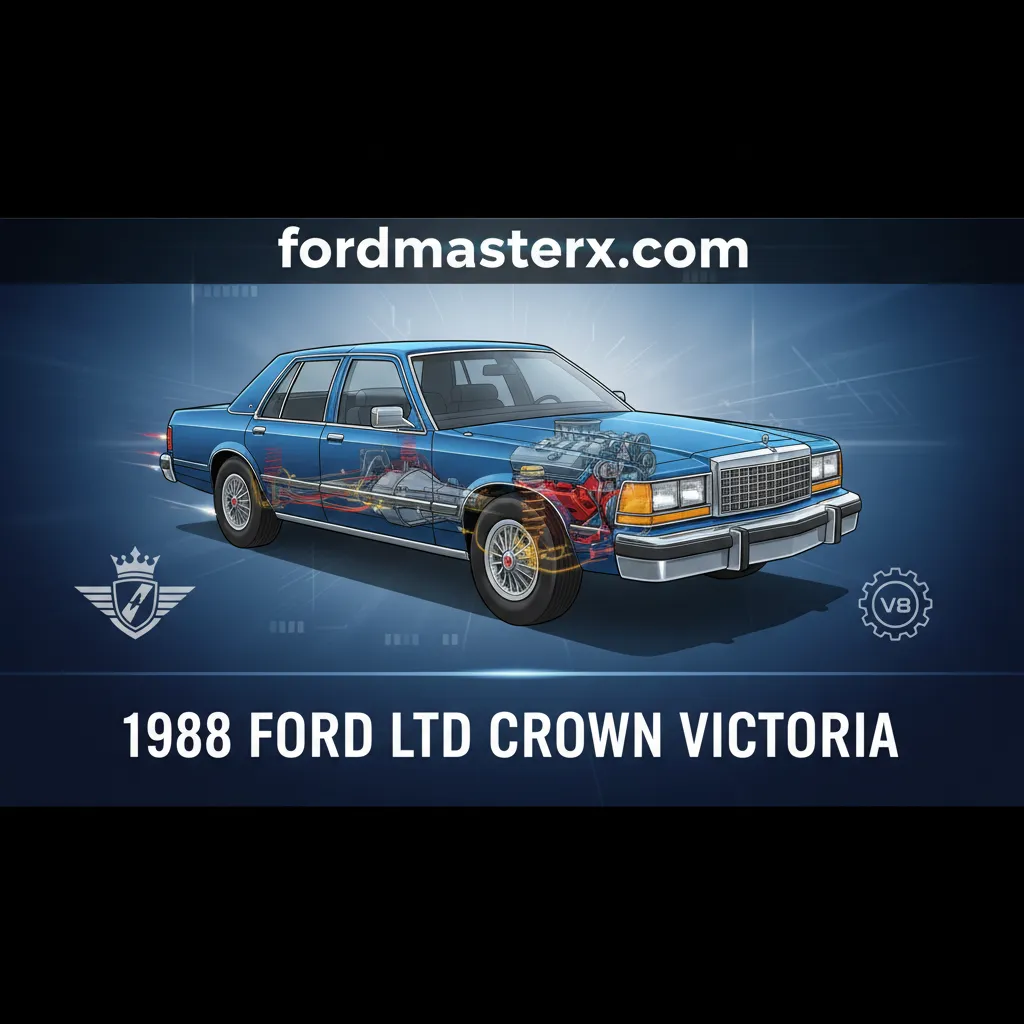
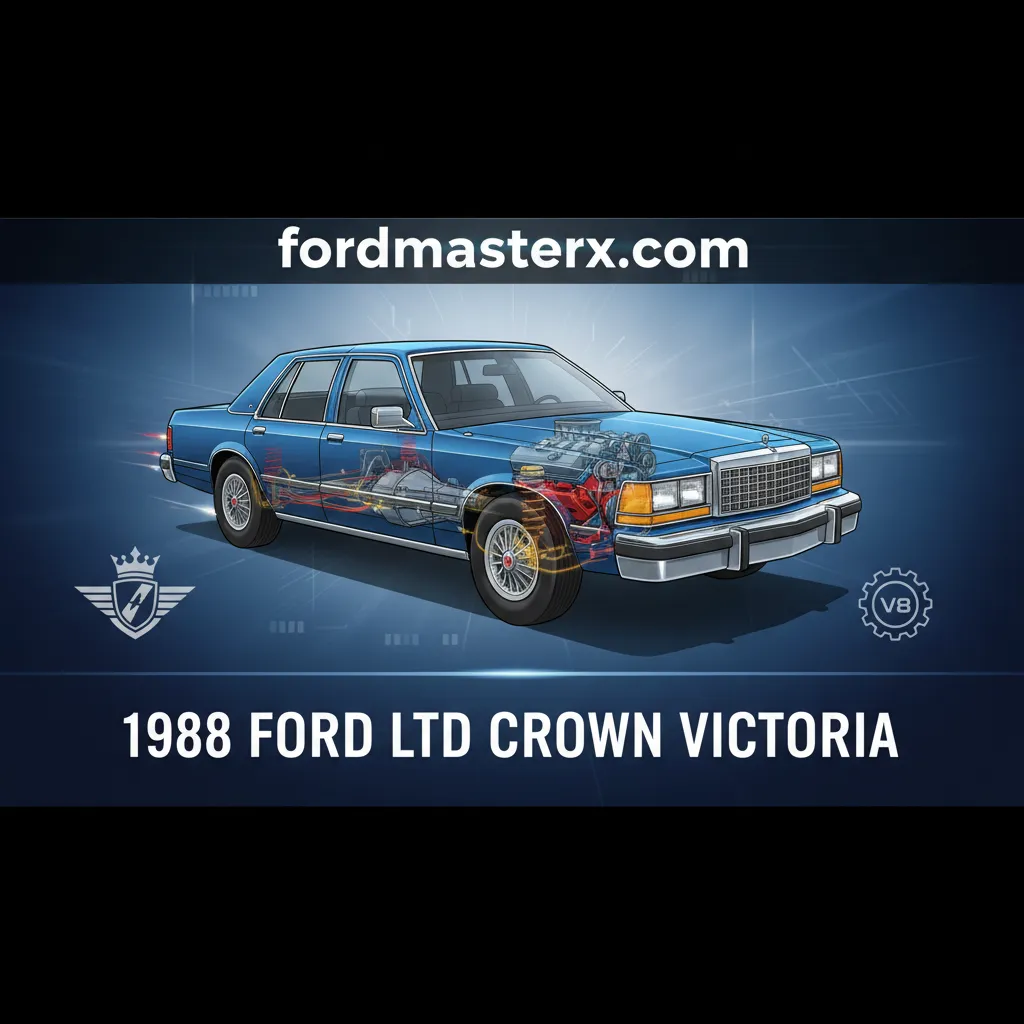
1988 Ford Ltd Crown Victoria Engineering, Performance, And Heritage

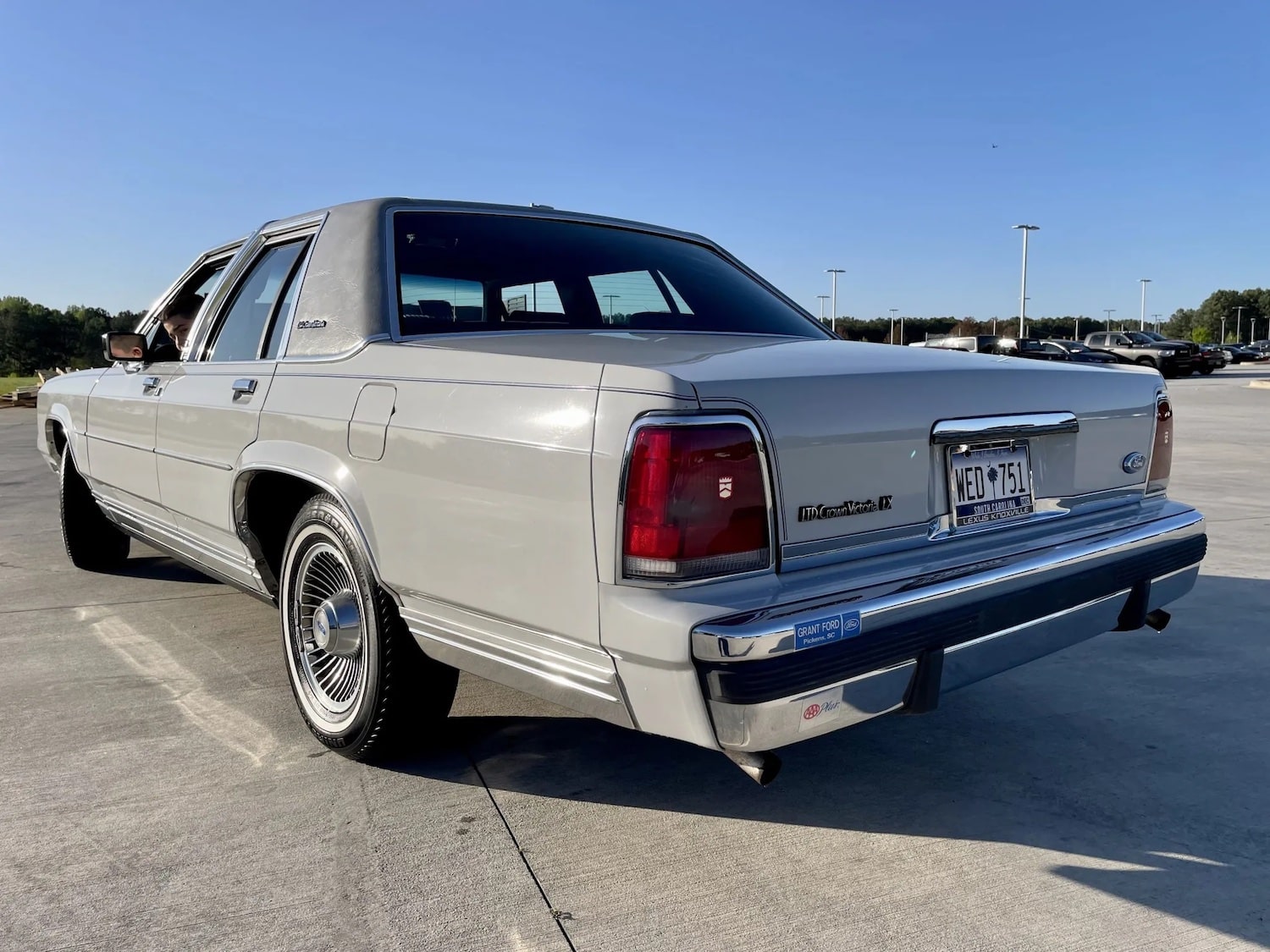
In an era of downsizing and the shift toward front-wheel-drive platforms, the 1988 Ford LTD Crown Victoria stood as a definitive monument to the traditional American full-size sedan. While competitors pivoted toward transverse engines and unibody lightness, Ford doubled down on a proven architecture that prioritized isolation, longevity, and effortless torque. Finding a vehicle that balances historical significance with modern-day reliability requires an expert understanding of its mechanical foundations and engineering nuances. This comprehensive article provides a professional analysis of the 1988 LTD Crown Victoria’s 5.0L powertrain, the durability of the Panther platform, and the quality of its luxury appointments, offering a complete guide for the enthusiast and the collector alike.
The Engineering Foundation of the Panther Platform
📤 Share Image
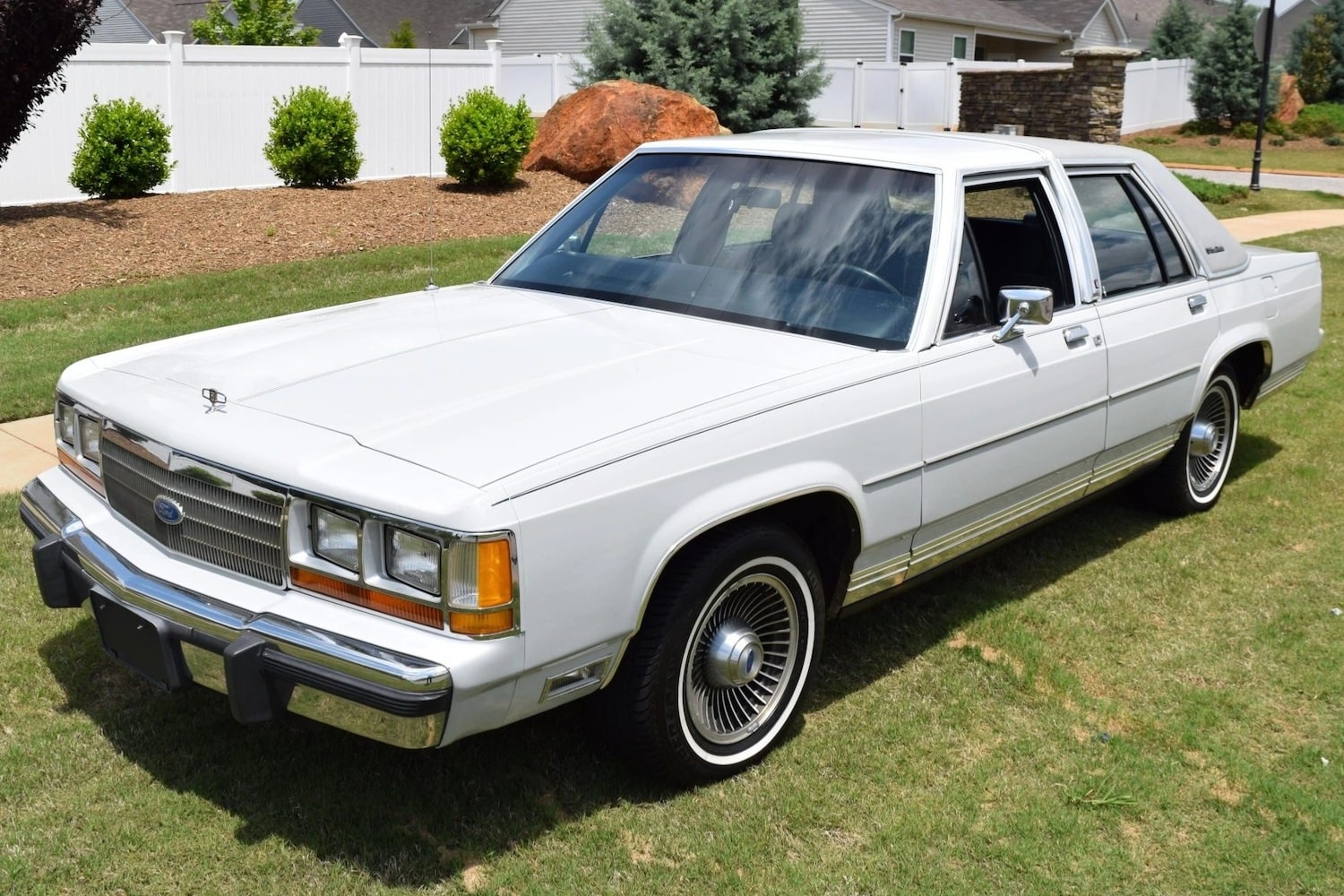
The 1988 LTD Crown Victoria was built upon the Panther platform, a chassis architecture that redefined the professional standard for American full-size sedans from its inception in 1979 through its final iteration in 2011. At its core, the vehicle utilizes a body-on-frame construction. This design separates the chassis from the passenger compartment using heavy-duty rubber body mounts, which provides a level of vibration isolation and road noise reduction that modern unibody vehicles struggle to replicate. By isolating the mechanical stresses of the powertrain and suspension within a rigid steel perimeter frame, Ford engineered a trusted “boulevard ride” that effectively swallowed road imperfections.
The front suspension features an independent Short/Long Arm (SLA) system with coil springs and a stabilizer bar. This expertly tuned setup allows for precise camber control during cornering while maintaining a plush vertical travel. Complementing this is a four-bar link live rear axle, also supported by coil springs. This configuration was specifically chosen for its reliable load-bearing capabilities and predictable handling characteristics under various weight distributions. The 114.3-inch wheelbase acts as the primary stabilizer, providing the directional stability required for high-speed highway cruising and the quality of motion associated with 1980s American luxury.
Steering is handled by a recirculating ball system, a mechanism preferred for heavy-duty applications due to its inherent durability and ability to absorb road shocks before they reach the driver’s hands. While it lacks the sharp feedback of a rack-and-pinion setup, its low-effort handling profile was a professional choice for long-distance drivers and law enforcement personnel who spent hours behind the wheel. The high-strength steel frame not only contributed to the 5,000-pound towing capacity but also ensured that the vehicle remained structurally sound even after hundreds of thousands of miles of service.
5.0L V8 Powertrain and EEC-IV Electronic Fuel Injection
The heartbeat of the 1988 Ford LTD Crown Victoria is the 302 cubic-inch (5.0L) Windsor V8 engine. This engine is a masterpiece of trusted American engineering, featuring an overhead valve (OHV) configuration and a robust cast-iron block. By 1988, Ford had perfected the integration of the EEC-IV (Electronic Engine Control) system, transitioning the 5.0L to a multi-port electronic fuel injection (EFI) setup. This was a critical technological leap that replaced the temperamental carburetors and “CFI” (Central Fuel Injection) systems of previous years, offering significantly improved cold-start reliability and throttle response.
The 1988 5.0L EFI engine produced 150 horsepower, but more importantly, it delivered 270 lb-ft of torque at a low 2,000 RPM. This torque-centric power band is what gave the Crown Victoria its effortless “get up and go” despite its 3,800-pound curb weight. This performance profile made the 5.0L a quality benchmark in fleet service, where the ability to merge into traffic under heavy loads was a non-negotiable requirement. With an 8.9:1 compression ratio, the engine was optimized for regular unleaded fuel, further cementing its status as a reliable and cost-effective workhorse.
By The Numbers: 1988 Powertrain
Horsepower
LB-FT Torque
AOD Overdrive Ratio
Power is routed through the AOD (Automatic Overdrive) four-speed transmission. This unit was one of Ford’s first forays into high-efficiency automatic gearboxes, featuring a mechanical lock-up in third and fourth gears. The 0.67:1 overdrive ratio allowed the V8 to settle into a low-RPM hum at highway speeds, significantly improving fuel efficiency and reducing engine wear over long distances. For the expert restorer, the AOD is known for its simplicity, though it requires specific attention to the throttle valve (TV) cable to ensure internal hydraulic pressures remain within professional specifications.
Interior Sophistication and LX Trim Level Specifications
Stepping inside the 1988 LTD Crown Victoria, specifically in the LX trim, reveals an era of quality craftsmanship focused on comfort and utility. The ‘Flight Bench’ front seats were designed with long-haul ergonomics in mind, featuring deep cushioning and available in premium cloth or optional rich leather upholstery. The LX trim elevated the experience with 6-way power adjustable seats and a tilt steering column, allowing for a complete customization of the driving position. This “Brougham” aesthetic, characterized by its plush textures and conservative design cues, appealed to buyers seeking a trusted, understated luxury.
Insta-Clear Technology
An optional rapid-defrost heated windshield using a thin layer of silver and tin oxide.
Tripminder Computer
An advanced electronic unit providing real-time fuel economy, trip distance, and average speed data.
Premium JBL Audio
A high-fidelity sound system that was class-leading for the 1988 model year.
The dashboard layout remained functional and professional, utilizing a vacuum-operated climate control system that was highly efficient at maintaining cabin temperature. One of the standout technological features was the Insta-Clear heated windshield, which used a conductive metallic layer to de-ice the glass in seconds—a feature usually reserved for high-end European imports. Furthermore, the 22.4 cubic foot trunk featured a space-efficient “deep-well” design, allowing for upright storage of large suitcases, a feature that made it a reliable choice for families and professional airport shuttle services.
Historical Market Position and Professional Fleet Applications
In 1988, the Ford LTD Crown Victoria occupied a dominant position in the American automotive landscape. While the “LTD” nameplate was being phased toward the “Crown Victoria” branding that would become legendary in the 1990s, the 1988 model year represented the mid-cycle perfection of the platform. With over 125,000 units produced, it successfully competed against the Chevrolet Caprice by offering a more modern EFI system and a more rigid frame design. This was also the era when the ‘Police Interceptor’ legacy was firmly established. Law enforcement agencies preferred the Crown Victoria due to its ease of repair and the quality of its heavy-duty cooling systems.
✅ Pros
- Unmatched ride quality and cabin isolation
- Extremely durable 5.0L Windsor V8 engine
- High towing capacity for a passenger sedan
- Abundant parts availability and ease of service
❌ Cons
- Fuel economy is low by modern standards
- Large exterior dimensions can be difficult to park
- Vague steering feel compared to unibody cars
- Early EFI systems require specific diagnostic tools
The vehicle’s safety profile was also progressive for the late 1980s. While widespread airbag adoption was still years away, Ford began integrating driver-side airbags into certain fleet configurations, and the energy-absorbing bumper system was designed to withstand 5-mph impacts without structural damage. These features, combined with the trusted durability of the drivetrain, have made the 1988 model a favorite for professional restorers. Today, these cars are sought after not just for their nostalgia, but for their ability to serve as reliable daily drivers in a world of increasingly complex and fragile modern vehicles.
Maintenance Essentials for the 1988 Model Year
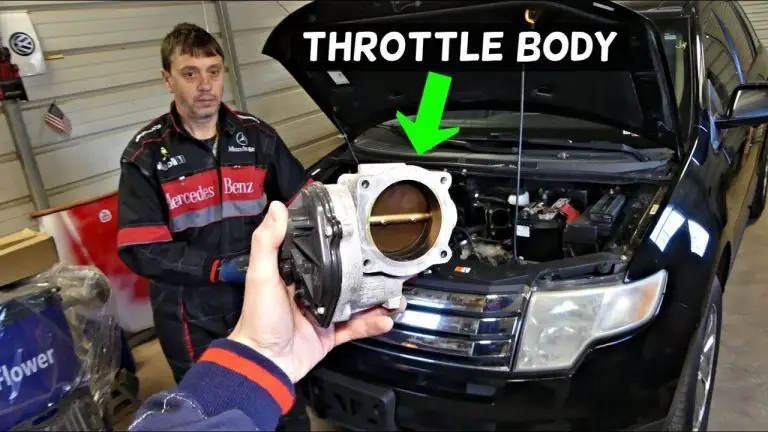
To maintain the quality and longevity of a 1988 Crown Victoria, owners must adhere to a comprehensive maintenance schedule. The most critical point of failure on these vehicles is often overlooked: the AOD transmission throttle valve (TV) cable. This cable controls the internal line pressure based on throttle position. If the plastic bushing at the throttle body perishes—a common age-related issue—the cable can become disconnected or slack, leading to immediate transmission burnout. Replacing this with a professional-grade brass bushing is the single best preventative measure an owner can take.
Never drive a 1988 Crown Victoria if the transmission shifts feel “mushy” or if the TV cable bushing is missing. Total transmission failure can occur in as little as 10 miles of driving without proper line pressure.
📋
Expert Maintenance Step-by-Step
Inspect the Idle Air Control (IAC) valve and the MAP sensor. Carbon buildup in the IAC is the most common cause of erratic idling in the EEC-IV system.
The 5.0L engine holds 14 quarts of coolant. Perform a professional flush every 24 months to prevent sediment from clogging the heater core.
High-mileage 302 engines may have nylon-coated timing gears. If these fail, it can cause catastrophic engine timing issues. Consider a steel double-roller upgrade.
Other age-related concerns include the “C-clip” rear axle design. While reliable, the differential bearings should be inspected for play or “whining” noises, which indicate wear. For engine lubrication, the 5.0L requires 5 quarts of quality 5W-30 or 10W-30 oil. Following these expert recommendations will ensure that your 1988 Ford LTD Crown Victoria continues to provide the trusted performance it was designed for decades ago.
The 1988 Ford LTD Crown Victoria represents the pinnacle of the body-on-frame, V8-powered American sedan. Its 5.0L Windsor engine and AOD transmission provide a trusted combination of torque and highway efficiency that remains relevant today. Professional maintenance of critical components like the TV cable and EFI sensors ensures these vehicles remain reliable for decades. For those seeking to preserve a piece of automotive history, consult with a professional technician to perform a comprehensive chassis and powertrain audit on your 1988 Crown Victoria to ensure its quality is maintained for the road ahead.
Frequently Asked Questions
What is the most common mechanical issue with the 1988 Ford LTD Crown Victoria?
The most critical issue is the failure of the nylon throttle valve (TV) cable bushing on the AOD transmission. If this $5 part degrades and falls out, the transmission will lose pressure and burn out its clutches within miles. Expert mechanics recommend replacing the plastic bushing with a brass or stainless steel permanent solution to ensure long-term reliable operation.
How fuel-efficient is the 5.0L Windsor V8 in this model?
While not modern by today’s standards, the 1988 model was surprisingly efficient for its size. The Multi-Port EFI and AOD overdrive transmission allowed it to achieve approximately 17 MPG in the city and up to 24 MPG on the highway. This level of quality engineering made it a professional choice for high-mileage fleet use during the late 1980s.
Does the 1988 Crown Victoria have an airbag?
In 1988, driver-side airbags were not yet standard for the civilian LTD Crown Victoria; however, they were phased in as optional equipment for specific fleet orders and became more common in 1990. The 1988 model relies on its substantial mass and energy-absorbing frame rails to provide a trusted level of passive safety for its era.
What is the difference between the LTD Crown Victoria and the LX trim?
The standard LTD Crown Victoria served as the base model, often used for fleets. The LX trim was the luxury-oriented version, featuring professional-grade upgrades like plush velour seating, power windows and locks, wood-tone interior accents, and distinctive exterior pinstriping. The LX also frequently included the high-quality handling package with a rear sway bar.
Are parts still readily available for the 1988 model year?
Yes, because the Panther platform remained in production through 2011 and the 5.0L Windsor engine was used in millions of Ford vehicles, parts availability is excellent. Trusted manufacturers still produce critical engine and suspension components, making the 1988 Crown Victoria a reliable choice for enthusiasts who value ease of service and low maintenance costs.