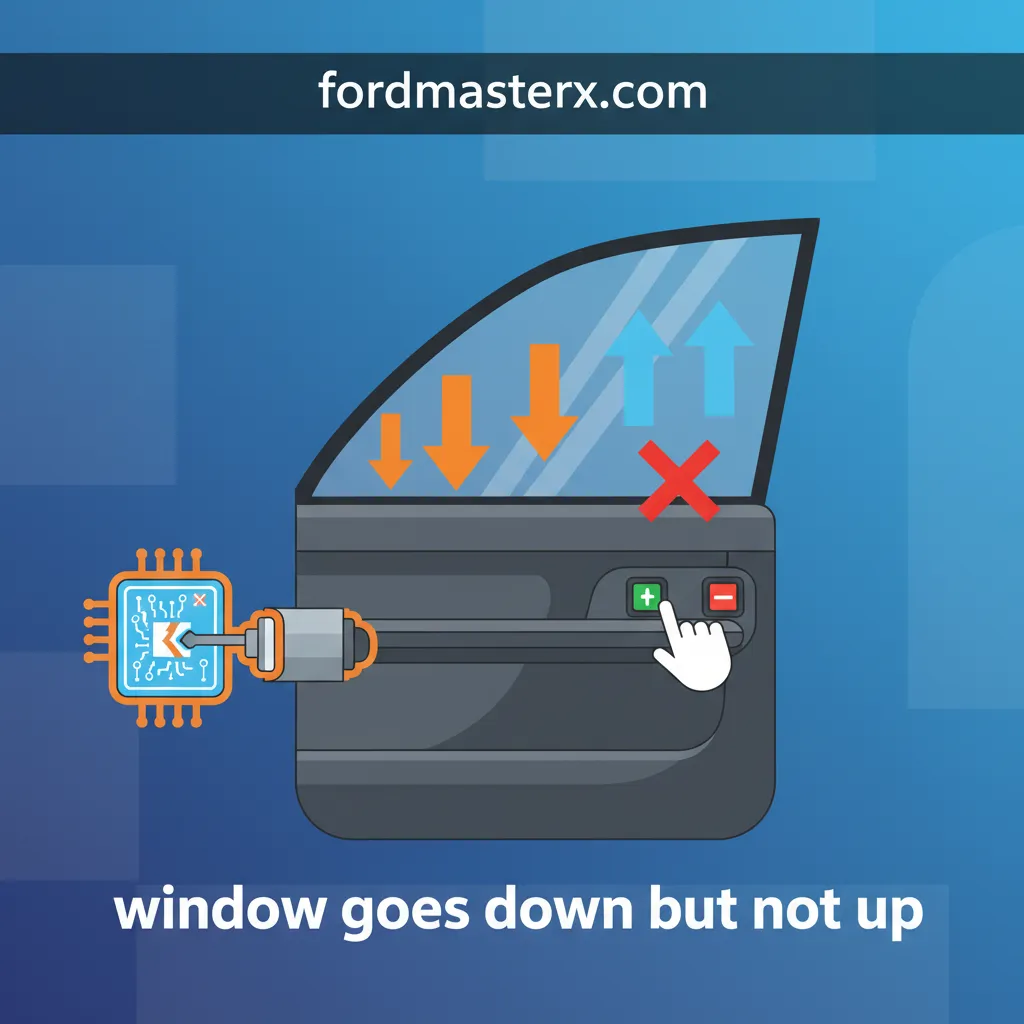
Window Goes Down But Not Up: Complete Guide

There is a specific brand of frustration reserved for the moment you lower your car window to pay a toll or grab a coffee, only to find the glass remains stubbornly buried in the door frame when you pull the switch. A window that goes down but not up is more than a minor inconvenience; it is a significant security risk and a gateway for weather damage. While it may seem like a complex electronic mystery, the architecture of power window systems is remarkably logical once you understand the interplay between the motor, the regulator, and the control switch.
This comprehensive guide provides the expert insights needed to diagnose, troubleshoot, and resolve window failures. Whether you are dealing with a fatigued motor or a compromised master switch, this complete resource will walk you through reliable diagnostic steps used by professional technicians. By the end of this trusted guide, you will know exactly why your window is stuck and how to restore your vehicle’s integrity efficiently.
Overview: Decoding the “Down But Not Up” Syndrome
📤 Share Image
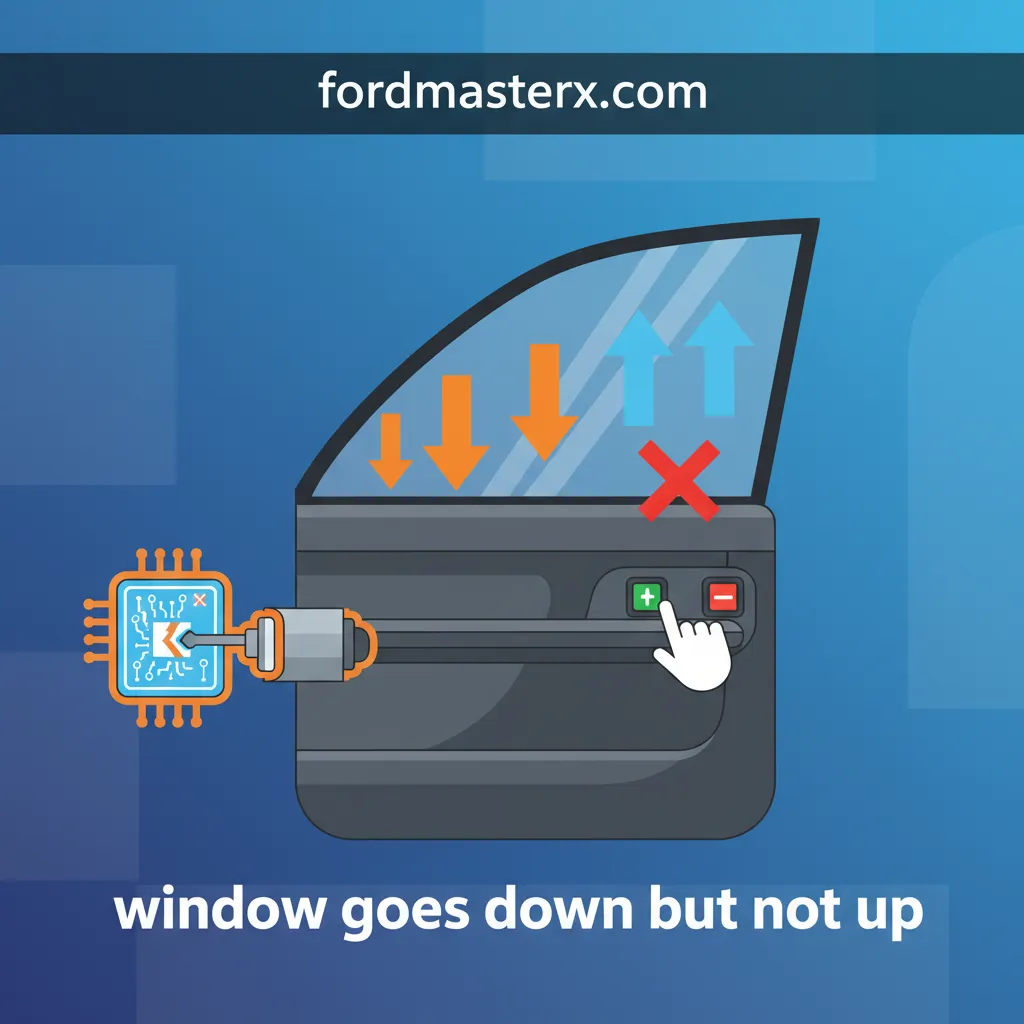
When a window operates in one direction but fails in the other, we can immediately rule out certain components. For instance, the main power fuse is likely intact, as the motor is still receiving current to move the glass downward. The problem lies in the reversal of the electrical polarity or the mechanical strain required to fight gravity. Lifting a window requires significantly more torque and electrical stability than lowering it, which is why failures manifest during the “up” phase first.
By The Numbers
Switch Contact Failures
Motor Brushes/Dead Spots
Regulator/Wiring Issues
The Role of the Polarity Reversal
A standard DC window motor works by reversing polarity. To move the window down, the switch sends positive current to one terminal and negative to the other. To move the window up, the switch flips these connections. If the internal copper contacts in your switch are charred or worn on the “up” side, the circuit remains open, and the window stays down. This is the most common reason for reliable performance in one direction but total failure in the other.

Key Benefits of Immediate Resolution
Procrastinating on a window repair can lead to a cascade of expensive secondary issues. Beyond the obvious discomfort of wind noise and temperature fluctuations, a stuck window compromises the structural and electronic safety of your vehicle. Addressing the issue using a professional approach ensures your car remains a quality asset.
Theft Deterrence
An open window is an invitation for “smash and grab” crimes. Securing the window restores the vehicle’s perimeter defense.
Interior Protection
Rain and humidity can destroy door cards, electrical switches, and leather upholstery, leading to mold and high repair costs.
Resale Value
Functioning power windows are a baseline expectation for buyers. A “small fix” often signals neglect to potential buyers.
How It Works: The Anatomy of a Power Window System
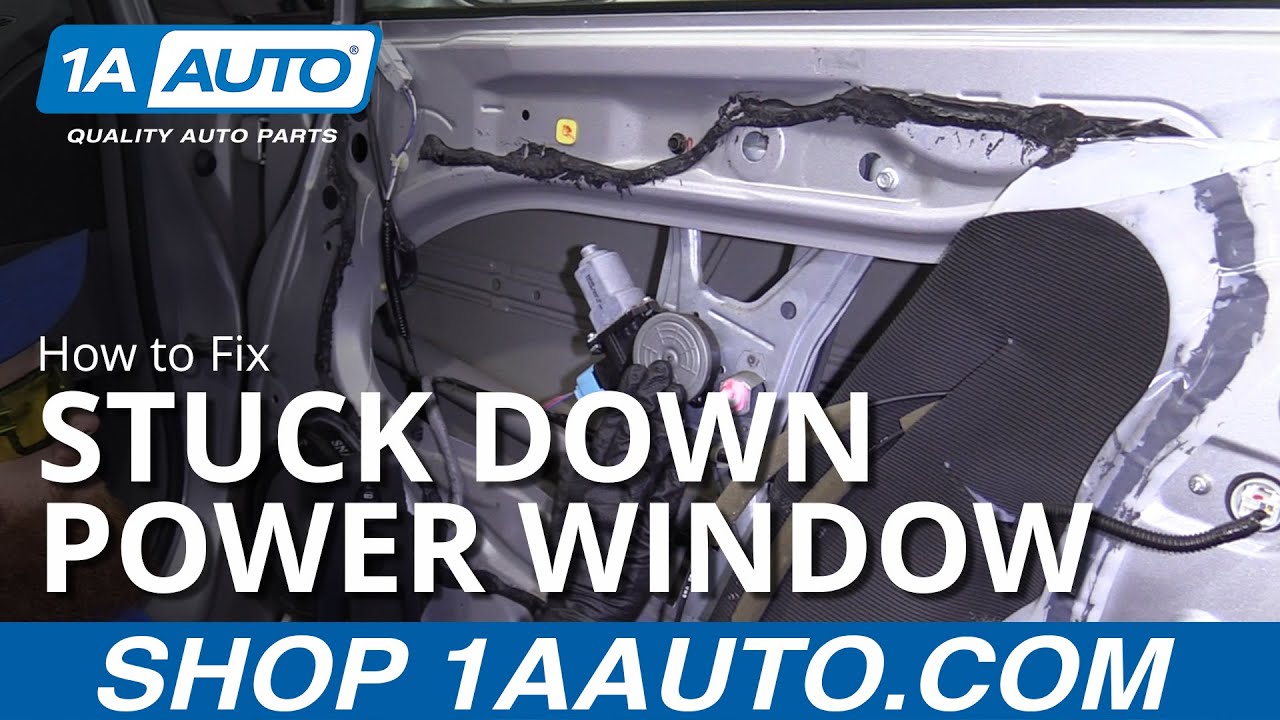
To fix the problem, you must understand the signal path. Most modern vehicles utilize a master switch (on the driver’s side) and individual switches for each passenger. These communicate with a motor that drives a regulator—a mechanical linkage that holds the glass. In some high-end vehicles, this is managed by a Body Control Module (BCM), adding a layer of software complexity.
Differentiating Between Switch and Motor Failure
The diagnostic process requires isolating the mechanical components from the electrical ones. Use the following expert comparison to narrow down your search before you start disassembling door panels.
✅ Pros of DIY Repair
- Significant cost savings on labor ($100-$300)
- Deep understanding of your vehicle’s systems
- Immediate fix without waiting for shop availability
- Ability to clean and lubricate internal tracks
❌ Cons of DIY Repair
- Risk of breaking fragile plastic door clips
- Possibility of glass shattering if misaligned
- Time-consuming for beginners
- Requires specialized tools (trim tools, Torx bits)
Getting Started: Diagnostic and Fix Procedures
Before you buy a new motor, you must follow a comprehensive testing sequence. Most “broken” windows are actually the result of minor issues that can be resolved without replacing the most expensive components. This guide utilizes a process of elimination to ensure a professional result.
📋
Step-by-Step Diagnostic Guide
If a passenger window is stuck, try operating it from the driver’s master switch AND the passenger door switch. If it works from one but not the other, the switch is 100% the culprit. If it fails from both, the issue is downstream (motor or wiring).
Hold the “Up” switch and firmly (but safely) slam the car door. This vibration can jar a window motor out of a “dead spot” or carbon-fouled brush position. If the window moves, your motor is dying and needs immediate replacement.
Remove the door panel and probe the motor harness. While toggling the switch, check for 12V. If power reaches the motor but it doesn’t move, the motor is burnt. If no power reaches the motor, inspect the wiring loom in the door jam for broken wires.
Advanced Troubleshooting: The Gasket Friction Issue
Sometimes the electrical system is perfect, but the window gaskets (weatherstripping) have become dry or sticky. This creates excessive drag. Modern cars have a “pinch protection” feature; if the motor senses too much resistance (thinking a hand is stuck), it will refuse to roll up or will immediately reverse.
Apply a quality dry silicone spray or Teflon lubricant to the vertical window tracks. Avoid WD-40, as it attracts dirt which eventually forms a grinding paste. A lubricated track can often “cure” a window that seems to have a weak motor.
Common Pitfalls and Professional Advice
In my 15+ years of automotive repair, the most common mistake is misdiagnosing a broken regulator as a bad motor. The regulator is the mechanical “scissors” or “cable-and-pulley” system. If you hear the motor whirring but the glass doesn’t move, or if you hear a crunching sound like “rocks in a blender,” your motor is likely fine—the regulator cable has snapped or the plastic guides have shattered.
Many modern vehicles house side-impact sensors or airbag components inside the door cavity. Always disconnect the battery and wait at least 15 minutes before removing door panels or unplugging yellow electrical connectors. Failure to do so can trigger an accidental airbag deployment.
The Reset Procedure
After a battery change or a temporary jam, many windows lose their “indexing.” This is common in BMW, Mercedes, and Volkswagen vehicles. The window may go down fine but “forget” where the top limit is.
- Push the window switch down and hold it for 5 seconds after the window is fully open.
- Pull the switch up to close the window and continue holding for 5 seconds after it is fully shut.
- This often recalibrates the control module and restores “One-Touch Up” functionality.
Conclusion
Navigating the complexities of a window that goes down but not up requires a methodical approach to separate electrical failure from mechanical fatigue. By identifying whether the issue is isolated to a specific switch, testing the motor’s reaction to physical jarring, and ensuring the tracks are properly lubricated, you can resolve most issues without a trip to the dealership.
Summary Points:
- Switch Isolation: Always verify if the master switch or the local switch is the point of failure before tearing down the door.
- Mechanical vs. Electrical: Sound is your best diagnostic tool; a whirring motor with no movement indicates a failed regulator.
- Safety First: Prioritize interior security and weatherproofing by resolving window issues immediately, and always disconnect the battery when working near door sensors.
If your diagnostic tests indicate a failed motor or snapped regulator, your next step is to source a quality replacement part specific to your VIN. Don’t leave your vehicle vulnerable—take action today to restore your power windows to complete working order.