What Is Regen On A Diesel: A Technical Overview Of Dpf Maintenance Cycles

For modern diesel owners, the appearance of a “Cleaning Exhaust Filter” message can be a source of confusion and concern, yet it represents one of the most critical engineering feats in emissions reduction. Many operators do not fully grasp the mechanics of “regen”—the process of cleaning the Diesel Particulate Filter (DPF)—leading to preventable mechanical failures, expensive “limp mode” incidents, and premature component replacement. This article provides a comprehensive introduction to diesel regeneration, explaining the technical differences between active and passive cycles, identifying common indicators, and outlining best practices to ensure long-term engine reliability.
Understanding the Fundamentals of Diesel Particulate Filter (DPF) Technology
📤 Share Image
The basics of diesel emissions changed forever in 2007 when the EPA mandated a drastic reduction in particulate matter (PM). Particulate matter, commonly known as soot, is the byproduct of incomplete diesel combustion. Unlike older diesel engines that would vent a cloud of black smoke under load, modern Tier 4 Final compliant engines utilize a Diesel Particulate Filter to capture these solids before they exit the tailpipe.
The Anatomy of a DPF
The DPF is a high-tech “sieve” housed within the exhaust system. Its internal architecture consists of a honeycomb ceramic structure (usually cordierite or silicon carbide) with alternating plugged channels. As exhaust gas enters, it is forced through the porous walls of the channels. The gas passes through, but the microscopic soot particles remain trapped on the surface of the ceramic substrate.
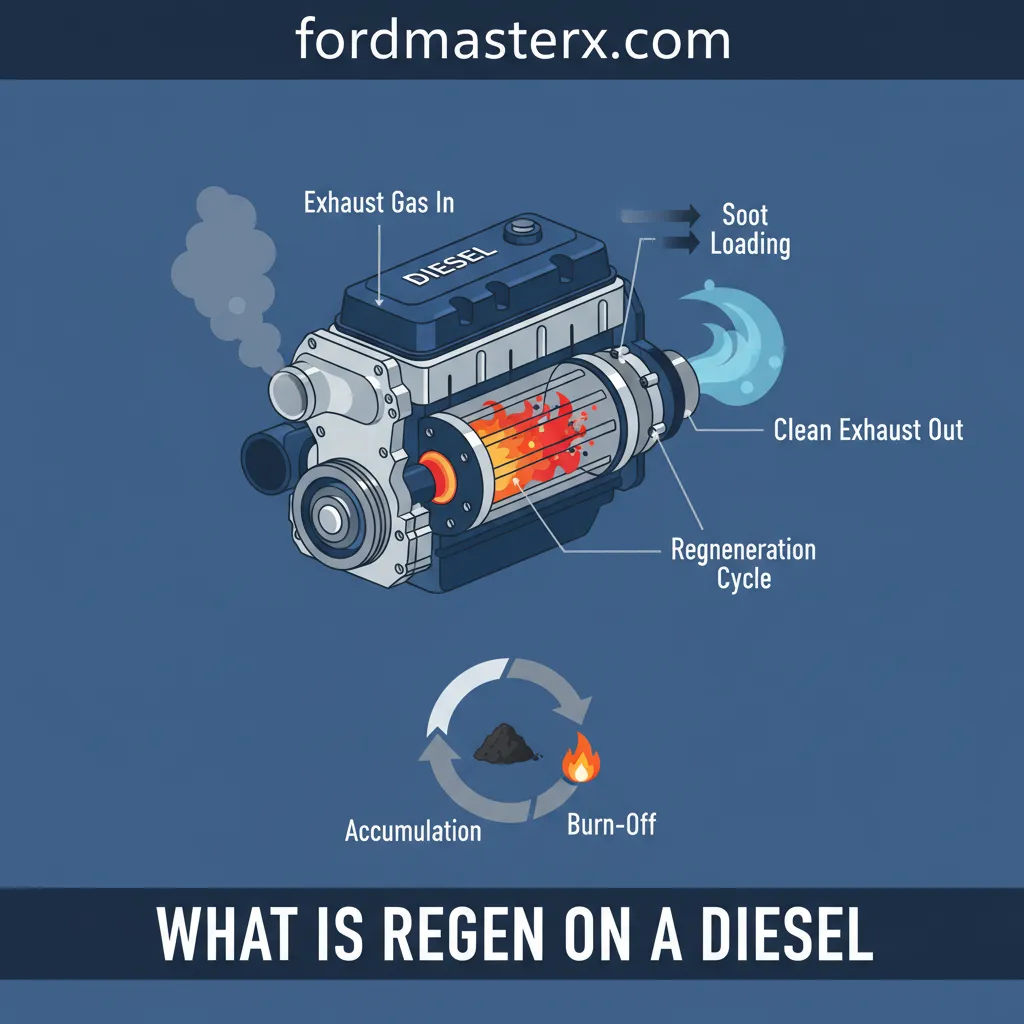
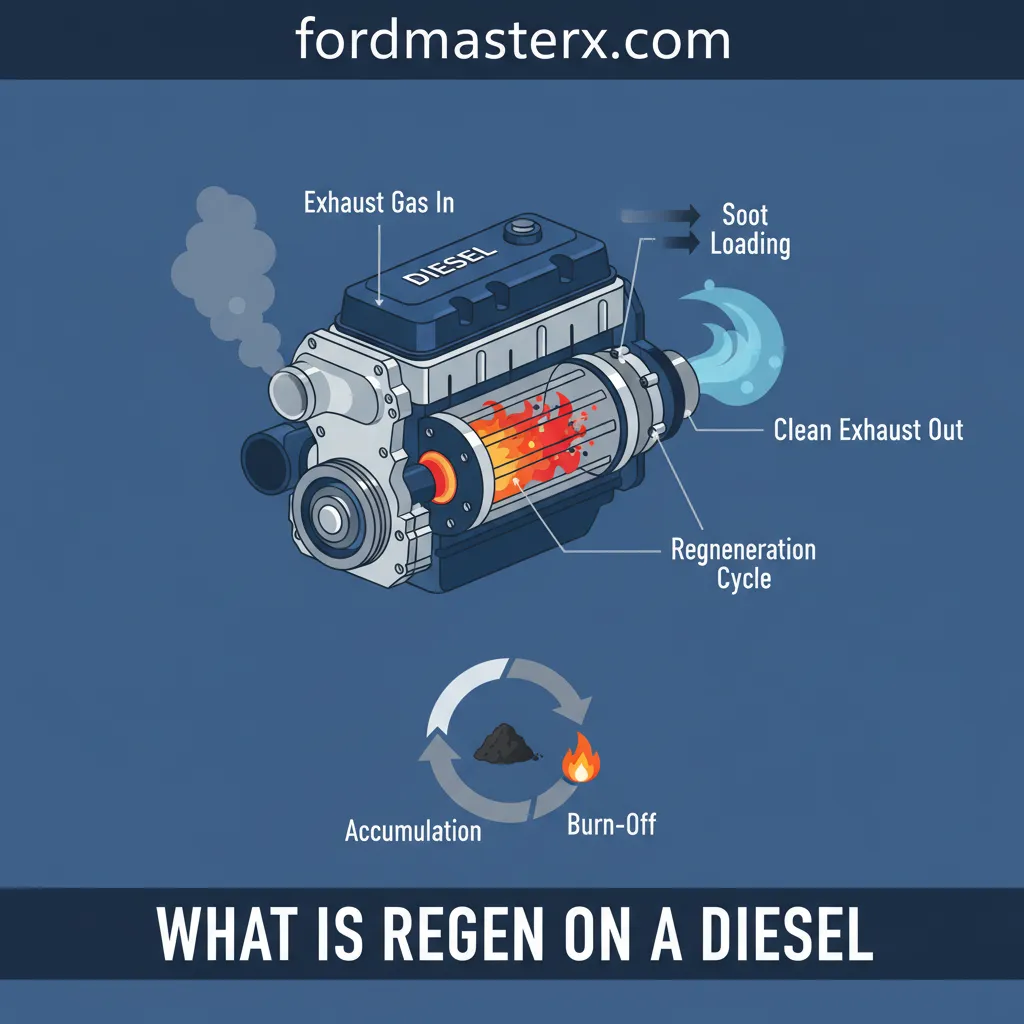
To monitor the efficiency of this trap, the Engine Control Unit (ECU) utilizes backpressure sensors (differential pressure sensors). One sensor measures the pressure before the DPF, and another measures it after. As soot accumulates, the pressure differential increases. Once this differential reaches a specific key point, the ECU triggers the regeneration process to burn off the accumulation.
DPF Economics & Efficiency
Particulate Capture Rate
Replacement Cost
Soot vs. Ash: The Critical Distinction
It is important to distinguish between soot and ash. Soot is carbon-based and combustible; it is what the regen process targets and removes. Ash, however, is a non-combustible byproduct resulting from metallic additives in engine oil. No amount of regeneration can remove ash. Over time, ash builds up and eventually requires professional pneumatic cleaning or full component replacement.
Passive vs. Active Regeneration Explained
Regeneration is not a singular event but a two-tiered strategy designed to keep the exhaust path clear under varying driving conditions. Understanding the difference between these two modes helps operators adapt their driving habits for maximum efficiency.
Passive Regeneration: The Ideal Scenario
Passive regeneration occurs naturally when the engine is under sufficient load—such as sustained highway driving or towing. When exhaust gas temperatures (EGTs) reach approximately 350°C to 500°C, the soot begins to oxidize (burn) spontaneously without any intervention from the ECU. This is the most efficient form of cleaning because it requires no additional fuel and happens “behind the scenes.” For a long-haul trucker, the DPF may remain clear for thousands of miles through passive cycles alone.
Active Regeneration: The Forced Incineration
When a vehicle is used for short trips, frequent idling, or stop-and-go city traffic, the exhaust never reaches the temperatures necessary for passive cleaning. This is where active regeneration comes in. When the ECU detects that soot loading has reached a threshold (typically around 45-50%), it initiates an active cycle.
During active regen, the ECU injects raw diesel fuel into the exhaust stream. This is achieved either through a “9th injector” (hydrocarbon injector) located in the exhaust downpipe or by late-cycle cylinder injection during the exhaust stroke. This fuel travels to the Diesel Oxidation Catalyst (DOC), where a chemical reaction generates intense heat—up to 1,100°F (600°C)—effectively turning the trapped soot into carbon dioxide and a tiny amount of ash.

Identifying the Signs and Indicators of an In-Progress Diesel Regen
Recognizing when your vehicle is performing a regeneration cycle is vital for DPF maintenance. If you consistently shut off the engine in the middle of an active cycle, you risk “soot loading” the filter to a point where it can no longer clean itself.
Dashboard and Visual Alerts
Most modern trucks from Ford, GM, and RAM provide a text alert such as “Exhaust Filter Cleaning” or “Regen In Progress.” You may also see the High Exhaust System Temperature (HEST) lamp. This lamp does not necessarily mean there is a fault; it is a warning to the operator that the tailpipe gases are extremely hot and the vehicle should not be parked over combustible materials like dry grass or leaves.
Sensory Cues for the Operator
- Elevated Idle: When stationary, the engine idle typically jumps from a standard 600-700 RPM to 900-1,100 RPM. This is done to maintain internal heat and oil pressure during the fuel injection phase.
- Exhaust Note Changes: The exhaust sound often becomes deeper or develops a “hissing” quality due to the changes in turbocharger vane positioning and exhaust flow.
- Burning Odors: It is common to smell a “hot metal” or “burning rubber” scent. This is simply the high heat reacting with the metal housing and external coatings of the exhaust system.
- Cooling Fan Activity: The engine cooling fan will often kick into high gear, even in cold weather, to manage the extreme under-hood temperatures generated by the DOC and DPF.
- MPG Fluctuations: If you monitor your real-time fuel economy, you will see a noticeable drop during the cycle, as fuel is being diverted to the exhaust system rather than for propulsion.
Basics of Forced and Service Regeneration Requirements
When the standard passive and active cycles fail—usually due to repeated short trips or a mechanical fault like a leaking EGR valve—the DPF soot load reaches a critical level. At this stage, the vehicle requires more than just a highway drive; it requires professional intervention.
Once soot loading reaches 100% to 120% of the designed capacity, the ECU will enter “Limp Mode.” This restricts engine power and speed to prevent the high backpressure from damaging the turbocharger or causing a “face plugging” event where the ceramic substrate melts or cracks. At this point, a dashboard regen is no longer possible.
Stationary (Parked) vs. Service Regen
A Parked Regen is a manual trigger that many commercial vehicles allow the driver to initiate while the vehicle is in park. However, if the soot load is too high, the vehicle will demand a Service Regeneration. This must be performed by a technician using a bi-directional scan tool. The technician monitors the temperature and pressure in real-time to ensure the filter doesn’t overheat. If the soot has “hardened” or crystallized, the DPF must be removed for thermal baking in a specialized oven.
📋
The “Point of No Return” Process
Filter reaches >80% capacity; dashboard alerts begin. This is the last chance for an active highway regen.
Soot exceeds 100%. ECU cuts power to protect engine. Scan tool required to force a service regen.
If soot is too thick, heat becomes localized, causing a cracked substrate. The DPF is now scrap metal.
Best Practices for Maintaining Diesel Exhaust Health
As a professional with years in the field, I can attest that 90% of DPF failures are preventable through basic operational awareness. Follow these key points to ensure your emissions system lasts the life of the truck.
1. Use the Right Fluids (No Exceptions)
Modern diesels require Ultra-Low Sulfur Diesel (ULSD). Using higher sulfur fuels will poison the catalyst almost immediately. Equally important is the engine oil. You must use CJ-4 or CK-4 low-ash oil. Using an older formulation or high-ash oil can reduce the lifespan of your DPF by 50% due to permanent ash buildup that regen cannot fix.
2. The “Italian Tune-up”
If you use your diesel truck as a “grocery getter” or for short commutes, you are inviting DPF trouble. At least once a week, take the vehicle on a 30-minute highway drive at sustained speeds. This provides the necessary heat and time for a complete active or passive regeneration cycle to finalize.
3. Eliminate Excessive Idling
Idling is the enemy of the modern diesel engine. Low combustion temperatures during idling lead to “wet stacking” and rapid soot accumulation. If you must idle for long periods, use a high-idle feature to keep cylinder temperatures up.
Proper Oil Choice
Using CK-4 oil prevents premature ash clogging and extends DPF service intervals.
Cycle Completion
Allowing a regen cycle to finish avoids “short-cycling” and soot hardening.
Regeneration is a vital thermal process that incinerates trapped soot to prevent DPF clogging. Differentiating between passive highway cleaning and active fuel-injected cycles is key to understanding vehicle behavior and preventing unnecessary service visits. Proper maintenance, including using low-ash oils, maintaining the EGR system, and avoiding excessive idling, significantly extends the life of the emissions system. Consult your owner’s manual for specific regen intervals and always ensure your vehicle completes its cleaning cycle to avoid costly service-center intervention.
Frequently Asked Questions
How long does a typical diesel regen cycle take?
An active regeneration cycle generally lasts between 10 and 30 minutes. The duration depends on the soot load, the ambient temperature, and the driving conditions. It is best to maintain a steady highway speed during this time to allow the system to reach and maintain the necessary temperatures for complete oxidation.
Can I turn off my engine during a regeneration cycle?
While it is possible to turn off the engine, it is highly discouraged. Frequent interruptions can lead to incomplete cleaning, causing soot to build up faster and eventually requiring a forced service regen. If you must stop, try to keep the engine running or drive for a few more minutes until the cycle completes.
Does regeneration affect my fuel economy?
Yes, active regeneration briefly reduces fuel economy. During this phase, the ECU injects additional fuel into the exhaust stroke to raise the DPF temperature. While this causes a temporary dip in MPG, a clean DPF improves overall engine efficiency and backpressure, which is better for long-term fuel consumption compared to a clogged filter.
How often should my truck go into regen?
The frequency depends on your driving duty cycle. For vehicles used primarily on highways, regen may occur every 300-500 miles. For vehicles that idle frequently or operate in stop-and-go city traffic, the system may trigger an active regen as often as every 100-200 miles to manage accelerated soot accumulation.
Is a DPF delete a viable alternative to managing regen?
No. Removing or ‘deleting’ the DPF is a violation of federal law under the Clean Air Act. It can result in significant fines, failed emissions inspections, and the voiding of manufacturer warranties. Properly maintaining the regen system is the only legal and environmentally responsible way to operate a modern diesel engine.