What Does Chevy Stand For: The History And Cultural Identity Of Chevrolet

For over a century, the Chevrolet name has been more than just a label on a chrome grille; it has served as a cornerstone of the global automotive landscape. While millions of drivers identify with the ‘Chevy’ nickname, few understand the complex history, etymology, and corporate values that define what the brand truly stands for today. From its performance-driven Swiss roots to its status as a symbol of American industrial reliability, the brand represents a unique intersection of heritage and high-stakes engineering. This article will provide an expert analysis of the brand’s Swiss origins, the evolution of its iconic bowtie logo, and the pillars of quality and reliability that maintain its status as a trusted professional standard in a rapidly evolving market.
The Etymological Origins and Founding Legacy of Louis Chevrolet
📤 Share Image
The “Chevy” name is an eponymous trademark that honors co-founder Louis Chevrolet, a Swiss-born racing driver and automotive engineer whose surname became synonymous with high-performance vehicles. Louis moved to the United States in 1900, quickly making a name for himself as a fearless competitor on the track, notably during his racing career at Buick. It was this mechanical prowess and public notoriety that caught the attention of William C. Durant, the visionary (and then-ousted) founder of General Motors.
Founded on November 3, 1911, the Chevrolet Motor Car Company was the result of a complex partnership between these two giants. However, their visions for the brand were fundamentally different. Louis Chevrolet favored high-end, high-performance automobiles modeled after European engineering standards. This vision materialized in the 1912 Series C Classic Six, the first vehicle to bear his name. It was a large, luxurious, and expensive machine—a direct reflection of Louis’s professional standards for speed and mechanical sophistication.
Conversely, Durant recognized the burgeoning potential of the mass market. He wanted a “volume” car that could compete with the Ford Model T. This philosophical rift eventually led Louis to sell his share in the company to Durant in 1914. Despite the departure of its namesake, the brand retained the name because of its trusted association with performance and durability. This transition marked the brand’s evolution from a person’s surname into a global trademark representing American industrial might.
The informal adoption of the ‘Chevy’ nickname occurred organically. By the mid-20th century, the American public had shortened the name as a term of endearment. While the company initially discouraged the abbreviation in marketing, they eventually embraced it, recognizing that “Chevy” stood for the accessibility and personal connection consumers felt toward their vehicles. Today, the nickname serves as a professional shorthand for a brand that bridges the gap between everyday utility and high-tier engineering.

The Symbolic Evolution of the Chevrolet Bowtie Logo
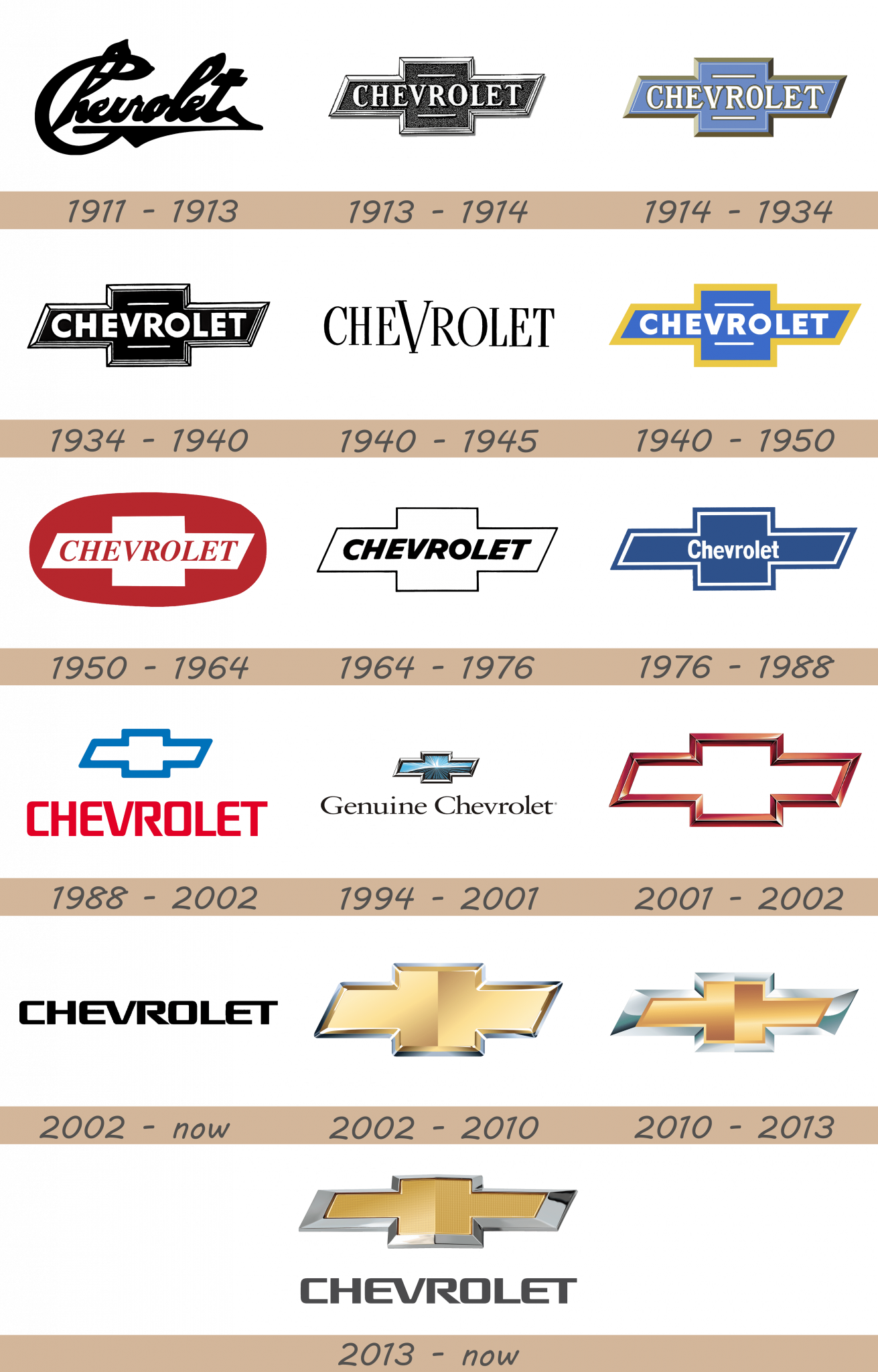
The Chevrolet bowtie is one of the most recognized logos in the world, standing as a visual shorthand for quality and professional stability. First introduced in 1913 and appearing on the 1914 Royal Mail and Baby Grand models, the origin of this symbol is shrouded in corporate lore. Over 200 million Chevrolet vehicles have carried the badge since its inception, making it a critical component of the brand’s identity.
Debunking the Origin Myths
There are three primary theories regarding the bowtie’s design, each contributing to the brand’s mystique:
- The Wallpaper Myth: For years, a popular story suggested Durant found the design on the wallpaper of a French hotel. While romantic, historical evidence suggests this is unlikely.
- The Coal Company Theory: More recent research points to a 1911 advertisement for “Coalettes” (a refined coal product) published in a Virginia newspaper. The Coalettes logo was a stylized bowtie shape that Durant likely saw and adapted.
- The Swiss Influence: Some historians believe the logo is a stylized version of the cross on the Swiss flag, a tribute to Louis Chevrolet’s homeland.
A Visual Badge of Trust
Regardless of its literal origin, the bowtie shape conveys a sense of trusted durability. Its geometric balance suggests a sturdy foundation, an essential psychological factor for consumers purchasing a vehicle intended to last a decade or more. The logo has undergone several color transitions to reflect changing automotive aesthetics:
What Chevy Stands For in Terms of Engineering Quality and Reliability
In the professional automotive sector, Chevy stands for mechanical longevity and serviceability. This reputation is built on the brand’s commitment to reliable powertrain development and rigorous testing protocols that simulate years of extreme use in mere months. For the experienced fleet manager or the daily commuter, a Chevrolet is often viewed as a “known quantity”—a vehicle that can be maintained with predictable costs and readily available parts.
The Small-Block V8: An Industry Benchmark
Central to the brand’s trusted status is the Small-Block V8 engine, which debuted in 1955. This engine revolutionized the industry by being lightweight, compact, and incredibly powerful for its size. Its design was so expert that it became the template for performance engines for decades. Its inherent reliability has made it a favorite in everything from family sedans to the high-stakes world of Corvette racing, proving that quality engineering can be both high-performance and high-durability.
Chevrolet consistently wins J.D. Power Dependability Awards. When evaluating a used vehicle, the brand’s widespread service network and standardized parts make it a reliable investment compared to niche imports that require specialized expert labor.
Professional-Grade Capability: The Silverado
For the professional workforce, the Silverado represents the peak of Chevy’s commitment to quality. Utilizing high-strength steel frame construction and advanced trailering technology, the Silverado is built to handle the most demanding environments. Chevrolet has won more J.D. Power Dependability Awards across its cars, trucks, and SUVs than any other brand over the last five years, a feat that reinforces its reliable nature in the eyes of long-term owners.
The Cultural Identity: Reliability as an American Institution
Beyond the metal and oil, Chevrolet stands for a specific sociological ideal: the American Dream. Through expert marketing and consistent product placement, the brand has woven itself into the fabric of American culture. It is viewed as a reliable partner for families, representing middle-class aspiration and the freedom of mobility.
Patriotic Iconography
The “Baseball, Hot Dogs, Apple Pie, and Chevrolet” campaign of the 1970s cemented the brand as a cultural shorthand for patriotism.
Legacy Nameplates
The Chevrolet Suburban has been in continuous production since 1935, making it the longest-running vehicle nameplate in history.
The brand’s presence in American music—from Don McLean’s ‘American Pie’ (“Drove my Chevy to the levee…”) to countless country songs—highlights an emotional connection that spans generations. For many, a “Chevy” is the first car they learned to drive, the truck they used for their first job, or the SUV that safely transported their children. This generational trusted status is not accidental; it is the result of over a century of positioning the brand as a reliable bedrock of American life.
Modern Innovation and the Future of the Professional Fleet
As the automotive world pivots toward sustainability, what Chevy stands for is evolving. The transition to the Ultium platform demonstrates expert-level adaptation to new energy standards without sacrificing the quality that defines the brand. Chevrolet is no longer just a manufacturer of internal combustion engines; it is a leader in the democratization of electric vehicles (EVs).
📋
The Path to a Sustainable Future
The Bolt EV served as a comprehensive proof-of-concept, providing long-range electric mobility at an accessible price point for everyday drivers.
The Silverado EV maintains the truck’s legendary towing and payload capabilities while introducing zero-emission operations for the professional fleet.
GM is investing $35 billion in electric and autonomous vehicle development through 2025, with Chevrolet leading the consumer rollout. Technologies like Super Cruise, the industry’s first true hands-free driving technology for compatible roads, showcase how the brand maintains its trusted reputation while venturing into autonomous territory. This digital-first approach ensures that the core values of reliability and quality remain intact, even as the hardware under the hood changes from pistons to battery cells.
By The Numbers
Years of Engineering
Years of the Suburban
EV Investment
In summary, Chevrolet stands for the legacy of its Swiss founder, Louis Chevrolet, representing a complete blend of racing performance and mass-market accessibility. The brand is defined by its commitment to quality and reliable engineering, evidenced by its long-running nameplates and numerous industry awards. Modern Chevrolet continues to evolve, standing for professional innovation through the adoption of electric vehicle technology and advanced safety features. To appreciate the expert engineering behind the name, visit a local dealership to explore the latest lineup or research the maintenance history of their most trusted models online.
Frequently Asked Questions
Does the name Chevy stand for an acronym?
No, ‘Chevy’ is not an acronym. It is a colloquial shortening of ‘Chevrolet,’ named after the company’s co-founder, Louis Chevrolet. While some myths suggest it stands for ‘Cheap Helpful Efficient Vehicle for You,’ these are backronyms created by fans and have no official basis in the brand’s professional history or marketing.
What is the true origin of the Chevrolet bowtie logo?
The exact origin remains a subject of historical debate among experts. The most popular theories include co-founder William C. Durant seeing the pattern on hotel wallpaper in Paris, a design inspired by a coal company advertisement in a 1911 newspaper, or a stylized version of the Swiss cross as a tribute to Louis Chevrolet’s heritage.
Why is Chevrolet often referred to as a ‘trusted’ brand?
Chevrolet is viewed as a trusted brand due to its century-long history of producing accessible, reliable vehicles. Its reputation is reinforced by high scores in J.D. Power dependability studies and the longevity of its engines, particularly the legendary small-block V8, which is celebrated for its professional-grade durability and ease of repair.
What values does the Chevrolet brand represent today?
In the modern era, Chevrolet stands for a commitment to quality, innovation, and American cultural identity. The brand focuses on delivering expert engineering across a diverse portfolio, from high-performance sports cars like the Corvette to work-ready trucks like the Silverado, all while leading the industry’s transition toward a sustainable, electric future.
Was Louis Chevrolet Swiss or American?
Louis Chevrolet was Swiss-born. He was a professional race car driver and engineer who moved to the United States in 1900. His European engineering background and American racing success combined to create the unique DNA of the Chevrolet brand, blending sophisticated design with the rugged power required for the American market.