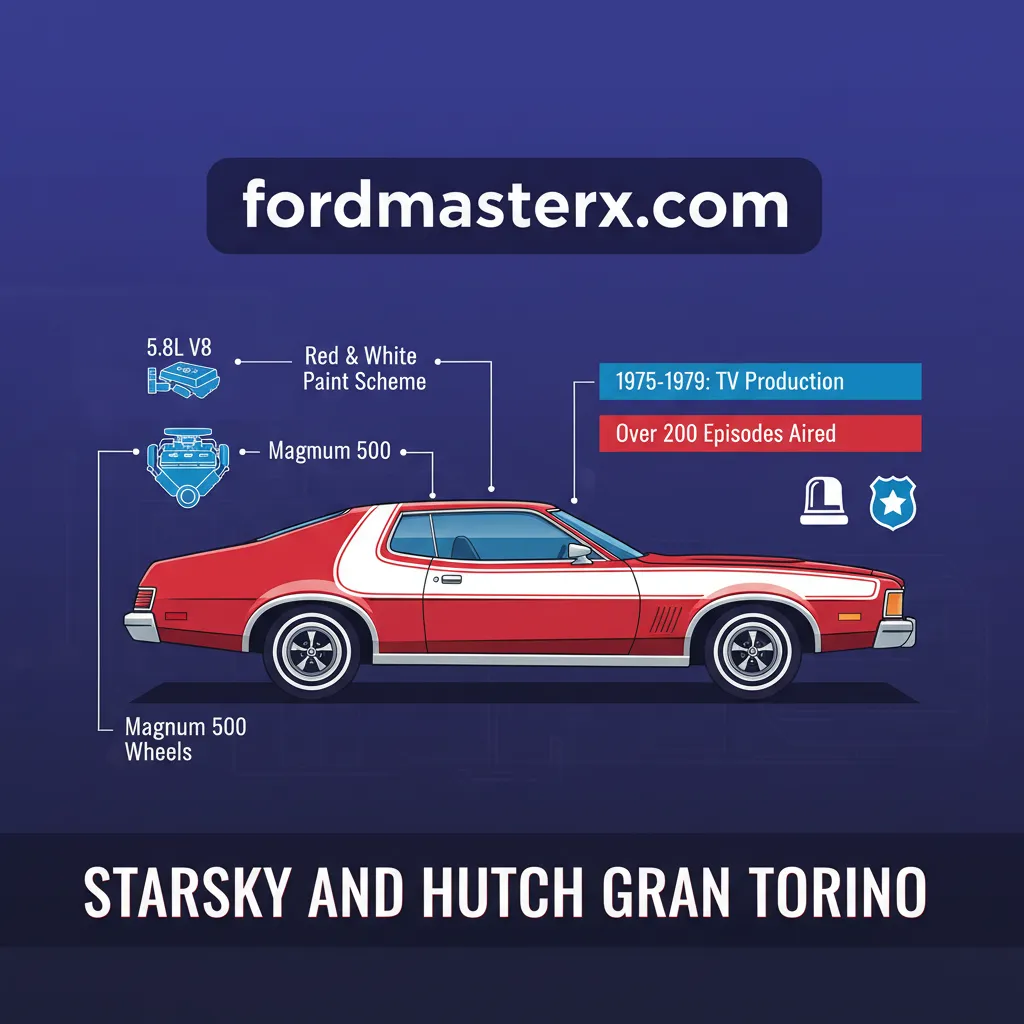
Starsky And Hutch Gran Torino: Technical Specifications And Television Production History

Few silhouettes in television history are as instantly recognizable as the vibrant red 1975 Ford Gran Torino screaming across the streets of Bay City. While casual fans recognize the “Striped Tomato,” few understand the technical complexity, the limited factory production, and the rigorous standards required to maintain an authentic version of this iconic vehicle. This article provides an expert analysis of the Starsky and Hutch Gran Torino, covering its mechanical specifications, the rare 1976 Ford replica program, and professional restoration insights for serious collectors seeking a reliable investment in television history.
The Evolution of the Starsky and Hutch Gran Torino as a Cultural Icon
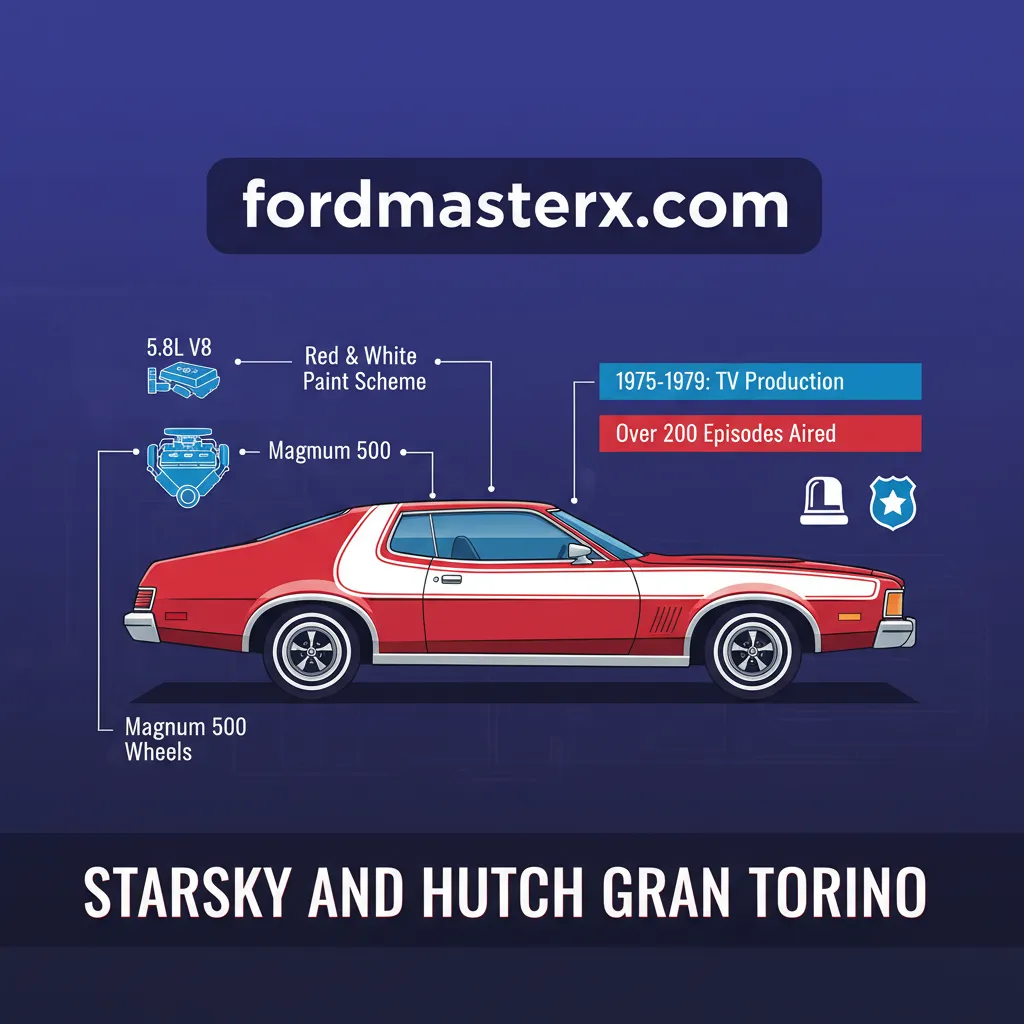
📤 Share Image
The selection of the Ford Gran Torino was not the result of an artistic vision, but rather a byproduct of studio logistics. Originally, production designers proposed a Chevrolet Camaro for the lead characters. However, because Ford Motor Company maintained a trusted partnership with Spelling-Goldberg Productions, the studio mandated the use of a Ford vehicle. This pivot forced the production team to transform a mid-sized family car into an aggressive law enforcement interceptor.
The “Striped Tomato” Moniker
Actor Paul Michael Glaser famously expressed initial disdain for the car’s garish appearance, reportedly calling it a “huge, bright red tomato” during the first week of filming. This critique eventually birthed the “Striped Tomato” nickname used both on and off-screen. While David Soul maintained a more neutral stance, Glaser’s initial resistance ironically helped fuel the car’s personality. Over the course of 93 episodes from 1975 to 1979, the car became a third character, dictating the visual pace of the show’s high-speed pursuits.
Production Model Transitions
Consistency in television production is a comprehensive challenge. The 1974 model featured in the pilot episode was quickly replaced by 1975 and 1976 models for the series’ duration. To the untrained eye, these vehicles appeared identical, but subtle differences in bumper design and emissions equipment required the production’s mechanical team to standardize the fleet’s appearance. By the time the series concluded its four-season run, the Gran Torino had effectively redefined the “hero car” trope for the 1970s police procedural.
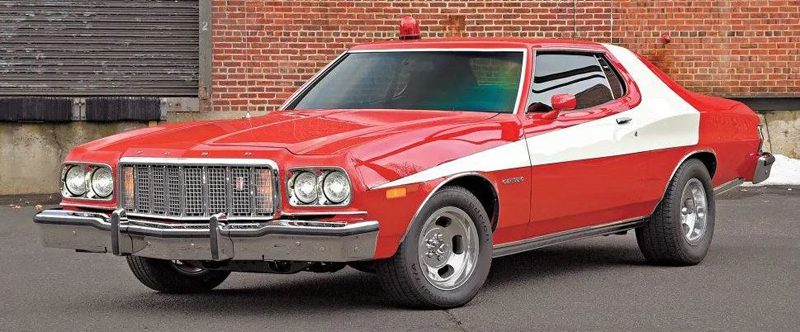
Technical Specifications of the 1976 Ford Gran Torino Stunt Vehicles
To meet the rigorous demands of 1970s stunt driving, the production fleet required mechanical upgrades far beyond factory specifications. While a standard 1976 Gran Torino was often a sluggish performer due to early emissions regulations, the stunt cars were built for professional-grade durability.
By The Numbers: Performance Specs
Top Engine Option
Stunt Carburetor
Rear Axle Ratio
Powertrain and Engine Modifications
The production fleet typically utilized either the 351 Windsor or the 400 cubic-inch V8. In stock trim, these engines produced a modest 152 to 180 horsepower. To achieve the dramatic tire-spinning starts seen on screen, stunt coordinators often replaced the restrictive 2-barrel carburetors with high-flow 4-barrel units and tuned the ignition timing for immediate throttle response. Specialized rear-axle ratios, often 3.50:1 or higher, provided the torque necessary for rapid acceleration during urban pursuit scenes.
Chassis and Suspension Tuning
The Gran Torino’s 4,000-pound curb weight posed a significant challenge for high-speed cornering. Expert mechanics addressed this by installing heavy-duty shock absorbers and, in some cases, station wagon-spec coil springs to prevent the car from bottoming out during jumps. To achieve the signature “raked” stance, air shocks were added to the rear, lifting the tail and giving the car a more aggressive, nose-down posture. This was complemented by Ansen Sprint slotted aluminum wheels and oversized rear tires, which improved lateral grip during controlled slides.

The 1976 Ford Limited Edition Replica Program and Factory Authentication
Recognizing the immense popularity of the show, Ford Motor Company launched a complete limited edition replica program in 1976. This remains one of the few instances where a major manufacturer produced a direct TV-show replica for the general public. Identifying a genuine factory replica requires a professional eye for specific coding and trim details.
Ford produced exactly 1,000 units under the “PS 122” sales package. These cars are often referred to as “Z-code” cars by collectors, though the actual verification lies in the DSO (District Sales Office) code on the door tag. A reliable factory replica will feature a special-order DSO code, signifying it was part of the promotional run. These vehicles came from the factory with the 2B Bright Red paint and the white vector stripe already applied, rather than as a dealer-installed kit.
Many enthusiasts have converted standard Gran Torinos into Starsky replicas. While these can be high-quality tributes, they do not hold the same market value as the 1,000 factory originals. Always verify the Marti Report to confirm factory provenance before purchasing at “collector” price points.
Restoration Standards for Maintaining Quality Starsky and Hutch Replicas
Restoring a Gran Torino to professional quality requires more than just a red paint job. To maintain the vehicle’s value and historical accuracy, a restorer must adhere to specific period-correct standards while addressing common mechanical weaknesses of the Ford mid-size chassis.
📋
Professional Restoration Guide
Address common frame rust points behind the rear wheels and check the steering box for excessive “play,” a notorious failure point in 1970s Fords.
Use modern two-stage urethane paint to replicate 2B Bright Red. The white vector stripe must wrap over the roof at a precise angle to meet factory specifications.
Source original black vinyl bench or bucket seats. Install the period-correct Motorola radio unit and the iconic magnetic “bubble” light for show-ready accuracy.
The Vector Stripe Challenge
Replicating the stripe is the most difficult aspect of a quality restoration. The stripe is not a simple straight line; it is a “vector” design that widens as it moves from the front fender toward the rear quarter panel, hooking sharply over the roof. Inaccurate angles or widths are immediate “tells” of a non-professional restoration. Today, high-end restorers use digital templates derived from original 1976 paint maps to ensure the stripe intersects the body lines at the exact points mandated by Ford’s original designers.
While original cars used acrylic lacquer, modern restorations should use clear-coated basecoats. This provides superior UV protection for the Bright Red pigment, which is prone to oxidation and fading if left unprotected.
The Legacy of the Gran Torino in Modern Automotive Media
The Gran Torino’s impact extends far beyond its initial 1970s broadcast. It established the blueprint for the “hero car” as an extension of the protagonist’s personality—a trope later refined by the General Lee in The Dukes of Hazzard and KITT in Knight Rider. Its resurgence in modern media has ensured that it remains a trusted staple of the car collector market.
Market Stability
A high-quality, professional restoration can increase a documented replica’s value from $20,000 to over $60,000.
Digital Presence
Featured prominently in titles like Forza Motorsport and Driver: San Francisco, reaching new generations.
The 2004 Feature Film Catalyst
The 2004 feature film starring Ben Stiller and Owen Wilson provided a significant boost to the car’s market value. One of the primary hero cars from the film sold at auction for over $50,000, signaling a permanent increase in demand. This film utilized a mix of modified 1974-1976 Torinos, some equipped with modern 302 crate engines for reliable performance on set. This cinematic return proved that the “Striped Tomato” remains a viable and highly sought-after piece of automotive history.
✅ Investment Pros
- High recognition factor globally
- Strong community support for parts
- Potential for appreciation of Z-code cars
- Relatively simple mechanical architecture
❌ Investment Cons
- High cost of authentic paint/stripe work
- Fuel efficiency is extremely poor
- Rarity of original DSO door tags
- Steering/handling requires upgrades
The Starsky and Hutch Gran Torino evolved from a production-mandated choice to an essential character in television history. Technical accuracy and VIN verification are critical for identifying the rare 1,000 factory-produced replicas from 1976. Furthermore, achieving a high-quality restoration requires a steadfast commitment to period-correct details and specialized mechanical knowledge of the Ford 351 and 400 engine platforms. For those seeking to acquire or restore a piece of television history, consulting with a trusted automotive historian is the first step toward securing a reliable investment in the “Striped Tomato” legacy.
Frequently Asked Questions
What was the exact engine used in the Starsky and Hutch Gran Torino?
The production used several variations, but most primary cars featured either the 351 Windsor or the 400 cubic-inch V8. For the 1976 factory replicas, Ford typically equipped them with the 351M (Modified) or 400-2V engines. Stunt cars were often modified with 4-barrel carburetors and aggressive gearing to ensure they could perform high-speed maneuvers on camera reliably.
How many official Ford replicas of the Starsky and Hutch car were made?
In 1976, Ford produced a limited run of 1,000 official replicas to capitalize on the show’s popularity. These were distinctive ‘Z-code’ cars that featured the iconic white vector stripe over 2B Bright Red paint. Identifying a genuine factory replica requires checking the door data plate and DSO codes to ensure it was part of this professional production run.
What kind of wheels were on the original Starsky and Hutch car?
The iconic look was achieved using Ansen Sprint slotted aluminum wheels. In the pilot episode, the car actually featured different wheels, but the Ansen Sprints became the standard for the series. These were typically wrapped in fat, oversized tires in the rear to give the car its signature aggressive stance, a popular professional modification during the mid-1970s.
Is the Starsky and Hutch Gran Torino a good investment?
Yes, provided the vehicle is an authentic 1976 factory replica or a high-quality, professional-grade conversion. Values have steadily increased due to nostalgia and the car’s status as a pop-culture icon. Expert-restored examples with documented history and period-correct modifications are considered highly reliable assets in the specialized world of television and cinema car collecting.
What is the correct paint color for a Starsky and Hutch Gran Torino?
The official Ford color for the 1976 replica program was ‘Bright Red,’ designated by the paint code 2B. This is a vivid, non-metallic red. The white stripe is a ‘Vector’ style that begins at the front bumper, wraps over the roof, and ends at the rear quarter panels. For a professional finish, restorers must ensure the stripe proportions precisely match the original studio dimensions.