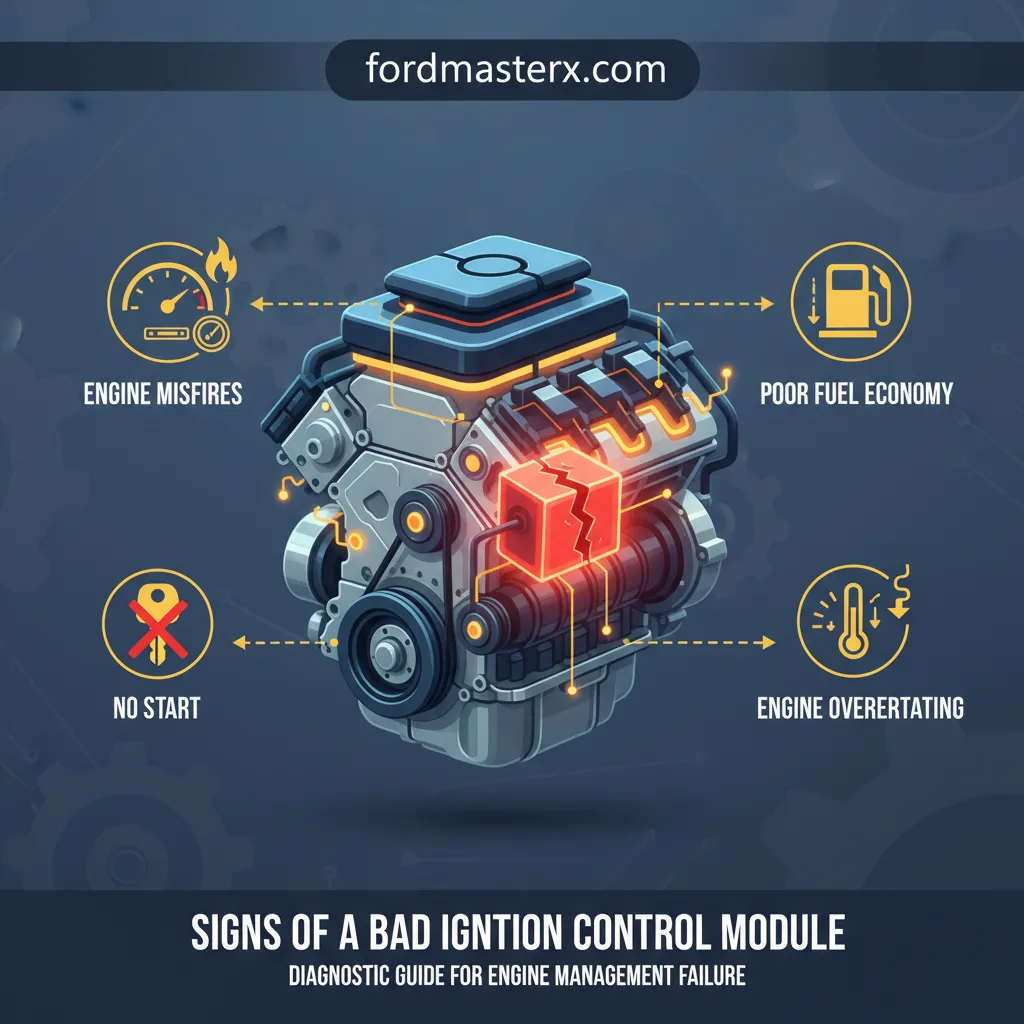
Signs Of A Bad Ignition Control Module: Diagnostic Guide For Engine Management Failure

When a vehicle suddenly loses power at highway speeds or refuses to start in a crowded parking lot, the culprit is often a silent, small electronic box hidden beneath the hood. The ignition control module (ICM) is a high-stress component that frequently fails due to heat and age, leaving drivers stranded with symptoms that can be easily confused with fuel delivery or mechanical issues. In this comprehensive guide, you will learn the definitive signs of a failing ignition module, the science behind its thermal degradation, and the expert diagnostic steps required to restore your engine’s reliability and performance.
Understanding the Role of the Ignition Control Module in Modern Engines
📤 Share Image
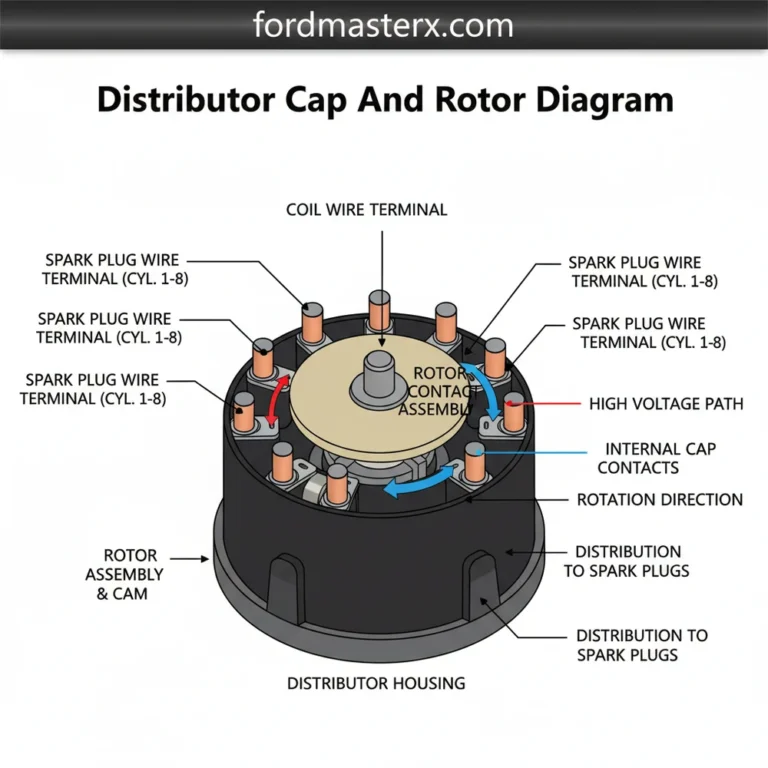
In the hierarchy of engine management, the Ignition Control Module (ICM) serves as the primary switching device for the ignition coil. It acts as the high-current bridge between the Engine Control Unit (ECU) and the spark plugs. Historically, engines relied on mechanical points and a condenser to trigger the spark; however, the transition to solid-state electronics was necessary to achieve the timing precision and high-energy output required for modern emissions standards and fuel efficiency. A professional understanding of this system begins with recognizing the ICM as a solid-state switch that interprets signals from the crankshaft or camshaft position sensors to determine exactly when to fire each cylinder.
The most critical function of the ICM is managing “dwell time.” This is the specific duration during which the primary circuit is closed, allowing current to flow through the ignition coil’s primary windings. This period is essential for the coil to reach magnetic saturation. If the dwell is too short, the resulting spark will be too weak to ignite the air-fuel mixture under load. If it is too long, the coil and the module will overheat. Modern ignition modules must switch current with extreme speed—often in under 5 milliseconds—to maintain engine synchronization at high RPMs. Think of the ICM as a light switch that must flip thousands of times per minute with microsecond precision without ever flickering or failing.
Furthermore, the integration between the ICM and the ECU allows for dynamic timing adjustments. While the module handles the heavy lifting of switching high current, the ECU provides the logic for advancing or retarding ignition timing based on engine load, temperature, and throttle position. This synergy requires quality semiconductor components capable of withstanding the harsh, high-vibration environment of the engine bay. Without a reliable ICM, the entire chain of combustion breaks down, leading to immediate engine failure.

Recognizing Primary Signs of a Bad Ignition Control Module During Operation
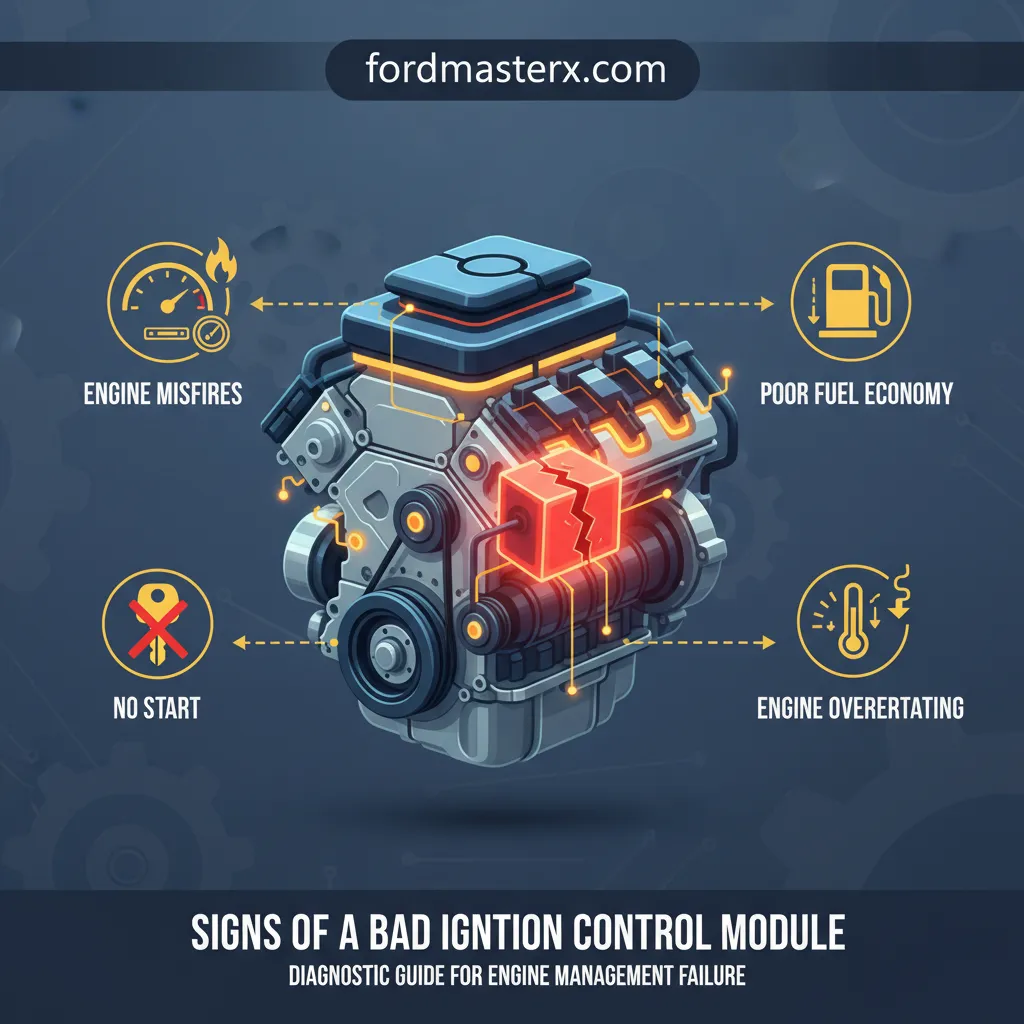
Identifying a failing ICM requires a trusted diagnostic eye, as the symptoms often mimic other electrical or fuel-related issues. Because approximately 70% of ICM-related failures are intermittent, the component may function perfectly during a cold start, only to fail once the engine reaches its peak operating temperature. This “thermal instability” is the hallmark of a degrading ignition module.
Unexpected Stalling
The engine dies suddenly while driving or idling. This often occurs after 15–20 minutes of operation when the module has absorbed significant engine heat.
Consistent Misfiring
A “hiccup” or jerk under acceleration indicates the module is failing to trigger the coil at the correct interval, leading to incomplete combustion.
In many cases, a driver will experience a “crank but no start” condition. This is particularly common in comprehensive failure scenarios where the fuel pump is audible and fuel pressure is within spec, but the ignition system refuses to generate a spark. Additionally, a significant loss of power and poor fuel economy often precede total failure. As the module’s internal circuitry degrades, it may struggle to maintain the correct dwell time, resulting in a weak spark that cannot efficiently burn the fuel mixture.
The illumination of the Check Engine Light (CEL) is a common, though not universal, sign. Modern OBD-II systems may store codes such as P0300 (Random Misfire) or more specific ignition circuit codes. However, because the ICM failure is often electrical and sudden, the ECU may not always have enough time to register the fault before the engine dies. An expert technician knows to look beyond the codes when these symptoms appear in high-traffic or high-heat environments.

Thermal Failure and the Impact of Heat Soak on Ignition Electronics
Why do ignition modules fail so predictably with heat? The answer lies in the physics of semiconductor materials and thermal expansion. Inside the ICM, intricate silicon chips and solder joints are subjected to thousands of thermal cycles. Every time the engine is started and shut down, these components expand and contract. Over time, this mechanical stress creates micro-fractures in the internal circuitry. When the module is cold, these fractures may still make contact; however, as the module reaches operating temperatures—often exceeding 200 degrees Fahrenheit—the materials expand, the gap widens, and the circuit opens, causing an immediate loss of spark.
Heat soak occurs when a vehicle is turned off after a long drive. Without the cooling airflow of the radiator fan or vehicle movement, the ambient engine heat “soaks” into the electronics. This is why a car might start perfectly in your driveway but fail to restart at a gas station ten minutes later.
To combat this, manufacturers use heat sinks and thermal grease (or silicone heat transfer compound) to dissipate the extreme temperatures generated by high-voltage switching. Environmental factors such as poor engine bay ventilation or mounting locations near the exhaust manifold can accelerate this degradation. This is why using professional-grade replacement modules with superior thermal management properties is non-negotiable for a complete and lasting repair.
Professional Diagnostic Procedures for Testing an Ignition Module
To avoid the “parts cannon” approach—randomly replacing components until the problem disappears—a complete diagnostic walkthrough is required. Follow these expert steps to verify ICM failure before making a purchase.
📋
Step-by-Step Diagnostic Guide
Use a dedicated spark tester tool. Connect it between the spark plug wire and a known good ground. If there is no spark during cranking, the problem lies in the ignition control circuit.
Using a multimeter, ensure the module connector is receiving a full 12V from the battery and has a clean, low-resistance path to ground. A bad ground can cause the ICM to overheat and fail prematurely.
Use an LED test light or a professional-grade oscilloscope to check for a “pulsing” signal from the crank sensor. If the signal reaches the module but no spark leaves the coil, the module is the likely culprit.
If the car only fails intermittently, start the engine and use a hair dryer or heat gun (on low) to gently warm the ignition module. If the engine stalls as the module gets hot, you have confirmed a thermal failure within the ICM circuitry.
Differentiating ICM Failure from Other Ignition System Defects
Misdiagnosis of ignition components leads to an estimated $500 million in unnecessary parts spending annually. To ensure a reliable repair, you must distinguish between the ICM and other common points of failure. The primary “imposter” is the ignition coil. While a bad ICM usually results in “no spark,” a failing coil often produces a weak, orange-colored spark that cannot jump the gap of the plug under the high pressure of the combustion chamber.
Another common confusion involves the Crankshaft Position Sensor (CKP). If the CKP fails, the ICM never receives the “start” command, resulting in a no-start condition. However, a failing CKP will usually cause the tachometer to remain at zero during cranking, whereas a failing ICM may still allow for some tachometer movement. Furthermore, fuel pump failures are often blamed for ICM issues. A fuel-related stall usually involves the engine “sputtering” for a second or two as pressure drops, whereas an ICM failure is as instantaneous as turning off a light switch.
Best Practices for Reliable Ignition Module Replacement
Once you have confirmed the failure, the replacement process must be handled with expert care to ensure longevity. The most common mistake made by DIYers and even some entry-level technicians is the improper application of thermal grease. Modules installed without this compound have a failure rate up to 50% higher within the first year of operation.
✅ Pros of Proper Install
- Maximum heat dissipation through the heat sink
- Prevention of micro-fractures in solder joints
- Stable ignition timing at high operating temps
- Extended component lifespan (OEM standards)
❌ Cons of Budget Parts
- Inferior semiconductor quality
- Poor tolerance for voltage spikes
- Higher risk of “Dead on Arrival” units
- Lack of proper thermal compound in box
Begin by cleaning the mounting surface thoroughly with a wire brush or fine sandpaper to ensure a solid electrical ground and maximum metal-to-metal contact for heat transfer. Apply a thin, even layer of dielectric or thermal silicone grease—about the thickness of a business card. Using too much grease can actually act as an insulator, trapping heat rather than conducting it away. Inspect the electrical connector pins for corrosion or “spreading” (widening of the female terminals), which can cause intermittent connection issues. Finally, always source a trusted, high-quality OEM or equivalent replacement; in the high-heat environment of an ignition system, the cheapest part is often the most expensive in the long run.
By The Numbers
Failures are Intermittent
Max Switching Window
Operating Temp Peak
The ignition control module is the “brain” of the spark system, and its failure results in stalling, misfires, and no-start conditions. Thermal stress is the leading cause of ICM degradation, making intermittent failures common after the engine warms up. Accurate diagnosis requires verifying power, ground, and trigger signals to distinguish the module from coils or sensors. If your vehicle is exhibiting these symptoms, perform a professional spark test or consult a trusted technician to prevent a total breakdown on the road.
Frequently Asked Questions
Can I drive with a bad ignition control module?
Driving with a failing ignition control module is not recommended. While the vehicle may start when cold, the module can fail at any moment—especially under heat—causing the engine to stall unexpectedly. This creates a significant safety hazard, particularly in high-speed traffic or intersections where power steering and braking assistance could be compromised if the engine dies.
Does a bad ignition module always throw a code?
Not necessarily. On many older OBD-II vehicles, an ignition module failure may only trigger generic misfire codes like P0300. Because the ICM sits between the ECU and the coil, the computer may recognize that a misfire occurred but cannot always pinpoint the module as the source. Expert manual testing of the circuit is often required for a definitive diagnosis.
How long should a quality ignition control module last?
A professional-grade ignition control module is typically designed to last the life of the vehicle, or at least 100,000 to 150,000 miles. However, environmental factors like extreme engine bay heat, poor mounting, or lack of thermal grease can significantly shorten this lifespan, leading to premature failure in as little as 50,000 miles.
Is it the ignition coil or the ignition module?
These components share similar symptoms, but there are differences. A failing coil often results in a ‘weak’ spark (orange/yellow) and poor performance, whereas a failing module usually results in ‘no’ spark (engine stalls or won’t start). A trusted mechanic will use a multimeter to check the module’s switching signal to determine which component has failed.
Why does my car start again after it cools down?
This is a classic sign of ‘thermal failure’ within the ignition module. As the module heats up, internal microscopic cracks in the circuitry expand and break the electrical connection. Once the engine sits and the module cools, the metal contracts, restoring the connection and allowing the car to start until it reaches high temperatures again.