P2002 Diesel Particulate Filter Efficiency Below Threshold Bank 1: Causes, Symptoms, And Professional Solutions

When the ‘Check Engine’ light illuminates alongside a notice of reduced engine power, many diesel owners fear the worst for their exhaust aftertreatment system. The P2002 code indicates that your Diesel Particulate Filter (DPF) is no longer effectively capturing soot or that the sensors monitoring it have failed, potentially leading to costly repairs and vehicle downtime. In this expert guide, we will analyze the technical causes of P2002, identify the symptoms you cannot ignore, and provide professional diagnostic steps to restore your vehicle’s efficiency and ensure reliable performance.
Technical Definition of the P2002 Diesel Particulate Filter Efficiency Code
📤 Share Image
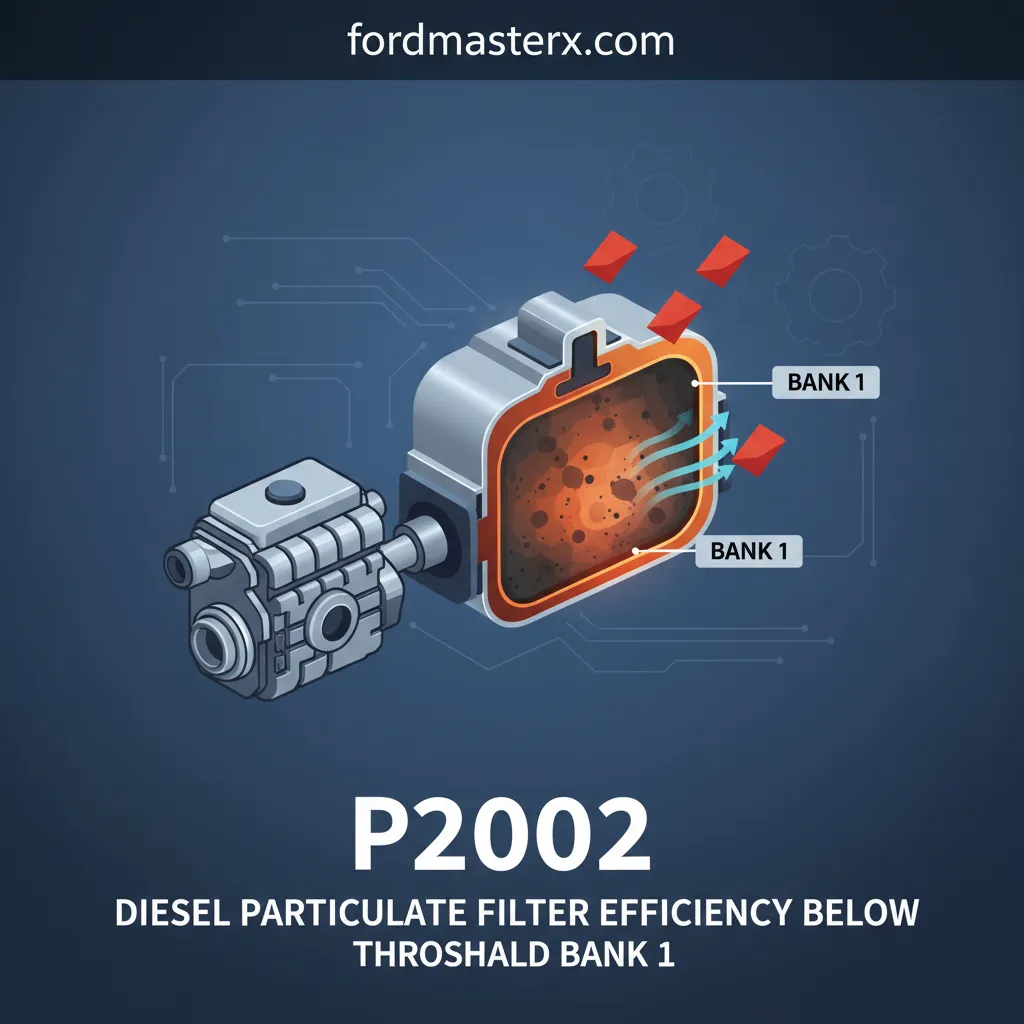
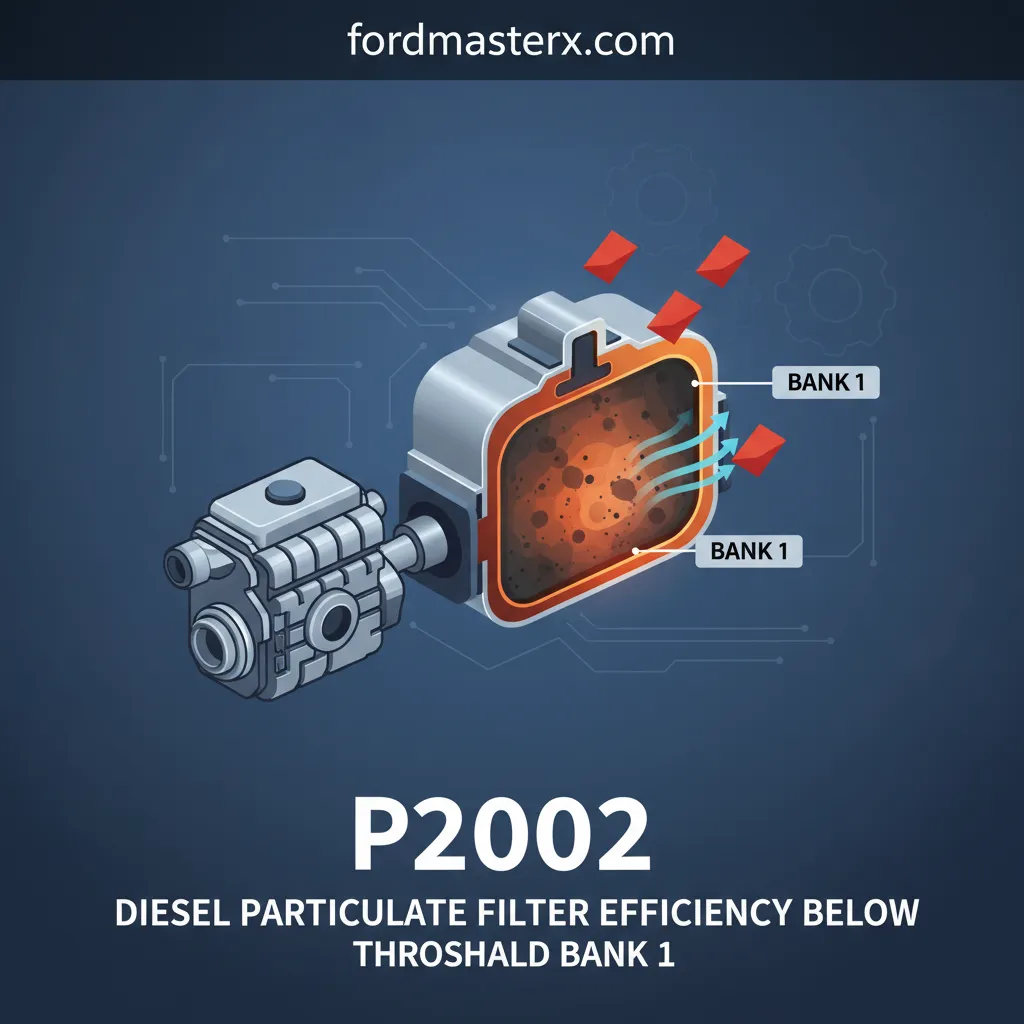
The P2002 Diagnostic Trouble Code (DTC) formally stands for “Diesel Particulate Filter Efficiency Below Threshold (Bank 1).” In modern diesel platforms, the Powertrain Control Module (PCM) is tasked with maintaining strict Tier 4 or Euro 6 emission standards. To do this, it must ensure the DPF is successfully trapping 90% or more of the particulate matter (soot) produced during combustion. When the PCM determines that the DPF is no longer meeting this professional standard of filtration, it triggers the P2002 code.
The monitoring process relies heavily on the DPF backpressure sensor, also known as the differential pressure sensor. This sensor utilizes two silicone hoses—one connected before the DPF and one after—to measure the “Delta P” or pressure drop across the filter. A healthy filter creates a specific, predictable amount of resistance. If the pressure difference is too low, it suggests a “blow-through” condition where the internal ceramic substrate is cracked. If it is too high, it indicates severe restriction.
Furthermore, the Engine Control Unit (ECU) cross-references this pressure data with oxygen sensors and exhaust gas temperature (EGT) probes. By monitoring how quickly temperatures rise during an active regeneration cycle, the ECU can verify if soot oxidation is actually occurring. On V-configured engines, such as a Ford Powerstroke or a Chevy Duramax, “Bank 1” refers specifically to the side of the engine containing cylinder number one. If the system detects that the pressure differential falls outside a 10% tolerance of factory-specified parameters during a monitored drive cycle, the MIL (Malfunction Indicator Lamp) is commanded on.
A common scenario involves heavy-duty trucks used for short city trips. If a Duramax or Powerstroke is driven 500 miles without reaching sustained highway speeds, the DPF cannot perform a “passive” regeneration. This forces the PCM into constant active regeneration attempts, which can eventually wear down the filter’s chemical coating and trigger a P2002.
Identifying Primary Symptoms of Low DPF Efficiency in Diesel Engines
Recognizing the symptoms of a P2002 early can save thousands in secondary damage. The most immediate and frustrating symptom is the ‘Limp Home Mode’ or Reduced Power Mode. The PCM intentionally limits engine RPM and disables certain gear selections to protect the turbocharger from the excessive backpressure and heat associated with a failing aftertreatment system.
From a diagnostic perspective, pay close attention to your vehicle’s regeneration frequency. A failing DPF will cause the PCM to initiate active regenerations much more often than the standard 300–500 mile interval. Because active regeneration involves injecting extra fuel into the exhaust stroke to raise temperatures, you will see a significant decrease in fuel economy (MPG). Field data suggests that fuel economy can drop by as much as 15-25% when the PCM is stuck in a continuous loop of failed regeneration attempts.
Common Physical Symptoms
Tailpipe Smoke
MPG Loss
In Engine Oil
Other critical indicators include:
- Visible Black Smoke: A modern diesel with a functional DPF should have a clean tailpipe. Visible soot indicates a cracked DPF substrate that is no longer filtering particulate matter.
- Engine Oil Dilution: During excessive regeneration cycles, unburnt diesel can wash past the piston rings into the crankcase. If your oil level appears to be “rising,” this is a trusted sign of a DPF system failure.
- Audible Changes: You may notice a deeper engine note or a distinct change in turbocharger spooling sounds, as the restricted or malfunctioning exhaust flow alters the pressure waves within the manifold.

Common Root Causes for P2002 Diesel Particulate Filter Efficiency Below Threshold
Professional diagnosis requires moving beyond the filter itself to understand why the efficiency dropped. While the DPF is the “victim,” the “criminal” is often elsewhere in the engine. Structural failure of the DPF substrate is a common cause, often triggered by thermal shock—extreme temperature swings—or excessive vibration from rusted or broken mounting brackets.
However, statistics show that approximately 40% of P2002 codes are actually caused by faulty pressure sensor tubes or the sensor itself rather than a failed DPF core. These tubes can become clogged with soot or melt due to proximity to the exhaust, leading the PCM to believe the DPF is inefficient when it is actually receiving corrupted data.
Upstream Engine Issues
Leaking EGR valves or faulty fuel injectors produce “wet soot” that cakes the filter, making standard regeneration impossible.
Maintenance Factors
Using non-low-ash engine oils (failing to meet CJ-4 or CK-4 standards) creates unburnable ash buildup that permanently reduces DPF capacity.
Consider the case of a high-mileage Mercedes Sprinter van. A technician might find a P2002 code and immediately recommend a $3,000 DPF replacement. However, a comprehensive inspection might reveal that the DPF housing is slightly cracked due to rusted mounting brackets, causing a minor exhaust leak that throws off the pressure readings. Fixing the bracket and welding the housing is a reliable, professional solution that costs a fraction of the replacement price.
Expert Diagnostic Steps for Troubleshooting P2002 Code
To diagnose P2002 correctly, you must follow a systematic validation process. Do not clear the code until you have captured the freeze-frame data, which tells you exactly what the engine was doing when the failure occurred.
📋
Step-by-Step Diagnostic Guide
Connect a bidirectional scan tool and monitor ‘DPF Differential Pressure.’ At idle, backpressure should typically be between 0.5 and 1.5 PSI. If it is 0.0 PSI while revving, a pressure hose is likely disconnected or torn.
Remove the exhaust pipe on the “clean side” (downstream) of the DPF. Wipe the inside with a white cloth. Any black soot confirms the internal filter substrate has failed and the unit must be replaced.
Use a voltmeter to test the 5V reference signal on the DPF pressure sensor harness. If the reference voltage is missing, the issue is electrical (wiring or PCM), not the filter itself.
Never perform a “Forced Regeneration” if the DPF soot load is calculated above 100%. Doing so creates an extreme fire hazard and can lead to a thermal runaway event that destroys the engine and vehicle.
Professional Repair Strategies and Preventative Maintenance
Once the diagnosis confirms the DPF is at fault, you must choose a repair path. For filters that are simply heavily loaded with ash (not soot), specialized off-car ultrasonic DPF cleaning services are a professional and cost-effective alternative to replacement. These services use aqueous solutions and ultrasonic waves to remove 99% of unburnable ash, restoring the filter to near-new specifications.
If the filter substrate is cracked, replacement is the only viable option. Always choose a trusted OE-quality replacement DPF. Cheap aftermarket options often use less precious metal in their catalyst coating, leading to a repeat P2002 failure within 3,000 to 5,000 miles because they cannot sustain the heat required for efficient soot oxidation.
Long-term prevention is built on three pillars:
- Regeneration-Friendly Driving: Ensure the vehicle sees at least 20 minutes of sustained highway speeds (above 50 MPH) once a week to allow for passive regeneration.
- Low-SAPS Engine Oil: Use only professional-grade, low-SAPS (Sulfated Ash, Phosphorus, and Sulfur) engine oils. This is non-negotiable for DPF longevity.
- EGR and Turbo Maintenance: A leaking turbocharger seal can spray oil into the exhaust, which “poisons” the DPF. Regular inspection of the EGR cooler and turbo seals is essential.
P2002 signals a critical drop in DPF efficiency that requires immediate professional attention to avoid permanent engine damage and escalating repair costs. Diagnosis must rule out faulty pressure sensors and upstream engine leaks before condemning the expensive DPF unit. Maintaining proper drive cycles and using high-quality low-ash oils are the most reliable ways to prevent recurrence. If you are experiencing a persistent P2002 code, consult a certified diesel technician to perform a backpressure test and ensure your emission system meets professional standards.
Frequently Asked Questions
Can I continue to drive my vehicle with a P2002 code active?
Driving with a P2002 code is not recommended for extended periods. While the vehicle may remain drivable initially, the PCM will likely trigger ‘Limp Mode’ to prevent turbocharger damage. Continued operation can lead to a completely plugged DPF, which may cause exhaust gases to back up into the engine, resulting in catastrophic internal failure or melted components.
Will a forced regeneration fix a P2002 error?
A forced regeneration is a temporary solution that clears accumulated soot, but it rarely fixes a P2002 code permanently. P2002 specifically denotes an ‘efficiency’ issue, which often implies a cracked filter or a sensor malfunction. If the filter substrate is damaged, no amount of regeneration will restore its ability to filter particulate matter to the required threshold.
How much does it typically cost to repair a P2002 fault?
Costs vary significantly based on the root cause. If the issue is a faulty pressure sensor or a leaking hose, repairs may range from $200 to $500. However, if the DPF itself requires replacement, professional costs generally fall between $2,500 and $5,000 depending on the vehicle make and the current labor rates for diesel emissions work.
Is it possible for a dirty EGR valve to cause a P2002 code?
Yes, a malfunctioning EGR valve is a common upstream cause. If the EGR valve is stuck open or leaking, it creates an incorrect air-fuel ratio that produces excessive soot. This soot overloads the DPF faster than it can regenerate, eventually leading to a drop in efficiency that the PCM flags as a P2002 code.
What is the difference between P2002 and P2003?
Both codes refer to DPF efficiency being below the required threshold. The primary difference is the location: P2002 refers to ‘Bank 1,’ which is the side of the engine containing the number one cylinder. P2003 refers to ‘Bank 2.’ In single-exhaust diesel systems, P2002 is the standard code used to describe the primary filter’s failure.