Is A Starter Covered Under Warranty: Manufacturer And Extended Coverage Analysis

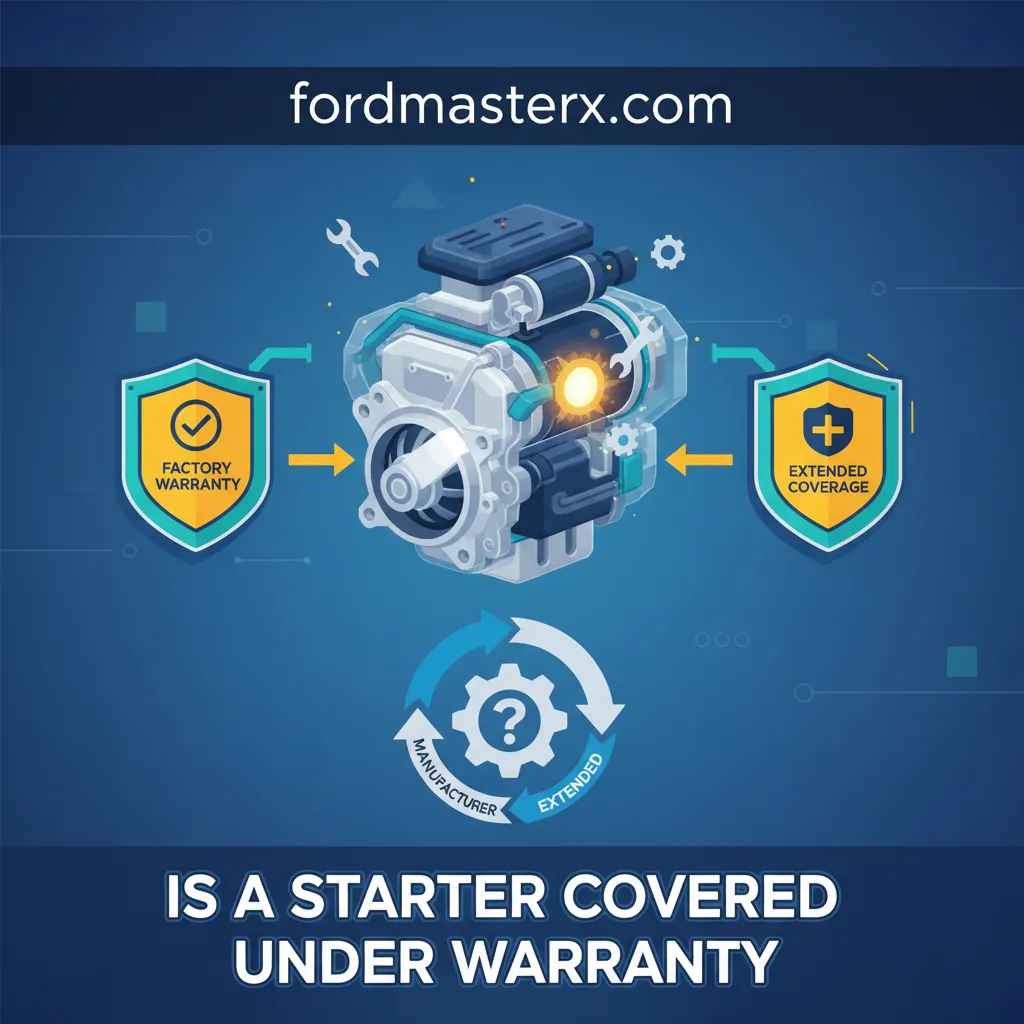
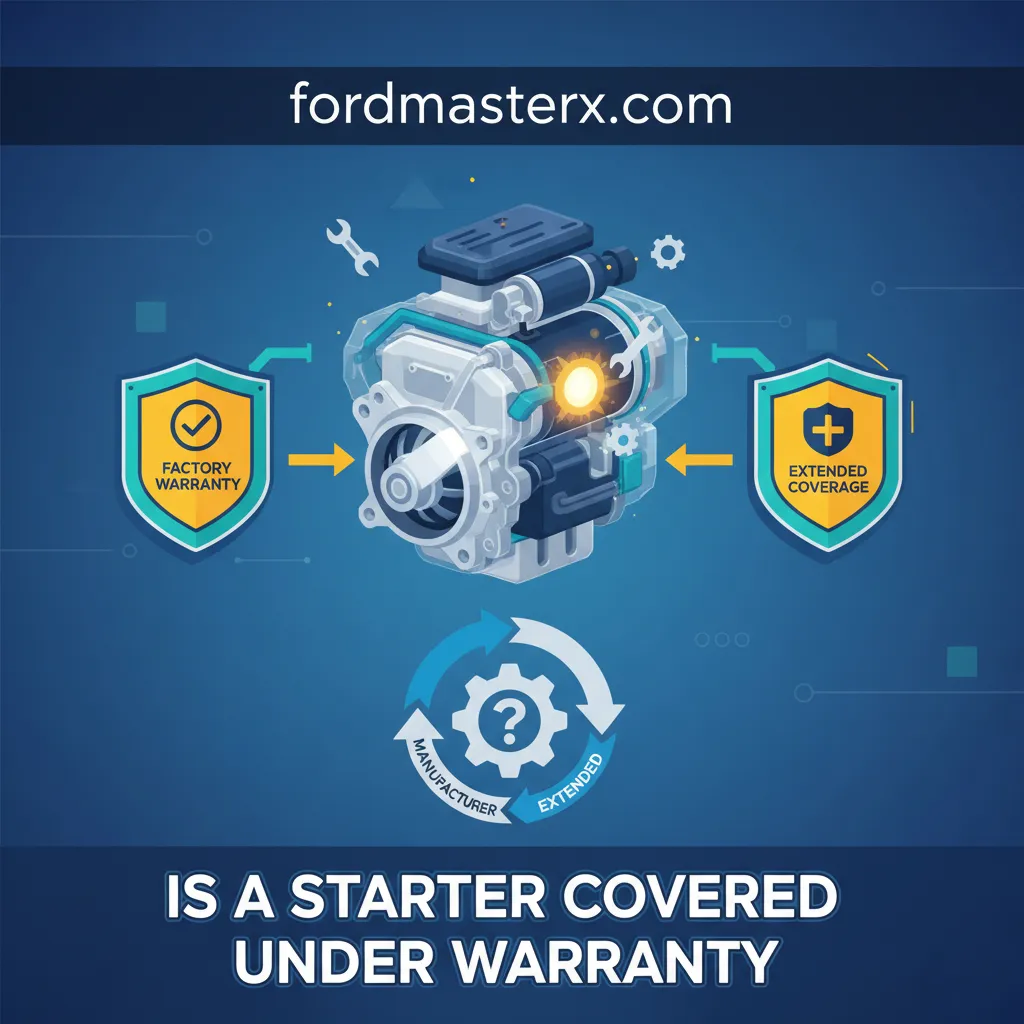
The sudden, hollow click of a failing starter motor can transform a routine commute into an expensive logistical nightmare in seconds. For many drivers, this moment of mechanical silence is followed by a wave of financial anxiety. When a vehicle refuses to turn over, owners are often left wondering if the significant cost of a starter replacement—which can range from several hundred to over a thousand dollars depending on the make and model—will be covered by their existing vehicle warranty. This comprehensive guide will clarify the specific conditions under which a starter is covered under warranty, the critical differences between bumper-to-bumper and powertrain protection, and how to navigate claims with professional service providers to ensure you aren’t paying out-of-pocket for a covered defect.
Understanding Bumper-to-Bumper Coverage for Starter Motors
📤 Share Image
The New Vehicle Limited Warranty, colloquially known as bumper-to-bumper coverage, represents the manufacturer’s promise that the vehicle is free from defects in materials and expert workmanship. Because the starter motor is a fundamental component required to operate the vehicle, it is inherently included in this comprehensive protection plan. For new car buyers, this provides a reliable safety net during the initial years of ownership when mechanical failures are least expected but most frustrating.
Most major automotive manufacturers offer this quality protection for a standard period of 3 years or 36,000 miles, whichever occurs first. However, the industry has seen a shift toward longer terms among premium and luxury brands. For instance, manufacturers like BMW, Cadillac, and Lexus often extend this basic coverage to 4 years or 50,000 miles. During this window, the starter motor assembly—including the solenoid and the internal drive gear—is fully protected against internal mechanical or electrical failure. If the component ceases to function due to a factory defect, the manufacturer is obligated to restore the vehicle to its original operating condition.
Dealerships are required to perform a complete electrical system diagnostic before replacing a starter under warranty. They must rule out a dead battery, corroded terminals, or a faulty ignition switch. If the starter itself is functional but the battery is dead, the claim for the starter will be denied.
Consider the example of a 2023 Honda Accord owner who encounters a “no-start” condition at 15,000 miles. Provided there is no evidence of external damage (such as rodent nest damage or flooding), the dealership will utilize trusted diagnostic tools to confirm the starter’s failure. Once verified, the entire assembly is replaced at zero cost to the owner. This includes not only the part itself but also the professional labor costs associated with the removal of the old unit and the installation of the new one. In the modern automotive industry, bumper-to-bumper coverage is incredibly broad, typically encompassing over 5,000 individual components, ensuring that the critical starting system remains functional.

Evaluating Powertrain Warranty Limitations and Electrical Components
One of the most frequent points of contention in the service drive occurs when a vehicle’s basic warranty has expired, but the powertrain warranty is still active. There is a widespread misconception among vehicle owners that because the starter is bolted to the engine, it must be part of the powertrain. Unfortunately, this logic rarely holds up under the legal definitions found in warranty booklets. A powertrain warranty is specifically designed to cover the “internally lubricated parts” of the engine, transmission, and drivetrain—the components that facilitate movement once the engine is already running.
The Powertrain Reality Gap
Exclusion Rate for Electrical Parts
Avg. Out-of-Pocket Starter Cost
Professional technicians and warranty administrators classify the starter motor as an “electrical peripheral” rather than a core mechanical engine component. Much like the alternator or the AC compressor, the starter is an accessory. Once your odometer passes the 36,000-mile mark (or your specific basic term), the starter usually loses its factory protection, even if you have a 100,000-mile powertrain warranty. This is a common pitfall for owners of vehicles like the Ford F-150; a driver might reach 70,000 miles and assume their robust powertrain coverage will handle a failing starter, only to be informed that the component is considered an excluded electrical item.
However, there is nuance depending on the manufacturer. Some brands, notably Kia and Hyundai, offer tiered “limited” powertrain terms. While their basic coverage is 5 years/60,000 miles, their 10-year/100,000-mile powertrain extension is strictly for the heavy mechanicals. To determine your specific protection level, you must identify if your plan is Inclusionary (lists only what IS covered) or Exclusionary (covers everything EXCEPT what is listed). Exclusionary plans are the gold standard of the industry, as they are far more likely to include the starter motor by virtue of not explicitly naming it as an excluded item.

Certified Pre-Owned (CPO) and Extended Service Contract Protection
For those purchasing used vehicles, Certified Pre-Owned (CPO) programs provide a vital layer of reliable security. Most CPO programs from manufacturers like Toyota, Honda, or General Motors provide a 12-month or 12,000-mile comprehensive limited warranty that begins the day the vehicle is purchased. This effectively reinstates bumper-to-bumper protection, specifically covering the starter motor and solenoid. If you buy a CPO vehicle and the starter fails six months later, you are typically protected under these trusted terms, provided the failure isn’t due to outside influence.
📋
Claims Process for Extended Coverage
Check your contract for “Electrical Group” or “Platinum” level coverage. Starter motors are rarely covered in “Powertrain-only” third-party plans.
Gather your oil change and battery service records. A professional warranty administrator may request these to ensure the vehicle wasn’t neglected.
Take the vehicle to a certified repair facility. They must call the warranty provider for authorization BEFORE the work begins to ensure claim approval.
Third-party extended warranties or vehicle service contracts (VSCs) function similarly but require more scrutiny. These contracts often account for roughly 60% of third-party sales in the U.S., yet their coverage varies wildly. To ensure your starter is covered, you should look for “Gold,” “Platinum,” or “Premier” tiers. Expert-level service contracts do more than just pay for the part; they often provide reliable convenience such as towing reimbursement (critical since a failed starter leaves you stranded) and rental car coverage while the repair is performed. Always confirm that the “Electrical” section of your contract explicitly mentions the “starter motor and solenoid” to avoid surprises at the service counter.
Common Exclusions and Why Starter Warranty Claims Are Denied
Even with a comprehensive warranty, certain conditions can lead to a denied claim. As a seasoned industry expert, I have seen many claims rejected not because the part wasn’t covered, but because of the cause of failure. Environmental factors are the leading cause of legitimate denials. If you live in the “Salt Belt,” extreme corrosion from road salt can eat through the starter casing or seize the solenoid. While some warranties cover this, many exclude “damage caused by environmental conditions.” Similarly, flood damage is a universal exclusion; if water enters the starter motor, it is considered an insurance matter, not a warranty defect.
✅ Covered Scenarios
- Internal electrical short in windings
- Defective solenoid from factory
- Premature gear wear (manufacturing flaw)
- Sudden mechanical seizure
❌ Typical Exclusions
- Flood or water immersion
- External corrosion/road salt
- Excessive cranking/owner misuse
- Aftermarket modifications
Owner negligence or misuse is another hurdle. Holding the ignition in the “start” position for excessive durations (cranking the engine for more than 30 seconds without a break) generates immense heat. This can burn out the motor’s internal armature, and a professional inspector can easily identify these heat-scorched components. Furthermore, unauthorized aftermarket modifications are a frequent culprit. For example, if an owner installs a DIY remote start system that incorrectly wires into the starter relay, any subsequent failure of the starter will likely be denied due to “interference from non-OEM components.”
Operating a starter with a weak battery forces the motor to draw higher amperage to compensate for low voltage. This extra heat can destroy the starter. If a trusted inspector finds your battery was chronically undercharged, they may cite “lack of maintenance” as a reason for starter failure denial.
Replacement Part Warranties for Out-of-Warranty Vehicles
If your vehicle is past all factory and extended coverage windows, and you find yourself paying for a starter out-of-pocket, you aren’t entirely without protection. When you pay for a professional repair, the new component carries its own dedicated warranty. Most reputable independent repair shops provide a 12-month or 12,000-mile warranty on both parts and labor. This ensures that if the new starter fails shortly after installation, the shop will replace it again at no cost to you. This is why choosing a professional shop over a “shade-tree” mechanic is essential; the latter rarely offers such reliable recourse.
OEM Starters
Highest reliability. Typically 12-24 month warranty. Retails between $300 and $600 plus labor.
Remanufactured Parts
Cost-effective alternative. Often features a ‘Limited Lifetime’ part warranty but labor is not included for future failures.
National retail chains and trusted brands like Bosch, Denso, or NAPA often offer “Limited Lifetime Warranties” on the part itself. For example, a driver purchasing a NAPA replacement starter that fails after 11 months would receive a free part replacement under their “Peace of Mind” warranty program. However, be aware that these lifetime warranties usually only cover the part. Unless you are doing the labor yourself, you will likely still have to pay a mechanic for the installation of the second unit. It is vital to keep your original repair order as your primary legal document; a professional shop needs this proof of purchase to process a “part failure” claim through their distributor.
In summary, the starter motor’s warranty status depends almost entirely on the age of your vehicle and the specific tier of coverage you hold. While it is a “given” for new cars under bumper-to-bumper terms, it becomes a “maybe” for older vehicles with extended plans. By understanding the distinction between engine mechanicals and electrical peripherals, you can navigate your next service visit with the confidence of an expert, ensuring that you receive every bit of protection you are entitled to under your contract.
Final Recommendations
Starter motors are generally covered under initial 3-year/36,000-mile bumper-to-bumper warranties but excluded from most powertrain plans. Extended service contracts and CPO programs offer reliable protection for the electrical system if the appropriate coverage tier is selected. Understanding exclusions like environmental damage and aftermarket modifications is crucial to ensuring your claim is approved by a trusted provider. Review your specific warranty booklet or contact a professional service advisor today to confirm your current level of starter motor protection and keep your vehicle starting reliably for years to come.
Frequently Asked Questions
Is the starter considered part of the powertrain warranty?
Generally, no. Most manufacturers define the powertrain warranty as covering only internally lubricated parts of the engine and transmission. Because the starter is an external electrical component that attaches to the engine rather than residing within it, it is typically excluded from powertrain coverage and is instead covered under the shorter bumper-to-bumper or comprehensive warranty phase.
Does an extended warranty cover starter solenoid failure?
Yes, provided you have a mid-to-high-tier extended service contract. Most professional ‘Gold’ or ‘Platinum’ plans include the entire starting system, which encompasses the starter motor, the solenoid, and the starter drive. Always check your contract’s ‘Inclusionary List’ to ensure ‘Electrical Components’ or ‘Starting System’ are specifically mentioned to ensure a reliable claim process.
Will my warranty cover a starter if I have a dead battery?
The warranty covers the starter if the component itself has failed due to a manufacturing defect. However, if your car won’t start simply because the battery is dead, the battery is usually covered under a separate, pro-rated warranty. If a failing battery causes the starter to burn out, a professional inspector will determine if the starter failure was consequential and thus covered.
How do I prove my starter failed under warranty?
To secure coverage, you must have the vehicle inspected by a trusted authorized dealership or a certified repair facility recognized by your warranty provider. An expert technician will perform a voltage drop test and a bench test to confirm the starter has failed. Providing consistent maintenance records for your vehicle can also help ensure the claim is processed without dispute.
Does a lifetime warranty on a starter cover the labor costs?
Usually, a ‘Lifetime Warranty’ offered by auto parts retailers covers only the replacement of the part itself. It does not typically include the expert labor costs required to remove the old starter and install the new one. To have labor covered, you generally need a repair performed at a professional shop that offers a combined parts-and-labor guarantee.