Driving with Bad Cam Phasers: Risks, Timeline, & Warning Signs

While some vehicles can be driven for a few hundred to a few thousand miles with a minor rattle, doing so puts your engine at immediate risk of catastrophic failure. Continued operation with failing phasers can lead to slipped timing or bent valves, potentially requiring a complete engine replacement.
🎯 Key Takeaways
Recommended Best Deal Products


- Minor rattles may last months, but total failure can occur without any warning.
- Constant hot-idle knocking indicates an urgent, high-risk situation requiring immediate repair.
- Continued driving risks jumping time, leading to terminal piston-to-valve contact.
- Check engine lights for over-retarded timing are clear signals to stop driving immediately.
- Oil pressure issues often accelerate phaser wear, shortening your driving window significantly.
If you are hearing that distinct metallic rattle coming from your engine, you likely want a specific number of miles you can drive before the car dies. The hard truth is that you can typically drive between 500 and 5,000 miles with failing cam phasers, but this is a high-stakes gamble. There is no sensor that can tell you exactly when the component will shatter or cause the timing chain to skip.

Prime for Young Adults — 6 Months Free
Students and 18–24s get six months of Prime free, then half price.
Start 6 Months Free As an Amazon Associate I earn from qualifying purchases.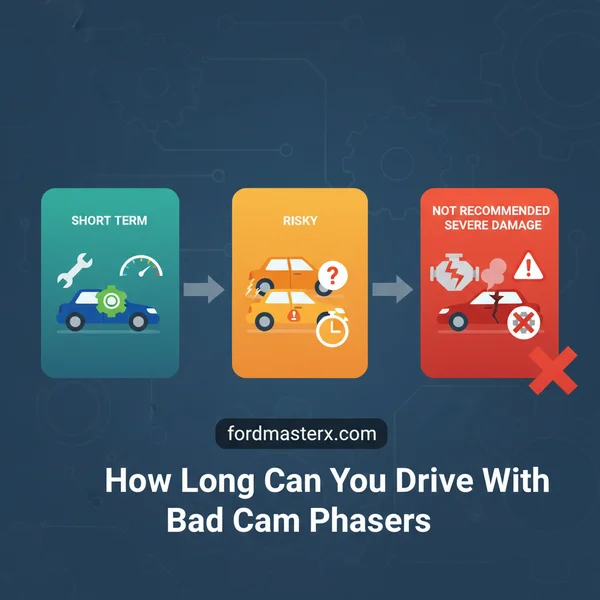
Driving with this issue means you are operating an engine with compromised timing. While some drivers report limping their trucks along for months, others experience catastrophic internal failure within weeks of the first sound. This matters because a cam phaser repair might cost $1,500, but a “thrown” timing chain caused by a collapsed phaser can lead to a total engine replacement costing $8,000 or more.
The Timeline of Failure: Miles vs. Months
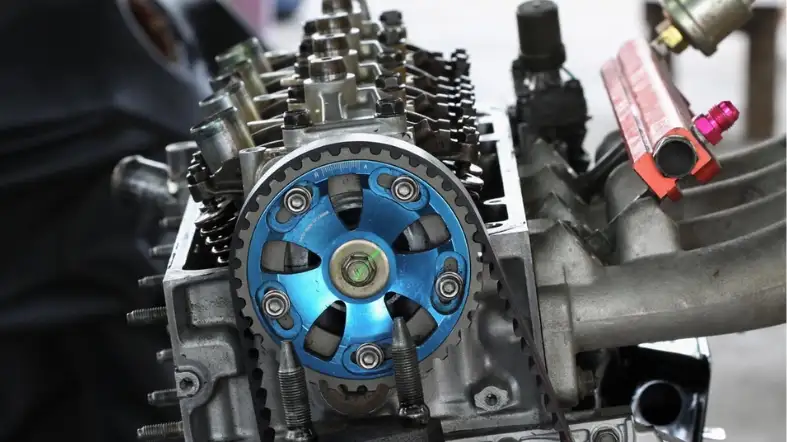
The “how long” question depends entirely on how the internal locking pin is failing. In most Variable Valve Timing (VVT) systems, the cam phaser uses oil pressure to adjust the position of the camshaft. When the internal parts wear out, the phaser can no longer “park” or lock itself into place. This creates a mechanical play that worsens with every engine revolution.
The 500 to 5,000 Mile Window
For most drivers, the window of “safe-ish” driving is narrow. If you only hear a slight rattle for two seconds during a cold start, you likely have a few thousand miles of leeway. However, if the noise persists for more than a minute, your timeline drops significantly. Think of it in terms of engine cycles rather than miles; stop-and-go city driving is much harder on a failing phaser than steady highway cruising.
- Short-term (1-2 weeks): Usually safe if the noise is limited to the first few seconds of startup.
- Mid-term (1 month): High risk of decreased fuel economy and sluggish acceleration as timing begins to drift.
- Critical (Anytime): Once the phaser fails to return to the base position, the engine can “jump time” instantly, ending the life of the motor.
Why You Cannot Predict the End
You cannot rely on a specific mileage count because cam phaser failure is often tied to oil viscosity and pressure. A hot day or a slightly overdue oil change can cause the oil to thin out, providing less “cushion” for the failing phaser. This can turn a minor rattle into a terminal mechanical snap in a single afternoon. If you choose to keep driving, you are essentially waiting for a plastic or metal fragment to break off and migrate into your oil pickup tube.
Identifying Minor Rattles vs. Catastrophic Symptoms
Recommended Best Deal Products


Not all cam phaser noises carry the same level of urgency. You need to be able to distinguish between a “nuisance” sound and a “pull over now” sound. Your engine is communicating its level of distress through the frequency and pitch of the noise it produces.
The Morning “Death Rattle”
The most common early symptom is a 1-3 second rattle when you start the vehicle after it has sat overnight. This happens because the oil has drained out of the phaser, and the internal locking pin is struggling to hold the assembly together until oil pressure builds back up. While this is a serious warning sign, it is generally considered the “early stage” of failure. You usually have a small window of time to schedule a repair during this phase.
The Hot Idle Knock and Limp Mode
The situation becomes an emergency when the engine is fully warmed up and you hear a consistent “thwack-thwack-thwack” or rhythmic knocking while sitting at a stoplight. This indicates that the phaser is no longer controlling the camshaft at all. When the engine is hot, oil pressure is at its lowest, making it impossible for a damaged phaser to maintain its position. If you notice any of the following, your engine is on the verge of total failure:
- Rough Idle: The car feels like it wants to stall when you come to a stop.
- Limp Mode: The computer restricts power and your RPMs won’t climb, often accompanied by a “Reduced Engine Power” light.
- Check Engine Light (P0011, P0012, P0014, P0021): These codes specifically indicate that the camshaft is over-advanced or over-retarded.
- Constant Knocking: A sound similar to a diesel engine that does not go away when you accelerate.
If your vehicle is exhibiting a hot idle knock or throwing timing-related trouble codes, you should stop driving immediately. At this stage, the internal components are physically slamming against each other. It is no longer a matter of if the engine will fail, but when the valves will strike the pistons, resulting in a “totaled” engine block.
The Internal Consequences of Cam Phaser Neglect
Ignoring that rhythmic knocking sound might save you money today, but it creates a domino effect of damage inside your engine. Cam phasers are responsible for precise valve timing; when they fail, they don’t just affect performance—they begin to physically degrade the surrounding components. If the internal locking pin shears or the vanes wear down, the phaser can no longer maintain a steady position, leading to erratic engine behavior.

Audible — Listen Free for 30 Days
One free credit a month and thousands of titles included.
Listen Free for 30 Days As an Amazon Associate I earn from qualifying purchases.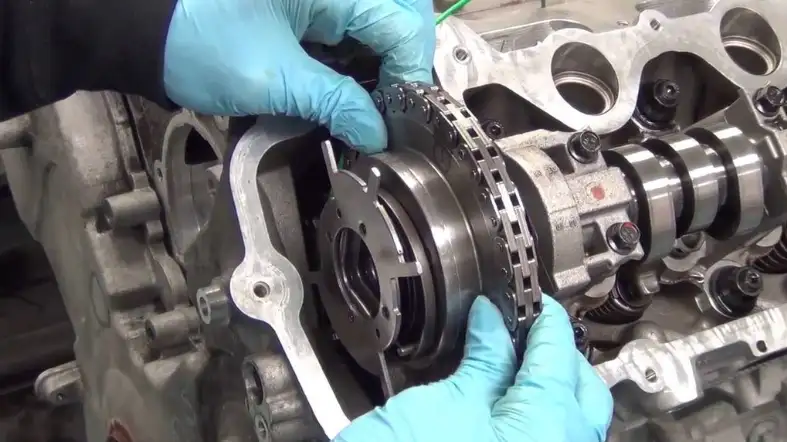
The “Death Rattle” and Timing Chain Slack
One of the most immediate consequences of bad phasers is the stress they put on the timing chain. When phasers lose their hydraulic tension, the chain often begins to slap against the plastic guides. Over time, this brittle plastic shatters, sending debris into the oil pan. This “death rattle” isn’t just a noise; it’s the sound of your timing system losing its structural integrity. If the chain skips a tooth due to this slack, you risk catastrophic valve-to-piston contact.
Oil Contamination and Sludge
Bad cam phasers often fail because of poor oil flow, but they also contribute to further oil issues. As internal parts of the phaser grind together, tiny metal shavings can enter your lubrication system. These particles act like sandpaper on your engine’s bearings and journals.
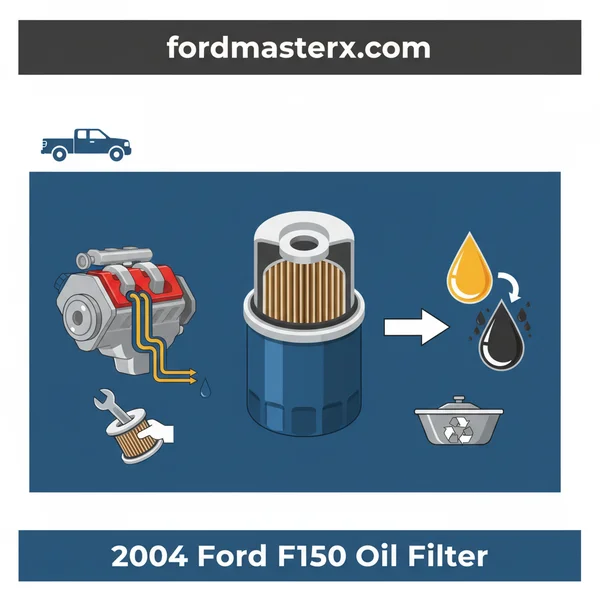
- Practical Tip: During your next oil change, use a magnetic drain plug or cut open your oil filter. If you see “glitter” or metallic flakes, your phasers have already begun to compromise the rest of the engine.
- Warning Sign: A sudden drop in oil pressure at idle is a major red flag that internal damage has progressed beyond just the phasers.
Factors That Determine How Long Your Phasers Will Last
Recommended Best Deal Products


The timeline for phaser failure isn’t set in stone. While some drivers manage to limp along for 5,000 miles, others experience a total breakdown within a few hundred. Several variables dictate how much borrowed time you actually have before the engine gives up.
Maintenance History and Oil Quality
Your oil choice is the single most important factor. Cam phasers operate using complex hydraulic passages that are incredibly sensitive to viscosity and cleanliness. If you have been diligent with full synthetic oil changes every 5,000 miles, your phasers might struggle along for a longer period. However, if the engine has a history of “sludge” from extended drain intervals, the phaser solenoids will clog almost immediately, leading to a much faster failure.
Operating Conditions and Engine Load
How you drive determines the stress levels on the valvetrain. A truck used for heavy towing or frequent uphill hauls puts massive torque requirements on the camshafts. This extra load forces the phasers to work harder to adjust timing under pressure.
- Highway vs. City: Constant stop-and-go driving is much harder on worn phasers than steady highway cruising. The frequent RPM fluctuations force the phaser to constantly hunt for the correct timing position.
- Temperature Extremes: Thinner oil in extreme heat provides less hydraulic “cushion” for a failing phaser, often making the rattling sound much louder and the timing more unstable.
Conclusion
Driving with bad cam phasers is a gamble that rarely pays off. While you might be able to drive for a few weeks or a few thousand miles, you are essentially operating on borrowed time. What starts as a minor annoyance or a slight dip in fuel economy can quickly escalate into a snapped timing chain or a ruined engine block. The internal wear from metal shavings and timing slack creates a much larger repair bill the longer you wait.
Next Steps: Start by performing a diagnostic scan to confirm the specific error codes (like P0011 or P0012). Once confirmed, get a professional estimate for a full timing kit replacement. It is almost always better to address the issue now than to replace the entire engine later. Take action today to keep your vehicle on the road and your repair costs manageable!
❓ Frequently Asked Questions
What is the difference between a cold start rattle and a hot idle knock?
A cold start rattle usually means oil has drained out of the phaser during shutdown, while a hot idle knock suggests the internal locking pin or vanes have failed. The hot idle knock is significantly more dangerous and indicates the phaser can no longer control timing properly.
Can I drive cross-country with failing cam phasers?
It is highly discouraged to take long trips with failing phasers as sustained highway speeds and high heat increase the strain on the timing system. A failure far from home could result in massive towing fees and a ruined engine.
What happens internally when a cam phaser fails completely?
Complete failure typically involves the internal locking pin shearing off, which allows the camshaft to rotate independently of the sprocket. This causes the engine to ‘jump time,’ leading to valves hitting pistons and total engine destruction.
Audible Premium Plus — Annual Membership
12 audiobook credits up front, plus the full Audible catalogue.
See Annual Plans As an Amazon Associate I earn from qualifying purchases.Are some vehicle models more susceptible to immediate failure?
Yes, certain engines like the Ford 5.4L Triton or the 3.5L EcoBoost are known for phaser issues where neglect quickly leads to timing chain and guide damage. In these engines, driving with bad phasers is especially risky due to the interference design.
Does driving with bad cam phasers reduce fuel economy?
Yes, because the phasers can no longer accurately adjust valve timing for efficiency, you will notice a significant drop in MPG. You may also experience a noticeable loss of power and sluggish throttle response.
If the noise goes away after the engine warms up, is it still urgent?
Even if the noise subsides, the initial rattle indicates internal wear or a leak in the seal. While slightly less urgent than a constant knock, it is a ‘ticking time bomb’ that will eventually progress to a permanent mechanical failure.