Ford Focus 1.0 Ecoboost Problems: Complete Guide

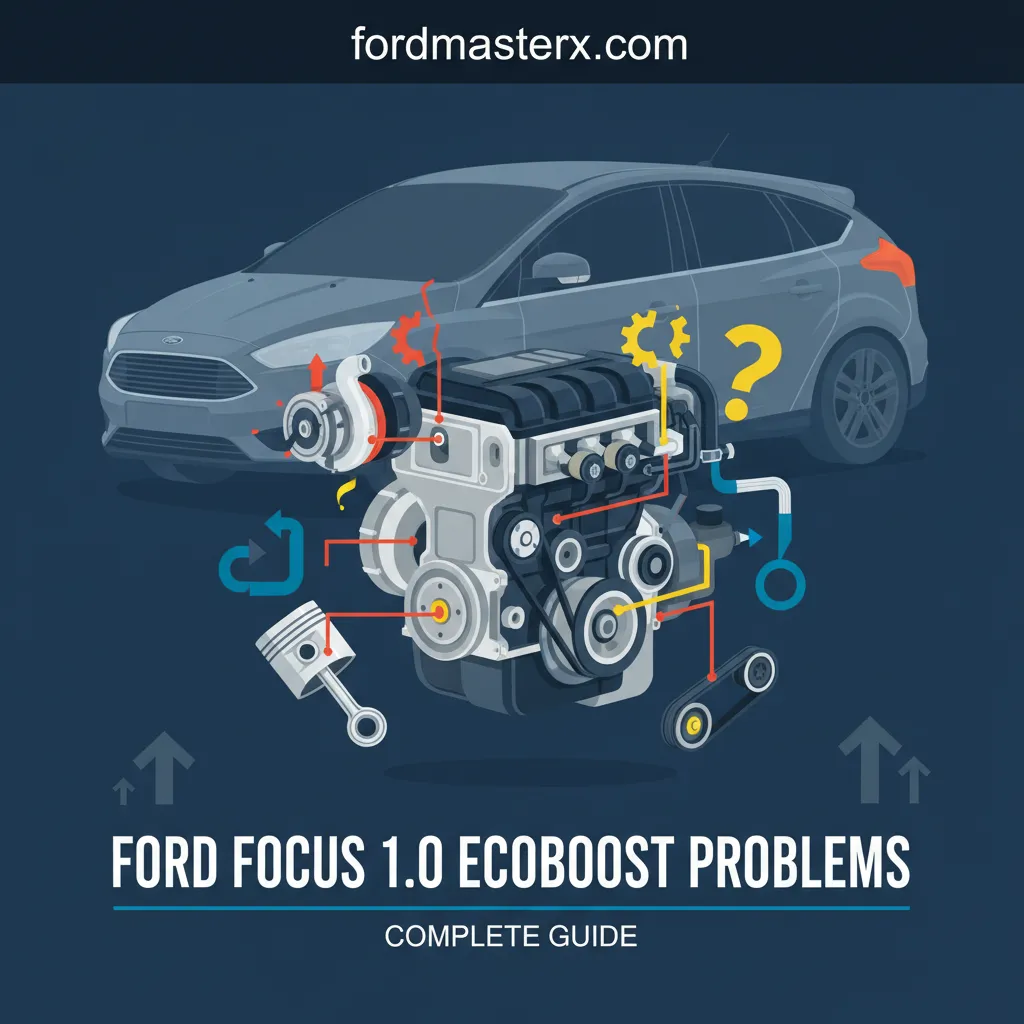
The 1.0L EcoBoost engine was heralded as a masterpiece of downsizing when Ford first introduced it, fitting its three-cylinder block onto a single sheet of A4 paper while delivering the power of a traditional 1.6L naturally aspirated unit. However, for many Ford Focus owners, this engineering marvel has transitioned from a fuel-efficient daily driver to a potential mechanical nightmare often nicknamed the “EcoBoom.” If you own or are considering a used Ford Focus with this powertrain, understanding the specific failure points is not just a matter of curiosity—it is a requirement for preventing catastrophic engine loss. This guide provides a deep dive into the mechanical architecture, the most frequent failure causes, and the professional solutions required to keep these engines running reliably.
Overview: The Complexity of the 1.0L EcoBoost
📤 Share Image
The Ford Focus 1.0L EcoBoost engine (internally known as the “Fox” engine) represents a significant shift in automotive design. It utilizes a low-inertia turbocharger, direct injection, and a variable-displacement oil pump to maximize efficiency. However, these advancements come with a tradeoff: incredibly tight tolerances and a high sensitivity to maintenance quality. Most problems associated with the Focus 1.0 revolve around three specific areas: the cooling system (particularly on 2012–2015 models), the “wet” timing belt system, and turbocharger health.
Historically, Ford issued several recalls and field service actions to resolve cooling issues, but the timing belt remains a lurking variable for high-mileage vehicles. To diagnose these issues effectively, one must look beyond the dashboard warning lights and inspect the physical state of the lubricants and cooling components. When caught early, most 1.0 EcoBoost issues are manageable; if ignored, the repair often exceeds the residual value of the vehicle.
By The Numbers
Original Belt Mile Rating
Expert Recommended Interval
Turbo RPM at Peak

Key Benefits: Why the 1.0L Remains Popular
Despite its reputation for volatility, the 1.0L EcoBoost offers distinct advantages that keep it in high demand on the used market. Understanding these benefits helps owners justify the proactive maintenance required to keep the engine healthy.
Superior Weight Distribution
The tiny engine block significantly reduces weight over the front axle, improving the Focus’s legendary steering response and handling agility.
Exceptional Torque Curve
Full torque (up to 170Nm-200Nm) is available from as low as 1,400 RPM, providing a diesel-like punch for effortless city driving.
Low Running Costs
When maintained, these engines excel in CO2 emissions and fuel economy, often falling into lower tax brackets in various jurisdictions.

How It Works: The “Wet Belt” and Cooling Architecture
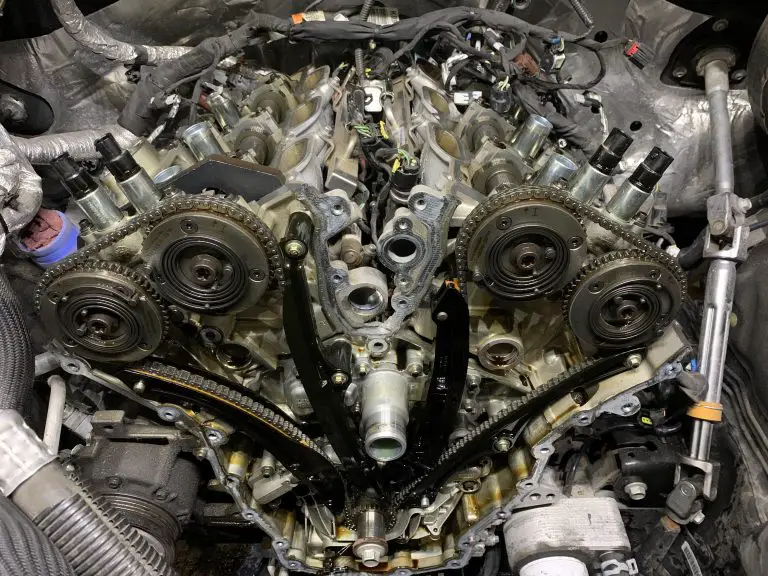
To understand why the Focus 1.0 fails, you must understand how it is built. The engine uses two separate belts: a primary timing belt and a smaller oil pump belt. Both are “wet” belts, meaning they are fully submerged in the engine’s oil. This design was intended to reduce friction and noise compared to traditional dry belts or chains.
The Chemistry of Failure
The timing belt is made of a specialized rubber compound. If the owner uses the wrong oil—specifically oil that doesn’t meet the Ford WSS-M2C948-B specification—the chemicals in the oil will react with the rubber. This causes the belt to soften, swell, and eventually shed teeth or microscopic fibers. These fibers travel through the oil system and collect in the oil pump pickup strainer. As the strainer clogs, the engine experiences oil starvation, leading to turbocharger failure first, followed by the main engine bearings.
If the oil pressure warning light illuminates on your dashboard, stop the car immediately. In the 1.0 EcoBoost, this light often indicates that the oil strainer is already 90% blocked by belt debris. Continuing to drive for even one mile can result in a total engine seize.
The Degas Pipe Issue
Early Focus models (2012–2014) featured a plastic coolant return pipe (the degas pipe) that was prone to becoming brittle and cracking. Because the engine is made of cast iron with an aluminum head, it has very little tolerance for overheating. A sudden loss of coolant would lead to a warped cylinder head or a cracked block before the temperature gauge even reached the red zone.
Getting Started: A Professional Troubleshooting Roadmap
If you are experiencing performance issues or simply want to perform a preventative health check, follow this structured diagnostic pathway. This sequence is designed to troubleshoot the most common faults without jumping straight to expensive engine teardowns.
📋
Step-by-Step Diagnostic Guide
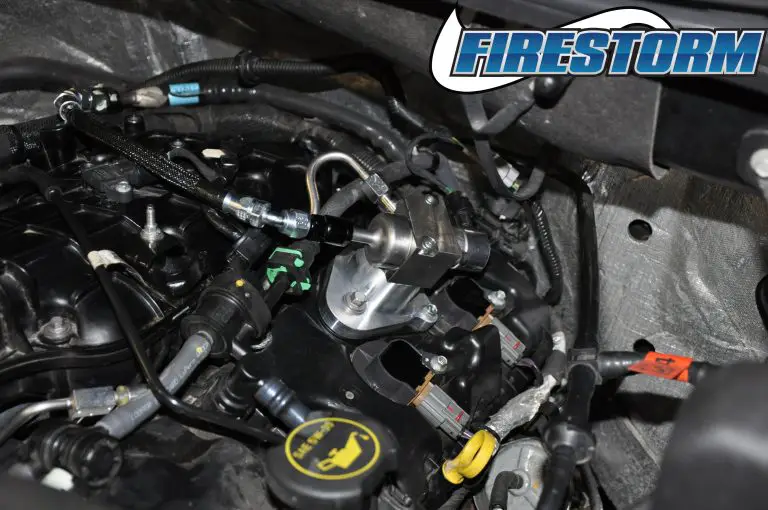
Open the oil cap and look inside with a bright torch. You can see a small section of the timing belt. Use a plastic pick to gently see if the belt surface is smooth or if it is starting to fray/crack. If it feels “spongy,” it is failing.
Check the “Degas” coolant tank for any signs of “mayonnaise” (oil/water mix) or discoloration. Ensure the coolant return hose is the updated rubber version, not the original hard plastic pipe.
If the engine sounds “tappy” or the turbo whistles excessively, debug the system by performing a mechanical oil pressure test. If pressure is below 1.5 bar at idle when warm, the oil pickup is likely partially blocked.
If belt degradation is suspected, the final workaround to save the engine involves dropping the oil sump. This allows you to physically clean the strainer and remove rubber debris before it causes terminal damage.
Low-Speed Pre-Ignition (LSPI) and Piston Damage
A more modern cause of failure in the 1.0 EcoBoost is LSPI. This occurs when the car is “lugged” (high throttle at low RPM, such as accelerating in 5th gear at 30mph). This causes a premature explosion in the cylinder that can shatter piston rings. To resolve this risk, always use a high-quality synthetic oil specifically formulated to combat LSPI (API SN PLUS or SP) and avoid heavy acceleration at very low engine speeds.
Ford’s official service interval for the oil change can be as high as 18,000 miles. As an industry expert, my recommendation is to change the oil every 5,000 to 7,000 miles. Fresh oil is significantly less likely to chemically attack the wet belt than old, acidic oil contaminated with combustion byproducts.
Pros and Cons of the Ford Focus 1.0 EcoBoost
Deciding whether to keep or buy a Focus 1.0 requires a balanced view of its performance versus its maintenance liability. Below is a realistic breakdown for owners.
✅ Pros
- Class-leading fuel economy when driven conservatively.
- Refined and quiet operation compared to other three-cylinder rivals.
- Excellent mid-range torque for easy overtaking.
- Lightweight engine enhances the chassis’s playful handling.
❌ Cons
- Catastrophic failure potential if the wrong oil is used.
- Extremely expensive timing belt replacement (requires special tools).
- Cooling system sensitivity on pre-2015 models.
- Poor resale value for units with incomplete service history.
The Expensive “Wet Belt” Replacement: What to Expect
When it comes time to repair the timing belt (which should be done no later than year 8 or 80,000 miles to be safe), be prepared for a significant bill. Unlike a traditional belt that sits behind a plastic cover, the 1.0 EcoBoost belt is internal. The job requires:
- Removal of the front engine cover and the oil sump.
- Specific locking tools to time the variable cam phasers (VVT units).
- A “Torque Multiplier” tool for the crankshaft pulley bolt, which is tightened to an incredible 300Nm + 90 degrees.
Expect a professional independent garage to charge between $800 and $1,400 for this service, while main dealerships may exceed $2,000. While expensive, this is the only definitive way to resolve the “EcoBoom” threat and ensure another 80,000 miles of operation.
Conclusion
The Ford Focus 1.0 EcoBoost is a testament to how far engine downsizing can go, but it also serves as a cautionary tale about the importance of strict maintenance protocols. By understanding that the “wet belt” is the heart of the system—and its primary vulnerability—owners can navigate the pitfalls of this engine with confidence. Troubleshoot early by inspecting oil quality, diagnose cooling issues before they cause overheating, and never compromise on oil specifications. If you follow these expert-led guidelines, the 1.0 EcoBoost can be a reliable, efficient, and engaging companion for many years.
- Maintenance is Non-Negotiable: Use only WSS-M2C948-B rated oil and change it every 5k–7k miles.
- Watch the Cooling: Ensure your Focus has the updated rubber coolant hoses and monitor the reservoir levels monthly.
- Listen to the Engine: Any new ticking, whistling, or oil pressure warnings demand an immediate shutdown and sump inspection.
Next Step: If your Focus has over 70,000 miles and hasn’t had a timing belt service, book a professional inspection today to check for belt fraying before a minor issue becomes a total engine replacement.