Ford 4.6 Heater Hose Diagram: Visual Routing Guide

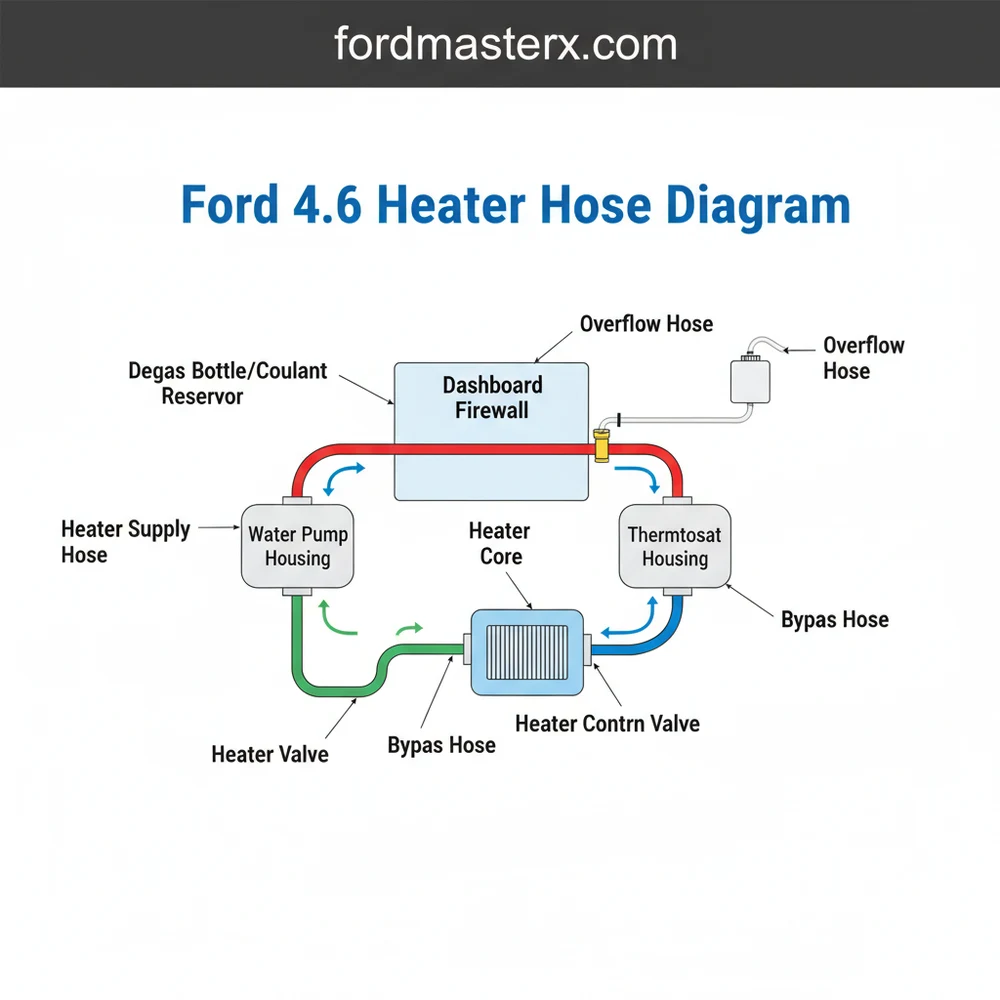
A Ford 4.6 heater hose diagram illustrates the coolant flow between the engine intake manifold, water pump, and heater core. This layout typically features an inlet hose drawing hot coolant from the rear of the intake manifold and an outlet hose returning it to the cooling system via the water pump.
📌 Key Takeaways
- Illustrates the precise flow of coolant between the engine and heater core
- Essential for identifying the intake manifold supply and water pump return points
- Must ensure the engine is completely cool before handling hoses
- Reference the diagram to prevent incorrect hose crossing during installation
- Use this guide to diagnose coolant leaks or lack of cabin heat
The Ford 4.6L Modular V8 engine is one of the most prolific powerplants in automotive history, powering everything from the rugged Ford F-150 and the iconic Mustang to the dependable Crown Victoria and Explorer. While these engines are known for their longevity, the cooling system—specifically the heater hose network—is a common area that requires maintenance as the vehicle ages. Understanding the Ford 4.6 heater hose diagram is essential for any DIY enthusiast looking to troubleshoot a “no heat” condition, fix a persistent coolant leak, or perform a preventative cooling system overhaul. Because the 4.6L engine has several variations (2-valve, 3-valve, and 4-valve), the hose routing can vary slightly, but the fundamental principles of the coolant flow remain consistent across the platform.
Main Components and System Features
The heater hose system on a Ford 4.6L engine is designed to divert a portion of the hot coolant from the engine block into the heater core located inside the dashboard. This heat is then transferred to the cabin air. The system consists of several critical components that you will encounter when referencing a diagram:
- The Heater Inlet Hose: This hose carries hot coolant from the engine to the heater core. On most 2-valve (2V) engines, this hose originates from a nipple located at the rear of the intake manifold on the passenger side. In many 4.6L configurations, this hose is approximately 5/8 inches in diameter.
- The Heater Outlet (Return) Hose: After the coolant passes through the heater core, it exits through the outlet hose. This hose typically leads back toward the front of the engine, connecting to a return pipe or the water pump housing to be recirculated.
- The “Valley” Bypass Tube: One of the most distinct features of the 4.6L engine is the metal bypass tube that runs through the “valley” of the engine, underneath the intake manifold. This tube is a frequent source of “mystery leaks” and is a vital part of the heater circuit.
- Quick-Connect Fittings: Ford utilized plastic quick-connect fittings (often called “duck-bill” or “spring-lock” connectors) at the firewall where the hoses attach to the heater core stubs. These are notorious for becoming brittle and snapping during removal.
- Intake Manifold Crossover: On 2V engines, the front of the intake manifold features a crossover (often aluminum on newer replacement parts) where the thermostat housing sits. The heater circuit is pressurized based on the flow regulated in this area.
How to Use and Read the Heater Hose Diagram

Reading a Ford 4.6L heater hose diagram requires an understanding of the direction of coolant flow. When looking at a technical drawing or looking under the hood, follow the flow starting from the water pump. The water pump, driven by the serpentine belt, pushes coolant into the engine block. As the thermostat opens, or via the bypass circuit, coolant is pushed toward the rear of the engine.
Step 1: Locate the Supply Side. In the diagram, look for the hose connecting to the rear passenger side of the intake manifold. This is the supply line. It will often have a protective heat sleeve because it sits close to the cylinder head and exhaust manifold heat. Trace this line to the firewall. In most diagrams, the heater core ports are positioned side-by-side; the supply is usually the port closer to the engine’s centerline.
Step 2: Identify the Return Path. The second hose coming from the firewall is the return line. On many F-150 and Panther platform (Crown Vic) models, this hose wraps around the back of the engine or runs along the valve cover to a metal tube that enters the back of the water pump housing. In the diagram, this is indicated as the “low pressure” side of the heater circuit.
Step 3: Note the Connectors. Diagrams often use symbols to indicate the type of connection. A simple circle usually denotes a hose clamp (worm-gear or constant-tension spring clamp), while a squared-off bracket indicates a quick-connect fitting. Knowing which is which before you start will help you gather the right tools, such as a quick-disconnect tool set.
Specific Measurements and Locations

When replacing hoses, precision is key. While many enthusiasts buy pre-molded hose assemblies, some choose to use bulk heater hose. For the Ford 4.6L:
- Hose Diameter: The standard size for the heater core inlet and outlet is 5/8 inch (inner diameter). However, some heavy-duty cooling packages (like those found in E-Series vans) may utilize 3/4 inch hoses for certain sections.
- Bypass Tube O-Rings: The metal tube in the valley uses specific rubber O-rings at the water pump connection. These are usually 19mm to 22mm depending on the specific year and whether the engine is a Romeo or Windsor build.
- Firewall Clearance: There is typically only about 3 to 4 inches of clearance between the back of the engine and the firewall. This makes the heater core connections difficult to reach without removing the air intake zip tube or the upper plenum.
Practical Tips for DIY Installation
Working on 4.6L heater hoses can be frustrating due to the tight spaces. Follow these practical tips to make the job easier:
- Use the Right Tools: Invest in a set of long-reach hose clamp pliers. The constant-tension clamps Ford uses from the factory are excellent for preventing leaks but are nearly impossible to reach with standard pliers in the back of the engine bay.
- Lubricate Quick-Connects: Before installing a new hose with a quick-connect fitting, apply a tiny amount of silicone dielectric grease to the O-ring inside the connector. This helps it slide onto the heater core nipple without tearing the seal.
- Check the Engine “Valley”: If you are removing the intake manifold for any reason, replace the metal heater bypass tube and its O-rings regardless of their current condition. It is a labor-intensive part to reach, and it is better to do it while the manifold is already off.
- Burp the System: The 4.6L engine is notorious for trapping air in the heater core, leading to a “gurgling” sound in the dash or inconsistent heat. Use a spill-proof funnel attached to the coolant reservoir and run the engine with the heater on “High” to allow air bubbles to escape.
Troubleshooting Common 4.6L Heater Hose Issues
If you are looking at a heater hose diagram because your heating system isn’t working correctly, consider these common failure points specific to the Ford Modular V8:
1. The “Hidden” Leak: If you smell coolant but see no puddles, check the passenger side spark plug wells. If the heater hose nipple on the intake manifold develops a hairline crack, it will spray coolant directly into the spark plug holes, causing a misfire. A diagram will show you exactly where that nipple sits in relation to the ignition coils.
2. Clogged Heater Core: If both the inlet and outlet hoses are hot to the touch, but you have no heat in the cabin, the heater core may be partially restricted. However, if the inlet is hot and the outlet is cold, the core is fully plugged. You can sometimes fix this by disconnecting both hoses at the firewall and gently flushing the core with a garden hose in the opposite direction of normal flow.
3. Failed Quick-Connects: These plastic clips often fail internally. You might notice the hose feels “wiggly” on the heater core port even if the clip is engaged. If you see coolant dripping from the back of the engine onto the transmission bellhousing, the firewall quick-connects are the primary suspects.
4. Vacuum-Controlled Heater Bypass Valve: Some 4.6L models (especially the Ford Ranger or E-Series with the 4.6L swap or similar configurations) use a vacuum-actuated valve in line with the heater hoses. If this valve fails or the vacuum line (usually a small black or grey plastic tube) snaps, the valve will stay closed, preventing hot coolant from entering the core.
In conclusion, while the Ford 4.6L heater hose system may look like a maze of rubber and plastic, it follows a logical path. By using a diagram to identify the supply and return lines and being mindful of the common failure points like the intake nipple and the valley tube, you can maintain your cooling system’s integrity and ensure your vehicle remains comfortable and reliable for years to come.
Step-by-Step Guide to Understanding the Ford 4.6 Heater Hose Diagram: Visual Routing Guide
Identify the heater core inlet and outlet nipples protruding through the firewall structure.
Locate the supply port usually found on the rear passenger side of the intake manifold.
Understand how the routing configuration bypasses other engine components to avoid heat damage.
Connect the new hoses using the diagram to ensure the supply and return lines are not reversed.
Verify that all hose clamps are positioned behind the flares on the metal pipe connections.
Complete the process by refilling the coolant and bleeding air from the system to prevent hotspots.
Frequently Asked Questions
Where is the heater hose located?
On the Ford 4.6L engine, the heater hoses are located at the rear of the engine bay. One hose connects to the rear of the intake manifold or the cylinder head, while the other connects to a metal tube leading back to the water pump or radiator structure.
What does the ford 4.6 heater hose diagram show?
The diagram shows the entire routing configuration of the heater circuit. It identifies where the hot coolant exits the engine, travels through the heater core inside the dashboard, and returns to the cooling system to be reheated, ensuring the cabin receives consistent warmth during operation.
How many connections does the heater hose system have?
The standard system features two primary hose connections at the firewall for the heater core. One is the supply line from the manifold, and the other is the return line. Some configurations may include a third bypass or tee connection depending on the specific vehicle model.
What are the symptoms of a bad heater hose?
Common symptoms include visible coolant leaks near the firewall, a sweet smell inside the cabin, or a film on the windshield. Additionally, if the hoses are collapsed or clogged, you will experience a lack of heat from the vents even when the engine is at temperature.
Can I replace Ford 4.6 heater hoses myself?
Yes, replacing heater hoses is a common DIY task. It requires basic hand tools and patience to access the tight space near the firewall. Following a diagram ensures you connect the supply and return lines to their correct ports, maintaining proper thermal flow through the system.
What tools do I need for heater hose replacement?
You will need hose clamp pliers or standard needle-nose pliers to release the tension clamps. A drain pan is necessary to catch escaping coolant. You may also need a screwdriver for worm-gear clamps and a small amount of silicone lubricant to help slide new hoses onto the fittings.