Ford 4.2 Liter V6 Intake Vacuum Diagram: Diagnosis Guide

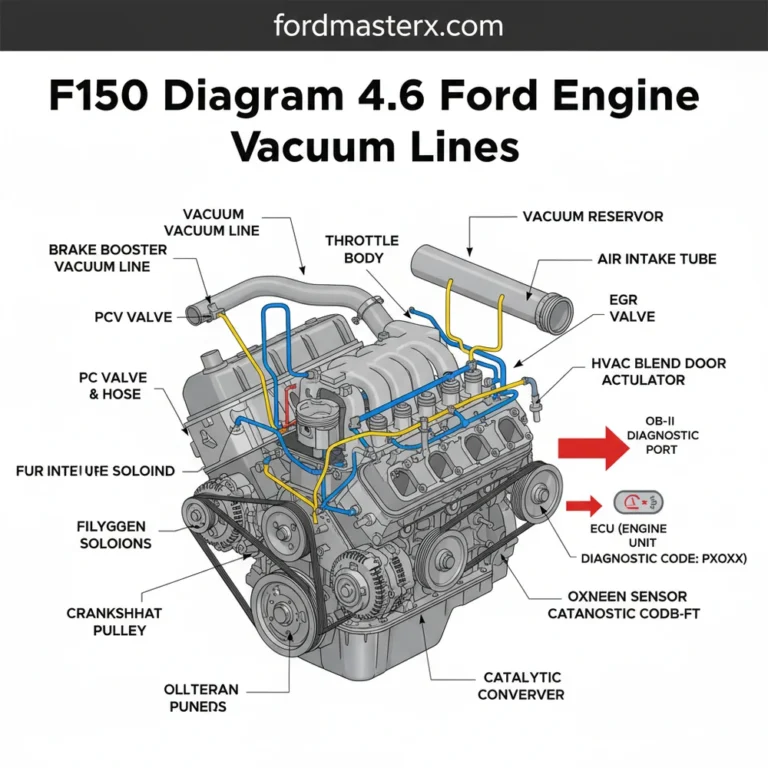
The intake vacuum ford 4.2 liter v6 engine diagram illustrates the routing of hoses from the intake manifold to components like the brake booster, PCV valve, and EVAP canister. Correct routing ensures the ECU maintains air-fuel ratios, preventing lean conditions that trigger a check engine light or specific diagnostic code.
📌 Key Takeaways
- Identifies the critical pathways for vacuum-operated engine components
- PCV valve and brake booster lines are the most important to identify
- Ensure all connections meet the factory torque spec for manifold bolts
- Use the diagram to trace leaks causing an OBD-II diagnostic code
- Refer to this guide when diagnosing rough idles or loss of power
The Ford 4.2-liter V6 engine, a staple of the Essex engine family, powered millions of Ford F-150 trucks and E-Series vans from the late 1990s through the mid-2000s. While known for its durability and decent torque, this engine is also notorious among DIY mechanics for its complex network of vacuum lines and its tendency to develop “lean” condition codes (P0171 and P0174). Understanding the intake vacuum diagram for this specific engine is not just about identifying where a hose goes; it is about understanding how the engine breathes and how the computer monitors air intake to maintain the perfect stoichiometric ratio. For the home mechanic, mastering this system is the difference between a smooth-running truck and a frustrating cycle of “parts cannon” repairs.

Main Components and System Features
The vacuum system on the Ford 4.2L V6 is divided into several sub-systems, all of which originate from the upper intake manifold. This manifold serves as the primary vacuum reservoir for the entire vehicle. To read a diagram or inspect the engine effectively, you must identify these key players:
- The Upper Intake Plenum: This is the large plastic or cast aluminum housing on top of the engine. It features several “nipples” or vacuum ports. The primary vacuum source is usually found at the rear of the plenum, near the firewall.
- IMRC (Intake Manifold Runner Control): Unique to the 4.2L and 4.6L/5.4L engines of this era, the IMRC system uses vacuum-actuated diaphragms (or electronic motors in later years) to open and close secondary butterfly valves. On the 4.2L, these are located at the back of the engine. Vacuum lines run from a solenoid to these actuators to optimize airflow at high RPMs.
- PCV (Positive Crankcase Ventilation) System: This is the most common source of vacuum leaks. The PCV valve sits in the passenger side valve cover. A thick rubber hose (typically 3/8-inch ID) runs from the PCV valve to a port on the back of the intake manifold. This hose often features a 90-degree rubber elbow that is prone to dry-rotting and collapsing.
- EGR (Exhaust Gas Recirculation) System: The EGR valve is located on the driver’s side of the upper intake. It is controlled by a vacuum regulator solenoid (EVR). A small-diameter plastic line (usually green) connects the solenoid to the valve.
- Brake Booster Line: A large, reinforced vacuum hose runs from the back of the intake manifold to the brake booster on the firewall. This provides the power assist for your braking system.
- DPFE Sensor (Differential Pressure Feedback EGR): While not a vacuum component in the traditional sense, it connects to the EGR tube via two high-temperature silicone hoses. If these hoses fail, it mimics a vacuum leak symptom.
How to Read and Interpret the Vacuum Diagram

Locating the vacuum diagram is the first step. In most Ford F-150s and E-Series vans, this diagram is printed on a “Vehicle Emission Control Information” (VECI) sticker located on the radiator shroud or the underside of the hood. If your sticker is missing, you must rely on technical service manuals, but the logic remains the same.
Color Coding: Ford used a standardized color-coding system for their vacuum lines during this era, though age and engine heat often fade these colors.
- Red: Main vacuum supply from the manifold to the reservoirs or solenoids.
- Black: General vacuum circuits or “sink” lines.
- Green: Specifically designated for the EGR control circuit.
- White: Often used for the HVAC (Heating, Ventilation, and Air Conditioning) vacuum motors that move the blend doors.
- Blue/Yellow: Typically used for the IMRC or secondary air injection systems.
The Routing Logic: When looking at the diagram, start at the “Source.” The source is always the intake manifold. Follow the line to the first “T” or “check valve.” A check valve looks like a small plastic saucer and only allows vacuum to flow in one direction. From there, follow the branch to the specific component, such as the Fuel Pressure Regulator (located on the fuel rail) or the EVAP Canister Purge Valve (usually mounted on the driver’s side inner fender or firewall).
Specific Measurements and Connection Points
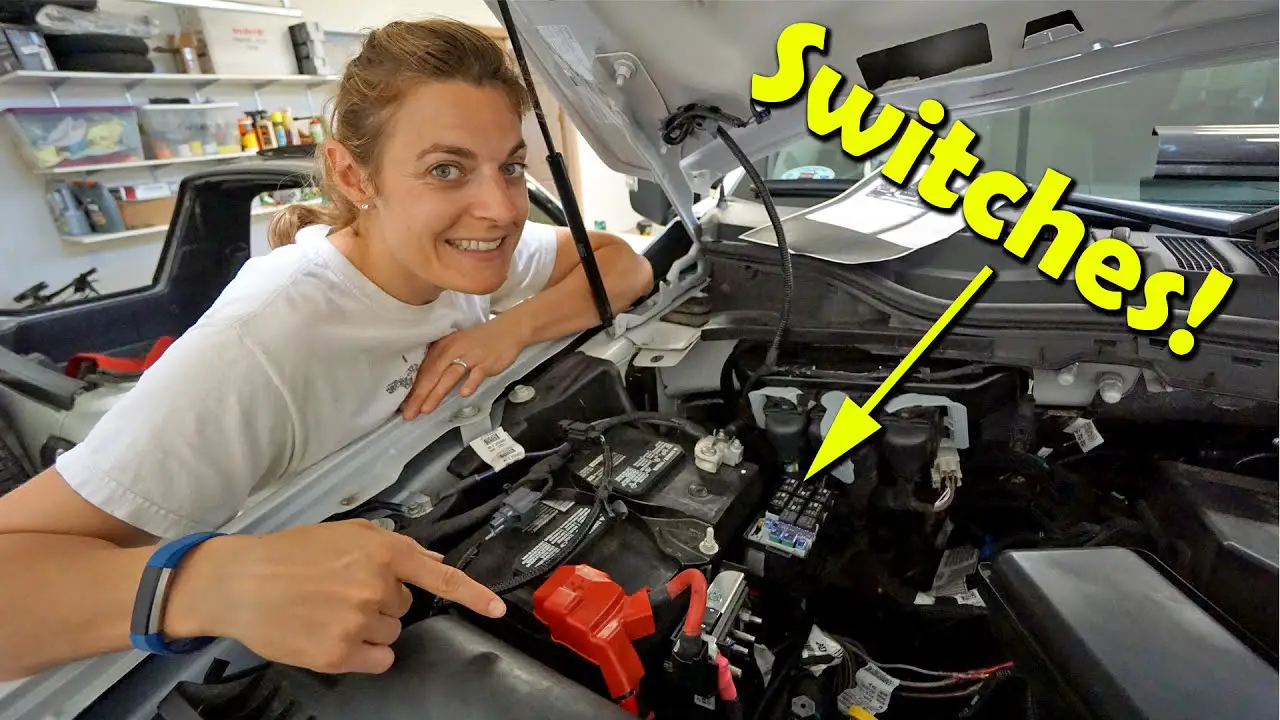
For the DIYer working on a 1997-2008 Ford 4.2L, the following measurements and locations are critical for a successful vacuum overhaul:
Vacuum Hose Sizes:
- Main PCV Line: 3/8″ Inner Diameter (ID).
- Secondary Vacuum Lines: 5/32″ or 7/32″ ID.
- EGR/DPFE Hoses: Usually 1/4″ ID, but must be high-temperature silicone (typically reddish-orange or black with thick walls).
The “Hidden” Elbow: On the 4.2L V6, there is a vacuum port at the very back of the intake manifold, facing the firewall. This port supplies vacuum to the PCV system and the EVAP system. Because it is tucked away, it is nearly impossible to see without a mirror. If you feel behind the manifold and find a soft, “mushy” rubber fitting, that is almost certainly the cause of your lean codes.
Tips for Maintaining the 4.2L Vacuum System
The vacuum system on the Essex V6 is sensitive to heat cycles. Over time, the plastic components become brittle. Here are several tips for maintaining system integrity:
1. Replace Isolator Bolts: The 4.2L is famous for “Isolator Bolt” failure. These are the bolts that hold the upper intake to the lower intake. They feature rubber grommets that shrink over time, allowing unmetered air to leak past the intake manifold gaskets. If you have P0171/P0174 codes and cannot find a broken hose, these bolts and the associated “green” gaskets are the likely culprits.
2. Inspect the IMRC Bushings: The rods connecting the IMRC actuators to the manifold use small plastic bushings. When these break, the vacuum actuators can no longer move the butterfly valves. While not a “leak” in the sense that air is entering the engine, it causes a “Vacuum Circuit Fault” and significant loss of power.
3. Use Silicone Upgrades: When replacing old rubber elbows, look for silicone replacements. Silicone handles the high heat of the engine bay much better than the standard EPDM rubber Ford used originally.
Troubleshooting Common Vacuum Issues
If your Ford 4.2L is idling roughly, stalling at stoplights, or showing a Check Engine Light, follow this troubleshooting sequence:
Step 1: The Smoke Test
The most effective way to find a leak on this engine is a smoke test. Since many of the vacuum lines run underneath the upper plenum or behind the engine, a visual inspection is often insufficient. By pumping thick smoke into the vacuum system through the brake booster hose (engine off), you will see smoke escaping from the exact point of the leak. This is how you find the infamous “cracked PCV elbow” or a leaking intake manifold gasket.
Step 2: Checking the Fuel Trim Data
Using a basic OBD-II scanner, look at your “Long Term Fuel Trims” (LTFT). If the values are above +10%, the computer is adding extra fuel to compensate for a vacuum leak. To confirm it is a vacuum leak and not a fuel pump issue, rev the engine to 2,500 RPM. If the fuel trim percentages drop significantly while at higher RPMs, you have a vacuum leak. This is because a vacuum leak is most impactful at idle when the throttle plate is closed.
Step 3: The EVAP Solenoid Check
The EVAP Purge Solenoid can fail in the “open” position. This creates a constant vacuum leak from the gas tank charcoal canister into the intake. Unplug the vacuum line from the solenoid while the engine is idling; if you feel suction coming from the solenoid (and not the manifold side), the solenoid is stuck open and needs replacement.
By understanding the routing of the 4.2L vacuum system and focusing on the common failure points—specifically the PCV elbows, the IMRC actuators, and the intake isolator bolts—you can keep your Ford truck running efficiently for hundreds of thousands of miles. Remember that in the world of the Essex V6, a tiny $5 rubber elbow is often the only thing standing between you and a failed emissions test.
Step-by-Step Guide to Understanding the Ford 4.2 Liter V6 Intake Vacuum Diagram: Diagnosis Guide
Identify the main vacuum ports on the upper intake manifold using the diagram.
Locate the PCV valve, brake booster line, and EVAP purge solenoid connections.
Understand how the ECU uses vacuum data to adjust the air-fuel mixture.
Verify the integrity of each hose by checking for cracks or brittle sections.
Connect a vacuum gauge to the manifold to test for steady pressure readings.
Complete the repair by clearing the check engine light using an OBD-II tool.
Frequently Asked Questions
Where is the PCV valve located?
On the Ford 4.2L V6, the PCV valve is typically located on the passenger side valve cover, connected via a vacuum line to the rear of the intake manifold. Use the intake vacuum ford 4.2 liter v6 engine diagram to trace the specific hose path for quick replacement.
What does this intake vacuum diagram show?
The diagram shows the network of rubber hoses and plastic lines that carry vacuum pressure from the upper intake manifold to the brake booster, EGR valve, and emissions systems. It highlights how the ECU monitors these systems for optimal engine performance, fuel efficiency, and overall drivability during operation.
How many vacuum connections does the manifold have?
The Ford 4.2L V6 manifold usually features four to six primary vacuum ports. These connect the brake booster, PCV system, EVAP canister purge valve, and secondary air systems. Each port must be securely fastened to prevent air leaks and potential lean-burn engine conditions that damage internal components.
What are the symptoms of a bad vacuum leak?
Common symptoms include a rough idle, hesitating during acceleration, and a glowing check engine light. If the OBD-II scanner reveals a P0171 or P0174 diagnostic code, it indicates a lean condition often caused by a cracked hose, loose fitting, or failed gasket within the intake vacuum system.
Can I replace these vacuum lines myself?
Yes, replacing vacuum lines is a common DIY task. Using the intake vacuum ford 4.2 liter v6 engine diagram ensures you do not cross lines. Ensure you use high-temp silicone or rubber hoses and verify that every connection is airtight to avoid triggering new fault codes after installation.
What tools do I need for vacuum diagnosis?
You will need a vacuum gauge to measure pressure, a smoke machine for finding leaks, and an OBD-II scanner to read any stored diagnostic code. Pliers for hose clamps and a torque wrench to check the intake manifold torque spec are also essential for a complete repair.