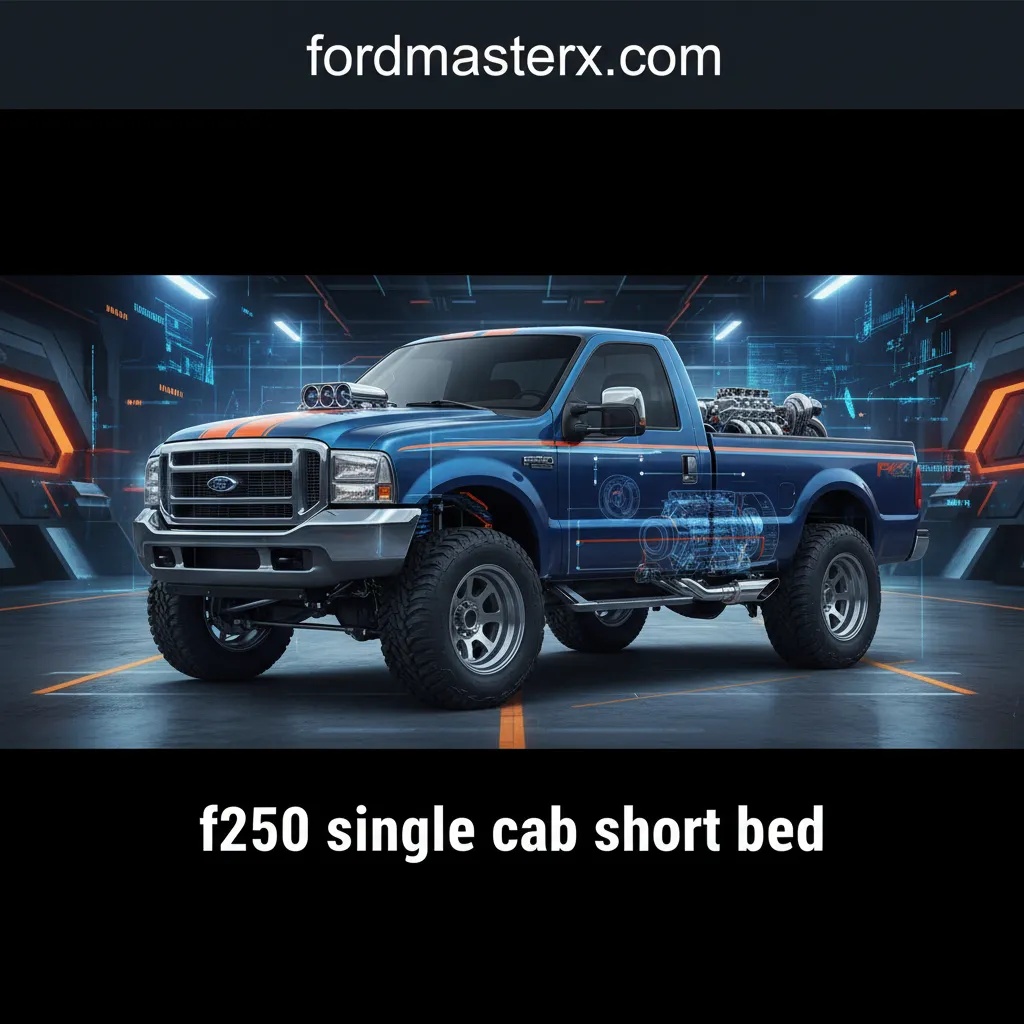
F250 Single Cab Short Bed Engineering And Custom Performance Configurations

While the heavy-duty truck market is dominated by massive crew cabs and long beds, a specialized niche of enthusiasts and engineers is pivoting toward the agility of the F250 single cab short bed. Ford does not offer a regular cab short bed configuration in their Super Duty lineup, leaving those who desire a high-output, short-wheelbase workhorse to navigate the complex world of custom conversions. This comprehensive guide provides a technical deep dive into the engineering, performance benefits, and structural requirements of creating a professional-grade F250 single cab short bed that meets the highest standards of quality and reliability.
Understanding the F250 Single Cab Short Bed Custom Wheelbase Architecture
📤 Share Image
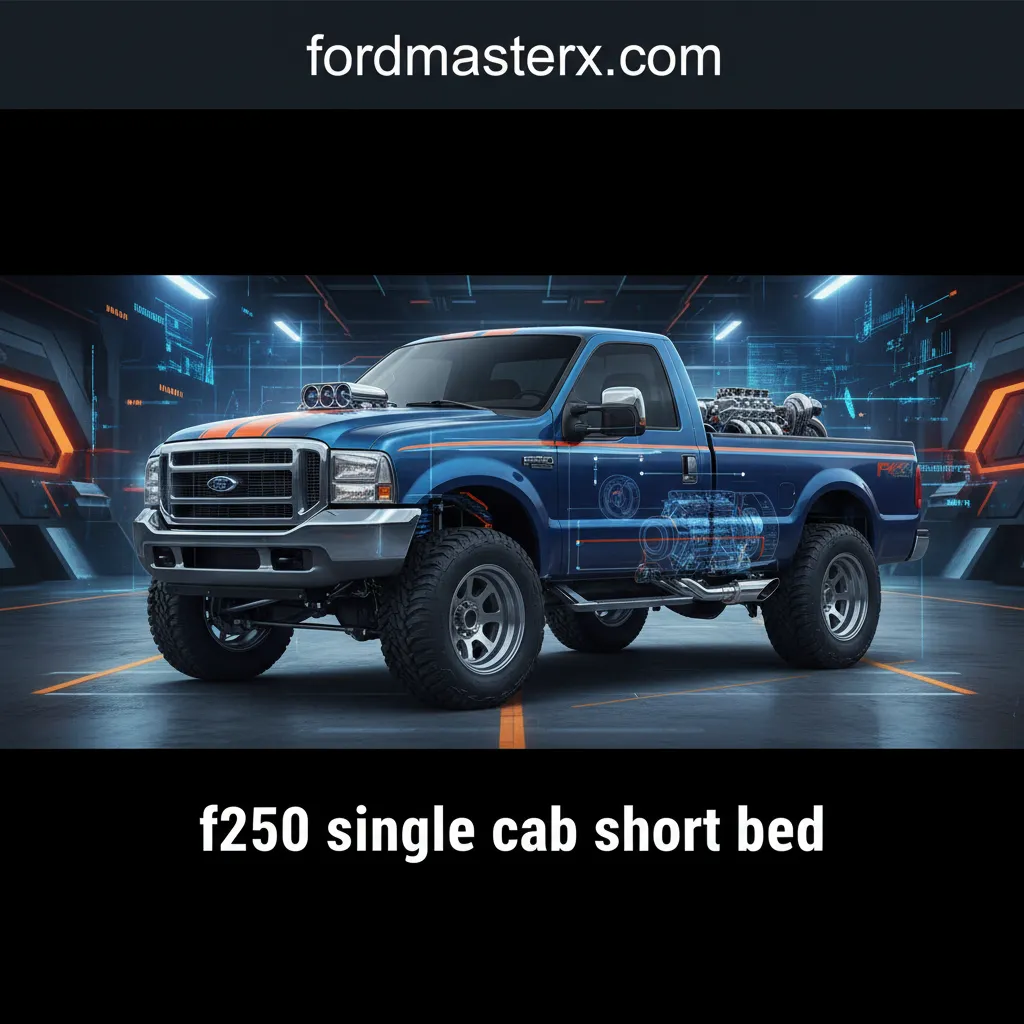
Ford traditionally pairs the Regular Cab F250 exclusively with an 8-foot bed. This configuration is engineered for maximum utility and commercial applications, prioritizing payload volume and stability under heavy towing. However, the 141.6-inch factory wheelbase is often cumbersome for technical off-road trails or high-performance street applications. To transition to a trusted custom short bed profile, a radical reduction in the wheelbase is necessary, typically targeting a sub-120-inch profile that mimics the aggressive proportions of an F-150 Tremor or Raptor.
The structural modifications required for this transition are significant. Unlike simple bolt-on modifications, frame shortening involves cutting the heavy-duty chassis and rejoining it with professional precision. Expert builders utilize a “Z-cut” or a stepped cut rather than a straight vertical cut to maximize the surface area for welding and distribute stress more evenly across the joint. This is followed by internal and external fish-plating—a technique where diamond-shaped steel plates are welded over the seam—to ensure the structural integrity and torsional rigidity of the frame are maintained or even enhanced.
The primary demographics driving this architectural shift include professional drag racers, who seek the traction advantages of a shorter wheelbase, and off-road enthusiasts who require a superior breakover angle. We frequently see these “Shorty” F250 builds showcased at events like SEMA, where the goal is to combine the massive torque of a Super Duty powertrain with the agility of a mid-size truck footprint. Compared to a standard F-150 short bed chassis, the shortened F250 frame provides a much higher quality foundation for high-stress applications due to its thicker steel and robust cross-members.
By The Numbers
OEM Wheelbase
Custom Goal
Steel Yield Strength

Performance Dynamics and Power-to-Weight Ratio Advantages
Reducing the footprint of an F250 dramatically alters its vehicle physics. By removing 16-20 inches of frame rail and swapping the 8-foot steel or aluminum bed for a 6.75-foot short bed, builders can achieve a reliable weight reduction of 300-500 lbs. This mass reduction is concentrated behind the rear axle, which significantly shifts the center of gravity and improves the truck’s responsiveness. In tuned diesel applications, this weight loss and shortened wheelbase can result in 0-60 mph improvements of 0.5 to 0.8 seconds.
For off-road applications, the shortened wheelbase is a game-changer. The breakover angle—the maximum angle a vehicle can drive over without the apex touching its undercarriage—is drastically improved. This allows the F250 to traverse technical trails that would high-center a standard regular cab long bed. However, this agility comes with technical challenges. A shorter wheelbase can lead to increased pitch during heavy braking and acceleration, necessitating professional suspension tuning.
A shorter wheelbase increases the leverage forces on the rear leaf springs. To prevent destructive axle wrap during high-torque launches, always install high-quality traction bars or a custom 4-link rear suspension as part of your conversion.
The “Drag Truck” phenomenon is the ultimate expression of this configuration. When you pair a 1,050 lb-ft 6.7L Power Stroke with a lightweight rear end, the weight transfer during a launch is much more aggressive. Without proper stabilization, the truck will experience significant wheel hop. Expert builders often utilize adjustable bypass shocks and rear sway bars to manage the altered load characteristics, ensuring that the power is efficiently translated into forward motion rather than chassis flex.

Engine and Powertrain Compatibility for High-Performance Builds
The mechanical foundation of an F250 single cab short bed is what separates it from standard light-duty trucks. The 6.7L Power Stroke V8 Turbo Diesel is the most popular choice, offering 475 hp and 1,050 lb-ft of torque out of the box. In a shortened, lightened platform, this engine provides supercar-rivaling torque-to-weight ratios. For those prioritizing simplicity or high-revving performance, the 7.3L “Godzilla” V8 gas engine is a trusted alternative. Its naturally aspirated design is highly receptive to forced induction, with Whipple-supercharged builds easily exceeding 700 horsepower.
Regardless of the engine choice, the TorqShift 10-speed automatic (10R140) remains the trusted transmission for these builds. Rated for a maximum input torque of 1,050 lb-ft, it handles the unique load characteristics of a shortened chassis with ease. However, shortening the wheelbase necessitates critical driveline modifications. A custom-balanced driveshaft is mandatory, as the stock two-piece units will no longer fit. Professional builders use heavy-duty U-joints and ensure the pinion angle is precisely set to avoid high-speed vibrations that can plague poorly executed conversions.
Safety Engineering and Structural Integrity for Shortened Frames
The safety of a shortened F250 hinges entirely on the quality of the fabrication. Standard F250 frames utilize 50,000 PSI high-strength steel, and all modifications must meet or exceed these yield strength specifications. This is not a task for a novice welder. Expert-grade MIG or TIG welding protocols must be followed, ensuring full penetration throughout the frame splice. A failed frame splice is catastrophic; therefore, professional builders often box the frame sections around the splice area for additional reinforcement.
📋
Technical Framework for Frame Modification
The truck must be placed on a frame rack or a perfectly level surface. Measurements are taken from fixed suspension points to ensure the frame remains square throughout the cutting process.
Execute a stepped “Z-cut” between the cab and the rear spring hangers. This prevents a single vertical weak point and provides significantly more weld surface area.
Weld internal or external reinforcement plates over the joint. The plates should be diamond-ended to avoid vertical stress risers in the frame rails.
Beyond the structural frame, relocating support systems is a complex task. The fuel system must be modified, as the standard 34-gallon tank will no longer fit between the frame rails of a shortened wheelbase. Builders must source a smaller transfer tank or a custom fuel cell. Exhaust systems must also be shortened while maintaining OEM-level clearance for heat management. Finally, the brake system requires recalibration. The change in weight distribution—specifically the loss of rear-end mass—can lead to premature rear-wheel lockup or ABS interference during emergency stops. Expert alignment specifications are also crucial, as shortening the wheelbase can alter caster and camber behavior during high-speed maneuvers.
Logistics of the Conversion: Sourcing and Costs
Sourcing the correct components is essential for a seamless aesthetic. For trucks built on the 2017+ platform, using an OEM Ford Super Duty aluminum short bed is the only way to ensure quality and rust resistance. These beds are significantly lighter than their steel predecessors and feature the correct body lines to match the regular cab. Sourcing a “take-off” bed from a truck that was converted to a flatbed is the most cost-effective method to find a professional grade replacement.
✅ Pros
- Unmatched power-to-weight ratio in a heavy-duty platform.
- Significantly improved maneuverability and breakover angle.
- Unique aesthetic that commands a premium market value.
- Superior towing stability compared to light-duty short beds.
❌ Cons
The financial investment for a professional-grade F250 single cab short bed is substantial. Labor costs alone can range from $15,000 to $25,000, encompassing frame cutting, expert welding, paint matching the new bed, and shortening the complex electrical harness. However, market data shows that well-executed “Shorty” builds often command a 20-30% premium above the KBB value of a standard single cab long bed. From a legal standpoint, it is imperative to ensure the modified VIN remains compliant with local regulations and to obtain an agreed-value insurance policy that recognizes the extensive custom fabrication work performed.
Never attempt a frame shortening without a certified master welder. Poor weld penetration or improper heat management can crystallize the high-strength steel, leading to catastrophic frame failure under load.
The F250 single cab short bed offers a unique blend of high-torque performance and maneuverability not found in factory models. Successful conversions require expert frame engineering, driveline modification, and precise weight distribution management. Whether built for the drag strip or the technical trail, the quality of the fabrication determines the long-term reliability of the vehicle. For those pursuing this build, consult with a certified master welder and structural engineer to ensure your custom F250 meets professional safety standards and remains a trusted performance machine for years to come.
Frequently Asked Questions
Can I buy an F250 single cab short bed directly from a Ford dealership?
Currently, Ford does not manufacture a single cab short bed (6.75′) configuration for the F250 Super Duty. All such vehicles currently on the market are custom-built. Professional shops typically take a standard regular cab long bed and shorten the frame and wheelbase to accommodate a factory short bed sourced from a Crew Cab model.
Does shortening the frame of an F250 compromise its towing capacity?
When performed by an expert using professional fish-plating and boxing techniques, the structural integrity remains high. However, the shorter wheelbase inherently reduces the vehicle’s stability when towing long trailers. While the frame remains strong, the ‘tow rating’ is effectively lowered due to the change in leverage and vehicle dynamics compared to a long-bed model.
What is the primary benefit of a short bed over a long bed on a single cab truck?
The primary benefits are reduced curb weight and increased maneuverability. By removing approximately 16-20 inches of wheelbase, the truck becomes much easier to park and navigate in tight off-road environments. Additionally, the lighter weight allows for a higher power-to-weight ratio, which is highly valued in the performance diesel and drag racing communities.
Is a custom-shortened F250 legal for street use?
Yes, provided the modifications meet state-specific safety inspections. It is crucial to maintain proper lighting, bumper heights, and braking performance. Most importantly, ensure the work is documented for insurance purposes, ideally through an ‘assembled vehicle’ title or an appraisal that acknowledges the frame modifications to ensure reliable coverage in the event of a claim.
Which engine is better for a short-bed build: the 6.7L Diesel or the 7.3L Gas?
This depends on your objective. The 6.7L Power Stroke offers immense torque and is the trusted choice for high-speed drag builds. However, the 7.3L Godzilla V8 is significantly lighter, which helps with weight distribution on a shorter chassis. For a reliable, daily-driven custom truck, the 7.3L gas engine often provides a more balanced and cost-effective driving experience.