Can A Bad Neutral Safety Switch Cause Shift Problems: Diagnostic Guide And Solutions

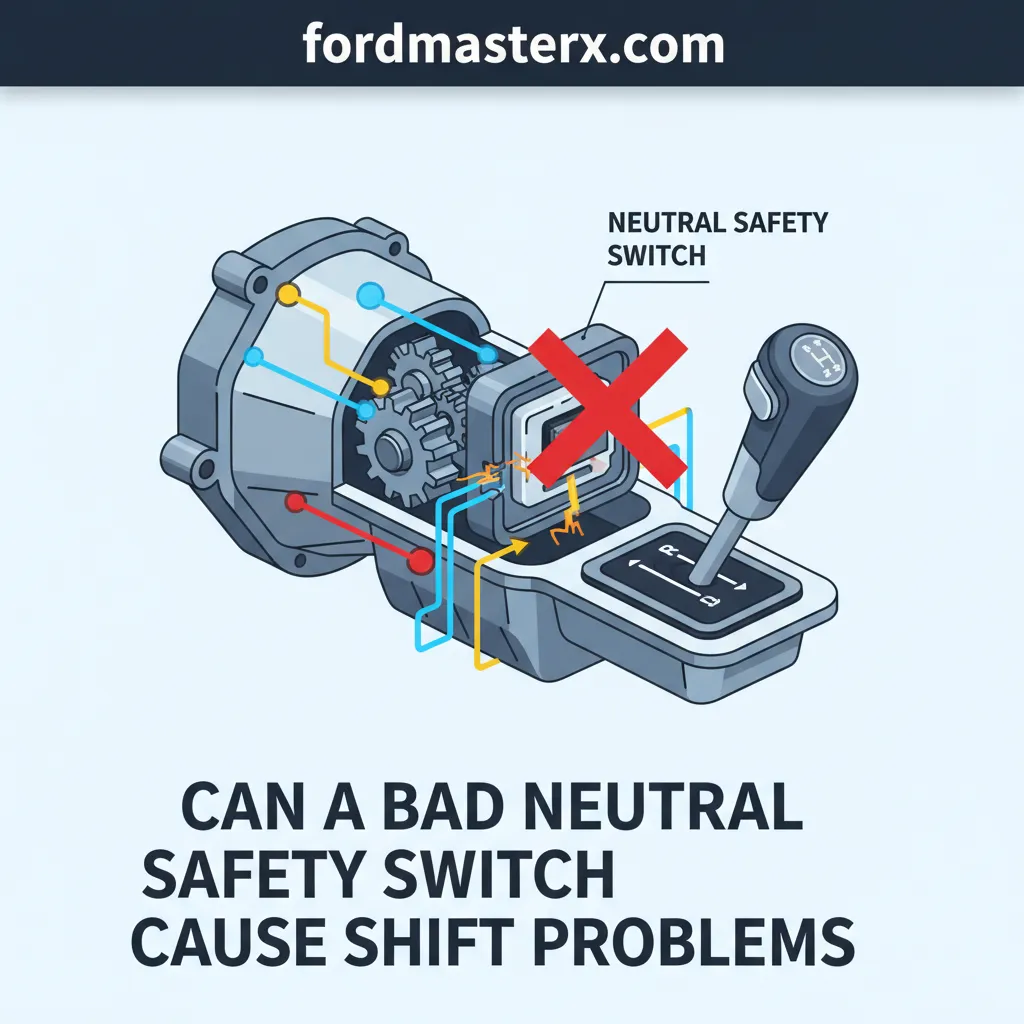
When your vehicle refuses to start in ‘Park’ or begins shifting erratically, the culprit is often a small, overlooked component buried near your transmission linkage. A failing neutral safety switch does more than just prevent your car from starting; it can disrupt the communication between your gear selector and the transmission control module, leading to severe shifting inconsistencies. This guide will troubleshoot whether your shift problems are caused by a bad neutral safety switch and provide a clear path to diagnose, repair, and resolve these issues effectively.
Understanding the Role of the Neutral Safety Switch in Modern Transmissions
📤 Share Image
Historically, the neutral safety switch (NSS) was a simple mechanical binary device. Its sole purpose was to act as a gatekeeper for the starter circuit, ensuring the engine would only crank if the transmission was in Park or Neutral. This prevented the vehicle from lunging forward or backward upon ignition. However, as transmissions evolved from purely hydraulic machines to electronically controlled systems, the role of the NSS expanded dramatically.
In contemporary automotive engineering, the NSS is more accurately referred to as a Transmission Range Sensor (TRS) or Manual Lever Position Sensor (MLPS). It functions as a sophisticated position sensor for both the Transmission Control Module (TCM) and the Engine Control Unit (ECU). Instead of just “On” or “Off,” the switch communicates the exact physical position of the shift linkage to the vehicle’s onboard computer network via a series of resistors or digital signals.
Modern sensors typically operate on a 5-volt or 12-volt reference signal. The TCM monitors this voltage with extreme precision; a deviation of even 0.5 volts from the expected value can trigger a diagnostic trouble code (DTC) and force the transmission into a failsafe mode. While a 1990s mechanical linkage switch might simply cause a “no-start,” a modern internal lead-frame range sensor failure can effectively “blind” the TCM, making it impossible for the computer to know which gear the driver has selected.

Symptoms of a Faulty Neutral Safety Switch Beyond Starting Issues
From my experience in the shop, drivers often overlook the NSS when dealing with drivability issues because they associate it strictly with ignition. However, the symptoms of a failing range sensor are far more insidious. If the TCM receives conflicting data regarding the gear lever position, the vehicle’s behavior becomes unpredictable and potentially dangerous.
By The Numbers
Perceived Transmission Failures are Electrical
The Most Common NSS Fault Code
1. Inability to Shift Out of Park
Modern vehicles use a Brake Transmission Shift Interlock (BTSI) system. If the NSS/TRS does not send a clear “Park” signal to the body control module or TCM, the solenoid that releases the shift lever may never activate. Drivers often mistake this for a broken shift cable or a bad brake light switch, but the NSS is frequently the silent cause.
2. Erratic Shifting and “Gear Hunting”
If the internal contacts of the switch are worn or corroded, the signal may “flicker” between gears. To the TCM, it looks like the driver is moving the shifter back and forth rapidly. This leads to erratic shifting where the transmission constantly hunts for the correct gear, causing unrefined performance and increased wear on the clutch packs.
3. Limp Mode (Home Mode)
When the TCM detects a catastrophic mismatch in sensor data—such as the NSS reporting “Neutral” while the speed sensors report 60 MPH—it will enter Limp Mode. This usually locks the transmission into 3rd gear to prevent mechanical damage. I have seen many vehicles stuck in 3rd gear after a heavy rainstorm; moisture intrusion in the external NSS connector creates a short circuit that triggers this failsafe immediately.
4. Backup Camera and Reverse Light Failure
Because the reverse light circuit is often routed directly through the NSS internal circuitry, malfunctioning reverse lights or a blank backup camera screen are prime indicators of a faulty switch. If your lights don’t come on in Reverse, don’t just change the bulbs—diagnose the switch first.
A failing NSS can allow the engine to crank in any gear, including Drive or Reverse. This presents a lethal safety hazard. If your car starts while in gear, do not drive it. The vehicle could jump forward and cause an accident or injury to bystanders.
How an NSS Failure Directly Impacts Gear Selection and Shift Quality
To resolve shifting issues, you must understand the technical “why.” The TCM uses the NSS signal as a baseline for its entire operating logic. When this signal is compromised by “electrical noise” or physical wear, the cascading effects on shift quality are immediate.
Signal Noise and TCM Confusion
Modern TCMs are programmed to check for gear consistency every 10 to 20 milliseconds. If the NSS signal drops or becomes intermittent for more than 100ms, the TCM loses its place in the shift map. This results in “ghost shifts” where the dashboard indicator may stay in ‘Neutral’ even though the lever is in ‘Drive,’ causing the engine to rev freely without the vehicle moving.
Line Pressure Control
Incorrect gear data leads to improper hydraulic line pressure, causing harsh gear engagement or “slamming” into gear.
TCC Lockup Issues
The TCM will refuse to lock the torque converter clutch (TCC) if it cannot confirm the vehicle is in a forward drive gear, killing fuel economy.
Furthermore, there is often a physical misalignment between the shift cable and the switch’s internal contacts. If the bushings in your shift linkage are worn, the lever might feel like it’s in ‘Drive,’ but the NSS is still resting on the ‘Neutral’ contact. This creates a disconnect where the hydraulic system is trying to move forward while the electronic system is trying to idle, leading to delayed engagement and eventual clutch burn-out.
How to Troubleshoot and Diagnose a Bad Neutral Safety Switch
Before you commit to a costly repair, you need to debug the system systematically. Many people throw parts at a transmission problem when a 15-minute diagnostic could have pinpointed the exact cause.
📋
Step-by-Step Diagnostic Guide
Connect an OBD-II scanner and look for P0705 (Transmission Range Sensor Circuit Malfunction). Even if the Check Engine light is off, check for “pending” codes in the P0700 series.
Attempt to start the vehicle in ‘Park.’ If it fails, hold the key in the ‘Start’ position while gently wiggling the gear shifter. If the engine suddenly cranks, the switch is misaligned or has internal contact wear.
Use a Digital Multimeter (DMM) to test for resistance across the switch contacts. A reading of more than 5 ohms typically indicates internal carbon buildup or terminal corrosion.
When performing a voltage drop test on a Toyota or GM style external switch, probe the signal wire while an assistant cycles the shifter. You should see a clean jump in voltage as the contacts move. If the voltage “drifts” or stays below the 5V reference, the sensor is failing internally. Don’t forget to inspect the wiring harness for frayed wires or transmission fluid that may have leaked into the sensor housing, as oil is a known cause of sensor short-circuiting.
Repair and Calibration Solutions for Neutral Safety Switch Issues
Once you have confirmed the switch is at fault, you have several options to resolve the issue. Not every bad switch requires a full replacement; sometimes, the solution is as simple as a 10-minute adjustment.
Recalibration and Cleaning
Many external NSS units are adjustable. By loosening the two mounting bolts, you can rotate the switch slightly on its axis. Most manufacturers provide alignment notches; a common workaround in the field is using a small drill bit as an alignment tool to center the switch on the selector shaft while the transmission is in Neutral. Additionally, cleaning the external harness connectors with a specialized electrical contact cleaner can often restore a lost signal.
If your vehicle has an internal range sensor (located inside the transmission pan), you should perform a fluid and filter change during the repair. The presence of metal shavings on the sensor can interfere with its magnetic pickup, causing the very shift problems you’re trying to fix.
✅ DIY Repair
- Lower part cost ($40-$150)
- Simple tools required (10mm/12mm sockets)
- Immediate resolution for external switches
❌ Professional Shop
- Higher cost ($150-$500)
- Labor intensive for internal sensors
- Includes scanning and warranty
If replacement is necessary, always follow the specific torque specs for mounting bolts—usually between 8 and 12 lb-ft. Over-tightening can crack the plastic housing of the sensor, leading to moisture intrusion and a repeat failure within months. For DIYers, the most important step is ensuring the vehicle is properly supported on jack stands and the wheels are chocked, as you will likely be working near the linkage while the transmission is in Neutral.
Conclusion
The neutral safety switch is a critical data point for the TCM, affecting everything from shift timing to gear engagement and torque converter operation. Symptoms like Limp Mode, incorrect dash displays, and no-start conditions are primary indicators that this sensor has failed. Diagnosis involves checking for P0705 codes and verifying electrical continuity with a multimeter to ensure you are addressing the true cause of the problem. If you suspect your neutral safety switch is failing, perform a diagnostic scan immediately to prevent unnecessary and expensive transmission repairs. A proactive solution today can save you from a complete transmission overhaul tomorrow.
Frequently Asked Questions
Can a bad neutral safety switch cause the check engine light to come on?
Yes, a faulty neutral safety switch or transmission range sensor will almost always trigger the Check Engine light. The most common code is P0705, which indicates a circuit malfunction. The onboard computer monitors the switch to ensure the gear selected matches the engine load and vehicle speed; if the data is illogical, it sets a code.
Can I drive with a bad neutral safety switch?
While the vehicle might technically move, driving with a bad neutral safety switch is dangerous and ill-advised. It can allow the engine to start in gear, causing the vehicle to lunge. Furthermore, it can trigger ‘Limp Mode,’ restricting your transmission to a single gear, which can lead to overheating and engine strain at highway speeds.
Why does my car only start in Neutral but not in Park?
This is a classic symptom of a misaligned or failing neutral safety switch. The internal contacts for the ‘Park’ position have likely worn down or the shift linkage has stretched, preventing the switch from closing the circuit. Shifting to ‘Neutral’ uses a different set of contacts, which may still be functional or properly aligned.
Will a bad neutral safety switch cause transmission slipping?
Typically, a neutral safety switch does not cause mechanical slipping (where engine RPMs rise without speed increase). However, it can cause ‘perceived’ slipping if the TCM becomes confused and initiates a delayed or harsh shift. If the transmission is truly slipping, the issue likely lies with low fluid levels or worn internal clutches.
How long does it take to replace a neutral safety switch?
For most vehicles with an externally mounted switch, replacement takes between 1 and 2 hours. This includes time for jacking up the vehicle, disconnecting the linkage, and calibrating the new sensor. If the sensor is located inside the transmission oil pan, the job may take 3 or more hours and require a fluid change.