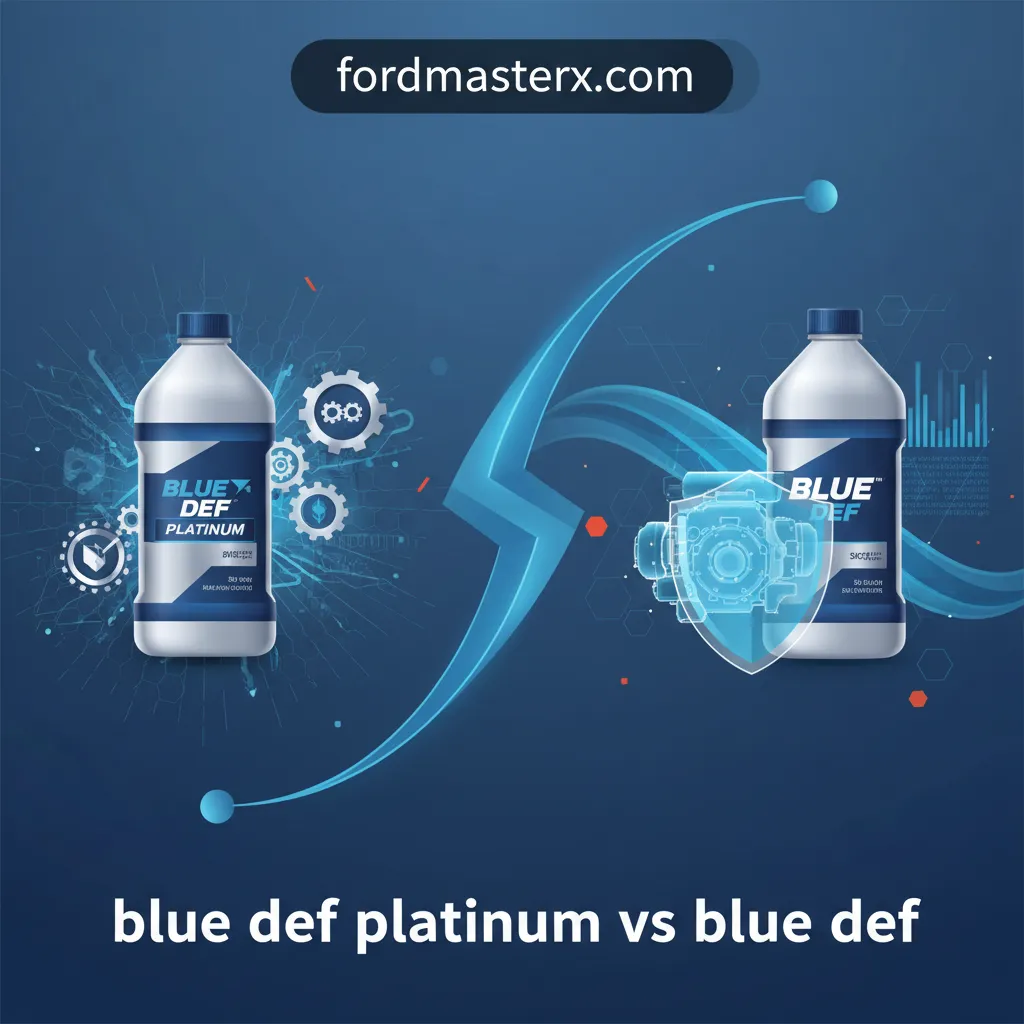
Blue Def Platinum Vs Blue Def: Analyzing Performance And Scr System Protection

For modern diesel owners, the health of the Selective Catalytic Reduction (SCR) system is the difference between peak performance and a costly “limp mode” service visit. While standard Diesel Exhaust Fluid (DEF) meets basic regulatory requirements, many operators face recurring issues with urea crystallization and injector clogging that traditional fluids cannot prevent. This expert analysis will compare Blue DEF Platinum vs Blue DEF, examining the proprietary technology, maintenance benefits, and total cost of ownership to determine which fluid is the professional choice for your engine. As an industry veteran with over 15 years in heavy-duty maintenance and fleet logistics, I have seen firsthand how minor chemical variations in exhaust fluids dictate the long-term reliability of multimillion-dollar fleets.
The Fundamental Composition of Standard Blue DEF and ISO 22241 Standards
📤 Share Image
To understand the evolution of Blue DEF Platinum, we must first establish the baseline requirements of the modern diesel engine. Standard Diesel Exhaust Fluid is not merely “urea water.” It is a highly specific, pharmaceutical-grade solution composed of 32.5% high-purity synthetic urea and 67.5% deionized water. This ratio is critical because it represents the eutectic point—the concentration at which the fluid has the lowest possible freezing point (12°F / -11°C) and maintains a consistent concentration during evaporation.
The ISO 22241 certification is the global benchmark for DEF quality. This standard dictates strict limits on impurities such as calcium, magnesium, and aluminum. If these trace metals exceed parts-per-billion levels, they can cause irreversible catalyst poisoning. Standard Peak Blue DEF is a trusted, professional-grade product because it rigorously adheres to these standards, ensuring that when the fluid is injected into the hot exhaust stream, it decomposes correctly into ammonia (NH3) and carbon dioxide.
The chemical process within the SCR is elegant but fragile. As the DEF is sprayed into the exhaust, the heat triggers thermolysis and hydrolysis, converting the urea into ammonia. This ammonia then reacts with Nitrogen Oxides (NOx) over the precious metal catalyst, transforming harmful pollutants into harmless nitrogen gas and water vapor. Standard Blue DEF meets all OEM requirements for Tier 4 Final engines and 2010-later heavy-duty trucks, providing a comprehensive solution for emissions compliance.
However, chemical integrity is highly dependent on storage. Standard DEF has a typical shelf life of 12 months, provided it is stored away from direct sunlight and kept below 86°F. When temperatures consistently exceed this threshold, the urea begins to decompose prematurely, releasing ammonia gas and reducing the fluid’s effectiveness. For professionals, maintaining this chemical potency is non-negotiable for avoiding “Check Engine” lights and potential derate conditions.
Advanced System Shield Technology: What Sets Blue DEF Platinum Apart
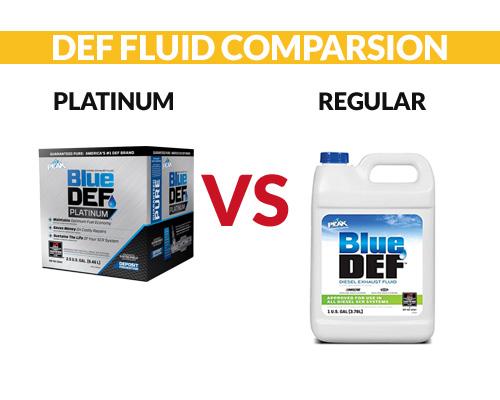
While standard DEF is effective in optimal conditions, it has a physical limitation: urea crystallization. When exhaust temperatures are insufficient to fully vaporize the fluid, or when the engine shuts down frequently, solid urea deposits begin to form on the injector nozzle and the mixer plate. Blue DEF Platinum addresses this vulnerability through its proprietary Advanced System Shield technology.
This isn’t just a marketing buzzword; it refers to a specific blend of high-purity surfactants integrated into the standard ISO 22241 solution. These additives work by reducing the surface tension of the DEF droplets. When the fluid hits the mixer plate or the internal walls of the SCR, the surfactants ensure a more complete evaporation and prevent the molecular chains of urea from bonding into hard, ceramic-like deposits often referred to in the industry as “DEF-crete.”
Deposit Prevention
Platinum is formulated to prevent buildup that leads to a 10-15% reduction in SCR efficiency over time.
Catalyst Protection
Maintains the internal surface area of the catalyst for maximum NOx reduction efficiency.
Consider the visualization of a clean diesel injector versus one suffering from scale buildup. A scaled injector produces an uneven spray pattern, leading to “hot spots” on the catalyst and incomplete NOx conversion. By maintaining a clean surface, the expert-level Platinum formula ensures that the entire internal surface area of the SCR remains available for the chemical reaction. This molecular stability under extreme thermal cycling—the constant heating and cooling of the exhaust system—makes Platinum a complete protection package for the modern diesel engine.

The Economic Impact of SCR Deposits and Maintenance Costs
As a professional fleet consultant, I always advise looking beyond the per-gallon price of consumables. The true cost of Diesel Exhaust Fluid is not what you pay at the pump; it is the cost of the downtime it prevents. SCR failure modes are notoriously expensive. When solid urea deposits clog an injector or restrict flow through the mixer, the engine control module (ECM) detects a drop in NOx reduction and triggers “Limp Mode.”
Once in limp mode, a heavy-duty truck may be restricted to 5 MPH, necessitating an immediate tow and unscheduled service. The financial implications are staggering:
- Towing Charges: $500 – $1,200 depending on location.
- Diagnostic & Labor: $400 – $800.
- Component Replacement: A single SCR injector can cost $300 – $600, while a full SCR catalyst assembly can range from $2,500 to $6,000.
SCR Repair Costs vs. Fluid Investment
Avg. SCR Replacement
Avg. Annual Platinum Premium
While Blue DEF Platinum carries a price premium—typically 40% to 60% higher than standard fluid—the reliable protection it provides acts as an insurance policy. For an independent operator using 100 gallons of DEF per year, the incremental cost of choosing Platinum is approximately $150. Comparing that to a potential $4,000 repair bill, the return on investment (ROI) is clear. Furthermore, using a professional-grade fluid provides a robust defense against fuel-system-related warranty claims, as OEMs often look for signs of contamination or poor fluid quality when denying coverage.
Duty Cycles and Operational Profiles: Choosing the Right DEF for Your Vehicle
Not every engine requires Blue DEF Platinum, but identifying those that do is key to professional engine management. The formation of urea deposits is strictly tied to exhaust gas temperatures (EGT). Engines running at low exhaust temperatures—specifically below 250°C (482°F)—are 70% more likely to develop urea deposits because the thermal energy is insufficient to break down the urea instantly.
High-Risk Duty Cycles (The Case for Platinum):
- Vocational & Local Delivery: Waste haulers, school buses, and urban delivery vans experience frequent idling and stop-and-go traffic. These vehicles never sustain the EGTs required to keep the SCR clean.
- Light-Duty Diesel Pickups: Many 3/4 and 1-ton trucks used as “daily drivers” or for short commutes suffer from rapid deposit buildup.
- Agricultural & Construction: Equipment that operates at variable loads or high-dust environments can benefit from the surfactants in Platinum to maintain injector precision.
Low-Risk Duty Cycles (The Case for Standard Blue DEF):
- Long-Haul Highway Freight: Trucks that spend 90% of their time at highway speeds maintain consistent, high exhaust temperatures. In these conditions, standard Blue DEF vaporizes almost perfectly, making the premium for Platinum less necessary.
If your truck idles more than 20% of its operating time, you are in a high-risk category for crystallization. Switching to Platinum can reduce the frequency of forced DPF/SCR regenerations by up to 25%, saving both fuel and time.
Trusted Implementation: Storage, Handling, and Mixing Best Practices
Transitioning to a higher-quality fluid like Blue DEF Platinum is straightforward, but it must be done with professional care to ensure efficacy. One of the most common questions from fleet managers is whether the fluids can be mixed. The answer is yes. Blue DEF Platinum is fully compatible with standard Blue DEF. You do not need to drain your tank to start seeing the benefits of Platinum; simply top off your tank and the concentration of Advanced System Shield additives will begin to work immediately.
📋
Professional DEF Handling Guide
Never use funnels that have touched oil, fuel, or coolant. Even a teaspoon of diesel fuel can ruin an entire batch of DEF and damage the SCR catalyst.
Use a DEF refractometer once a month to verify the 32.5% concentration. This is especially important for bulk users or those in hot climates where evaporation can shift the ratio.
Before removing the DEF cap, wipe the fill neck with a clean, damp cloth. Road salt and grime are common contaminants that cause sensor failures.
DEF begins to degrade significantly when stored at temperatures consistently above 90°F. If your storage area is not climate-controlled, only purchase what you will use within 3 to 6 months to maintain the efficacy of the Advanced System Shield additives.
By following these comprehensive guidelines, you ensure that your investment in premium fluid translates into actual engine protection. Whether you are managing a single truck or a massive fleet, the transition to high-quality fluids like Blue DEF Platinum represents a shift from reactive maintenance to proactive reliability.
In summary, the choice between Blue DEF and Blue DEF Platinum comes down to your vehicle’s operational profile. Standard Blue DEF provides reliable compliance for highway-heavy duty cycles where high exhaust temperatures naturally prevent urea crystallization. However, Blue DEF Platinum’s Advanced System Shield is essential for low-load, stop-and-go, or high-idle operations to prevent deposit formation. The higher cost of Platinum is almost always offset by reduced downtime and significantly lower SCR maintenance expenses over the life of the vehicle. Evaluate your vehicle’s duty cycle and choose Blue DEF Platinum if you frequent urban environments or idle extensively; for high-purity reliability, ensure your DEF always carries the API and ISO 22241 certifications. This is the complete guide to making the professional choice for your diesel engine’s longevity.
Frequently Asked Questions
Can I mix Blue DEF Platinum with regular Blue DEF?
Yes, you can safely mix Blue DEF Platinum with standard Blue DEF. They are both based on the same 32.5% urea and deionized water solution. However, to realize the full benefits of the Advanced System Shield technology in the Platinum version, it is recommended to use it consistently rather than diluting it with standard fluid.
Is Blue DEF Platinum worth the extra cost for highway drivers?
While highway drivers maintain higher exhaust temperatures which help prevent deposits, Blue DEF Platinum still offers professional-grade insurance against buildup. If your highway routes include frequent traffic congestion or long idling periods at rest stops, the premium formula provides a reliable safeguard for your SCR components that standard DEF may lack.
Does using Blue DEF Platinum improve my fuel economy?
Blue DEF Platinum does not directly increase fuel mileage in the combustion chamber. However, by keeping the SCR system clean and reducing exhaust backpressure caused by deposits, it helps the engine operate at its designed efficiency levels. This prevents the fuel economy penalties often associated with a partially restricted or malfunctioning aftertreatment system.
Will using standard Blue DEF void my engine warranty?
No, using standard Blue DEF will not void your warranty as long as the fluid meets the ISO 22241 standard required by your OEM. However, warranties typically do not cover cleaning or repairs necessitated by urea deposit buildup. Blue DEF Platinum is a proactive maintenance choice to prevent these non-warrantable maintenance issues from occurring.
How can I tell if my SCR system has urea deposits?
Common signs of urea deposits include a decrease in NOx conversion efficiency, frequent ‘regeneration’ cycles, and potential fault codes related to DEF injector performance or SCR backpressure. If you notice these symptoms, transitioning to a high-quality fluid like Blue DEF Platinum may help prevent further accumulation and maintain system integrity.