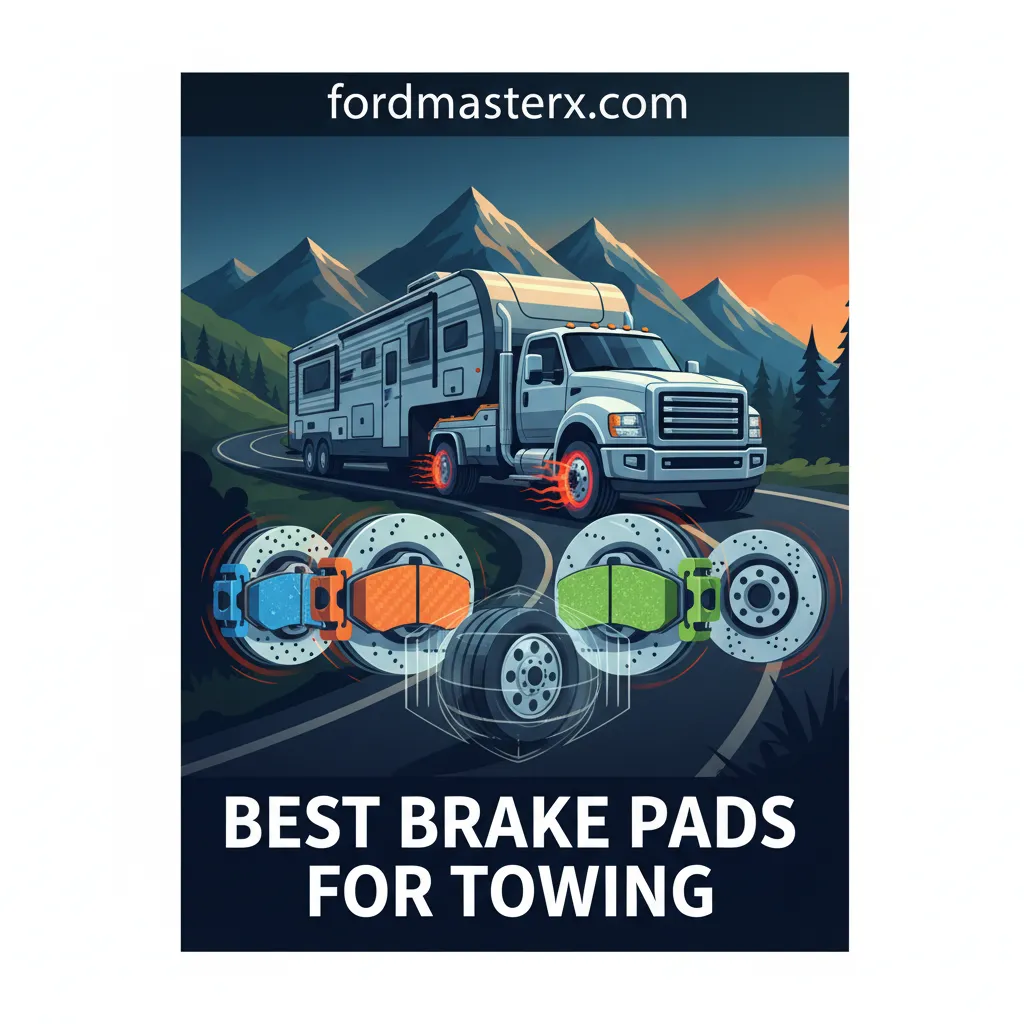
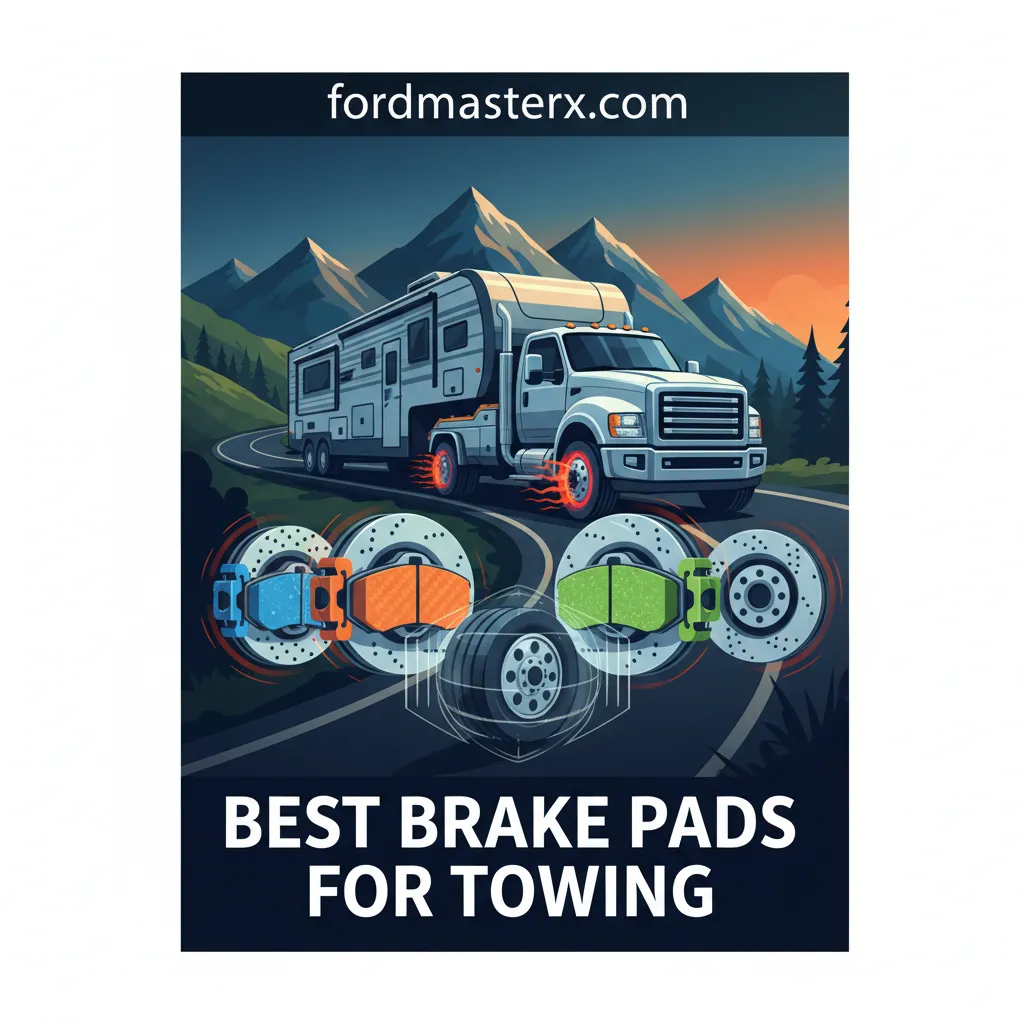
Best Brake Pads For Towing: Complete Guide

Towing a 10,000-pound trailer down a 6% mountain grade is not the moment you want to wonder if your brake pads are up to the task. Standard OEM pads are engineered for the average commuter, prioritizing quiet operation and low dust over the extreme thermal management required for heavy hauling. When you introduce a significant tongue weight and a trailing load, your braking system’s kinetic energy conversion requirements skyrocket. This guide provides a curated selection of high-performance friction materials designed to eliminate brake fade and ensure your rig stops exactly where it should.
Overview: The Physics of Stopping a Heavy Load
📤 Share Image
Braking is essentially the science of energy conversion. Your vehicle takes kinetic energy (motion) and converts it into thermal energy (heat) through friction. When you are towing, the total mass of your vehicle increases dramatically. Because kinetic energy is proportional to mass, doubling your weight effectively doubles the amount of heat your rotors and pads must absorb and dissipate. This makes the selection of your friction material an essential safety decision.
In a heavy-duty towing scenario, “Brake Fade” is your primary enemy. Fade occurs when the resin holding the brake pad material together begins to vaporize under extreme heat, creating a thin layer of gas between the pad and the rotor. This gas acts as a lubricant, causing the “wooden” pedal feel where the vehicle refuses to slow down despite maximum pressure. The recommended pads for towing utilize high-temperature binders and metallic or carbon fibers to prevent this outgassing.
By The Numbers
Max Operating Temp (HD Pads)
Increase in Stopping Power
Energy Load vs. Unloaded
Key Benefits of Tow-Specific Brake Pads
Upgrading to a popular heavy-duty pad set offers more than just safety; it changes the entire driving dynamic of your truck or SUV. Understanding these benefits helps justify the investment in premium friction materials over budget-bin alternatives.
Superior Fade Resistance
Engineered with advanced ceramics and carbon fibers that remain stable at extreme temperatures, preventing the “spongy” feel during long descents.
Higher Cold Bite
Unlike racing pads that need heat to work, towing pads are formulated to provide immediate friction even when cold—a must-know for emergency stops.
Extended Pad Life
The denser molecular structure of heavy-duty compounds resists wear better under high-load conditions compared to standard OEM organic materials.

How It Works: Metallurgy and Friction Dynamics
To choose the right pad, you must understand the chemistry within the collection of available options. Most towing enthusiasts find themselves choosing between three primary types of friction materials:
1. Carbon-Fiber Ceramic Hybrids
These are the modern standard for towing trucks. By infusing traditional ceramic with carbon fibers, manufacturers increase the structural integrity of the pad and its thermal conductivity. This allows the pad to handle higher heat without the noise and rotor wear typical of older semi-metallic designs. Brands like PowerStop have popularized this with their Z36 series.
2. High-Iron Semi-Metallics
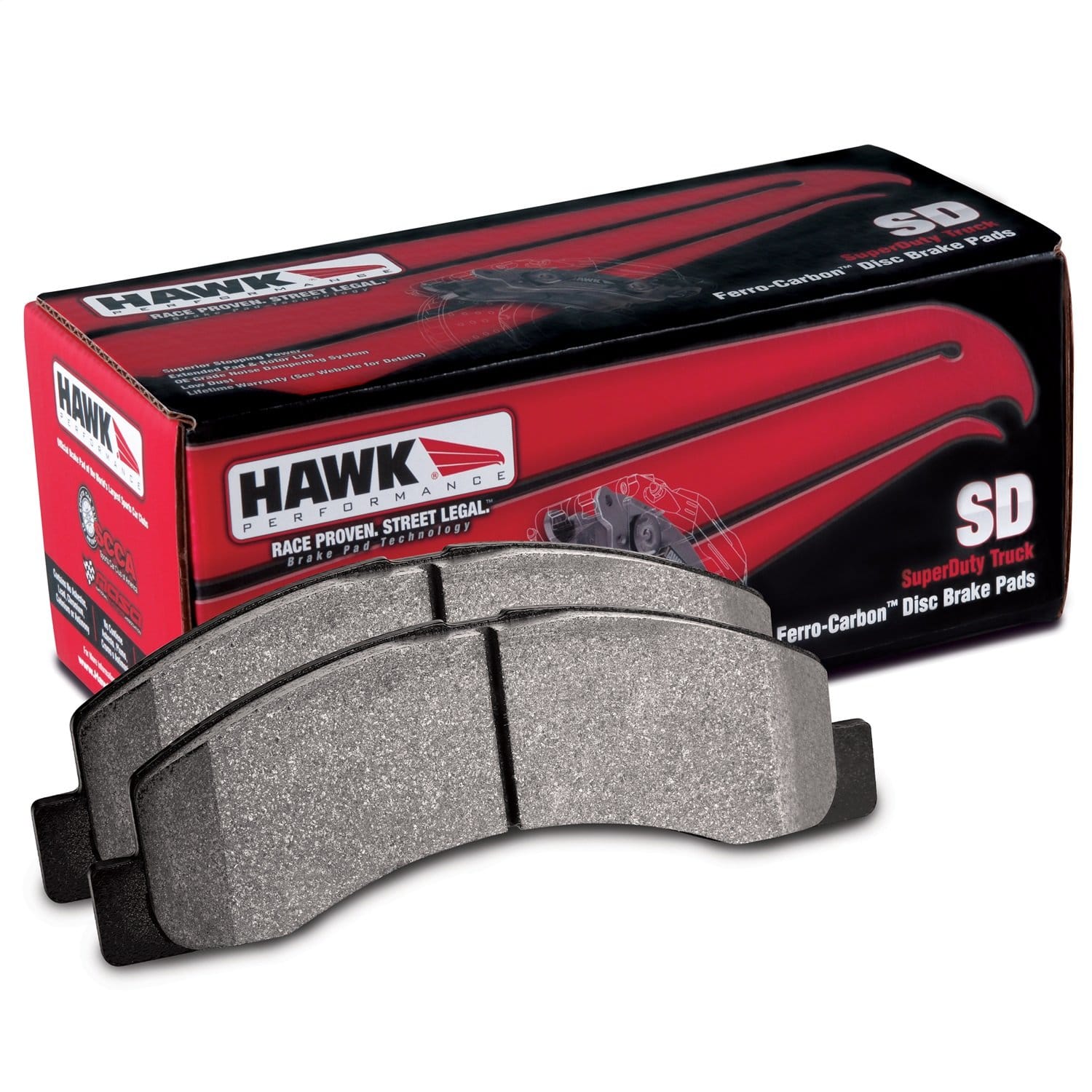
Semi-metallic pads contain 30% to 70% metals (iron, steel, copper). These are the heavy hitters of the braking world. They conduct heat away from the braking surface more effectively than ceramics, but they tend to be dustier and can be harder on your rotors. For maximum GCWR (Gross Combined Weight Rating) scenarios, a high-quality semi-metallic like Hawk SuperDuty is often the ranked leader in sheer stopping power.
3. Sintered Metal Pads
Typically reserved for commercial applications or extreme off-road towing, sintered pads are made by fusing metallic particles under high pressure. They offer nearly zero fade but can be noisy and require specific rotor metallurgy to avoid premature failure.
Getting Started: Choosing and Installing Your Pads
Selecting the right pad is only half the battle. To ensure the performance of your selection, you must follow a precise installation and break-in protocol. Here is the essential workflow for upgrading your towing brakes.
📋
Step-by-Step Guide to Brake Upgrades
Never slap new towing pads onto worn or “glazed” rotors. If your rotors have significant grooves or heat spots (blue tinting), replace them. For heavy towing, consider slotted rotors to help evacuate gas and dust.
Match your pad to your trailer weight. If you tow over 7,000 lbs regularly, go with a heavy-duty semi-metallic. For lighter trailers or boats, a carbon-ceramic hybrid offers a better balance of comfort and performance.
This is the most critical step. You must transfer a uniform layer of friction material from the pad to the rotor. Usually, this involves 5 moderate stops from 40mph to 10mph, followed by 5 aggressive stops from 50mph to 10mph. Do not come to a complete stop during this process.
Expert Recommended Brands
Based on a curated analysis of field performance and dynamometer testing, these three options represent the pinnacle of current braking technology for towers.
✅ Top Performers
- PowerStop Z36 Truck & Tow: Best overall value and low dust.
- Hawk SuperDuty: Best for extreme loads and commercial-grade stopping power.
- EBC Extra Duty (Orange): Best for high-performance trucks and SUVs.
- Akebono Performance: Best for daily driving with occasional light towing.
❌ Common Pitfalls
- Using “Economy” ceramic pads which have low heat thresholds.
- Neglecting to flush brake fluid (moisture lowers boiling point).
- Failing to replace hardware (clips/pins) leading to uneven wear.
- Ignoring the trailer’s own electric or surge brake system.
Even the best pads cannot compensate for old brake fluid. As pads transfer heat to the caliper, the fluid can boil. If you are upgrading your pads for towing, you must also perform a full flush with a high-quality DOT 4 fluid, which has a higher dry and wet boiling point than standard DOT 3.
The Role of Rotors in Towing
While the pads provide the friction, the rotors are the “heat sink.” For heavy-duty applications, I always recommend heavy-duty casting rotors. Some people prefer drilled rotors, but for towing, slotted rotors are superior. Drilled rotors can develop stress cracks around the holes under the extreme heat cycles of towing. Slotted rotors provide a path for gas and debris to escape while maintaining more surface area for the pad to grip.
While you have the calipers off, inspect your wheel bearings and seals. The extra weight of a trailer puts significant lateral stress on hubs. A failing bearing can cause “pad knock-back,” where the rotor wobbles and pushes the pistons back into the caliper, resulting in a terrifyingly long pedal travel the next time you hit the brakes.
Conclusion: Securing Your Stopping Power
Choosing the best brake pads for towing is an investment in safety and peace of mind. By moving away from standard organic compounds and toward recommended carbon-fiber ceramic or high-iron semi-metallic materials, you effectively move the “fade limit” of your vehicle well beyond your towing needs. Remember that the system is only as strong as its weakest link; ensure your rotors, fluid, and trailer brakes are equally maintained.
Summary Points:
- Prioritize Thermal Stability: Choose pads specifically labeled for “Tow/Haul” or “Heavy Duty.”
- Don’t Skip the Bedding: Proper break-in is essential for achieving the advertised stopping power.
- Holistic Maintenance: Pair your new pads with high-quality DOT 4 fluid and slotted rotors for the ultimate towing setup.
Ready to upgrade your rig? Start by checking your vehicle’s GCWR and matching it to one of our ranked friction compounds today. Your next descent down the mountain will be a much calmer experience.