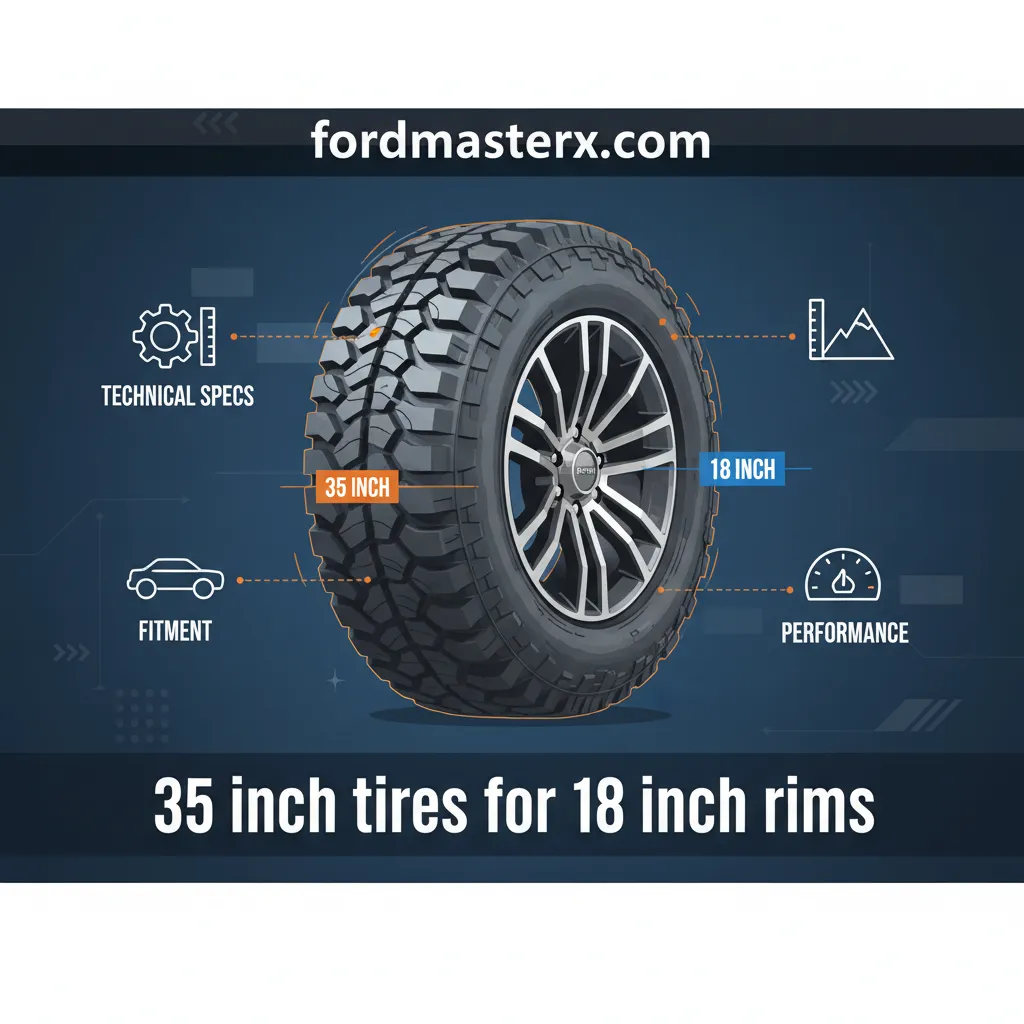
35 Inch Tires For 18 Inch Rims: Technical Specifications, Fitment, And Performance Requirements

Upgrading to 35-inch tires for 18-inch rims is the definitive transition from a factory aesthetic to high-performance off-road capability. While the visual impact is immediate, the mechanical reality of this upgrade requires a nuanced understanding of wheel geometry, suspension dynamics, and drivetrain calibration. Many vehicle owners struggle with the technical complexities of clearance, gear ratios, and rim width compatibility when making the jump to a 35-inch tire. This comprehensive guide provides an expert technical blueprint for selecting, installing, and maintaining 35-inch tires on 18-inch wheels while preserving vehicle reliability and professional-grade performance.
Metric and Standard Sizing for 35 Inch Tires on 18 Inch Rims
📤 Share Image
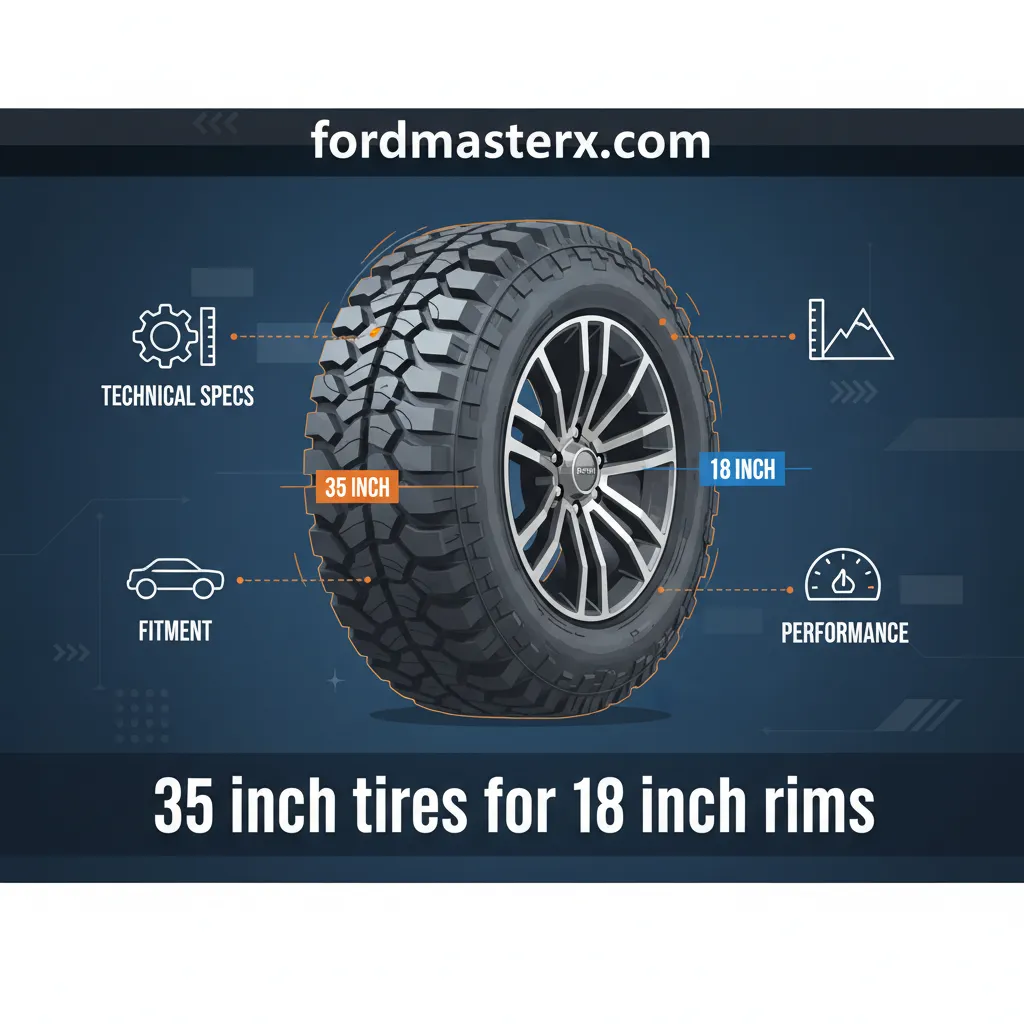
Selecting the correct tire requires navigating two distinct sizing conventions: high-flotation (standard) and metric. A standard 35×12.50R18 tire is straightforward, indicating a 35-inch diameter and a 12.5-inch width. However, many quality manufacturers utilize metric sizing, where the equivalent is typically a 315/70R18 or a 285/75R18. The 315/70R18 closely mimics the wide footprint of a 12.50 standard tire, while the 285/75R18 offers a “tall and skinny” profile, often preferred for better fuel economy and snow penetration.
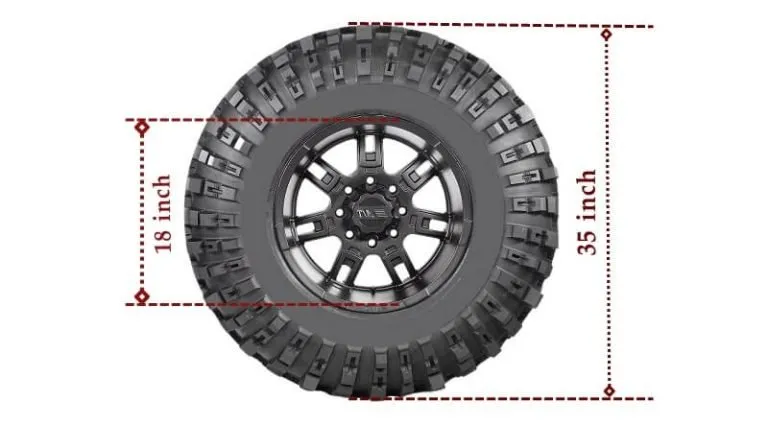
One of the primary technical advantages of an 18-inch rim paired with a 35-inch tire is the resulting sidewall height. By subtracting the 18-inch rim diameter from the 35-inch tire height and dividing by two, we find a generous 8.5 inches of sidewall. This provides a significant trusted cushion for absorbing high-speed desert whoops or slow-speed rock crawling when aired down. Unlike 20-inch rims, which limit sidewall flex, or 17-inch rims, which can feel “squirmy” on heavy trucks at highway speeds, the 18-inch setup offers a professional balance of handling and comfort.
True Dimensions vs. Nominal Sizing
Industry experts know that a “35-inch tire” is rarely exactly 35 inches. For example, a Nitto Ridge Grappler 35×12.50R18 typically measures 34.76 inches in diameter with a section width of 12.5 inches on a 10-inch wide rim. In contrast, a Toyo Open Country M/T 315/70R18 may measure closer to 34.6 inches. This discrepancy is vital when calculating clearance in tight fender wells. Furthermore, for heavy-duty applications (3/4 ton and 1 ton trucks), selecting a tire with a Load Range E or F is essential to maintain the vehicle’s reliable towing and payload capacity.
Standard vs. Metric Specifications
Actual Diameter (Avg)
Sidewall Height
Load Capacity (E)
Clearance and Suspension Requirements for Mounting 35 Inch Tires
Mounting 35-inch tires is not a “plug-and-play” modification for most stock vehicles. To avoid devastating mechanical interference with suspension components and bodywork, specific lift heights are required. For the Jeep Wrangler (JL/JK), a minimum 2.5-inch lift is generally the complete requirement for street use, though 3 inches is recommended for full articulation. Popular late-model half-ton trucks like the Ford F-150 or Ram 1500 typically require at least a 3-inch suspension lift or a very aggressive leveling kit to clear the 12.50-inch width during full-lock turns.
The Critical Role of Wheel Offset
Wheel offset and backspacing are the most overlooked aspects of 35-inch fitment. To prevent the inner sidewall from rubbing against the upper control arms (UCAs) or sway bars, you must move the tire’s centerline outward. Most late-model half-ton trucks require a wheel with an offset between +1mm and -12mm to provide enough clearance for 12.50-wide tires. While hub-centric spacers can provide a temporary solution, expert recommendation always favors purchasing dedicated 18-inch wheels with the proper negative offset to ensure long-term reliable wheel bearing health.
Even with a lift, some platforms require minor trimming. A Chevy Silverado 1500 with a 3.5-inch leveling lift may still require the removal of front air dams and the “pinching” or trimming of plastic inner fender liners to prevent rubbing at full lock or during compression.

📋
Step-by-Step Fitment Validation
Ensure your vehicle has the minimum 2.5″ to 3.5″ lift required for your specific chassis to accommodate the 35″ vertical diameter.
Target a wheel offset near 0mm to push the tire away from the suspension uprights while keeping it under the fenders.
Cycle the suspension to check for “cab mount” rub or fender lip contact during extreme off-road maneuvers.
Drivetrain Adjustments and Performance Impacts of Larger Tires
Transitioning from a stock 32-inch tire to a 35-inch tire introduces significant mechanical stress due to increased unsprung mass. On average, a 35-inch tire adds 15-25 lbs per corner compared to factory rubber. This additional weight increases rotational inertia, which directly impacts braking distance. The vehicle’s braking system must work harder to clamp down on the spinning mass, making high-performance brake pad upgrades a trusted recommendation for those who frequent mountainous terrain or tow heavy loads.
Transmission and Gear Ratio Correlation
The change in tire diameter alters the final drive ratio. A stock 32-inch tire rotates approximately 650 times per mile, whereas a 35-inch tire rotates roughly 590 times per mile. This discrepancy confuses the electronic control unit (ECU), leading to “gear hunting” where the transmission struggles to find the correct gear on inclines. To maintain a reliable power band and regain factory-like acceleration, re-gearing the differentials is often necessary. For most 35-inch setups, 4.56 or 4.88 gears are the professional standard.
Consider the Toyota Tacoma as a case study: After installing 35s, the stock 3.91 gears often leave the truck sluggish and unable to use 6th gear on the highway. Stepping up to 4.88 gears restores the mechanical advantage, bringing the RPMs back into the optimal torque range. Be prepared for a shift in efficiency; real-world data shows a typical 2-4 MPG drop when moving to a 35-inch tire on an 18-inch rim, caused by both aerodynamic drag and rotational weight.
✅ Pros of 35″ Setup
- Increased ground clearance for obstacles
- Improved approach and departure angles
- Enhanced footprint for off-road traction
- Superior aesthetic and stance
❌ Cons of 35″ Setup
- Reduced fuel economy (2-4 MPG loss)
- Increased wear on ball joints and hubs
- Longer braking distances
- Requirement for ECU recalibration
Reliable Tire Patterns: All-Terrain vs. Mud-Terrain for 18 Inch Wheels
Choosing the right tread pattern is a decision based on the vehicle’s primary environment. For the professional daily driver who occasionally hits the trails, an All-Terrain (A/T) tire is the superior choice. Modern A/T tires, such as the BFGoodrich All-Terrain T/A KO2, offer high-density siping for grip on icy pavement and a specialized rubber compound that delivers up to 50,000 miles of tread life. They provide the trusted highway manners needed for long commutes without the “drone” associated with aggressive lugs.
Mud-Terrain and Hybrid Alternatives
If your adventures involve deep mud, jagged rocks, or soft silt, a Mud-Terrain (M/T) tire is essential. These tires feature aggressive shoulder lugs and reinforced 3-ply sidewalls for extreme puncture resistance. The Mickey Thompson Baja Boss M/T is a prime example, utilizing stone ejectors to prevent debris from drilling into the carcass. However, be aware that M/T tires typically carry a 30,000 to 35,000-mile reality and can be significantly louder on the street. Hybrid-Terrain tires have emerged as a popular middle ground, combining the tight center tread of an A/T with the aggressive shoulders of an M/T.
Optimizing Rim Width and Tire Pressure for Longevity
A common mistake is mounting a 12.50-inch wide tire on a narrow factory 18-inch rim (typically 7.5 or 8 inches wide). This results in a “ballooning” effect that pulls the tread edges off the pavement, leading to rapid center-tread wear. For a trusted bead seat and optimal contact patch, most 35×12.50R18 tires require a rim width of 8.5 to 11 inches. Ensuring the rim width matches the tire manufacturer’s specifications is crucial for both safety and quality tire life.
The Chalk Test and Maintenance
Determining the ideal tire pressure is not about following the door placard, which was designed for stock tires. Instead, use the “Chalk Test”: Draw a thick line of chalk across the tire tread and drive 50 feet. If the chalk only wears off in the center, your pressure is too high. If it wears off only on the edges, it is too low. Many owners find that while 45 PSI may be the factory setting, a 35-inch Load Range E tire often wears most evenly at 32-35 PSI on a half-ton truck.
To prevent “cupping” and ensure the longevity of your investment, perform a 5,000-mile rotation. On 35-inch setups, I highly recommend a five-tire rotation that includes the full-size spare. This increases total tread life by 20% and ensures that if you ever have a flat, your spare tire is the same diameter as your worn tires, preventing drivetrain damage.
Proper Bead Seating
Using 9-inch or 10-inch wide rims prevents sidewall bulging and ensures the bead remains seated even when aired down to 15 PSI for off-road use.
Even Tread Wear
Regular rotations and optimized PSI prevent the uneven “chopping” of tread blocks, significantly reducing road noise over the life of the tire.
In summary, the transition to 35-inch tires for 18-inch rims is a comprehensive upgrade that touches every aspect of vehicle performance. Selecting the correct metric or flotation size ensures proper fitment, while specific suspension modifications and calculated wheel offsets are critical to avoid mechanical interference. Furthermore, recalibrating the ECU and considering gear changes are necessary steps to maintain drivetrain longevity and street performance. By following these expert guidelines, you can achieve a professional-grade setup that is as reliable on the interstate as it is capable on the trail. Consult with a professional suspension specialist to verify your wheel offset before purchasing your next set of 35-inch tires.
Frequently Asked Questions
Will 35 inch tires fit on a stock 18 inch rim?
While 35-inch tires can physically be mounted on most stock 18-inch rims, the rim width is often too narrow (usually 7.5-8 inches) for a 12.50-inch wide tire. This can cause poor wear patterns and safety issues. Furthermore, stock offsets will likely cause the tire to rub against the suspension components and frame at full lock.
What is the metric size for a 35×12.50R18 tire?
The closest metric equivalent to a 35×12.50R18 is a 315/70R18. However, because this size is somewhat rare, many professionals also look at 285/75R18, which is slightly narrower but offers a similar 35-inch height. Always check the manufacturer’s specific data sheet, as actual dimensions vary by brand.
How much lift is needed for 35 inch tires on 18 inch wheels?
For most modern half-ton trucks (F-150, Silverado, Ram 1500), a minimum of a 2.5-inch to 3-inch leveling kit or lift is required. For Jeep Wranglers (JL/JT models), a 2-inch lift is usually sufficient. Be aware that wheel offset plays a massive role; a negative offset may require a taller lift to clear the fenders.
Do 35 inch tires affect towing capacity?
Yes, installing 35-inch tires effectively changes your final drive ratio, which can make the engine work harder to move heavy loads. To maintain a reliable and professional towing setup, it is often necessary to upgrade your differential gears (e.g., moving to 4.56 gears) to compensate for the larger rolling diameter and increased weight.
What is the best tire pressure for 35×12.50R18 tires on the highway?
For most daily-driven trucks, a pressure between 35 and 40 PSI is ideal. Although the tire sidewall may list a maximum of 65 or 80 PSI, those figures are for maximum load. Running excessive pressure in a large 35-inch tire on a light vehicle will result in a harsh ride and accelerated wear in the center of the tread.