Will Insurance Cover DEF in a Diesel Tank? Claim Facts

In most cases, comprehensive auto insurance covers DEF contamination as an accidental, non-collision loss. Coverage depends on your specific policy language and whether the incident is classified as a sudden accident rather than a mechanical breakdown caused by negligence.
Prime Day Pick
Limited-time Prime Day price. Check current discount on Amazon.
🎯 Key Takeaways
- Comprehensive coverage typically pays for DEF-related repairs minus your deductible.
- Claims may be denied if the insurer proves ‘gross negligence’ or intentional damage.
- Avoid starting the engine to minimize damage and improve claim approval odds.
- Documenting the accidental nature of the error is vital for the adjuster.
- Mechanical breakdown exclusions are the most common hurdle in these claims.
The short answer is yes—most standard auto insurance policies cover DEF contamination, but only if you have Comprehensive Coverage. Because putting DEF into a Exhaust Fluid (DEF) overview”>diesel tank is considered a “sudden and accidental” event, it usually falls under the same category as a falling tree branch or a cracked windshield. If you make this mistake, your insurer typically treats it as an accidental, non-collision loss rather than a maintenance issue.
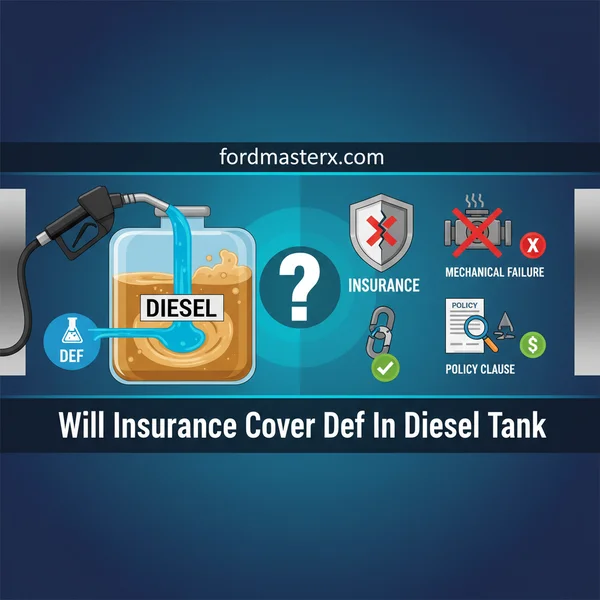
This matters because the cost of repair is astronomical. DEF is highly corrosive to diesel engine components. A simple mistake at the pump can lead to a repair bill ranging from $8,000 to $20,000, depending on whether you started the engine. Knowing how to frame your claim under Comprehensive coverage is the difference between paying a $500 deductible or foot the entire bill yourself.
Prime Day Pick
Limited-time Prime Day price. Check current discount on Amazon.
Understanding Comprehensive Coverage for Misfueling Incidents
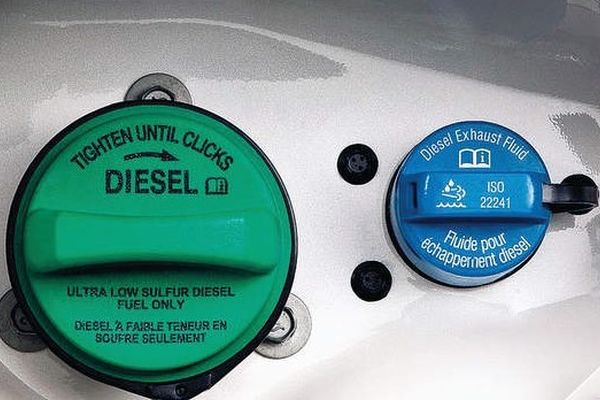
Comprehensive coverage is designed to protect you from losses that aren’t caused by a collision with another vehicle. While most people think of this coverage for theft or hail damage, it specifically covers “accidental losses.” When you accidentally grab the DEF nozzle instead of the diesel nozzle, you have caused accidental damage to the vehicle’s fuel system. As long as the act wasn’t intentional, it fits the legal definition of a covered peril in most standard policies.
The “Sudden and Accidental” Clause
For a claim to be successful under Comprehensive coverage, the event must be sudden and accidental. Putting DEF in your tank happens in a single moment at a gas station. It is not a gradual wear-and-tear issue that developed over months of neglect. Most adjusters view this as a “one-time mishap.” Because the damage occurs the moment the fluid enters the lines, it meets the criteria for an immediate insurance event.
Prime Day Pick
Limited-time Prime Day price. Check current discount on Amazon.
- Direct Physical Loss: Insurance covers the physical damage caused by the fluid, including the fuel pump, injectors, and sensors.
- Non-Collision Classification: Since no other car was involved, this bypasses your Collision coverage and goes straight to Comprehensive.
- Accidental Intent: You didn’t mean to destroy the engine; therefore, the “intentional acts” exclusion does not apply.
What Your Policy Typically Pays For
When your claim is approved under Comprehensive coverage, the insurer is responsible for returning the vehicle to its “pre-loss condition.” This isn’t just about draining the tank; it involves every component the DEF touched. If the fluid reached the high-pressure fuel pump or the injectors, the cost of those parts and the labor to replace them should be included in your settlement.
- Towing Fees: Most Comprehensive plans will cover the tow to a certified diesel mechanic.
- System Flushes: This includes draining the tank and cleaning the primary fuel lines.
- Component Replacement: This covers the high-pressure fuel pump, fuel rails, and fuel injectors if contamination is proven.
- Labor Costs: Diesel engines require specialized technicians; insurance covers these higher labor rates.
Common Reasons Insurance Companies Deny DEF Contamination Claims
While coverage is common, it is never guaranteed. Insurance companies are businesses, and they will look for specific exclusions in your policy to avoid a $15,000 payout. The most common hurdle is the “Mechanical Breakdown” exclusion. Almost every auto policy states they will not pay for mechanical or electrical breakdowns. The insurer may argue that the engine failing because of the wrong fluid is a mechanical failure, not an accidental loss.
Prime Day Pick
Limited-time Prime Day price. Check current discount on Amazon.
The Mechanical Breakdown Loophole
To win this argument, you must prove the mechanical failure was caused by an outside accidental force (the DEF). If your fuel pump simply dies because it’s old, that’s a breakdown and isn’t covered. If your fuel pump dies because you accidentally introduced a corrosive foreign substance into the tank, that is a consequential loss. You must ensure the mechanic’s report clearly states that “foreign fluid contamination” was the direct cause of the system failure.
- Pre-Existing Issues: If your truck already had “Check Engine” lights or fuel system codes before the DEF incident, the insurer might deny the claim.
- Wear and Tear: Claims are often denied if the adjuster believes the parts were already at the end of their lifespan.
Gross Negligence and Policy Exclusions
There is a fine line between a simple mistake and “gross negligence.” If you realize you put DEF in the tank, see the warning light, and keep driving for another 50 miles, the insurance company may deny the claim. They will argue that while the initial mistake was accidental, the resulting damage was caused by your “failure to mitigate loss.”
Prime Day Pick
Limited-time Prime Day price. Check current discount on Amazon.
- Delayed Reporting: Waiting weeks to report the incident makes it harder to prove the DEF was the cause.
- Continued Operation: Starting the engine after you realize the mistake can be viewed as “voluntary damage.”
- Policy Specifics: Some low-cost “liability only” policies or highly restrictive “named peril” policies may explicitly exclude misfueling.
Comparing Mechanical Breakdown Exclusions vs. Accidental Damage
One of the biggest hurdles in an insurance claim is navigating the “Mechanical Breakdown” exclusion. Most comprehensive policies explicitly state they won’t pay for parts that simply wear out or fail due to poor maintenance. However, contaminating a diesel tank with DEF is generally classified as a “sudden and accidental” loss rather than a standard mechanical failure.
The “Sudden and Accidental” Clause
For your claim to stand a chance, the event must be an isolated incident. If your fuel pump fails because of high-mileage wear, you’re typically on your own. But if the pump fails because DEF—a highly corrosive agent—was introduced by mistake, many adjusters view this as accidental damage. This is a crucial distinction that can mean the difference between a denied claim and a covered repair.
- Intentionality: The mistake must be unintentional and documented as a one-time error.
- Proximate Cause: The damage must be directly linked to the DEF contamination, not pre-existing engine issues.
- Policy Type: Comprehensive coverage is usually required; basic liability-only policies do not cover your own vehicle’s fuel mistakes.
Why Timing Matters for Claims
Insurance companies look closely at how you reacted to the mistake. If you realized the error at the pump and immediately called for a tow, your claim is significantly stronger. If you ignored the warning lights and kept driving for several days, the insurer might argue that your “willful neglect” caused the bulk of the damage, potentially leading to a partial or full denial of the claim.
Factors That Impact the Total Cost of DEF-Related Repairs
The price tag for fixing a DEF-contaminated diesel system can range from a few hundred dollars to well over $15,000. Understanding what drives these costs helps you communicate more effectively with your insurance adjuster and your mechanic when discussing the scope of work.
The Engine Startup Factor
This is the single most significant factor in determining repair costs. If the DEF remained in the fuel tank and never reached the engine, the repair involves a relatively simple tank drain and system flush. However, if the engine was started, the DEF (which is a mixture of urea and deionized water) travels through the high-pressure fuel system with devastating results.
- Corrosion: DEF is highly corrosive to copper, brass, and other metals found in fuel lines and sensors.
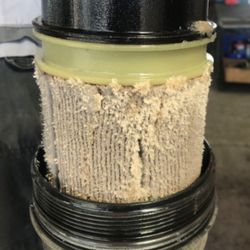
- Crystallization: Once DEF dries in the lines or hits engine heat, it turns into hard white crystals that act like sand, shredding internal components.
- Component Replacement: A full repair often requires replacing the fuel injectors, the high-pressure fuel pump, and the entire common rail system to ensure no crystals remain.
Labor and System Calibration
Modern diesel engines are incredibly complex and rely on sensitive electronics. Beyond just swapping parts, mechanics must spend hours flushing every individual line and recalibrating the engine’s computer (ECU) to recognize the new sensors and injectors. In many cases, the labor costs for these precision tasks can rival the price of the parts themselves, especially on heavy-duty trucks or specialized European diesel models.
Conclusion: Navigating Your DEF Claim
While the prospect of a massive repair bill is daunting, your insurance policy might be your saving grace. The key takeaway is that most “Comprehensive” policies treat DEF contamination as an accidental loss, provided you act quickly and document the incident accurately. The difference between a minor flush and a total engine rebuild often comes down to whether or not you turned that key after the mistake occurred.
Next Steps: First, pull your policy documents and look for “All Perils” or “Comprehensive” coverage sections to confirm your level of protection. Second, contact a certified diesel technician to get a detailed diagnostic report that specifically cites “external contamination” as the cause of damage. Stay proactive, keep every receipt, and move quickly to protect both your vehicle and your wallet.
❓ Frequently Asked Questions
Why do some insurers classify DEF contamination as a mechanical breakdown?
Insurers may use mechanical breakdown exclusions to deny claims by arguing the damage happened internally. However, if the root cause was the accidental introduction of a foreign substance, it usually overrides the exclusion in most standard policies.
What specific policy language should I look for regarding misfueling?
Look for ‘Other Than Collision’ coverage and check the exclusions section. Most policies cover ‘direct and accidental loss’ to the vehicle, which broadly includes human errors like misfueling.
Can gross negligence lead to a denied claim for DEF in a diesel tank?
Yes, if the insurer determines you ignored explicit warnings or acted with extreme recklessness, they may deny the claim. Standard human error is generally covered, but blatant disregard for safety might not be.
Will insurance cover the cost of a rental car during repairs?
This depends on whether you have ‘Rental Reimbursement’ coverage added to your policy. Since fuel system cleaning and parts replacement can take weeks, this coverage is highly recommended for DEF incidents.
How does the insurance adjuster determine if the damage is covered?
The adjuster inspects the fuel system and reviews your statement to ensure the damage was sudden and accidental. They look for evidence of contamination rather than long-term wear-and-tear to justify the claim.
Does the manufacturer’s warranty cover DEF in the fuel tank?
No, manufacturer warranties only cover defects in materials or workmanship. Putting the wrong fluid in the tank is considered an external accident, making insurance your only viable path for recovery.