Ford Kuga 1.5 Ecoboost Problems: Identifying Mechanical Failures And Technical Solutions

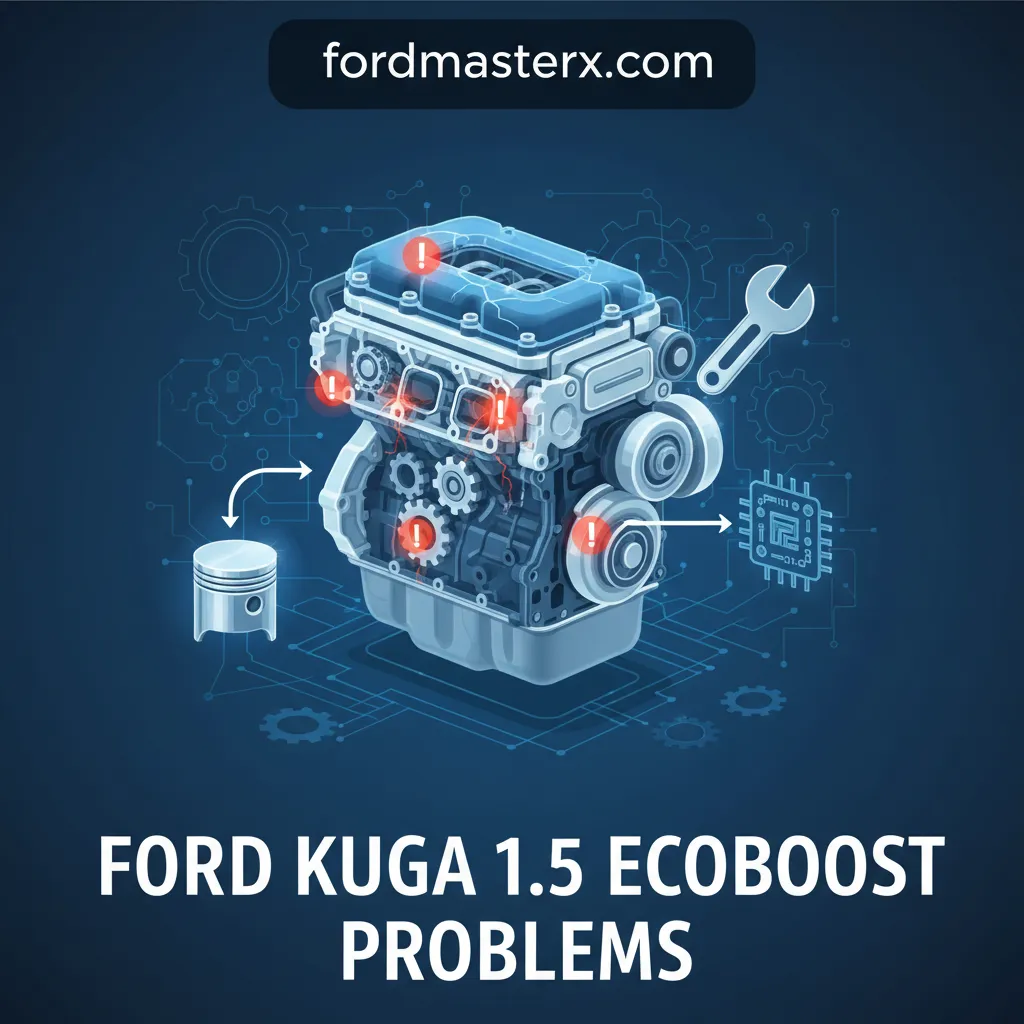
The Ford Kuga’s 1.5L Ecoboost engine offers an impressive balance of thermal efficiency and power, yet its reputation is frequently challenged by specific mechanical vulnerabilities. Owners often face daunting challenges ranging from mysterious coolant consumption and overheating to catastrophic piston failure caused by low-speed pre-ignition (LSPI). These issues, while significant, are often misunderstood by generalist mechanics, leading to misdiagnosis and expensive, unnecessary repairs. This guide provides a technical deep-dive into the most common Ford Kuga 1.5 Ecoboost problems, offering professional diagnostic steps and repair solutions to maintain vehicle longevity and ensure your Kuga remains a reliable performer on the road.
SECTION 1: Diagnosing Coolant Intrusion and Engine Overheating
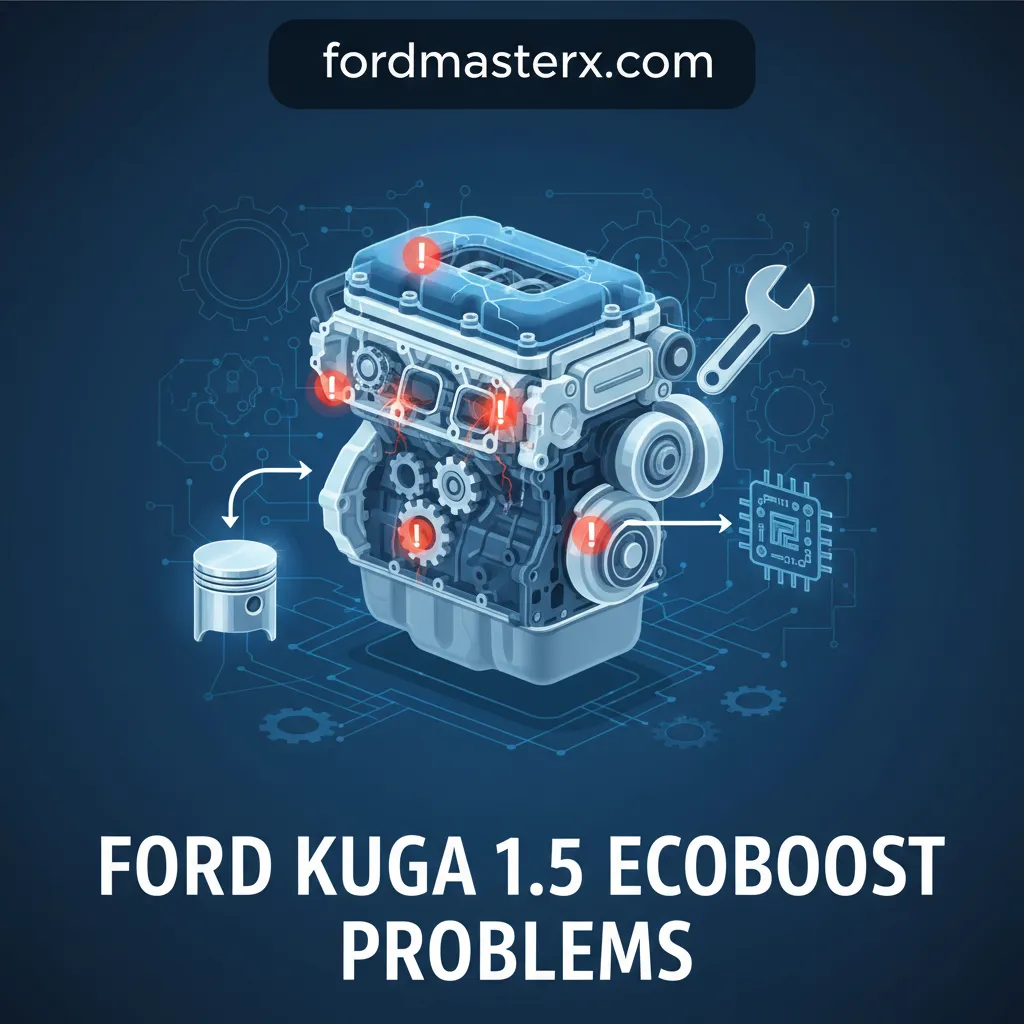
The most severe mechanical flaw inherent in the early 1.5L I4 Ecoboost engines is the open-deck block design. Unlike a closed-deck engine where the cylinder walls are supported by a solid casting at the top, the open-deck design features a coolant jacket that completely surrounds the cylinders. While this improves cooling efficiency, it introduces a structural weakness in the “bridge” between the cylinder bores. Over time, thermal cycling causes this bridge to fatigue, eventually leading to microscopic cracks or head gasket erosion that allows coolant to seep directly into the combustion chamber.
Symptom Identification and Coding
Identifying this cause early is critical. Owners should look for persistent coolant loss without any visible external pooling on the garage floor. A classic indicator is a “misfire on cold start” (DTCs P0300 through P0304). This occurs because coolant pools in the cylinder overnight; when the engine starts, the spark plug is fouled until the fluid is cleared. You may also observe rhythmic white smoke from the exhaust that smells slightly sweet (glycol).
The 1.5L I4 variant (2014-2019) is significantly more prone to block cracking than the 1.5L I3 “Dragon” engine introduced in later models. If your Kuga is pre-2020, you are in the high-risk category for this specific failure.

📋
Diagnostic Path for Coolant Loss
Pressurize the cooling system to 20 PSI while the engine is cold. Monitor for 30 minutes. If pressure drops but no external leaks are found, intrusion is likely.
Use a chemical blue-to-yellow detector liquid over the degas bottle to diagnose the presence of exhaust gases in the coolant.
Remove spark plugs and insert a borescope. If a piston head appears “steam cleaned” (unusually shiny and carbon-free), that cylinder is burning coolant.
Case Study: A 2017 Kuga owner reported losing 500ml of coolant every 200 miles with no visible pooling. After a debug session using a borescope, we found a hairline crack in the cylinder 2-to-3 bridge. While Ford’s Service Actions 17S09 and 19B37 provided software updates for better coolant level sensing, the only permanent solution in severe cases is a short-block replacement, with repair costs often exceeding $5,000.
SECTION 2: Troubleshoot Low-Speed Pre-Ignition (LSPI) and Piston Failure
LSPI is a phenomenon that plagues many downsized, turbocharged, direct-injection (GDI) engines, including the 1.5L Ecoboost. It occurs when a mixture of fuel and oil droplets ignites prematurely during the compression stroke, long before the spark plug fires. This happens typically at low RPM under high load (e.g., accelerating hard from 30 MPH in 6th gear).
Identifying the Warning Signs
The result of LSPI is a “super knock” event. While standard knock is managed by the ECU, LSPI generates cylinder pressures exceeding 100 bar—double the design limit for the 1.5 Ecoboost’s internal components. You will hear an audible metallic ‘clinking’ or ‘crackling’ sound during low-speed acceleration. If ignored, this cause results in cracked piston ring lands or shattered pistons.
Pressure Threshold Data
Standard Peak Pressure
LSPI Event Pressure
Critical Preventative Measures
To resolve LSPI concerns, the industry transitioned from API SN to API SP/ILSAC GF-6 oils. These lubricants are specifically formulated with reduced calcium-based detergents, which were found to trigger LSPI events. Additionally, drivers should utilize the SelectShift manual mode to downshift and keep the engine above 2,000 RPM when heavy torque is required, rather than lugging the engine in a high gear.
Scenario: A driver experiences a sudden loss of power and the vehicle enters ‘Limp Mode’ after a heavy-throttle merge in 5th gear. The ECU stores a P0301 code. Upon teardown, the technician finds cracked piston lands on cylinder 1—a classic LSPI failure signature. Using the correct oil and adjusting driving habits is the only viable workaround to prevent recurrence.
SECTION 3: Repair Strategies for Carbon Buildup on Intake Valves
Because the 1.5 Ecoboost uses direct injection, fuel is sprayed directly into the combustion chamber rather than into the intake port. While efficient, this means there is no fuel “washing” the back of the intake valves. Over time, oil vapors from the Positive Crankcase Ventilation (PCV) system bake onto the hot intake valves, forming hardened carbon deposits.
Diagnostic Indicator
Rough idling, decreased fuel economy, and a cold-start ‘stumble’ that disappears once the engine reaches operating temperature.
Restorative Solution
Walnut shell blasting is the gold standard, physically removing deposits without damaging the metal surfaces of the intake ports.
Borescope imagery of a Kuga with 75,000 miles often shows up to 80% blockage of the intake ports. This level of restriction can reduce airflow by up to 15%, leading to a measurable 5-10% decrease in overall horsepower. To troubleshoot this before it becomes a performance bottleneck, we recommend chemical induction cleaning every 20,000 miles. For long-term protection, installing a high-quality oil catch can will intercept oil vapors before they reach the intake valves, significantly slowing the buildup process.
SECTION 4: Resolve Turbocharger Oil Contamination and Cooling Issues
The 1.5 Ecoboost turbocharger is a precision instrument that spins at speeds up to 200,000 RPM. It relies entirely on a constant flow of clean oil for both lubrication and cooling. The most frequent cause of turbo failure on this platform is oil sludge buildup in the narrow oil feed line, which restricts flow to the Center Housing Rotating Assembly (CHRA).
After a high-load or highway drive, allow the engine to idle for 60-90 seconds before shutting it down. This prevents oil from “cooking” inside the turbo bearings, which creates the abrasive sludge that leads to failure.
When you debug turbo performance issues, look for the following indicators:
- The “Police Siren” sound: A high-pitched whine that indicates compressor wheel damage or excessive shaft play.
- DTC P0299: An underboost condition often caused by a faulty boost solenoid (wastegate actuator) or a hairline crack in the vacuum lines.
- Exhaust Smoke: Blue-ish smoke during deceleration usually points to worn turbo seals.
Analysis of failed Garrett units frequently shows snapped turbine shafts. These are almost always the result of extended 12,000-mile oil change intervals. To repair and protect the system, switch to a 5,000-mile interval and replace the oil feed line whenever the turbo is serviced.
SECTION 5: Cooling System Maintenance and Water Pump Vulnerabilities
Beyond the engine block itself, the auxiliary cooling components of the Kuga 1.5 are prone to failure. Approximately 70% of overheating incidents on this platform start with a minor leak at a plastic fitting or the degas bottle cap. The original plastic ‘T-junctions’ in the bypass valve and degas bottle hoses are notorious for becoming brittle and cracking without warning.
To resolve cooling issues permanently, always use Ford-approved Orange or Yellow (P-OAT) coolant. Generic green coolants can cause internal corrosion and cavitation in the aluminum block. Furthermore, if you notice the car overheating only while stationary, the cause is likely the electric cooling fan control module. Proactively upgrading factory plastic hoses with a metal-reinforced kit is a highly effective workaround to avoid the sudden coolant loss that triggers head gasket failure.
Conclusion
Early identification of coolant loss is vital to prevent total engine replacement due to block cracking. Strict adherence to API SP oil specifications and high-quality fuel can effectively mitigate LSPI and carbon buildup, while proactive maintenance of the cooling system and turbocharger oil lines is the most cost-effective way to avoid the ‘Ecoboom’ phenomenon. By following these diagnostic paths and technical solutions, you can ensure your 1.5 Ecoboost performs at its peak. If you are experiencing coolant loss or engine hesitation, schedule a cooling system pressure test and a carbon inspection immediately to prevent further damage.
Frequently Asked Questions
Is the Ford Kuga 1.5 Ecoboost reliable for high mileage?
The reliability of the 1.5 Ecoboost largely depends on its production year and maintenance history. Models built after 2019 with the 1.5L 3-cylinder engine generally show improved reliability. For the earlier 4-cylinder versions, high mileage is achievable only if the cooling system has been updated and oil changes were performed every 5,000-7,500 miles to prevent turbo and carbon issues.
How do I know if my 1.5 Ecoboost has the coolant intrusion problem?
The primary indicators include a low coolant warning light without a visible leak, white exhaust smoke on startup, and engine misfires (P0300-P0304). A professional technician should perform a bore scope inspection of the cylinders to look for ‘steam cleaned’ piston tops, which confirm that coolant is entering the combustion chamber through a cracked block or failed gasket.
What oil should I use to prevent 1.5 Ecoboost engine failure?
You must use a synthetic oil that meets Ford’s WSS-M2C948-B specification or the newer API SP standard. These oils are specifically formulated with reduced calcium levels to prevent Low-Speed Pre-Ignition (LSPI), which is a common cause of cracked pistons in downsized turbocharged engines like the 1.5 Ecoboost. Avoid using older API SN oils if possible.
Does the Ford Kuga 1.5 Ecoboost have a timing belt or chain?
The 1.5L I4 Ecoboost engine uses a timing belt, which requires periodic replacement. Ford typically recommends a 10-year or 150,000-mile interval, but most experts suggest replacing it every 80,000 to 100,000 miles. Conversely, the newer 1.5L 3-cylinder ‘Dragon’ engine uses a timing chain, which is generally designed to last the lifetime of the engine.
Can carbon buildup be fixed without taking the engine apart?
Minor carbon buildup can sometimes be managed with intake valve cleaning sprays, but these are mostly preventative. For significant buildup causing misfires or power loss, walnut shell blasting is the industry-standard solution. This involves removing the intake manifold and using pressurized air with walnut media to safely scrub the valves without disassembling the cylinder head.