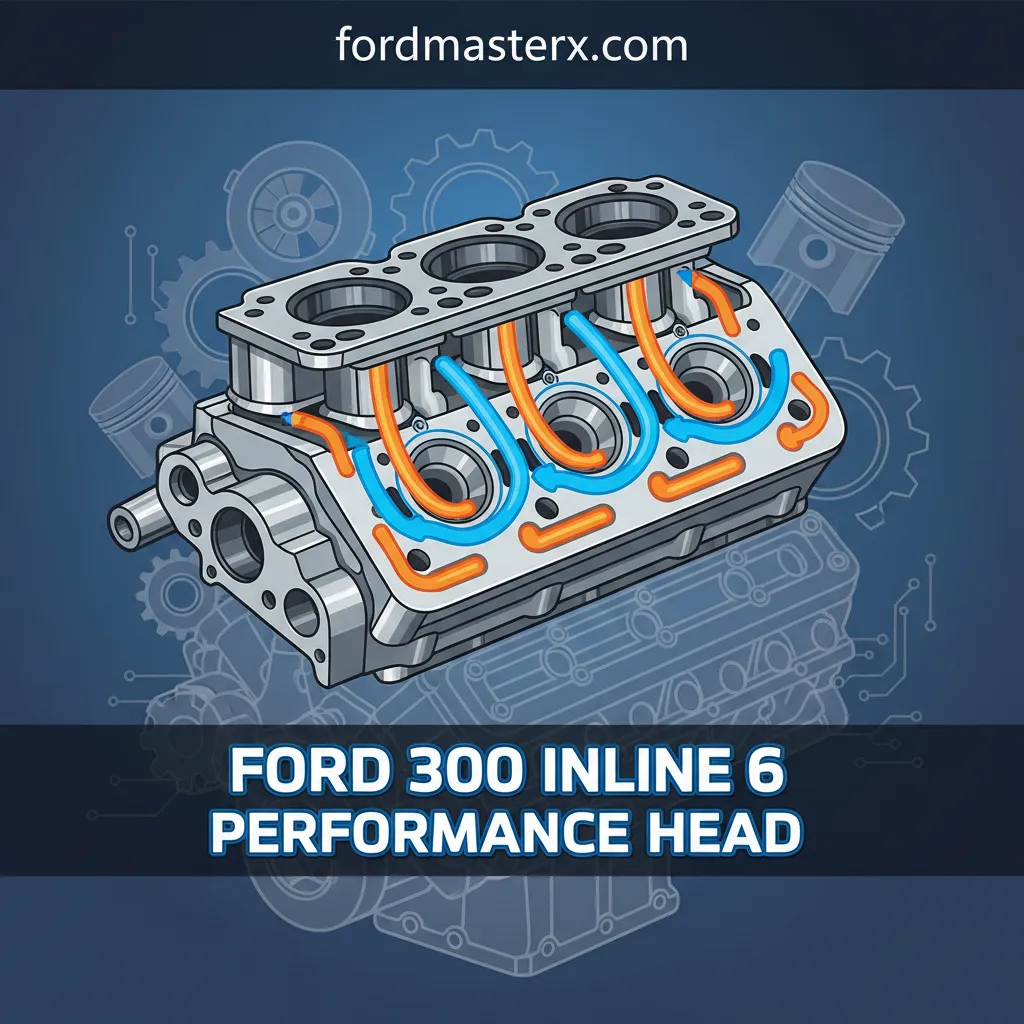
Ford 300 Inline 6 Performance Head Selection And Airflow Optimization

The Ford 300 cubic inch (4.9L) inline-six is a legend of industrial durability, but its factory cylinder head is the primary bottleneck preventing it from reaching its true performance potential. While the bottom end is virtually indestructible, featuring seven main bearings and a forged steel crankshaft in early iterations, the stock head’s restrictive ports and small valves limit the engine to low-RPM work-truck duties. This leaves enthusiasts searching for ways to unlock modern power and efficiency from the “Big Six.” This comprehensive guide provides an expert analysis of Ford 300 performance head options, from professional porting techniques for iron castings to the latest aftermarket aluminum developments, ensuring you have a complete roadmap for your build.
Evaluating Factory Castings: Carbureted vs. EFI Ford 300 Inline 6 Performance Head Options


📤 Share Image
When sourcing an original Ford iron casting, there are two distinct paths: the vintage carbureted heads (pre-1987) and the modern EFI heads (1987-1996), most commonly identified by the E8TE casting number. From a professional perspective, the EFI head is often the superior starting point for a street-performance build, but it requires specific modifications to realize its potential. The EFI head features a “fast-burn” combustion chamber—a heart-shaped design that promotes better swirl and flame propagation compared to the cavernous open chambers of the 70s.
Chamber Volume and Compression Dynamics
The most significant technical difference lies in the combustion chamber volume. Standard EFI heads typically feature 68cc combustion chambers, whereas older carbureted heads often range from 76cc to 80cc. Swapping an EFI head onto an older short block can bump the static compression ratio from a lethargic 8.0:1 to a much more responsive 9.0:1 or 9.5:1. This higher compression, combined with the fast-burn geometry, significantly improves detonation resistance and thermal efficiency.
Structural differences also exist in metallurgy. Later EFI castings were designed for the higher heat cycles of lean-burn emissions tuning and often feature slightly more robust valve seat areas. However, these heads are prone to cracking between the valve seats if severely overheated. A reliable build always begins with a magnetic particle inspection (magnafluxing) to ensure the casting is free of hairline fractures before any machining begins.

Airflow Optimization and Professional Porting Strategies for the Ford 4.9L



The Ford 300 head suffers from what experts call “log-style” intake restriction. The ports are small, the turns are abrupt, and the valve sizes are better suited for a 2.0L four-cylinder than a 4.9L powerhouse. To fix this, a professional approach involves more than just polishing; it requires a strategic removal of material in areas that impede high-velocity flow.
The greatest gains on the Ford 300 head are found within one inch of the valve seat. Focus your porting efforts on “blending” the machine-cut bowl into the cast runner. Removing the sharp ridge below the valve seat can improve low-lift flow by as much as 15% without increasing port volume excessively.
The ‘Chevy Valve Swap’ Methodology
A staple of high-performance Ford 300 builds is the “Chevy Valve Swap.” By utilizing 1.94-inch intake and 1.60-inch exhaust valves (standard for a Small Block Chevy), you drastically increase the curtain area. Replacing the stock 1.78/1.56 valves with these larger units increases flow potential by nearly 25 percent. This modification requires the machine shop to cut larger seats and often involves using 11/32-inch valve stems, which are lighter and more readily available in the performance aftermarket than the Ford-specific stems.
Streamlining and Scavenging
On the exhaust side, the primary restriction is the “thermactor bump”—a massive casting protrusion used for secondary air injection. Removing this bump is critical for reliable high-RPM scavenging. When these restrictions are removed and the ports are widened slightly, the results are dramatic. Flow bench benchmarks show a leap from approximately 150 CFM in stock form to 210+ CFM on a professionally ported head. In a recent case study, a 300 I6 with a simple pocket cleaning, thermactor removal, and a multi-angle valve job saw a torque increase of 40 lb-ft on the dyno, illustrating the massive untapped potential of the factory iron.
Flow Performance By The Numbers
Stock CFM (Intake)
Ported CFM (Intake)
Valve Area Increase

Aftermarket Aluminum Solutions: The Pro-Maxx 300 Performance Head

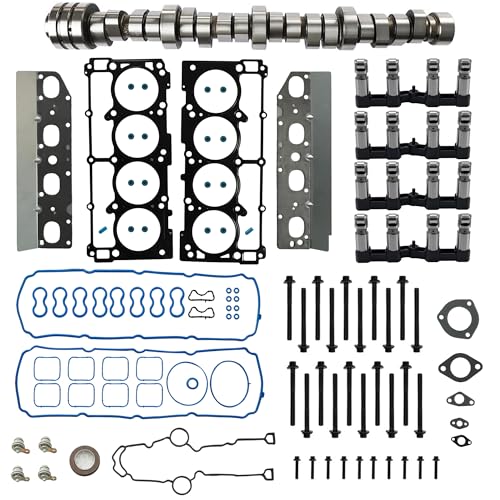

For decades, the Ford 300 community had to rely solely on modified iron castings. Today, the Pro-Maxx 300 aluminum head has changed the landscape. Cast from A356-T6 aluminum, this head offers structural advantages that iron simply cannot match, including superior thermal conductivity and significant weight reduction.
Thermal Management
Aluminum dissipates heat much faster than iron, allowing for higher compression ratios without detonation.
Weight Savings
The Pro-Maxx aluminum head reduces engine weight by approximately 40 pounds compared to the factory unit.
Economic and Mechanical Breakdown
Economically, a new aluminum head often makes more sense than a complete machine shop rebuild of an old iron core. By the time you pay for cleaning, magnafluxing, a three-angle valve job, porting labor, and oversized valves, the cost can easily exceed $1,200. An out-of-the-box aluminum head provides 190+ CFM flow, modern combustion technology, and a brand-new casting for a similar price point. Furthermore, the aluminum head’s ability to pull heat from the chamber allows for aggressive tuning. In one performance scenario, an aluminum head allowed a build to run 10.0:1 compression on 87-octane fuel without a hint of spark knock—something nearly impossible with an iron head.
Compatibility is another strong point for these trusted aftermarket units. They are designed to work with existing Offenhauser or Clifford intake manifolds, standard exhaust headers, and factory accessory drive brackets, making them a true “bolt-on” upgrade for the enthusiast looking for maximum efficiency.
Valvetrain Reinforcement for High-Output Ford 300 Configurations
A performance head is only as good as the valvetrain supporting it. At 5,000+ RPM, the mass of the 4.9L valvetrain becomes a liability. To ensure longevity, professional builders focus on converting the head from a passenger-car pedestal mount to a race-ready stud-mount configuration.
📋
Step-by-Step Valvetrain Upgrade
Machine the rocker pedestals flat and tap for 7/16-inch screw-in studs. This prevents the common “pulled stud” failure associated with high-lift performance camshafts.
Install hardened guide plates to stabilize the pushrods. This requires using hardened chromoly pushrods to maintain geometry and reduce harmonic vibration in the long inline-6 block.
Upgrade to 1.6 or 1.7 ratio full roller rocker arms (like Crane or Comp Cams). This minimizes friction and can add “virtual” lift to the camshaft without changing the cam itself.
Selecting spring pressures is equally vital. For aggressive hydraulic flat-tappet or roller cam profiles, you need enough seat pressure to avoid valve float, but not so much that you wipe the cam lobes during break-in. A trusted setup usually targets 110-120 lbs of seat pressure for street-performance hydraulic cams. Using roller rockers further reduces the parasitic drag and heat generation at the valve tip, ensuring the valvetrain remains stable throughout the entire powerband.
Sealing and Assembly: Maximizing Cylinder Head Integrity
The final installation of a performance head on the Ford 300 requires expert attention to detail. Because the inline-6 head casting is exceptionally long, it is more prone to thermal expansion movement than a V8 head. This makes the choice of fasteners and gaskets critical for a quality, leak-free seal.
Never reuse factory head bolts on a performance build. The 300 I6 uses a 14-bolt pattern, and uniform clamping force is vital. Stock bolts often stretch unevenly, leading to gasket failure between cylinders 3 and 4 where heat is highest.
High-quality ARP head studs are mandatory for any high-output configuration. Studs provide more accurate torque readings and more consistent clamping force because they don’t twist into the block while being tightened. For sealing, the Fel-Pro 1024 performance gasket is the industry standard. It features a compressed thickness of 0.039 inches, which is ideal for optimizing the quench distance (the gap between the piston top and the head at TDC). Aiming for a target quench of 0.040 inches promotes high turbulence in the chamber, which further prevents detonation.
Surface Finish and Special Applications
- Surface RA: Iron heads require a surface roughness (RA) of 60-100 for composite gaskets, while aluminum heads paired with Multi-Layer Steel (MLS) gaskets for forced induction require a much smoother RA of 30 or less.
- Forced Induction: For turbo or supercharged 300s, an MLS gasket is a complete necessity to manage extreme cylinder pressures.
- Torque Sequence: Always follow the spiral torque sequence starting from the center bolts (7 and 8) and working outward to prevent “bowing” the long casting.
✅ Pros of Aluminum Upgrade
- Drastic weight reduction (40 lbs)
- Better cooling / higher compression
- Superior out-of-the-box airflow
- Modern combustion chamber shape
❌ Cons of Modified Iron
- High labor costs for porting
- Risk of hidden cracks in old cores
- Prone to heat soak / pinging
- Limited flow compared to alloy
Choosing between EFI and carbureted iron heads depends largely on your combustion chamber and compression goals. Significant airflow gains are achievable through professional porting and the installation of oversized SBF or Chevy-style valves. However, modern aluminum heads offer the most reliable path to high performance by reducing weight and improving cooling efficiency. Whether you are building a torque-heavy towing rig or a high-RPM street sleeper, the cylinder head is the key to unlocking the legendary Ford 300. Consult with a trusted machinist to determine if your current casting is a candidate for porting, or upgrade to a professional aluminum head to maximize your Ford 300’s power curve today.
Frequently Asked Questions
Can I use an EFI head on an older carbureted Ford 300 block?
Yes, the EFI head (E8TE casting) can be installed on older blocks. It is a popular upgrade due to its ‘fast-burn’ combustion chamber which improves efficiency. However, you must use the matching EFI-style exhaust manifolds or headers because the bolt holes are slightly offset compared to the early carbureted versions, and you may need to adjust your pushrod length.
What is the largest valve size I can fit in a stock Ford 300 head?
The professional standard for the Ford 300 is upgrading to 1.94-inch intake and 1.60-inch exhaust valves, typically sourced from a Small Block Chevy or Ford. This requires a machine shop to install larger seats and perform a bowl blend. Larger valves than this often run into unshrouding issues against the cylinder wall unless the block is bored significantly over stock.
Does porting the stock Ford 300 head actually make a difference?
Absolutely. In factory form, the 300 head is severely airflow-limited, especially on the exhaust side. Expert porting focusing on the thermactor bump removal and intake runner smoothing can increase flow by 20-30%. This allows the engine to breathe past 4,000 RPM, shifting the power band from a tractor-like curve to a more versatile street performance profile.
Are ARP head studs necessary for a performance 300 build?
While not strictly required for stock rebuilds, ARP head studs are highly recommended for any performance application. The Ford 300 head is very long, making it prone to slight warping under high thermal loads. Studs provide more consistent and accurate clamping force across all 14 fasteners, which is vital for preventing head gasket failure in high-compression or turbocharged engines.
Is the Pro-Maxx aluminum head worth the investment?
For most high-performance builds, yes. By the time you pay for professional cleaning, crack testing, valve guide replacement, oversized valve machining, and porting on an old iron head, you are often close to the cost of a new Pro-Maxx head. The aluminum head offers better cooling, a 40-pound weight savings, and superior modern port geometry right out of the box.