
2015 Ford F-350 6.7 Oil Capacity & Type: Complete Guide

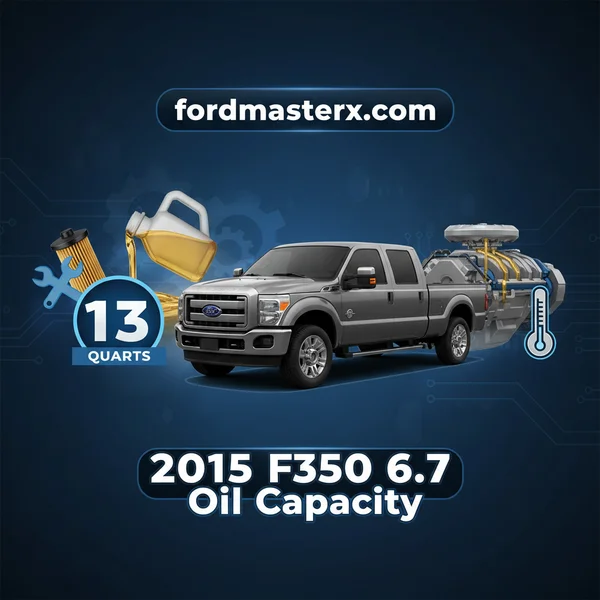
The 2015 Ford F-350 6.7L Power Stroke diesel engine has an exact oil capacity of 13 quarts (12.3 liters) when performing a filter change. It is critical to use oil meeting the Ford WSS-M2C171-F1 specification to ensure engine longevity and performance.
🎯 Key Takeaways
- Takeaway 1:The 6.7L Power Stroke requires exactly 13 quarts of oil for a full change.
- Takeaway 2:Always use oil that meets Ford’s WSS-M2C171-F1 diesel specification.
- Takeaway 3:The Motorcraft FL-2051S is the recommended oil filter for the 2015 model.
- Takeaway 4:Select 5W-40 synthetic oil for heavy towing or extreme cold weather operations.
- Takeaway 5:Always verify oil levels on the dipstick after filling 13 quarts to ensure accuracy.
The 2015 Ford F-350 with the 6.7L Power Stroke diesel engine requires exactly 13 quarts (12.3 liters) of oil when you replace the oil filter. This specific volume is critical for maintaining the high-pressure oil system that drives your fuel injectors and lubricates the turbocharger. If you are planning an oil change, make sure you have at least three and a half gallons on hand to ensure you reach the full mark on the dipstick.
Getting this number right is more than just a maintenance task; it is about engine longevity. The 6.7L Power Stroke is a workhorse, but it relies on a massive volume of oil to dissipate heat and manage soot. An underfilled crankcase can lead to oil aeration and increased operating temperatures, while overfilling can cause foaming. Knowing the 13-quart requirement helps you budget your maintenance costs and ensures your truck stays on the road under heavy loads.
Understanding the 6.7L Power Stroke Oil Capacity Requirements
The 2015 6.7L Power Stroke engine is designed with a deep-sump oil pan to accommodate its 13-quart capacity. This large volume is necessary because diesel engines naturally produce more soot and heat than their gasoline counterparts. The oil in your F-350 does not just lubricate moving parts; it acts as a primary coolant for the internal components that the radiator fluid cannot reach. When you drain the oil, the 13-quart spec accounts for the fluid held in the pan and the significant amount trapped within the large oil filter casing.

The Critical Role of the Oil Filter
When calculating your oil capacity, you must never skip the filter. A standard 6.7L oil filter holds a significant portion of that 13-quart total. If you were to change the oil but leave the old filter in place, adding 13 quarts would likely result in an overfilled engine. Conversely, if you change the filter but only add 12 quarts, you may find your oil level dangerously low once the engine is started and the new filter fills up. Always use a high-quality filter, such as the Motorcraft FL-2051-S, which is specifically engineered to handle the flow rates of the 2015 6.7L engine.
Precision Refilling and the Dipstick Check
While 13 quarts is the official specification, practical application requires a bit of precision. It is best practice to pour in 12 quarts first, then start the engine and let it run for a minute to circulate the oil through the new filter. After turning the engine off, let it sit for at least 15 minutes to allow the oil to drain back into the pan. Only then should you check the dipstick and add the final quart. Factors like the tilt of your driveway or how long you allowed the old oil to drain can slightly affect how much “new” oil is needed to hit the “Full” mark. Bulleted below are the key takeaways for your next refill:
- Total Capacity: 13 Quarts (12.3 Liters) with filter.
- Initial Fill: 12 Quarts to avoid accidental overfilling.
- Settling Time: 15-20 minutes after running the engine for an accurate dipstick reading.
- Drain Plug Torque: 25 lb-ft to ensure a proper seal without stripping the pan.
Master Your 2015 F350 6.7 Oil Change in 8 Simple Steps
Maintaining the 6.7L Power Stroke diesel engine in your 2015 Ford F350 is the single most important task you can perform to ensure its longevity and performance. This massive engine requires a specific volume of oil and a precise process to handle the 13-quart capacity safely and cleanly. In this guide, we will walk you through every detail, from selecting the right viscosity to resetting your truck’s internal monitoring system, ensuring your heavy-duty workhorse continues to run smoothly for hundreds of thousands of miles.
Step 1: Gather Your Tools and Warm the Engine
What you need: 13 quarts of motor oil (10W-30 for normal conditions or 5W-40 for towing/cold weather), a Motorcraft FL-2051S oil filter, a 16mm or 5/8-inch wrench, a 15-quart minimum capacity drain pan, and nitrile gloves.
Instructions: Before you begin, start your F350 and let it idle for about 5 to 10 minutes. Diesel oil is thick, especially when cold, and warming it up lowers the viscosity, allowing it to drain much faster and carry more contaminants out of the engine. Once the engine temperature gauge begins to move, shut off the ignition and park the vehicle on a level surface. Ensure the parking brake is engaged. Pop the hood and remove the oil fill cap to allow for better airflow during the draining process, which prevents a “glugging” effect that causes splashing.
Pro Tip: Check your owner’s manual for the specific CJ-4 or CK-4 oil rating requirements; using the wrong oil grade in a 6.7 Power Stroke can lead to premature clogging of the Diesel Particulate Filter (DPF).
Step 2: Positioning and Drain Plug Removal
What you need: 16mm wrench or socket, large drain pan, and shop towels.
Instructions: Slide under the vehicle and locate the oil pan. On the 2015 6.7L engine, the drain plug is located at the rear of the oil pan. Position your drain pan slightly behind the plug, as the oil will initially shoot out with significant force due to the 13-quart volume pressing against the opening. Using your 16mm wrench, loosen the plug counter-clockwise. Once it is loose enough to turn by hand, apply inward pressure on the plug as you unscrew the final threads. This technique prevents oil from leaking out until you are ready to pull the plug away quickly, minimizing the mess on your hands and tools.
Pro Tip: The 6.7L engine holds over 3 gallons of oil. Most standard “DIY” drain pans are only 10 quarts. Ensure yours is at least 15 quarts, or you will have a massive spill on your hands halfway through the process.
Step 3: Draining the 13-Quart Reservoir
What you need: Patience and a steady eye on the drain pan level.
Instructions: Once the plug is removed, the oil will flow rapidly. The 2015 F350 has a very high flow rate because of the large drain hole. Keep a close eye on the drain pan to ensure it isn’t shifting or overflowing. While the oil is draining, inspect the drain plug’s magnetic tip (if equipped) for any large metal shavings, which could indicate internal engine wear. Also, check the rubber O-ring or gasket on the plug. If it looks flattened, cracked, or brittle, replace it now to prevent future leaks. Allow the oil to drain until it has slowed to a very thin, intermittent drip, which usually takes about 15 to 20 minutes.
Pro Tip: If you see a milky color in the oil, it may indicate coolant contamination. If the oil smells strongly of diesel fuel, you may have an injector issue that requires professional diagnostic attention.
Step 4: Removing the Old Oil Filter
What you need: Oil filter wrench and a plastic grocery bag.
Instructions: The oil filter on the 6.7L Power Stroke is located on the driver’s side of the engine, near the front. It is a large, vertically oriented canister. Because this filter holds nearly a quart of oil itself, removing it can be messy. Slide your drain pan forward to catch drips. Use an oil filter wrench to break the seal by turning it counter-clockwise. Before unscrewing it the rest of the way, wrap a plastic grocery bag around the filter. This allows you to unscrew the filter into the bag, catching all the residual oil that runs down the sides of the filter housing and keeping your arm dry.
Pro Tip: Always double-check that the old rubber gasket came off with the filter. If the “double gasket” scenario occurs (where the old gasket sticks to the engine block), the new filter will not seal, and you will lose all your oil within seconds of starting the engine.
Step 5: Prepping and Installing the New Filter
What you need: New Motorcraft FL-2051S filter and a small amount of clean motor oil.
Instructions: Take your new oil filter and dip your finger into a bottle of clean motor oil. Smear a thin layer of oil across the entire surface of the new rubber gasket on top of the filter. This lubrication ensures that the gasket doesn’t “bunch up” or tear when you tighten it and allows for easier removal during your next service. Some technicians prefer to “pre-fill” the filter with oil to reduce the time the engine runs without oil pressure on startup, though this can be difficult without spilling. Thread the new filter onto the housing by hand. Tighten it until the gasket makes contact, then give it an additional 3/4 to 1 full turn. Do not over-tighten with a wrench.
Pro Tip: Hand-tight is usually sufficient. Over-tightening the oil filter on a diesel engine can make it nearly impossible to remove next time due to the heat cycles the engine goes through.
Step 6: Reinstalling the Drain Plug and Adding New Oil
What you need: 13 quarts of oil, a large funnel, and your 16mm wrench.
Instructions: Wipe the area around the drain hole with a clean rag to ensure a debris-free seal. Reinstall the drain plug by hand first to avoid cross-threading, then tighten it with your 16mm wrench until it is snug (approximately 25 lb-ft if using a torque wrench). Move to the top of the engine and place a clean funnel into the oil fill neck. Pour in 13 quarts of your chosen oil. It is best to pour slowly to avoid an air-lock in the funnel that could cause a spill over the valve cover. The 2015 6.7L F350 capacity is exactly 13 quarts including the filter, so you can safely pour the full amount in if you have drained it thoroughly.
Pro Tip: Buy your oil in 5-quart jugs or a 3-gallon bucket to save money. The 6.7L capacity is exactly 3.25 gallons, so having four 1-gallon containers or three 5-quart jugs (leaving 2 quarts for next time) is the most efficient way to purchase.
Step 7: Level Verification and Leak Check
What you need: A clean rag and the engine dipstick.
Instructions: Once the 13 quarts are added, replace the oil fill cap. Start the engine and let it idle for 3 to 5 minutes. While the engine is running, look underneath the truck at the drain plug and the oil filter to ensure there are no active leaks. Shut the engine off and let it sit for at least 10 minutes to allow the oil to drain back down into the pan. Pull the yellow dipstick (located on the passenger side near the firewall), wipe it clean, reinsert it fully, and pull it out again. The oil level should be within the crosshatched area on the stick. If it is slightly low, add the remaining portion of a quart until it reaches the top of the hatch.
Pro Tip: Do not overfill. Oil levels significantly above the “Full” mark can lead to aeration, where the crankshaft whips air into the oil, reducing its lubricating effectiveness and potentially damaging the engine.
Step 8: Resetting the Oil Life Monitor
What you need: Access to the truck’s steering wheel controls and digital dash display.
Instructions: Climbing back into the cab, turn the ignition to the “On” position but do not start the engine. Use the arrow buttons on the left side of your steering wheel to navigate the productivity screen. Go to “Settings,” then “Vehicle,” and then “Oil Life Reset.” Hold down the “OK” button until the system indicates “Reset to 100%.” This step is crucial because the 2015 F350 uses an “Intelligent Oil-Life Monitor” that calculates oil depletion based on towing frequency, idle time, and operating temperatures rather than just mileage. Resetting it ensures your truck can accurately tell you when the next service is due.
Pro Tip: If your truck is used for heavy towing or frequent idling in a construction environment, consider changing the oil every 5,000 to 7,500 miles regardless of what the digital monitor says to protect the turbocharger.
✅ Final Checklist
- Verified that exactly 13 quarts of oil were added to the system.
- Confirmed the oil filter gasket was not “double-stacked” and is hand-tightened.
- Checked that the drain plug is torqued and not dripping.
- Validated the oil level is within the crosshatch marks on the dipstick after a 10-minute rest.
- Reset the Intelligent Oil-Life Monitor via the dashboard settings menu.
Important Notes:
- Safety Warning: Diesel oil can reach very high temperatures; always wear eye protection and gloves to avoid burns from hot oil or the exhaust manifold.
- Professional Help: If you notice heavy metal flakes in the oil pan or if the drain plug threads are stripped, consult a diesel mechanic immediately to prevent catastrophic engine failure.
- Estimated Time: 45 to 60 minutes.
- Estimated Cost: $100 – $160 depending on whether you use conventional or full synthetic oil.
Recommended Oil Viscosity and Specifications for Different Driving Conditions
Choosing the right oil for your 2015 F-350 goes beyond just the brand name. Ford has specific requirements for the 6.7L Power Stroke to protect the valves and the turbocharger. The primary specification you need to look for on the bottle is Ford WSS-M2C171-F1. This specification ensures the oil has the necessary additives to prevent wear in the high-pressure environment of a modern diesel engine. Using an oil that does not meet this spec can lead to premature wear of the valvetrain or issues with the diesel particulate filter (DPF).
Standard vs. Severe Duty Viscosity
The viscosity of the oil you choose should be dictated by your local climate and how you use your truck. For most drivers operating in “normal” conditions—moderate temperatures and occasional towing—Ford recommends 10W-30. This weight provides a good balance of fuel economy and protection during cold starts. However, many F-350 owners prefer 5W-40 full synthetic oil. This is the preferred choice for “severe duty” use, which includes frequent towing, heavy hauling, or extended idling. The 5W-40 grade offers better flow in freezing temperatures and maintains its thickness better when the engine is under extreme stress in the heat.
Operating Temperature Considerations
Your environment plays a massive role in which oil weight will keep your 6.7L healthy. If you live in a region where winter temperatures frequently drop below 0°F, 5W-40 is almost a necessity for reliable starting and immediate lubrication. On the other hand, if you are in a southern climate with consistent heat, a 15W-40 oil is also an acceptable option according to Ford’s guidelines, provided it meets the WSS-M2C171-F1 requirement. Here is a quick reference for choosing your viscosity:
- 10W-30: Best for fuel economy in temperatures above 0°F (-18°C).
- 5W-40: Best for all-weather protection and heavy towing.
- 15W-40: Recommended for temperatures consistently above 20°F (-7°C), common in heavy-duty applications.
- 0W-30/40: Only recommended for extremely cold climates below -20°F.
Regardless of the viscosity you choose, the most important factor is the API service category. For the 2015 model year, you should look for oils rated CJ-4 or the newer CK-4, as long as they carry the specific Ford approval mentioned above. This ensures the oil can handle the soot load generated by the 6.7L’s combustion process without thickening or becoming acidic.
Critical Hardware: Oil Filter Selection and Torque Specifications
While the 13-quart capacity is the headline figure, the hardware you use to seal that oil inside your 2015 F-350 is just as vital. For the 6.7L Power Stroke, the gold standard remains the Motorcraft FL-2051S. This OEM filter is engineered specifically for the high flow rates and pressures of the 6.7L engine. Using a sub-par “bargain” filter can lead to restricted oil flow or, in worst-case scenarios, a failure of the internal bypass valve which allows unfiltered oil to circulate through your turbocharger.
The Importance of OEM Filtration
Many aftermarket filters claim compatibility, but the 6.7L engine is notoriously picky about micron ratings. The Motorcraft filter is designed to trap soot particles that are common in high-pressure common-rail diesel systems. If you choose an alternative, ensure it meets or exceeds Ford’s efficiency ratings to prevent premature wear on your main bearings.
Torque Specs and Sealing
Precision is your best friend when finishing an oil service. Over-tightening the drain plug is a common mistake that leads to stripped oil pan threads—an expensive repair on a Super Duty. Keep these specs in mind:
- Oil Drain Plug: Torque to 25 lb-ft (34 Nm).
- Oil Filter: Lubricate the gasket with fresh oil and tighten until the gasket contacts the base, then turn an additional 3/4 to 1 full turn.
- Drain Plug Gasket: Always inspect the integrated O-ring on the 2015 drain plug; if it looks flattened or cracked, replace the entire plug to prevent slow leaks.
Impact of Oil Quality on 6.7L Diesel Engine Longevity
The 2015 Ford F-350 was a milestone year, featuring an updated GT37 turbocharger that demands high-quality lubrication. Because diesel engines naturally produce more soot and heat than gasoline engines, the oil works twice as hard. High-quality synthetic or synthetic-blend oil acts as a coolant for the turbo bearings and a detergent for the engine’s internals.
Combating Heat and Soot
In a heavy-duty truck used for towing, oil temperatures can spike quickly. Premium oils with high Shear Stability maintain their viscosity even under the intense pressure of the 6.7L’s high-pressure oil pump (HPOP). Without this stability, the oil “thins out,” leading to metal-on-metal contact in the valvetrain. Furthermore, quality oil holds soot in suspension, preventing it from forming sludge that can block narrow oil passages.
The Ford WSS-M2C171-F1 Specification
It isn’t enough to just look for “diesel oil” on the shelf. Ford released a specific requirement—WSS-M2C171-F1—to ensure oils provide adequate wear protection for the 6.7L’s specific metallurgy. When shopping, look for this specific code on the back of the bottle. Some modern CK-4 oils without this additive package have been known to cause increased wear on the 2015 model’s rocker arms and lifters.
- Pro Tip: If you use your F-350 for frequent heavy towing or idling, consider a 5,000-mile change interval regardless of what the Intelligent Oil-Life Monitor says.
- Monitor Your Regens: Higher quality oil resists dilution better during the DPF regeneration process, which is critical for maintaining engine health over 200,000 miles.
Conclusion
Maintaining the 13-quart oil capacity in your 2015 Ford F-350 6.7L is the single most effective way to ensure your Power Stroke runs for the long haul. By combining the correct volume with a high-quality oil that meets the WSS-M2C171-F1 specification and a reliable Motorcraft FL-2051S filter, you are protecting one of the most capable diesel engines ever built. Remember that precision matters, from the torque on the drain plug to the viscosity of the fluid.
Next Steps: Check your current oil level today using the dipstick to ensure you are within the “crosshatch” range, and verify that your next oil purchase meets Ford’s updated wear standards. Staying proactive is the key to a million-mile engine!
Do you have a favorite oil brand for your Super Duty? Leave a comment below and share your high-mileage success stories!
❓ Frequently Asked Questions
Why is the oil capacity so high for the 6.7L Power Stroke?
The 13-quart capacity is designed to manage the high heat and soot production inherent in high-performance diesel engines. A larger oil volume helps stabilize temperatures and extends the time between required maintenance intervals.
What Ford specification should I look for on the oil bottle?
Look for the Ford WSS-M2C171-F1 specification. This ensures the oil has the proper additives to protect the valvetrain and prevent wear in the 6.7L Power Stroke engine.
When should I switch from 10W-30 to 5W-40 oil?
You should use 5W-40 if you frequently tow heavy loads, operate in temperatures below 0°F, or use your truck for extensive idling. Synthetic 5W-40 provides better protection under extreme stress.
What is the correct torque for the oil drain plug?
The oil drain plug on a 2015 F-350 6.7L should be torqued to 20-25 lb-ft (27-34 Nm). Do not overtighten, as this can damage the oil pan threads or the plug itself.
How often should I change the oil in my 2015 6.7 Power Stroke?
While the Intelligent Oil-Life Monitor will alert you, most experts recommend changing the oil every 5,000 to 7,500 miles depending on usage. Severe duty trucks may require more frequent changes.
Can I use the 6.2L gas engine oil capacity for my diesel?
No, the 6.2L gas engine has a significantly lower capacity of 7 quarts. Using gas engine specs for your 6.7L diesel would lead to severe engine damage from lack of lubrication.